Historic Homes on Binnewater Road Deserve More Than a Guess
If your home was built before 1980 and you’re planning a renovation or just dealt with flood damage near the Rondout Creek asbestos abatement isn’t optional. We handle it right, start to finish, with the NYS DOL license to prove it.
I needed a professional consultation explanation of procedure for safe removal of Asbestos in my apartment complex. Without having an account yet, I was very impressed with the caring, knowledgeable and generous advice offered by Jessica, and will look forward to doing business in the future. Thank you so much! I feel much more informed about a sometimes scary endeavor. Peace. Nancy Silva Mineola, NY.
Mia Munoz
Used this company to clean up some water flood in my house. They were fast and easy to work with.very professional, Would recommend to anyone!
Nini Valle
Great company, had a flood and they responded quickly and efficiently. Billed my insurance company directly. I highly recommend this company!
joe colapietro, jr
I had pipe freeze in my basement right before a snow storm and they made to within an hour to help start the clean up process. They we by our side throughout the entire process and even helped with the insurance company. They did such a great job with the cleanup, repair, remidiation, I contracted them to perform the repairs and finishes in the basement. They came with enough manpower and material to get the job done. Leo and Jessica were nothing but a pleasure to deal with!!
Cristian Arredondo c
I had some water damage in my home and Green Island was able to take care of my issue quickly and effectively. I am very pleased with the work they did. They responded quickly and were very professional.
Michael M
Outstanding service! From the office to the field crew everyone was friendly, helpful and responsive. I highly recommend Green Island Group.
Most people don’t call about asbestos until something forces their hand a renovation, a real estate deal, or water damage that tore through an old floor or wall. When that moment comes, the last thing you need is a contractor who shows up without the right credentials, does the work, and leaves you with no documentation and no clearance test. That’s not a minor inconvenience. In New York State, it’s a liability.
Binnewater’s housing stock is genuinely old. The Rosendale and Binnewater area contains relatively historic residences, and a significant portion of the homes along Binnewater Road were built well before World War II. That means pipe insulation, floor tiles, plaster, and roofing materials from an era when asbestos was standard. When you renovate or repair those materials without a licensed survey first, you’re not just taking a health risk you’re breaking state law under NYS Industrial Code Rule 56.
After a proper abatement, you get something most homeowners don’t realize they need until they don’t have it: documented proof. Air clearance testing confirms the space is safe. The paperwork protects you in future real estate transactions. And you can move forward with your renovation, your sale, or your family’s return to the space without wondering if the job was really finished.
Licensed Asbestos Contractor Serving Binnewater, NY
The Credentials Are Real and You Can Verify Them
We’re a full-service environmental remediation company serving Ulster County and the broader Hudson Valley. We hold the NYS DOL Asbestos Handling License the specific state-issued credential required by law for any asbestos abatement work in New York. That’s not the same as a general contractor license, and it matters more than most homeowners realize until they’re already mid-project with the wrong crew.
Beyond asbestos, we carry IICRC certification for water and fire restoration, USEPA Lead and RRP certifications, and a NYS DOL Mold license. For properties near the Rondout Creek floodplain in Binnewater where a single storm event can simultaneously cause water damage and disturb asbestos-containing materials in a 100-year-old structure that combination of credentials under one roof is genuinely rare in this market.
We serve Binnewater directly. Not as a footnote to a Kingston service area, but as a named location. If you’re on Binnewater Road, near the Binnewater Lakes, or anywhere in the Rosendale area, you’re in our coverage zone and we know the building stock here.
No Surprises Here's Exactly What the Process Looks Like
It starts with a licensed asbestos inspection. Under NYS Industrial Code Rule 56, any building where construction began before 1974 requires a certified survey before renovation, remodeling, or demolition work can legally proceed. In Binnewater, that covers nearly every structure in the hamlet including homes, commercial buildings, and any property tied to the former cement industry era along Binnewater Road. We coordinate the inspection and handle the NYS DOL notification and permit process so you’re not navigating state bureaucracy on your own.
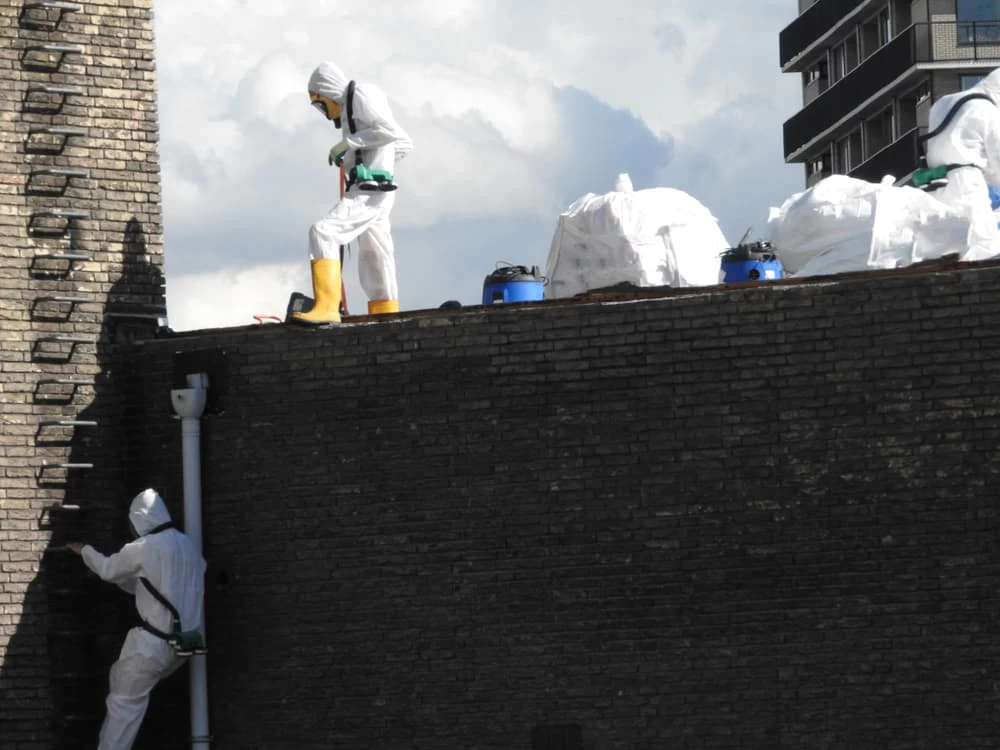
Once the survey identifies asbestos-containing materials, the abatement work is planned around the specific materials present whether that’s pipe insulation around an old boiler, 9×9 vinyl floor tiles and the black mastic adhesive beneath them, plaster walls, or roofing. The work area is properly contained, materials are removed using NYS-mandated protocols, and waste is disposed of at permitted facilities. Nothing gets cut short to save time.
After removal, air clearance monitoring is conducted and documented. You receive the results. That report is your legal protection it confirms the space meets safety standards and creates a record that must be maintained for 30 years under New York State law. If your project also involves water damage from a Rondout Creek flood event, we can address both the asbestos abatement and the water restoration in the same project engagement, without handing you off to a second contractor.
Asbestos Abatement and Removal Services, Binnewater NY
What's Actually Included When You Call Us
Asbestos abatement isn’t a single task it’s a regulated sequence of steps, and every one of them matters. We cover the full scope: licensed inspection and survey, permit applications and NYS DOL notifications, containment setup, licensed removal of asbestos-containing materials, proper waste disposal, post-abatement air clearance monitoring, and final documentation. You don’t need to piece this together with multiple vendors. One call, one licensed contractor, one complete paper trail.
For Binnewater specifically, the most common asbestos-containing materials found during renovation work include pipe and boiler insulation in older homes with steam heat systems, vinyl floor tiles and black mastic adhesive especially common in mid-century properties along Binnewater Road textured acoustic ceiling material in post-WWII construction, and exterior roofing and siding materials on pre-1980 structures. Vermiculite attic insulation, which has a well-documented association with asbestos contamination, is also present in a portion of the region’s older housing stock. If you’re not sure what you have, the inspection answers that question before any work begins.
We also hold USEPA Lead and RRP certifications. Many of the same pre-1978 homes in Binnewater that carry asbestos risk also carry lead-based paint. Addressing both hazards in one project, with one licensed contractor, is more efficient and less disruptive than scheduling two separate remediation crews and it’s the kind of cross-hazard capability that most local competitors in the Binnewater area simply don’t offer.
Do I need an asbestos survey before renovating my Binnewater home?
Yes and it’s not optional under New York State law. NYS Industrial Code Rule 56 requires a licensed asbestos survey before any renovation, remodeling, repair, or demolition work on a building where construction began before 1974. In Binnewater, that applies to virtually every structure in the hamlet. Homes along Binnewater Road, former industrial-era buildings, and any property built during or after the cement industry period fall squarely into this category.
The survey must be conducted by a NYS DOL-certified inspector not a general contractor, not a home inspector, and not someone who simply offers to “check for asbestos” without credentials. If the survey identifies asbestos-containing materials above the threshold levels defined by state law 10 square feet or more of surface material, or 25 linear feet or more of pipe insulation licensed abatement is required before work proceeds. Skipping this step doesn’t just create a health risk. It creates legal liability for you as the property owner, and it can result in stop-work orders, fines, and the cost of re-remediation if unlicensed work is discovered.
What does asbestos abatement typically cost for a home in Ulster County?
Costs vary based on what materials are present, how much of them there are, and where they’re located in the structure. For residential projects in the Hudson Valley including Ulster County and the Rosendale area asbestos abatement typically runs between $1,500 and $15,000 for most standard residential scopes. Smaller jobs like a single room of floor tile removal or a section of pipe insulation will land at the lower end. Larger whole-house projects, or work involving multiple material types across an older structure, can run higher.
A few things affect the number specific to Binnewater properties: the age and complexity of the structure, whether the materials are friable (crumbling or easily disturbed) versus non-friable, and whether the project involves any flood-damaged materials that require additional handling protocols. The only way to get an accurate number is a licensed inspection first. Any contractor quoting you a firm price without first seeing the property and identifying what’s there is guessing and in a regulated process like this, guessing is expensive.
Can flood damage from the Rondout Creek trigger an asbestos problem in my home?
It can and in Binnewater, this is a real scenario, not a hypothetical. The Rondout Creek runs through the area, and NOAA’s stream gauge at Rosendale has recorded catastrophic flood events, including peak flows during Hurricane Irene in 2011 that exceeded 36,000 cubic feet per second. When floodwater saturates the building materials in a pre-1980 home soaking through old vinyl floor tiles, compromising pipe insulation, or deteriorating plaster walls it can disturb asbestos-containing materials that were previously stable and undisturbed.
Once those materials are wet, damaged, or physically disrupted, they become a regulated asbestos disturbance event under NYS Industrial Code Rule 56, regardless of how the damage occurred. That means you can’t simply dry out the space and continue with repairs a licensed survey is required before remediation work begins. We handle both asbestos abatement and water damage restoration under one roof, which matters enormously when you’re dealing with both problems at the same time and don’t have the bandwidth to coordinate multiple contractors.
How do I know if the asbestos removal was actually completed correctly?
The answer is air clearance monitoring and it should be a standard part of every licensed abatement project, not an add-on you have to ask for. After removal is complete, air samples are taken inside the work area and analyzed to confirm that airborne asbestos fiber levels meet the clearance standards required by New York State. The results are documented and provided to you in writing.
This matters for two reasons. First, it’s the only objective confirmation that the space is actually safe not just visually clean, but tested and cleared. Second, that documentation has legal and financial value. It protects you in a future real estate sale, satisfies insurance requirements, and creates the 30-year project record that NYS law requires. We provide post-abatement air clearance testing as a standard deliverable on every project. One customer described it plainly: air monitoring afterward showed them none of it was left. That’s the outcome you’re paying for, and you should expect documentation to prove it.
What types of asbestos-containing materials are most common in older Rosendale-area homes?
The materials that show up most frequently in pre-1980 homes in the Rosendale and Binnewater area reflect the construction methods of the era. Pipe and boiler insulation is one of the most common older Hudson Valley homes with steam heat systems often have wrapped insulation around boiler pipes that contains asbestos. Nine-by-nine inch vinyl floor tiles and the black mastic adhesive used to install them are found in a large percentage of mid-century properties, often hidden beneath later flooring layers. Plaster walls, joint compound, and textured acoustic ceiling material are also common sources in homes built between the 1940s and 1970s.
Roofing shingles and exterior siding on pre-1980 structures can also contain asbestos, as can vermiculite attic insulation a material with a well-documented association with asbestos contamination that was widely used through the late 1970s. In a hamlet where a significant portion of the housing stock was built before World War II, the statistical likelihood that any given renovation will encounter at least one of these materials is high. A licensed inspection identifies exactly what’s present before any work begins, so there are no surprises mid-project.
Is Green Island Group actually licensed for asbestos work in New York State?
Yes we hold the NYS DOL Asbestos Handling License, which is the specific state-issued credential required by law for asbestos abatement work in New York. This is separate from a general contractor license, and it’s the credential that NYS Industrial Code Rule 56 requires. You can verify any contractor’s asbestos license directly through the NYS Department of Labor’s contractor lookup tool and you should, regardless of who you hire.
This distinction matters in the Ulster County market because not every contractor advertising asbestos services holds this specific license. Some are general contractors who handle asbestos as a side offering. Others may hold certifications from other states or from trade organizations that don’t satisfy New York’s licensing requirement. Hiring an unlicensed operator for asbestos work in New York creates personal legal liability for you as the property owner including potential responsibility for re-remediation costs and regulatory penalties. Our license, combined with our IICRC, USEPA Lead, and NYS DOL Mold credentials, reflects a level of regulatory compliance that most local competitors in the Binnewater and Rosendale area simply don’t match.