Briarwood's Pre-War Buildings Deserve More Than a Guess
Most homes and co-ops in Briarwood were built before 1960 and nearly all of them contain asbestos somewhere. We handle the full asbestos abatement process, from the first inspection to your DEP clearance certificate.
I needed a professional consultation explanation of procedure for safe removal of Asbestos in my apartment complex. Without having an account yet, I was very impressed with the caring, knowledgeable and generous advice offered by Jessica, and will look forward to doing business in the future. Thank you so much! I feel much more informed about a sometimes scary endeavor. Peace. Nancy Silva Mineola, NY.
Mia Munoz
Used this company to clean up some water flood in my house. They were fast and easy to work with.very professional, Would recommend to anyone!
Nini Valle
Great company, had a flood and they responded quickly and efficiently. Billed my insurance company directly. I highly recommend this company!
joe colapietro, jr
I had pipe freeze in my basement right before a snow storm and they made to within an hour to help start the clean up process. They we by our side throughout the entire process and even helped with the insurance company. They did such a great job with the cleanup, repair, remidiation, I contracted them to perform the repairs and finishes in the basement. They came with enough manpower and material to get the job done. Leo and Jessica were nothing but a pleasure to deal with!!
Cristian Arredondo c
I had some water damage in my home and Green Island was able to take care of my issue quickly and effectively. I am very pleased with the work they did. They responded quickly and were very professional.
Michael M
Outstanding service! From the office to the field crew everyone was friendly, helpful and responsive. I highly recommend Green Island Group.
When a contractor pulls up old floor tiles in your Briarwood co-op or cracks open a wall in one of the 1930s Colonials off Main Street, what they find underneath changes everything. The renovation stops. The questions start. And suddenly you’re trying to figure out what’s regulated, what’s dangerous, and who’s actually qualified to handle it under NYC rules.
That’s where most Briarwood homeowners get stuck not because they’re unprepared, but because the NYC DEP’s asbestos requirements are genuinely complex. You need a licensed contractor, a project notification filed through the city’s ARTS system, post-abatement air monitoring, and an ACP-5 clearance form before the Department of Buildings will issue any permit for follow-up work. Miss one step and you’re looking at fines between $1,200 and $10,000 per infraction.
What you get on the other side of this process is simple: documented proof that the work was done correctly, the clearance paperwork your co-op board or real estate attorney needs, and the ability to move forward with your renovation or your sale without the project hanging over you. In a neighborhood where the average property is over 70 years old, that clarity is worth a lot.
We hold the NYS Department of Labor Asbestos license, NYC DEP compliance capability, an NYC General Contractor license, NYC BIC licensing, and NYS/NYC M/WBE certification among several others. Most contractors in the Queens asbestos market hold one or two of these. We hold all of them. That’s not a minor distinction when you’re dealing with the most regulated asbestos environment in the country.
Our team has worked across all five boroughs and understands the specific building stock that defines Briarwood the postwar co-op towers along Queens Boulevard, the Parkway Village complex built in 1947, the Tudor and Colonial homes in the Briarwood Estates section that date back to 1936. We know what materials were used, where they tend to show up, and exactly what the NYC DEP expects before, during, and after removal.
If you’re a co-op owner, a landlord managing rental units, or a homeowner getting ready to sell in Briarwood, we give you the documentation and the compliance record you need not just the removal.
No Guesswork Here's What the Process Actually Looks Like
It starts with an inspection by a DEP-certified asbestos investigator. In a Briarwood building whether that’s a pre-war single-family home, a mid-century co-op, or a multi-unit rental the inspector identifies which materials contain asbestos and whether they’ll be disturbed by the planned work. That report determines what happens next.
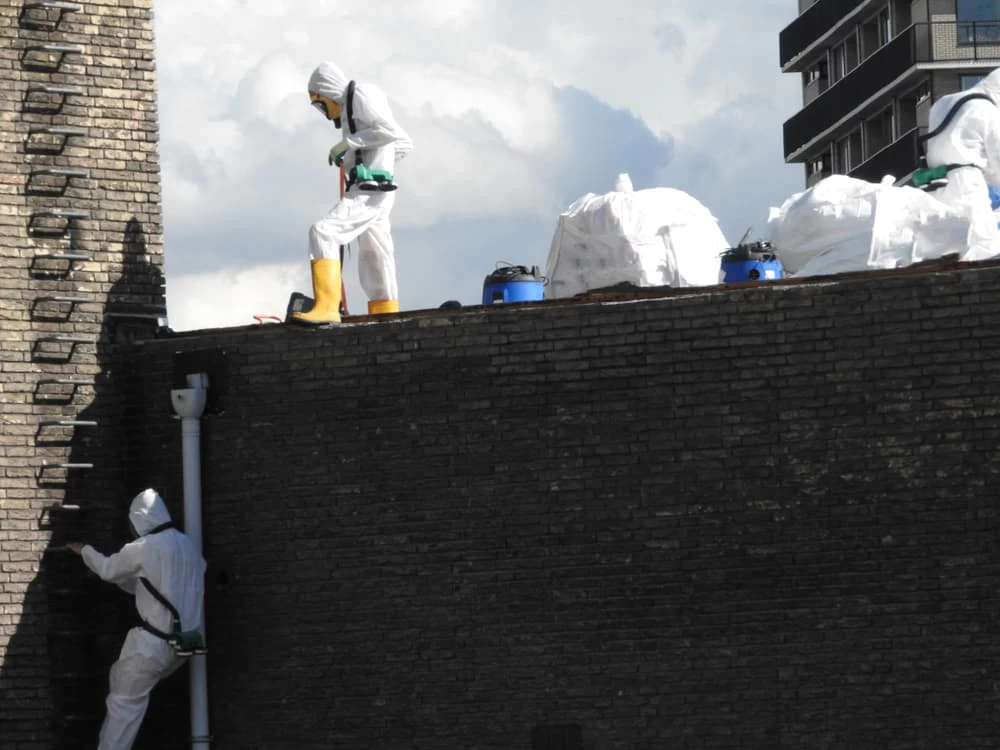
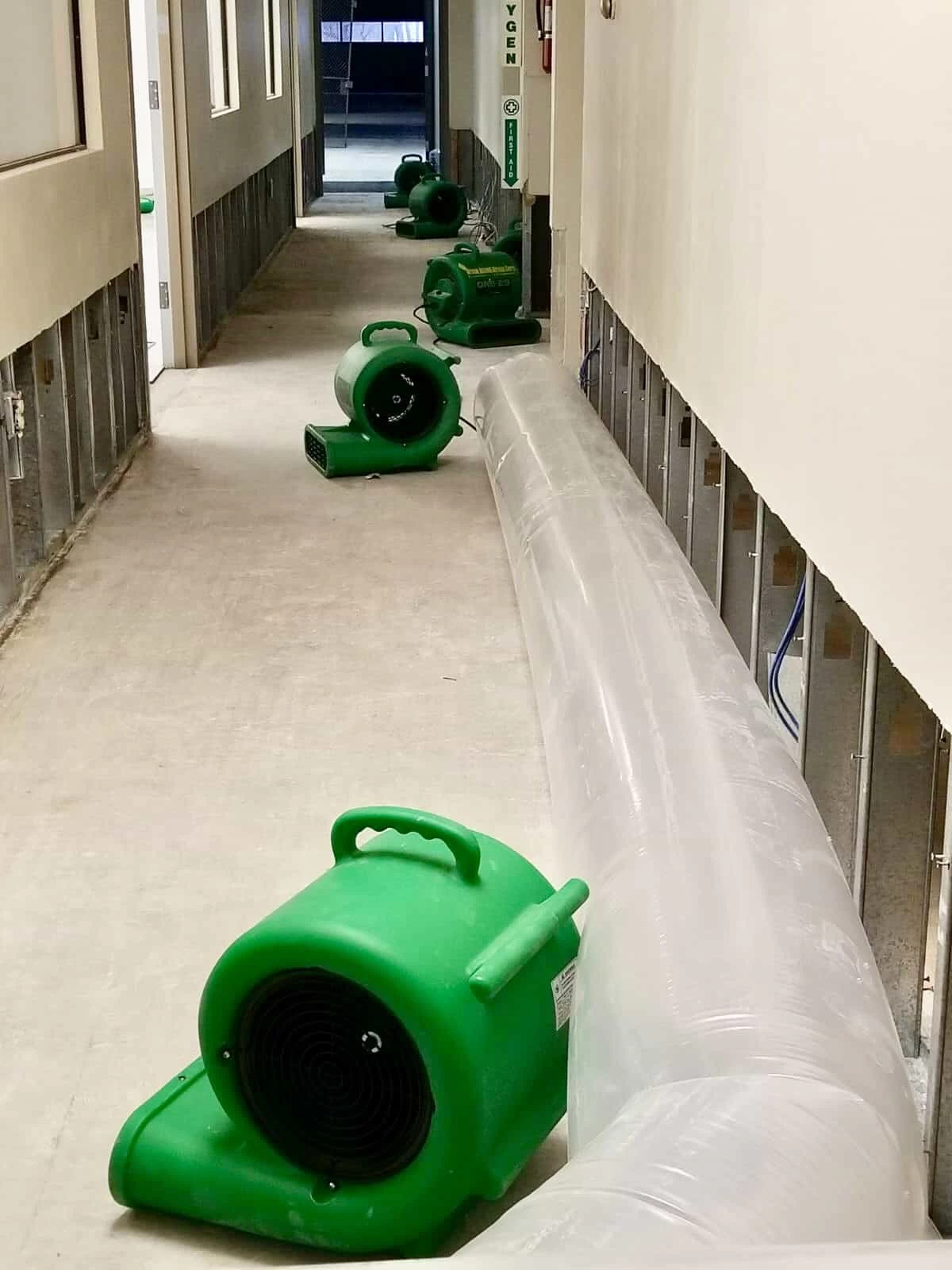
If regulated asbestos-containing materials are present, we file the ACP7 project notification with the NYC DEP through the ARTS system at least seven days before work begins. From there, our abatement crew sets up full containment negative air pressure, Microtrap air scrubbers, protective barriers before a single material is touched. Asbestos tile removal, pipe insulation, popcorn ceiling texture, drywall joint compound: each material type has a specific handling protocol, and we follow all of them.
Once removal is complete, independent post-abatement air monitoring confirms the space is clear. That clearance result becomes the ACP-5 form the document your co-op board, your DOB permit application, or your real estate closing will require. If the space needs reconstruction after abatement, we handle that too. One contractor, start to finish.
Built for Briarwood's Buildings, Not a Generic Checklist
Briarwood’s housing stock is specific. Over 40% of units were built before 1950, and the median construction year is 1955 which means the materials most commonly found during renovations here are exactly the ones that require licensed abatement. The 9×9 vinyl asbestos floor tiles used throughout postwar co-op construction. Sprayed acoustic ceiling texture in mid-century apartment buildings. Pipe and boiler insulation in buildings that have been running the same heating systems for decades. Roofing materials and drywall joint compound in the older single-family homes in the Briarwood Estates section.
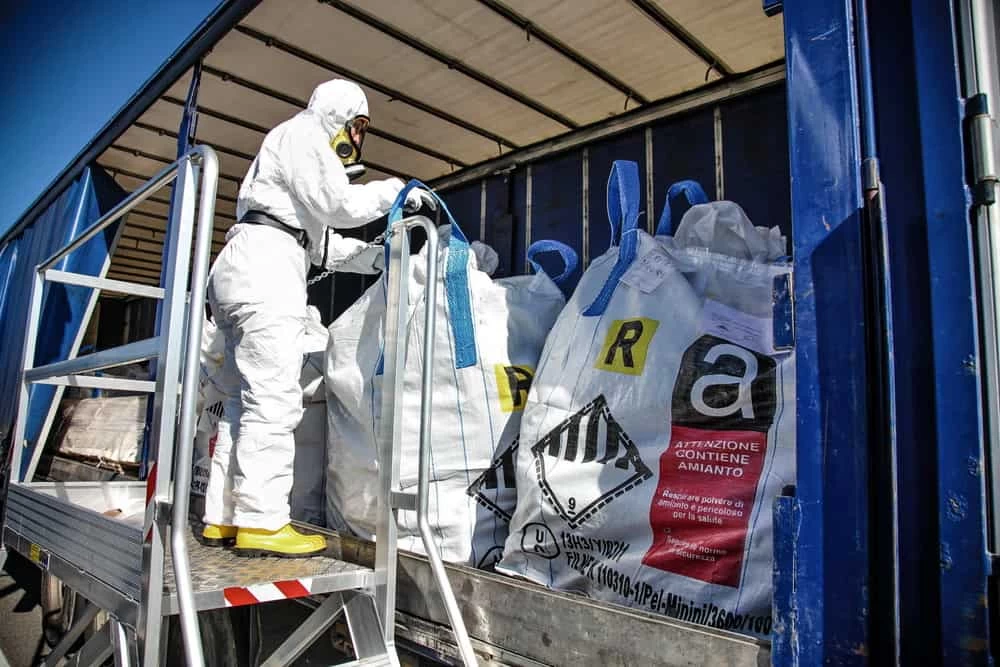
We offer comprehensive asbestos removal services covering all of it. The scope includes the initial DEP-certified survey, full containment setup, licensed removal, proper disposal in accordance with NYC and NYS regulations, post-abatement air clearance testing, and the ACP-5 documentation package. For Briarwood’s large renter-occupied housing market 64.3% of units are tenant-occupied we also work with landlords and property management companies to handle phased abatement in occupied buildings, minimizing disruption while meeting every regulatory requirement.
If asbestos is discovered alongside mold, water damage, or lead paint which is common in buildings of this age we’re licensed to handle all of it under the same engagement. No coordinating multiple vendors, no gap between the abatement and the restoration.
Do I need an asbestos survey before renovating my Briarwood co-op apartment?
Yes and in New York City, this isn’t optional. Under NYC DEP rules, building owners are required to have an asbestos survey conducted by a DEP-certified investigator before any work begins that could disturb asbestos-containing materials. This applies to co-op apartments, single-family homes, and multi-unit rental buildings alike. If you skip this step and asbestos is disturbed without proper notification and abatement, the penalties range from $1,200 to $10,000 per infraction and the building owner, not the contractor, is typically held responsible.
For Briarwood co-op owners specifically, there’s an additional layer: your co-op board will almost certainly require documentation before approving any renovation permit. That means the DEP-certified survey report, the ACP7 project notification, and the post-abatement ACP-5 clearance form are all things you’ll need to produce before your renovation can legally proceed. Getting the survey done upfront isn’t just about compliance it’s what keeps your project on schedule.
What materials in a Briarwood home are most likely to contain asbestos?
Given that most of Briarwood’s housing was built between the 1930s and 1970s, the materials most commonly found to contain asbestos here are floor tiles particularly the 9×9 vinyl asbestos tiles used throughout postwar co-op construction pipe and boiler insulation, sprayed acoustic ceiling texture (popcorn ceilings), drywall joint compound, roofing materials, and HVAC duct wrap. None of these are dangerous when they’re intact and undisturbed. The risk comes when renovation work begins and those materials get cut, scraped, or broken.
In the older Colonial and Tudor-style homes in the Briarwood Estates section some dating back to 1936 it’s common to find asbestos in multiple locations throughout the same building. In the postwar co-op towers like Parkway Village or The Arlington, pipe insulation and floor tiles are the most frequent discoveries. If you’re planning any renovation in a pre-1980 Briarwood building, assume asbestos is present somewhere until a certified inspector confirms otherwise.
How long does asbestos abatement typically take in a residential property?
For most residential projects a single apartment, a bathroom or kitchen gut renovation, or a specific area of a single-family home abatement typically takes one to five days from the start of work. That timeline includes containment setup, the removal itself, and post-abatement air monitoring. The ACP-5 clearance form is usually issued within a day or two of the clearance test results coming back clean.
What affects the timeline more than the size of the space is the regulatory filing requirement. In New York City, the ACP7 project notification must be submitted to the DEP through the ARTS system at least seven business days before work can begin. That means the clock starts when you file not when you call a contractor. If you’re working toward a real estate closing deadline or a co-op board approval window, the sooner you get the survey done and the filing submitted, the better. We handle the filing as part of the process, so you’re not navigating the ARTS system on your own.
Can asbestos abatement be covered by homeowner's insurance in Briarwood, NY?
It depends on how the asbestos was discovered and what triggered the need for removal. In cases where asbestos-containing materials were disturbed by a covered event a burst pipe, water damage, or a storm-related incident that exposed old insulation or ceiling material there’s a reasonable basis for an insurance claim, and many policies do cover remediation costs in those circumstances. We bill insurance directly, which removes a significant amount of friction from the process when a claim is involved.
Where insurance typically doesn’t apply is elective renovation if you’re remodeling a kitchen or bathroom and the survey reveals asbestos floor tiles or joint compound, that’s generally considered a renovation cost rather than a covered loss. In Briarwood’s older building stock, water damage events that expose asbestos-containing pipe insulation are not uncommon, particularly in buildings that have been running aging heating systems for decades. If you’re unsure whether your situation qualifies, it’s worth calling your insurance carrier before assuming you’re paying out of pocket and we can help document the scope of work in the format insurers typically require.
What is an ACP-5 form and why does my Briarwood renovation require one?
The ACP-5 is an Asbestos Assessment Form issued by the NYC Department of Environmental Protection. It’s the official document that certifies either that no asbestos-containing materials are present in the area being renovated, or that any asbestos that was present has been properly abated by a licensed contractor. The NYC Department of Buildings requires an ACP-5 before it will issue a permit for renovation or construction work in most pre-1987 buildings.
For Briarwood property owners, this form is the gating document for almost any significant renovation project. Without it, your DOB permit application stalls. If you’re selling a co-op, your real estate attorney will likely ask for it as part of the closing documentation. If your co-op board requires a permit before approving renovation work which most do the ACP-5 is what gets you there. We provide the ACP-5 as a standard deliverable at the end of every abatement project, along with the post-clearance air monitoring results that support it.
Is asbestos in Briarwood's older apartment buildings a health risk if I'm not renovating?
Not necessarily and this is one of the most important things to understand about asbestos. Asbestos-containing materials that are intact, undamaged, and not being disturbed don’t release fibers into the air. The health risk comes from friable asbestos materials that are deteriorating, crumbling, or being physically disturbed through cutting, scraping, or demolition. If the floor tiles in your 1950s Briarwood co-op are in good condition and you’re not renovating, they’re not an active hazard.
Where this changes is when materials start to degrade on their own which becomes more likely as buildings age. Pipe insulation that’s been patched and re-patched over decades, ceiling texture that’s been painted over multiple times, or boiler wrap that’s starting to crumble can all reach a point where they release fibers without any renovation work happening. Briarwood is also projected to see a significant increase in extreme heat days over the next 30 years, and sustained heat accelerates the breakdown of some asbestos-containing materials. If you’re in a pre-1980 building and you notice deteriorating insulation, ceiling damage, or crumbling materials near mechanical systems, that’s worth having a certified inspector look at not because it’s definitely dangerous, but because knowing for certain is always better than guessing.