Hamptons Renovations Don't Wait Neither Should Your Abatement
If you’re renovating, selling, or buying a pre-1980 property in Bridgehampton, asbestos abatement isn’t optional it’s the step that keeps everything else moving. We handle it right, with full documentation and certified compliance.
I needed a professional consultation explanation of procedure for safe removal of Asbestos in my apartment complex. Without having an account yet, I was very impressed with the caring, knowledgeable and generous advice offered by Jessica, and will look forward to doing business in the future. Thank you so much! I feel much more informed about a sometimes scary endeavor. Peace. Nancy Silva Mineola, NY.
Mia Munoz
Used this company to clean up some water flood in my house. They were fast and easy to work with.very professional, Would recommend to anyone!
Nini Valle
Great company, had a flood and they responded quickly and efficiently. Billed my insurance company directly. I highly recommend this company!
joe colapietro, jr
I had pipe freeze in my basement right before a snow storm and they made to within an hour to help start the clean up process. They we by our side throughout the entire process and even helped with the insurance company. They did such a great job with the cleanup, repair, remidiation, I contracted them to perform the repairs and finishes in the basement. They came with enough manpower and material to get the job done. Leo and Jessica were nothing but a pleasure to deal with!!
Cristian Arredondo c
I had some water damage in my home and Green Island was able to take care of my issue quickly and effectively. I am very pleased with the work they did. They responded quickly and were very professional.
Michael M
Outstanding service! From the office to the field crew everyone was friendly, helpful and responsive. I highly recommend Green Island Group.
Your Bridgehampton Renovation Stays on Schedule. Your Property Stays Clean.
In Bridgehampton, the renovation window is real and it’s short. Most estate owners time their projects between October and April before the season kicks back in and when abatement gets delayed or done wrong, it doesn’t just slow things down, it can shut the whole project down. Getting this handled properly from the start means your general contractor, your architect, and your building department all stay on the same page.
The properties here are different from most of Long Island. You’ve got mid-century beach houses, historic farmhouses near Mecox, equestrian estate buildings, and outbuildings that were constructed decades ago with materials we now know are hazardous. Salt air off the Atlantic accelerates the breakdown of those materials pipe insulation, floor tiles, ceiling texture faster than you’d see in an inland town. That means ACMs that look intact can already be deteriorating in ways that aren’t visible.
When abatement is done correctly, you walk away with something concrete: a clean property, a compliant project, and a documentation package that holds up with attorneys, lenders, and buyers. In a market where a single transaction can involve millions of dollars and a team of professionals scrutinizing every detail, that paperwork matters as much as the work itself.
We’re a Long Island-based asbestos abatement and environmental remediation company that works across Suffolk County, including Bridgehampton and the surrounding South Fork communities Sagaponack, Water Mill, Wainscott, and Sag Harbor. We’re not a national franchise routing calls through a 1-800 number. We’re a local operation that knows Bridgehampton, knows these building types, and knows exactly what the Town of Southampton’s building department needs to see before a project closes out.
Every abatement contractor on our team is trained and certified under New York State Department of Labor Industrial Code Rule 56 the state regulation that governs all asbestos work in New York. That’s not a bonus. That’s the legal requirement, and it’s what separates a compliant project from a liability.
We’ve worked on everything from mid-century ranch homes near Bridgehampton Commons to equestrian estate facilities with decades-old roofing and siding materials. Whatever the property type, the process is the same: thorough, documented, and done right.
From First Call to Final Clearance Here's What to Expect
It starts with an inspection. Before anything is touched, a certified inspector assesses the property and identifies any suspected asbestos-containing materials. We collect samples and send them to an accredited laboratory for analysis. You get real results not guesswork and a clear picture of what needs to be addressed before your project moves forward.
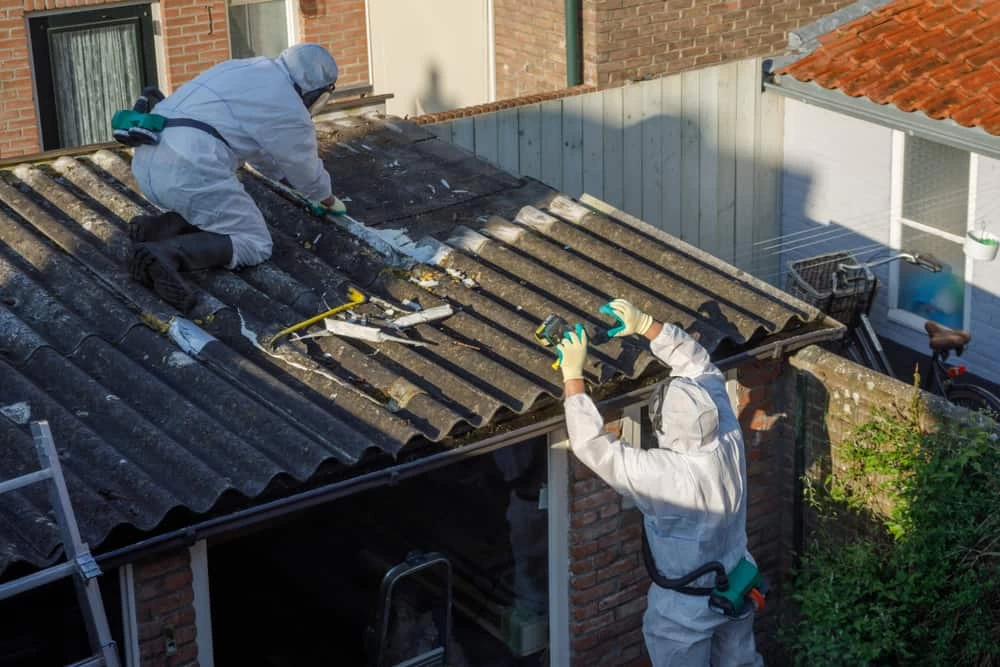
If asbestos is confirmed, we file the required notification with the New York State Department of Labor before any abatement work begins. This is a legal requirement under Industrial Code Rule 56, and it applies to renovation and demolition projects across Suffolk County, including all properties within the Town of Southampton. The abatement itself is performed under full containment negative air pressure, sealed work areas, and proper personal protective equipment so the rest of the property stays unaffected.
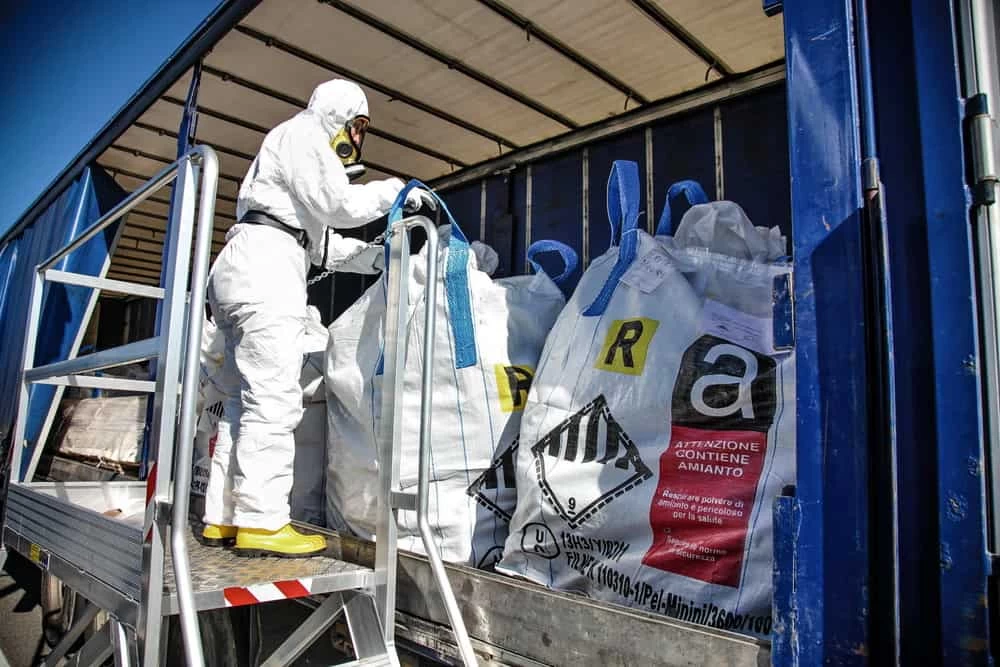
Once the material is removed, we arrange for it to be packaged and transported by a licensed waste hauler to a permitted disposal facility, as required by the NYSDEC. Then comes post-abatement air clearance testing, performed independently to confirm the space is clean. At the end of the process, you receive a complete documentation package: inspection report, lab results, NYSDOL notification records, air clearance results, and disposal manifests. That’s the file your attorney, your buyer, or your building department will ask for and it’ll be ready.
Asbestos Tile and Ceiling Removal Bridgehampton NY
Every ACM Type Found in Bridgehampton Properties, Handled Correctly
Asbestos shows up differently depending on when and how a property was built. In Bridgehampton, where the building stock spans from the 1600s through the late 20th century, the range of asbestos-containing materials is wide. The most common ones we encounter in this area are 9×9 vinyl asbestos floor tiles in kitchens, basements, and utility rooms of mid-century homes; popcorn and textured ceiling finishes applied through the 1970s; pipe and boiler insulation in older mechanical rooms; transite cement siding and roofing on outbuildings and equestrian facilities; and joint compound behind plaster walls.
Asbestos tile removal and asbestos popcorn ceiling removal are two of the most frequent projects we handle for Bridgehampton homeowners often as part of a broader gut-renovation or pre-sale preparation. Both require the same certified approach: test first, contain the work area, remove carefully, dispose legally, and document everything. Disturbing either material without testing is not only risky it’s a code violation.
For estate properties south of the highway, equestrian facilities near the Hampton Classic grounds, or older structures anywhere in the 11932 ZIP code, the process is the same. We assess what’s there, remove what needs to go, and give you the paperwork that proves it was handled properly. No shortcuts, no gaps in the record.
Do I need asbestos testing before renovating my Bridgehampton home?
If your Bridgehampton property was built before 1980, testing before any renovation or demolition work is not just recommended it’s required under New York State law. Under NYSDOL Industrial Code Rule 56, any renovation or demolition that disturbs building materials in a pre-1980 structure must be preceded by an asbestos survey conducted by a certified inspector. The Town of Southampton’s building department will not issue final approvals for renovation projects where asbestos handling requirements haven’t been addressed.
This matters practically, not just legally. Bridgehampton has a significant inventory of mid-century homes ranch-style houses, older beach cottages, estate expansions from the 1950s through 1970s where asbestos-containing materials are common in flooring, ceilings, insulation, and wall finishes. The coastal environment here also accelerates material degradation, so even materials that appear intact may already be in a condition that makes them hazardous when disturbed. Getting a proper inspection before your contractor starts demo protects everyone on the job and keeps your project legally clean from day one.
How long does asbestos abatement typically take for a property in Bridgehampton?
The timeline depends on the scope how much material is present, what type it is, and how many areas of the property are affected. A focused asbestos tile removal in a single room or a popcorn ceiling removal in one or two spaces can often be completed in one to two days. A larger project involving multiple material types across an estate property which is more common in Bridgehampton given the size of many homes here may take several days to a week or more.
What most people don’t factor in is the time on either end of the physical work. The NYSDOL requires written notification at least 10 working days before abatement begins on qualifying projects, so that lead time needs to be built into your renovation schedule. Post-abatement air clearance testing also adds time before the space can be turned back over to your contractor. If you’re working against a pre-summer deadline which is common for Bridgehampton owners trying to have renovations wrapped before Memorial Day starting the abatement process early in the off-season is the move that keeps everything on track.
What happens if asbestos is found in my barn or equestrian facility on my Bridgehampton property?
It’s more common than most people expect. Many of the equestrian estate facilities and agricultural outbuildings in Bridgehampton were constructed or renovated in the mid-20th century using corrugated asbestos cement roofing sheets, transite board siding, and asbestos pipe lagging. When these structures are being renovated, expanded, or demolished which happens frequently as estates change hands and upgrade their facilities the same abatement requirements apply as they would to any residential structure.
The process for a barn or outbuilding follows the same certified framework: inspection, laboratory testing, NYSDOL notification if required, contained removal, licensed waste disposal, and air clearance documentation. The fact that it’s a non-residential structure doesn’t reduce the regulatory requirements or the health risk. If you’re planning to renovate a stable complex, convert an outbuilding, or demolish an older agricultural structure on your Bridgehampton property, have it assessed before any demo work begins. The materials in those buildings can be just as hazardous as anything found inside the main residence.
Will asbestos abatement documentation hold up during a Bridgehampton real estate transaction?
Yes if it’s done correctly. In the Bridgehampton real estate market, where transactions routinely involve real estate attorneys, environmental consultants, and sophisticated buyers, the documentation from your abatement project needs to be complete and verifiable. That means a pre-abatement inspection report, laboratory analysis results, the NYSDOL project notification record, post-abatement air clearance test results from an independent certified industrial hygienist, and the licensed waste disposal manifest.
Buyers and their attorneys will ask for this file as part of due diligence, and lenders financing high-value properties in the 11932 ZIP code or adjacent Sagaponack which carries the highest median home sale prices in the country will often require it as a condition of financing. A documentation package with gaps or missing records can delay or derail a closing. When you hire a licensed, certified contractor who follows the full legal process from notification through disposal, the paperwork reflects that and it holds up under scrutiny.
Is the popcorn ceiling in my Bridgehampton home likely to contain asbestos?
If your home was built or renovated between the early 1950s and approximately 1978, there’s a real possibility the textured ceiling contains asbestos specifically chrysotile asbestos, which was commonly added to popcorn and spray-applied ceiling finishes during that era. The use of asbestos in these products was largely phased out after the EPA began restricting it in the late 1970s, but homes built or finished before that cutoff are candidates for testing.
In Bridgehampton, a large portion of the mid-century residential stock falls squarely in that window. Many of the beach houses and estate homes built during the postwar decades through the 1970s still have original ceiling finishes. The only way to know for certain is to have a certified inspector take a sample and send it to an accredited lab visual inspection alone cannot confirm or rule out asbestos. If the test comes back positive, the ceiling needs to be removed by a licensed abatement contractor before any renovation or painting work disturbs the material. It’s a straightforward process, and it’s one of the most common asbestos removal services we handle for Bridgehampton homeowners.
How much does asbestos abatement cost for a home in Bridgehampton, NY?
Cost varies based on the type of material, the quantity, and the complexity of the project. A targeted asbestos tile removal covering one room typically ranges from $1,500 to $3,500. Popcorn ceiling removal for a single room or small area tends to fall in a similar range. Larger projects a full-floor tile removal across a multi-room estate, or abatement across several material types in a gut-renovation can run anywhere from $5,000 to $25,000 or more depending on scope.
In Bridgehampton, where renovation budgets on estate properties are substantial and the cost of a failed real estate transaction far exceeds the cost of proper abatement, most property owners approach this as a non-negotiable line item rather than a place to cut corners. What you’re paying for isn’t just the physical removal it’s the certified process, the legal compliance, the independent air clearance testing, and the documentation package that protects you in a transaction or a permit review. Getting a detailed written estimate upfront, based on an actual inspection of your property, is the only way to get an accurate number and that’s always where we start.