If your Brinckerhoff home was built before 1985, there’s a real chance asbestos is somewhere in it and a renovation, a flood, or a pre-sale inspection could expose it fast. We handle asbestos abatement the right way, from the first test to the final clearance certificate.
I needed a professional consultation explanation of procedure for safe removal of Asbestos in my apartment complex. Without having an account yet, I was very impressed with the caring, knowledgeable and generous advice offered by Jessica, and will look forward to doing business in the future. Thank you so much! I feel much more informed about a sometimes scary endeavor. Peace. Nancy Silva Mineola, NY.
Mia Munoz
Used this company to clean up some water flood in my house. They were fast and easy to work with.very professional, Would recommend to anyone!
Nini Valle
Great company, had a flood and they responded quickly and efficiently. Billed my insurance company directly. I highly recommend this company!
joe colapietro, jr
I had pipe freeze in my basement right before a snow storm and they made to within an hour to help start the clean up process. They we by our side throughout the entire process and even helped with the insurance company. They did such a great job with the cleanup, repair, remidiation, I contracted them to perform the repairs and finishes in the basement. They came with enough manpower and material to get the job done. Leo and Jessica were nothing but a pleasure to deal with!!
Cristian Arredondo c
I had some water damage in my home and Green Island was able to take care of my issue quickly and effectively. I am very pleased with the work they did. They responded quickly and were very professional.
Michael M
Outstanding service! From the office to the field crew everyone was friendly, helpful and responsive. I highly recommend Green Island Group.
Most homes in Brinckerhoff sitting in the 12524 ZIP code were built somewhere between the 1940s and the 1990s. That’s the exact window when asbestos was standard in floor tiles, pipe insulation, textured ceilings, and roofing materials. You may have lived in the house for years without a problem and that’s fine, because undisturbed asbestos isn’t always an emergency. But the moment a renovation starts, a basement floods, or a buyer’s inspector shows up, the situation changes.
Once the material is properly removed and cleared, you get something that’s hard to put a price on: documentation. A post-abatement air clearance certificate tells you, your family, and any future buyer that the space is safe. In a market where New York City-area buyers are actively purchasing Hudson Valley homes and scrutinizing every detail, that paperwork is real leverage.
There’s also the peace of mind that comes from knowing the job was done to New York State standards not just cleaned up and hoped for the best. Dutchess County falls under the Albany District Office of the NYS Department of Labor’s Asbestos Control Bureau. Every project filed, every disposal handled through licensed haulers, every clearance test documented. That’s what proper asbestos remediation actually looks like.
Licensed Asbestos Contractor Serving Brinckerhoff, NY
12 Years In, 5,000 Projects Deep We Know Brinckerhoff's Homes
We’ve been doing certified asbestos abatement across New York State for over 12 years and have completed more than 5,000 projects. That includes active work in Fishkill and East Fishkill the communities that border and administratively contain Brinckerhoff. We’re not stretching our service map to pick up a new ZIP code. The Town of Fishkill is already part of our territory, and we understand the specific housing stock and building codes that Brinckerhoff residents deal with.
Beyond the project count, we hold Minority and Woman-Owned Business Enterprise (MWBE) certification and are an approved contractor for New York State agencies a credential no identified competitor in the Dutchess County asbestos market currently holds. That kind of vetting doesn’t happen by accident.
We also bill insurance companies directly, respond within hours, and are available around the clock. If you find something on a Friday afternoon or after a spring storm floods your basement near Merritt Park, you’re not leaving a voicemail and waiting until Monday.
Asbestos Abatement Process for Brinckerhoff Residents
No Surprises Here's Exactly How the Job Gets Done
It starts with an assessment. Before anything is touched, the material in question needs to be identified and tested. Not everything that looks like asbestos is, and not everything that contains it is an immediate hazard. We’ll walk through your home, identify suspect materials floor tiles, pipe wrap, ceiling texture, roofing and determine what actually needs to go and what can safely stay.
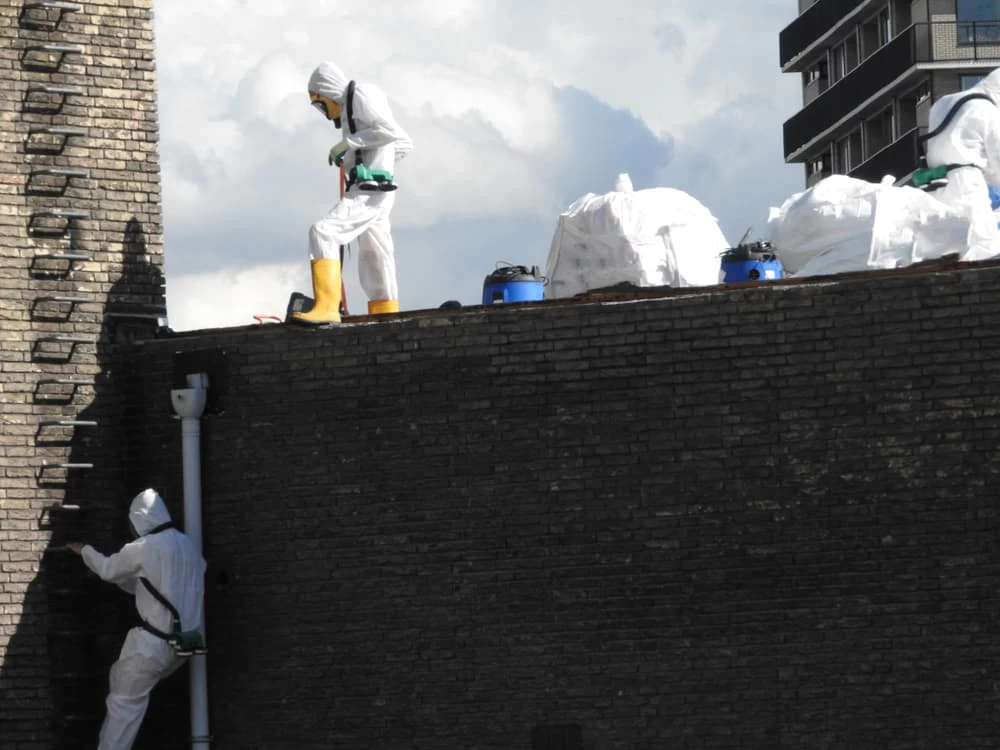
If abatement is needed, the next step is containment. The work area gets sealed off, negative air pressure is established, and the removal happens under controlled conditions so fibers don’t migrate into the rest of your living space. For projects in the Town of Fishkill, this also means filing the appropriate documentation with the Albany District ACB Office before work begins a step that’s legally required under NYS Industrial Code Rule 56 and one that unlicensed operators routinely skip.
After removal, the space is cleaned and a post-abatement air clearance test is conducted by an independent party. You get the results in writing. Only when that test confirms the air is within safe limits is the project considered complete. That final certificate is what protects you at resale, during permitting, and in your own home.
Asbestos Removal and Remediation in Brinckerhoff, NY
Every Material Type Found in These Homes We Cover It All
Brinckerhoff’s housing stock is almost entirely owner-occupied, medium-to-large single-family homes built across several decades and each era brought its own asbestos risks. The 9×9 vinyl floor tiles in a 1965 kitchen. The popcorn ceiling in a 1974 living room. The pipe insulation wrapped around a boiler that’s been running since the Carter administration. Asbestos tile removal, textured ceiling abatement, pipe and duct insulation removal we handle all of it under one scope.
Our service includes initial inspection and bulk sampling, full containment setup, licensed removal, transport by certified haulers to an approved disposal facility, and independent post-abatement air clearance testing. There’s no handoff between vendors and no gap in the chain of custody. Everything is documented from start to finish, which matters when you’re selling a home, pulling a renovation permit through the Town of Fishkill, or simply need to prove the work was done correctly.
For situations where full removal isn’t required or isn’t yet practical, encapsulation is also an option sealing the material in place when it’s stable and undisturbed. We’ll tell you honestly which approach fits your situation, not just the one that costs more. Free estimates are available, and if your abatement is tied to a covered insurance event, we’ll work directly with your carrier.
Is asbestos actually common in Brinckerhoff homes, or is this overstated?
It’s not overstated it’s just underappreciated until something triggers it. The majority of homes in Brinckerhoff were built between 1940 and 1999, and asbestos was a standard ingredient in dozens of building products throughout that entire period. Floor tiles, ceiling texture, pipe insulation, roofing shingles, joint compound, exterior siding these were all manufactured with asbestos at various points during those decades. A home built in 1968 has a statistically high probability of containing at least one asbestos-containing material somewhere in the structure.
The reason most homeowners in Brinckerhoff don’t know it’s there is that undisturbed asbestos isn’t always visible or dangerous. It becomes a problem when it’s disturbed during a renovation, after water damage, or when materials start to break down with age. Brinckerhoff’s freeze-thaw winters and the Hudson Valley’s wet springs can degrade pipe insulation and basement materials over time, moving them from stable to hazardous without anyone noticing. A professional inspection before any major renovation is the only way to know what you’re actually dealing with.
Do I need a permit for asbestos removal in the Town of Fishkill?
Yes, and it’s not optional. Any renovation that will disturb asbestos-containing materials in the Town of Fishkill requires a building permit, and that permit process requires documentation showing a licensed abatement contractor is involved. Beyond the town permit, the abatement contractor is also required under NYS Industrial Code Rule 56 to file the project with the Albany District Office of the NYS Department of Labor’s Asbestos Control Bureau before work begins. These aren’t formalities they’re legal requirements that exist to protect you, your neighbors, and anyone who occupies the property afterward.
Homeowners who try to skip this process or hire an unlicensed contractor who skips it for them can face stop-work orders, fines, and significant liability if the situation ever comes up during a future sale or inspection. The documentation trail that a properly filed and permitted project creates is also what protects you if questions arise later. It’s worth doing right the first time.
What does asbestos abatement typically cost for a home in this area?
For a typical residential project in the New York metro area, asbestos abatement generally runs between $1,296 and $3,050, with an average around $2,170. That range shifts depending on how much material is involved, what type it is, and how accessible the work area is. A single room of asbestos floor tile will cost less than a full basement pipe insulation removal, for example. Costs in this region have also increased in recent years due to updated NYS DOL contractor licensing requirements and higher disposal fees at permitted facilities.
Brinckerhoff homeowners with a household income well above the state median tend to approach this as a property investment rather than a pure expense and that framing is accurate. Proper abatement with documented air clearance testing adds real value to a home in a market where Hudson Valley buyers, many coming from New York City, are doing thorough due diligence before closing. A clearance certificate is worth more than the cost of the job when it prevents a deal from falling apart. We provide free estimates so you know what you’re looking at before committing to anything.
Can I stay in my home while asbestos abatement is being done?
It depends on the scope and location of the work. For a contained project a single room, a section of basement, or a specific material type it’s often possible for the rest of the home to remain occupied while work is underway, as long as proper containment and negative air pressure protocols are in place. For larger or more invasive projects involving multiple areas or central HVAC systems, temporary relocation may be the safer and more practical choice.
We’ll give you a straight answer on this during the assessment, based on your specific home and the materials involved. Given that more than 22% of Brinckerhoff residents are 65 or older and many households include school-age children, this is a question that gets asked often and the answer matters. The post-abatement air clearance test at the end of every project is specifically designed to confirm the space is safe to reoccupy before your family comes back in.
What's the difference between asbestos removal and encapsulation which one do I need?
Removal means the asbestos-containing material is physically taken out, bagged, transported by a licensed hauler, and disposed of at a permitted facility. Encapsulation means the material is sealed in place with a binding agent that prevents fibers from becoming airborne. Both are legitimate approaches, and the right one depends on the condition of the material, where it is in the home, and what you plan to do with the space.
If you’re planning a renovation that will disturb the material pulling up floors, opening walls, replacing a boiler removal is almost always the right call because encapsulation won’t survive the disruption. If the material is stable, in good condition, and in a location that won’t be touched, encapsulation may be a reasonable interim solution. In Brinckerhoff homes where the asbestos is in a finished basement that’s staying as-is, for example, encapsulation might make sense. We’ll assess the actual condition of the material and tell you which approach is appropriate not which one generates a larger invoice.
How do I know if the asbestos removal was done correctly and my home is actually safe?
The only way to know with certainty is a post-abatement air clearance test conducted by an independent third party after the work is complete. This test measures airborne asbestos fiber concentrations in the work area and confirms they’re within the limits set by New York State regulations. If the levels pass, you receive a written clearance certificate. If they don’t, the area has to be re-cleaned and retested before anyone reoccupies it. That certificate is your proof not the contractor’s word, not a visual inspection, but a laboratory-verified result.
We include post-abatement air clearance testing as a standard part of every project, not as an add-on. For Brinckerhoff homeowners preparing to sell especially in a market where buyers from the New York City area are conducting thorough inspections before closing that documentation is often the difference between a smooth transaction and a last-minute negotiation. Keep the certificate with your home’s records. It has real value.