If your home was built before 1980 in Burnside, asbestos abatement isn’t a maybe it’s a real conversation worth having now. The homes throughout this area were largely constructed in the 1960s and 1970s, right in the window when asbestos was used in everything from floor tiles to pipe insulation to popcorn ceilings.
I needed a professional consultation explanation of procedure for safe removal of Asbestos in my apartment complex. Without having an account yet, I was very impressed with the caring, knowledgeable and generous advice offered by Jessica, and will look forward to doing business in the future. Thank you so much! I feel much more informed about a sometimes scary endeavor. Peace. Nancy Silva Mineola, NY.
Mia Munoz
Used this company to clean up some water flood in my house. They were fast and easy to work with.very professional, Would recommend to anyone!
Nini Valle
Great company, had a flood and they responded quickly and efficiently. Billed my insurance company directly. I highly recommend this company!
joe colapietro, jr
I had pipe freeze in my basement right before a snow storm and they made to within an hour to help start the clean up process. They we by our side throughout the entire process and even helped with the insurance company. They did such a great job with the cleanup, repair, remidiation, I contracted them to perform the repairs and finishes in the basement. They came with enough manpower and material to get the job done. Leo and Jessica were nothing but a pleasure to deal with!!
Cristian Arredondo c
I had some water damage in my home and Green Island was able to take care of my issue quickly and effectively. I am very pleased with the work they did. They responded quickly and were very professional.
Michael M
Outstanding service! From the office to the field crew everyone was friendly, helpful and responsive. I highly recommend Green Island Group.
Most homeowners in Burnside don’t find out about asbestos because they went looking for it. They find out mid-renovation when a contractor pulls up old floor tiles or cuts into a wall and suddenly the whole project stops. That pause is expensive, stressful, and completely avoidable when you know what you’re dealing with upfront.
The homes throughout Burnside and the surrounding Town of Hamptonburgh were largely built in the 1960s and 1970s right in the window when asbestos was used in everything from floor tiles to pipe insulation to popcorn ceilings. Orange County’s freeze-thaw winters don’t help. That cycling gradually breaks down older building materials, and what was once stable and contained can become friable and airborne over time. That’s the version of this problem you don’t want.
When abatement is done correctly, you get more than just the material removed. You get a written clearance certificate from an independent industrial hygienist confirming the space is safe. You get documentation that satisfies a lender if you’re selling. You get the renovation back on track. And you get the kind of peace of mind that doesn’t come from guessing it comes from a licensed contractor who followed every step New York State requires.
12 Years Serving Burnside and Hamptonburgh Zero Shortcuts Taken
We’ve been doing this work in Orange County for over 12 years not as a franchise, not as a national brand with a local phone number, but as an independently owned company with real accountability to the communities we serve. Burnside and the surrounding Town of Hamptonburgh aren’t edge-of-territory jobs for us. They’re part of the region we know and work in regularly.
We hold the New York State Department of Labor Asbestos Contractor License required to legally perform regulated asbestos work under Code Rule 56. That license is publicly verifiable on the NYS DOL website and we encourage you to look it up before you hire anyone. We also carry dual NYS and NYC M/WBE certification, which required government auditing and documentation to earn, and we’ve completed asbestos abatement work for NYS OGS, DASNY, and Nassau and Suffolk Counties. If state agencies have vetted us for public buildings, your Burnside home is in the same hands.
It starts with a site assessment. Before anything is touched, we identify what materials are present, where they are, and whether they meet the threshold for regulated abatement under New York State’s Code Rule 56. In a pre-1980 home in Burnside, that often means looking at floor tiles, pipe and boiler insulation, ceiling texture, joint compound, and any exterior cement board on older outbuildings which are common on rural and semi-rural properties throughout this part of Orange County.
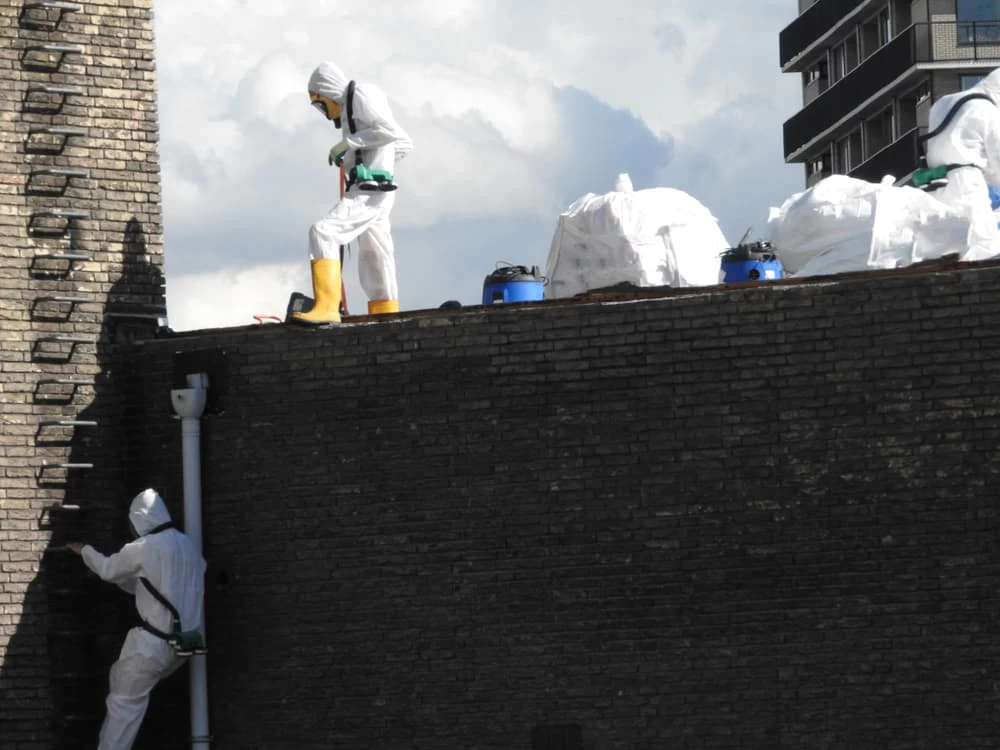
Once the scope is confirmed, we file the required pre-abatement notification with the NYS Department of Labor and coordinate any local permit requirements with the Town of Hamptonburgh. Then the actual removal begins full containment, negative air pressure, wet methods, and proper disposal at a licensed Class II landfill. Every step is dictated by state regulation, not our preference.
After removal, an independent industrial hygienist conducts post-abatement air monitoring. That’s not optional, and it’s not something we skip to save time. You receive a written clearance certificate before the space is reoccupied. That document is what your contractor needs to resume work, what your buyer’s lender needs at closing, and what gives you actual proof not just a verbal assurance that the job is done right.
The most common asbestos-containing materials we find in Burnside and Hamptonburgh homes are 9×9 and 12×12 vinyl asbestos floor tiles, popcorn and acoustic ceiling texture, pipe and boiler insulation in basements and mechanical rooms, roofing felt, and joint compound behind drywall. Older agricultural outbuildings on rural Hamptonburgh properties the kind that sit behind homes throughout this area often contain asbestos cement board siding and roofing that gets overlooked until demolition begins.
Asbestos tile removal and asbestos popcorn ceiling removal are two of the most frequent residential jobs we handle in Burnside and the surrounding area. Both require containment and proper disposal under Code Rule 56, and neither is a DIY project not legally, and not safely. If you’re renovating a kitchen or bathroom in a home built before 1980, there’s a real chance the floor underneath has tiles that need to be tested before they’re disturbed.
Beyond asbestos, we handle mold remediation, lead paint removal, water damage restoration, and fire and smoke damage restoration. For a 1960s home in Burnside where seasonal moisture and freeze-thaw conditions are a real factor that multi-hazard capability matters. You don’t have to coordinate three separate contractors when one team can handle what’s actually there. We also offer 0% APR financing for qualifying projects up to $200,000 and bill insurance directly when the work is tied to a covered event.
Does my Burnside home actually need asbestos testing before I renovate?
If your home was built before 1980, testing before renovation isn’t just a good idea in many cases, it’s required under New York State’s Code Rule 56. The regulation applies to any project that disturbs regulated asbestos-containing materials above certain thresholds, and the penalties for proceeding without proper abatement fall on the property owner, not just the contractor.
In Burnside and the broader Town of Hamptonburgh, the housing stock is heavily concentrated in the 1960s and 1970s exactly when asbestos was used in floor tiles, ceiling texture, pipe insulation, and joint compound. A general contractor pulling up old flooring or opening walls in a home of that era without a prior assessment is taking a real regulatory and health risk. The cost of testing is minor compared to a work stoppage, a failed inspection, or a remediation that has to be redone because it wasn’t done under license.
How do I know if an asbestos contractor in Orange County is actually licensed?
The New York State Department of Labor maintains a public listing of licensed asbestos contractors. You can search by company name at the NYS DOL website and confirm whether a contractor holds an active Asbestos Contractor License under Code Rule 56. This takes about two minutes, and it’s the single most important thing you can do before signing anything.
The reason this matters in Orange County specifically is that the area has a mix of legitimate licensed contractors and operators who are not properly credentialed. Hiring an unlicensed contractor creates direct legal exposure for you as the property owner no valid clearance certificate, no regulatory compliance, and no legal recourse if something goes wrong. Our license is active and verifiable. We list it because we want you to check it.
What does asbestos abatement actually cost for a typical Burnside home?
Cost varies based on what materials are present, where they are, and how much square footage is involved. A straightforward asbestos tile removal in a single room of a Burnside home might run in the range of $1,500 to $3,500. A larger scope pipe insulation throughout a basement, popcorn ceilings across multiple rooms, or combined materials in a full renovation can range from $5,000 to $15,000 or more depending on conditions.
What drives the cost up isn’t the removal itself it’s the containment, the regulatory compliance, the disposal at a licensed Class II landfill, and the post-abatement air monitoring by an independent industrial hygienist. Those steps aren’t optional under New York State law, and any quote that doesn’t include them is either incomplete or not compliant. We offer 0% APR financing for qualifying projects up to $200,000, which makes an unexpected abatement cost manageable even when it lands mid-renovation.
Can I stay in my home during asbestos removal in Burnside, NY?
It depends on the scope and location of the work. For a contained single-room project like asbestos tile removal in a kitchen or bathroom it may be possible to remain in the home if the affected area is properly sealed off and negative air pressure is maintained throughout the job. For larger projects involving multiple rooms, HVAC-adjacent materials, or whole-basement pipe insulation, temporary displacement is typically the safer and more practical choice.
Under New York State’s Code Rule 56, the abatement area must remain sealed and off-limits until post-abatement air monitoring is complete and a clearance certificate is issued. No one re-enters the space before that step is done not you, not the general contractor, not anyone. We walk through this with every Burnside homeowner before work begins so there are no surprises about timing or logistics.
What happens if asbestos is found during a home sale in Burnside?
This is one of the most time-sensitive scenarios we handle. A home inspector flags suspected asbestos-containing materials in a Burnside property. The buyer’s lender or attorney requires remediation before closing. The clock is already running. What you need at that point is a licensed contractor who can move quickly, document everything correctly, and produce a clearance certificate that satisfies the lender’s requirements.
We’ve handled this exact situation for Orange County homeowners on tight closing timelines. The clearance certificate issued after post-abatement air monitoring is the document that moves the transaction forward it’s third-party verified, it’s in writing, and it confirms the work was done under a licensed contractor following Code Rule 56. If you’re mid-transaction and need this resolved fast, that’s exactly the kind of job we’re set up for. We’re available 24 hours a day, seven days a week, including weekends.
Does Green Island Group handle asbestos in older outbuildings and barns in Hamptonburgh?
Yes and this is a detail that gets missed more often than it should. Rural and semi-rural properties throughout Burnside and Hamptonburgh frequently include older outbuildings, garages, and agricultural structures that were built using asbestos cement board siding or roofing. These materials were standard in agricultural construction through the 1970s and are still sitting on properties across this part of Orange County, often undisturbed for decades.
The issue surfaces when someone decides to demolish or renovate one of these structures. Under New York State law, any demolition of a pre-1980 structure requires an asbestos survey before work begins and if regulated materials are present, a licensed contractor must perform the abatement before demolition proceeds. The Town of Hamptonburgh’s building department will flag this during the permit process. We handle asbestos abatement in outbuildings and accessory structures with the same licensed process we apply to residential interiors full containment, proper disposal, and a written clearance certificate when the job is done.