If you’re renovating, selling, or dealing with flood damage in Cahoonzie, asbestos abatement may not be optional and we’re already working in your area.
I needed a professional consultation explanation of procedure for safe removal of Asbestos in my apartment complex. Without having an account yet, I was very impressed with the caring, knowledgeable and generous advice offered by Jessica, and will look forward to doing business in the future. Thank you so much! I feel much more informed about a sometimes scary endeavor. Peace. Nancy Silva Mineola, NY.
Mia Munoz
Used this company to clean up some water flood in my house. They were fast and easy to work with.very professional, Would recommend to anyone!
Nini Valle
Great company, had a flood and they responded quickly and efficiently. Billed my insurance company directly. I highly recommend this company!
joe colapietro, jr
I had pipe freeze in my basement right before a snow storm and they made to within an hour to help start the clean up process. They we by our side throughout the entire process and even helped with the insurance company. They did such a great job with the cleanup, repair, remidiation, I contracted them to perform the repairs and finishes in the basement. They came with enough manpower and material to get the job done. Leo and Jessica were nothing but a pleasure to deal with!!
Cristian Arredondo c
I had some water damage in my home and Green Island was able to take care of my issue quickly and effectively. I am very pleased with the work they did. They responded quickly and were very professional.
Michael M
Outstanding service! From the office to the field crew everyone was friendly, helpful and responsive. I highly recommend Green Island Group.
Your Home Gets Cleared. Your Project Moves Forward.
When asbestos shows up mid-renovation, everything stops. The contractor goes idle, the budget takes a hit, and suddenly you’re trying to figure out who to call, what the law requires, and how long this is going to take. That uncertainty is the hardest part and it’s exactly what a licensed abatement contractor is supposed to remove for you.
Cahoonzie sits in a part of Orange County where the housing stock tells its own story. The bi-levels, bungalows, and ranch homes along Old Cahoonskie Road and the surrounding wooded lots were largely built during the decades when asbestos was standard in floor tiles, pipe insulation, popcorn ceilings, and joint compound. Many of these properties haven’t been professionally assessed in years. When you start pulling things apart, you find out what’s actually there.
The documented flood hazard areas along Route 42 and Peenpack Trail add another layer. When water gets into an older structure, it doesn’t just cause mold it disturbs building materials that were stable for decades. That disturbance is what creates exposure risk. Getting a licensed contractor in quickly, one who can assess both the water damage and the potential asbestos involvement at the same time, is what keeps a manageable situation from becoming a serious one.
We’ve been doing environmental remediation work in New York for over 12 years. Not as a franchise. Not as a national chain that hands your job to a local sub. As an independently owned company that holds every license required to do this work legally in New York State including the NYS Department of Labor Asbestos Contractor License that the law mandates for any abatement project.
That licensing matters more in a rural area like Cahoonzie than most people realize. Plenty of contractors will take the call and show up without it. The problem is that unlicensed asbestos removal in New York can carry fines up to $10,000 per day per violation and the liability doesn’t just fall on the contractor. It can follow the property.
We’ve performed work for NYS Office of General Services, the Dormitory Authority of the State of New York, and NYS Office of Mental Health, among others. Those agencies vet their contractors thoroughly before a single contract is signed. That same standard of accountability comes with every residential project in Cahoonzie.
The first step is assessment. Before anything gets removed, the materials in question need to be tested by a qualified industrial hygienist to confirm whether asbestos-containing materials are actually present and in what concentration. In older Cahoonzie homes, that often means testing floor tiles, pipe insulation, ceiling texture, and any disturbed building material especially if water damage has already been involved.
Once the scope is confirmed, the abatement work is planned and permitted according to New York State’s 12 NYCRR Part 56 regulations. For larger projects, NYS DOL notification is required before removal begins. This isn’t a formality it’s a legal requirement, and it’s part of what separates a properly documented abatement from one that creates problems down the road for lenders, buyers, and building departments. The Town of Deerpark Building Department handles local permitting, and we manage that process so you don’t have to.
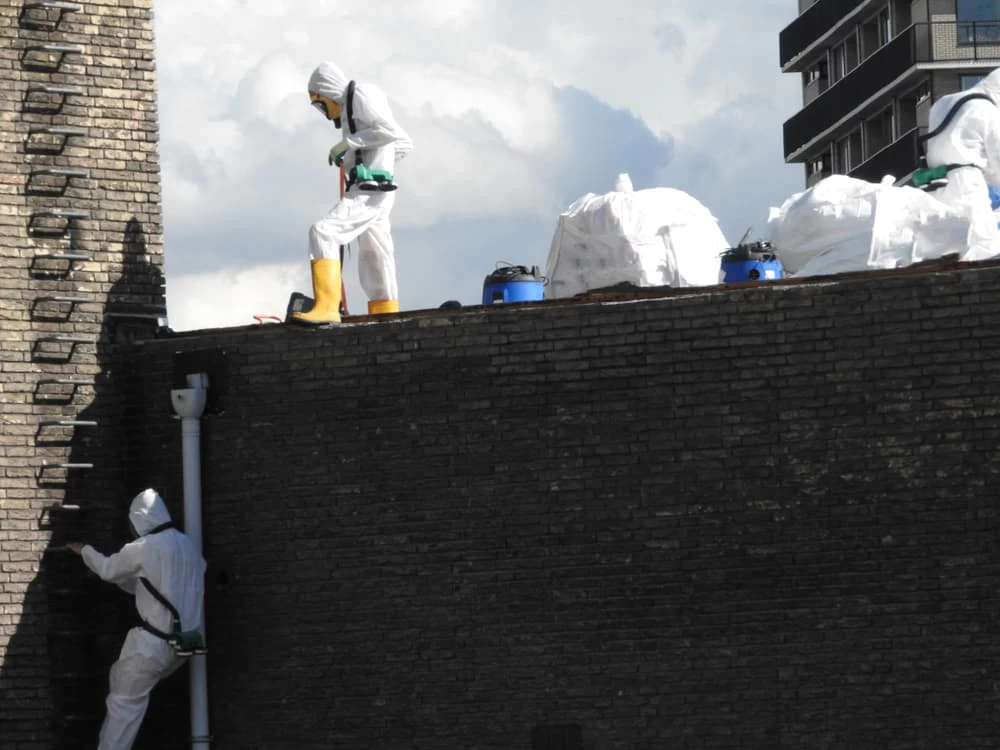
The actual removal is done under containment, with negative air pressure and HEPA filtration to prevent fiber migration. When the work is complete, an independent industrial hygienist conducts post-abatement air monitoring. That testing produces the written clearance certificate the document your real estate attorney, lender, or building department will ask for. You get it in writing before the job is closed.
Asbestos abatement in Cahoonzie isn’t a single-line item. Older properties in western Orange County often present with multiple hazards at once asbestos tile removal in the basement, pipe insulation in the utility room, popcorn ceiling material in bedrooms, and mold in the walls from years of moisture. We handle all of it. Asbestos abatement, mold remediation, lead paint removal, water damage restoration, and demolition are all in-house capabilities. You don’t have to coordinate four separate contractors while your home sits uninhabitable.
Every project includes the full compliance package: pre-abatement testing coordination, licensed removal under proper containment, waste disposal in accordance with NYS DOL and EPA requirements, and post-abatement clearance testing by an independent industrial hygienist. The clearance certificate you receive at the end is the document that satisfies real estate buyers, lenders, and building departments it’s not optional, and it’s included.
For Cahoonzie homeowners dealing with flood-related damage on Route 42 or Peenpack Trail, we also bill insurance companies directly. The Town of Deerpark has recorded nearly $3.75 million in NFIP flood loss claims when a covered event disturbs asbestos-containing materials in your home, you shouldn’t also have to manage the insurance paperwork alone. We also offer 0% APR financing up to $200,000 for qualifying projects, which makes an unexpected abatement cost a manageable monthly payment rather than a budget crisis.
Does asbestos abatement in Cahoonzie require a state license?
Yes, and this is one of the most important things to verify before you hire anyone. New York State law under 12 NYCRR Part 56 requires that any contractor performing asbestos abatement hold a valid NYS Department of Labor Asbestos Contractor License. This applies everywhere in the state including unincorporated hamlets like Cahoonzie in the Town of Deerpark. There are no local exemptions, and no general contractor license substitutes for it.
The reason this matters is that unlicensed asbestos removal in New York can carry penalties of up to $10,000 per day per violation. More practically, work performed by an unlicensed contractor won’t produce the documentation that lenders, real estate buyers, and building departments require. If you’re planning to sell a property on Old Cahoonskie Road or close out a renovation permit with the Town of Deerpark, you need a clearance certificate from a licensed abatement contractor and that certificate only holds up if the work was done legally. Always ask for the contractor’s NYS DOL license number and verify it independently on the state’s website before any work begins.
How do I know if my older Cahoonzie home actually contains asbestos?
The honest answer is that you can’t know for certain without testing. Visual inspection isn’t enough asbestos-containing materials often look identical to non-asbestos versions of the same product. What you can do is assess the risk based on age and material type. Homes built before 1980 in Cahoonzie are the highest-risk category, and the housing stock along Old Cahoonskie Road and throughout the area includes a significant number of mid-century bi-levels, bungalows, and ranch homes that were built during the peak era of asbestos use.
The materials most commonly found to contain asbestos in homes of that era are 9×9 vinyl floor tiles, pipe and duct insulation, textured ceiling coatings like popcorn ceilings, roofing felt, transite siding, and joint compound. If your home has any of these and was built before 1980, professional testing before any renovation work is the right move. A qualified industrial hygienist will collect samples and send them to an accredited lab the results typically come back within a few days and give you a clear picture of what you’re actually dealing with before any contractor touches anything.
Can flood damage in Cahoonzie create an asbestos exposure risk?
It can, and this is a specific concern for properties in Cahoonzie. The Orange County Multi-Hazard Mitigation Plan identifies Route 42 and Peenpack Trail the roads that define this hamlet as documented flood hazard areas. The Town of Deerpark has recorded 182 NFIP flood loss claims totaling nearly $3.75 million, which reflects how frequently water events affect structures in this part of Orange County.
When water infiltrates an older home, it can disturb building materials that have been stable for decades. Pipe insulation, floor tiles, and basement materials that were safely encapsulated become a risk once they’re wet, swelling, or physically damaged. Disturbed asbestos-containing materials release fibers into the air which is when the health risk becomes real. If you’ve had significant water damage in a pre-1980 home in the Cahoonzie area, it’s worth having an assessment done before any remediation or reconstruction work begins. We handle both water damage restoration and asbestos abatement, so you’re not trying to coordinate two separate licensed contractors while your home is already compromised.
What is a post-abatement clearance certificate and do I actually need one?
A clearance certificate is the written documentation produced after post-abatement air monitoring confirms that fiber levels in the treated area meet regulatory standards. In New York State, this testing is performed by an independent industrial hygienist not the abatement contractor and it’s a legal requirement before a remediated space can be reoccupied. It’s not optional, and it’s not something a contractor can skip or self-certify.
For most Cahoonzie residents, the clearance certificate becomes critical in one of two situations: a real estate transaction or a permit closing. If you’re selling a property and the buyer’s inspector flagged potential asbestos, the buyer’s lender will likely require a clearance certificate before the loan closes. If you pulled a renovation permit with the Town of Deerpark Building Department and asbestos was discovered during the work, the permit typically won’t close without documentation that the hazard was properly addressed. We coordinate the independent air monitoring and deliver the written clearance certificate as part of every abatement project it’s included in the scope, not an add-on.
How long does asbestos abatement typically take for a residential property?
The timeline depends on the scope of what’s being removed. A straightforward asbestos tile removal in a single room of a Cahoonzie home can often be completed in one to two days. A more involved project pipe insulation throughout a basement, popcorn ceiling removal across multiple rooms, or a full residential abatement in an older property may take several days to a week or more, depending on square footage and the number of materials involved.
What most homeowners don’t account for is the time on either end. Pre-abatement testing takes a few days for lab results to come back. Post-abatement air monitoring adds another step after the physical work is complete, and you need to wait for clearance results before reoccupying the space. For projects tied to a real estate closing date, this timeline matters if your closing is in three weeks and you’re just now getting testing done, you need a contractor who can move quickly once the scope is confirmed. We operate 24/7 and are already active in the Port Jervis and western Orange County area, which means response time to Cahoonzie is fast.
What does asbestos abatement typically cost for a home in Cahoonzie?
Cost varies based on what materials are present, how much square footage is involved, and whether the project requires multi-hazard work. For a localized removal a section of asbestos floor tiles or a single room of popcorn ceiling you’re typically looking in the range of $1,500 to $5,000. Larger projects involving pipe insulation, multiple rooms, or full residential abatement in an older Cahoonzie property can run $8,000 to $25,000 or more depending on scope.
The honest reality for many Cahoonzie homeowners is that asbestos discovery is unbudgeted. You were in the middle of a renovation, or a home inspector flagged something during a sale, and now there’s a line item you didn’t plan for. We offer 0% APR financing up to $200,000 for qualifying projects through a third-party lender, which makes it possible to move forward without derailing the rest of your project or draining savings. The other factor worth knowing: if your abatement need is tied to a covered insurance event like flood damage along Route 42 we bill your insurance company directly and work through the claims process with you, so the financial burden isn’t sitting entirely on your shoulders while the work gets done.