I needed a professional consultation explanation of procedure for safe removal of Asbestos in my apartment complex. Without having an account yet, I was very impressed with the caring, knowledgeable and generous advice offered by Jessica, and will look forward to doing business in the future. Thank you so much! I feel much more informed about a sometimes scary endeavor. Peace. Nancy Silva Mineola, NY.
Mia Munoz
Used this company to clean up some water flood in my house. They were fast and easy to work with.very professional, Would recommend to anyone!
Nini Valle
Great company, had a flood and they responded quickly and efficiently. Billed my insurance company directly. I highly recommend this company!
joe colapietro, jr
I had pipe freeze in my basement right before a snow storm and they made to within an hour to help start the clean up process. They we by our side throughout the entire process and even helped with the insurance company. They did such a great job with the cleanup, repair, remidiation, I contracted them to perform the repairs and finishes in the basement. They came with enough manpower and material to get the job done. Leo and Jessica were nothing but a pleasure to deal with!!
Cristian Arredondo c
I had some water damage in my home and Green Island was able to take care of my issue quickly and effectively. I am very pleased with the work they did. They responded quickly and were very professional.
Michael M
Outstanding service! From the office to the field crew everyone was friendly, helpful and responsive. I highly recommend Green Island Group.
When asbestos is handled correctly, your renovation moves forward. Your home sale doesn’t stall. Your family isn’t breathing something that was quietly deteriorating behind a wall or under a floor you’ve walked on for twenty years. That’s the real outcome not just a cleaner space, but actual peace of mind backed by documentation that proves the work was done right.
Calverton’s housing stock tells the story pretty clearly. A significant portion of homes here were built during the 1950s, 1960s, and 1970s the exact decades when asbestos was standard in floor tiles, pipe insulation, popcorn ceilings, roofing, and joint compound. With a median resident age pushing 60, a lot of Calverton homeowners have lived in the same house for decades without ever needing to think about what’s inside the walls. Until a contractor stops mid-job and hands you a number to call.
There’s also the manufactured home communities along Fresh Pond Avenue and Sound Avenue to consider. Units built in the late 1970s and early 1980s commonly contain asbestos in ceiling tiles, floor materials, and ductwork and many residents in those communities don’t realize that even minor repairs can disturb those materials. Whether you’re in a ranch home near the Calverton National Cemetery or a manufactured home off Route 25, the standard for safe removal doesn’t change.
We’re a Long Island-based asbestos abatement company with deep familiarity with Suffolk County’s regulatory environment, building departments, and the types of homes that actually exist out here. We’re not a national franchise applying a generic protocol to a ZIP code we’ve never worked in. We know eastern Long Island, and we know how to navigate it.
Calverton sits across two town jurisdictions most of the hamlet falls under the Town of Riverhead, while properties south of the Peconic River fall under the Town of Brookhaven. That’s two different building departments, two different permitting processes, and a detail that catches a lot of homeowners off guard. We know which department governs your parcel before we ever show up, and we handle that coordination so you don’t have to.
Every project we take on is performed by individually certified abatement workers under New York State Industrial Code Rule 56 not subcontractors brought in without credentials. Our licensing is current, verifiable through the NY Department of Labor, and required by law. That’s not a selling point. That’s the baseline and we hold it on every job.
No Surprises Here's Exactly What the Process Looks Like
It starts with an inspection and sampling. We send a certified inspector to your property to identify suspect materials and collect samples for laboratory analysis. You’ll have confirmed results before any abatement work begins not assumptions, not guesses. For homes in Calverton built before 1980, this step commonly turns up findings in floor tiles, popcorn ceilings, pipe insulation, or roofing materials, especially in homes that haven’t been significantly renovated.
Once the lab results are back, we put together a written abatement plan that outlines exactly what’s being removed, how the work area will be contained, and what the timeline looks like. Negative pressure containment is set up to prevent fibers from spreading to other areas of your home during removal. If your property falls under Riverhead Town jurisdiction, we coordinate any required permitting with their building department directly. For parcels in the Brookhaven portion of Calverton, we handle that side of it too.
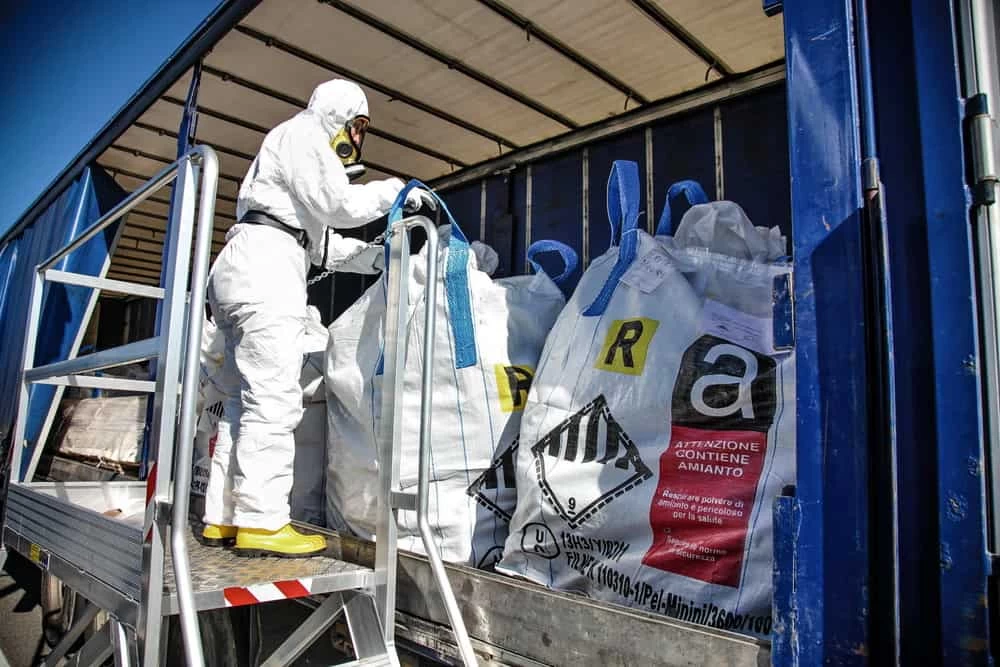
After removal, all asbestos-containing material is transported to a licensed disposal facility using approved protocols. Then comes final clearance air testing independent confirmation that the space is safe for reoccupancy. You receive a complete documentation package at the end: lab reports, disposal manifests, air monitoring records, and clearance results. If you’re preparing to sell your home or refinance, that paperwork is worth having.
What's Actually Included in a Proper Abatement Job
Asbestos abatement isn’t just pulling material out of a wall. A compliant, complete project covers the full scope inspection, sampling, lab analysis, a written abatement plan, containment setup, certified removal, air monitoring throughout the job, licensed disposal, and final clearance testing. Every one of those steps matters, and skipping any of them creates gaps in compliance and gaps in your documentation.
Two of the most common services we perform for Calverton homeowners are asbestos tile removal and asbestos popcorn ceiling removal. The 9-by-9-inch vinyl asbestos floor tiles that were standard in pre-1980 construction are still sitting under newer flooring in kitchens, bathrooms, and basements all over this area. Popcorn ceiling texture applied before 1978 frequently contains asbestos as well and a lot of homeowners only find out when they’re ready to update their interiors and a contractor flags it. Both require full containment, certified removal, and proper disposal under ICR 56. Neither is a DIY situation.
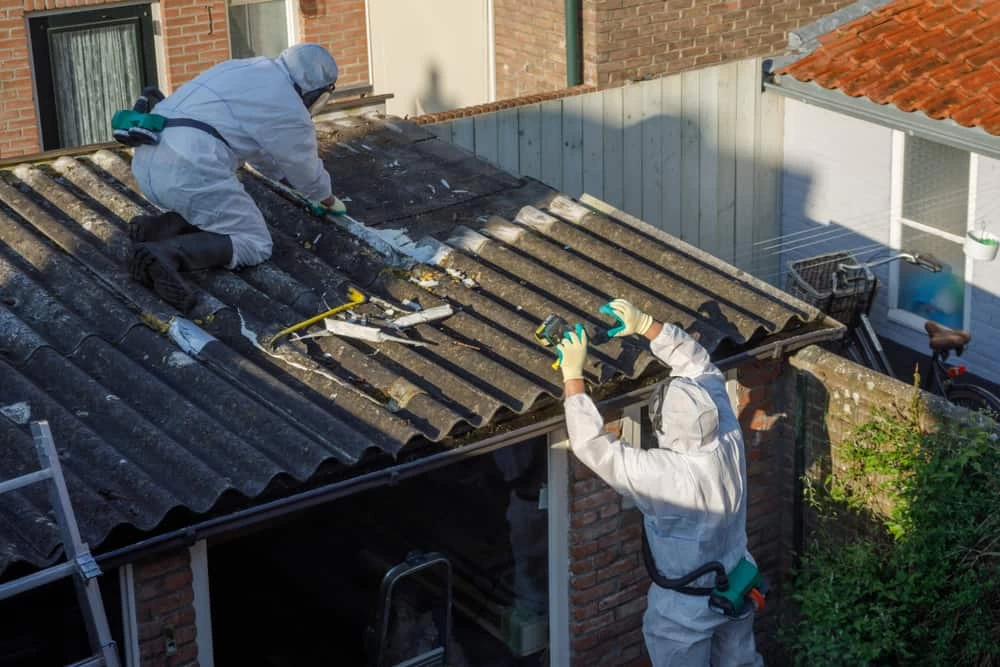
For properties near the former NWIRP site or older agricultural structures on the western edge of Calverton, asbestos cement roofing and insulation materials are also common findings. Corrugated asbestos cement sheets were widely used in mid-century agricultural and industrial construction, and any demolition or renovation touching those structures requires a proper survey before work begins. Whatever the material or the structure, the process is the same: confirm it, contain it, remove it right, and document everything.
Does my Calverton home actually need asbestos testing before I renovate?
If your home was built before 1980, testing before any renovation is the right call and in many cases, it’s legally required. Under New York State Industrial Code Rule 56, renovation and demolition projects that disturb suspect materials above certain thresholds must be handled by a licensed abatement contractor. The rule isn’t optional, and the penalty for ignoring it falls on the property owner as much as the contractor.
In practical terms, a lot of Calverton homeowners discover this mid-project. A contractor opens a wall, pulls up old flooring, or scrapes a ceiling and stops work when something looks suspicious. At that point, you’re already behind schedule. Getting a professional inspection done before renovation starts is almost always faster and less expensive than dealing with a work stoppage after the fact. For homes built in the 1950s through 1970s which represent a significant portion of Calverton’s housing stock the likelihood of finding at least one asbestos-containing material is high enough that testing should be the default, not the exception.
How much does asbestos abatement typically cost for a home in Calverton, NY?
Cost varies based on what materials are present, how much of it there is, and where it’s located in your home. A straightforward asbestos tile removal in a single room is a very different scope than a whole-home abatement involving pipe insulation, popcorn ceilings, and roofing materials. Generally speaking, smaller contained projects start in the range of a few hundred dollars for testing and a few thousand for removal, while larger whole-home or multi-material projects can run significantly higher.
What affects cost most in Calverton specifically is the age and type of the home. Older homes with original flooring, textured ceilings, and uninsulated pipes tend to have more widespread material than homes that have been partially renovated over the years. Manufactured homes along Fresh Pond Avenue and Sound Avenue have their own set of common materials floor tiles, ceiling panels, ductwork insulation that may require a different approach than a traditional single-family home. The most accurate way to understand your cost is to get a professional inspection and written scope first. That way you’re comparing real quotes, not estimates based on square footage alone.
What materials in older Long Island homes most commonly contain asbestos?
The most common findings in pre-1980 homes on Long Island are 9-by-9-inch vinyl floor tiles, the adhesive backing those tiles were set in, textured popcorn ceiling finish, pipe and duct insulation, roofing shingles, exterior transite siding panels, and joint compound used around drywall seams. These materials were used routinely during that era because asbestos was cheap, effective as an insulator, and fire-resistant. Nobody was hiding it it was just how things were built.
In Calverton, the combination of older housing stock and the area’s agricultural heritage adds a few less common materials to that list. Corrugated asbestos cement roofing was widely used on barns, sheds, and outbuildings throughout eastern Long Island, and plenty of Calverton properties still have those structures standing. If you’re renovating or demolishing any outbuilding on your property, it’s worth having it surveyed before any work starts. The same applies to the main house if you’re not sure what era your home was built in, a professional inspection will tell you what’s there and what’s not.
Can I just encapsulate the asbestos instead of removing it is that allowed in NY?
Encapsulation is a legitimate option in some situations, but it’s not always the right one and it’s not a decision you should make without professional guidance. Under New York State Industrial Code Rule 56, encapsulation is permitted in certain scenarios where the material is intact and non-friable, meaning it hasn’t broken down and isn’t releasing fibers. The idea is that if the material is stable and won’t be disturbed, sealing it in place can be a safe and cost-effective alternative to full removal.
The problem is that encapsulation only works if the material stays undisturbed. If you’re renovating, selling, or planning any future work that might touch the area, encapsulation creates a complication down the line the next contractor or buyer will need to know it’s there, and it will need to be disclosed. For Calverton homeowners who are preparing to sell or undertaking significant renovations, full removal with documentation is almost always the cleaner path. It eliminates the liability, satisfies buyer inspections, and gives you a clear record that the material is gone not just covered.
How long does asbestos abatement take, and can I stay in my home during the work?
Timeline depends on the scope of the project. A single-room tile removal might be completed in a day or two. A larger project involving multiple materials across several areas of your home could take a week or more. We provide a realistic timeline as part of the written abatement plan before work begins not a vague estimate, but an actual schedule tied to the specific scope of your job.
Whether you can stay in your home during abatement depends on what’s being removed and where. For contained, single-area projects, it’s sometimes possible to remain in unaffected parts of the home. For larger projects, or work in central areas like hallways, HVAC systems, or main living spaces, temporary relocation is often the safer and more practical option. We walk you through this clearly before the job starts. In Calverton, where many homeowners are retired or working from home, disruption to daily life is a real concern and we address it upfront.
Is Green Island Group familiar with Riverhead Town permit requirements for asbestos work in Calverton?
Yes and this matters more in Calverton than most people realize. Because Calverton straddles two town jurisdictions, the permitting process depends entirely on where your property sits. Homes in the majority of Calverton fall under the Town of Riverhead Building Department. Properties south of the Peconic River, in the smaller portion of Calverton that extends into Brookhaven Town, fall under a completely different department with different processes and contacts.
Getting this wrong calling the wrong building department, pulling a permit under the wrong jurisdiction, or missing a required notification can delay your project or create compliance issues after the fact. We handle this coordination as part of the abatement process. We identify which town governs your parcel, manage the required notifications to the NY DOL Asbestos Control Bureau, and make sure the project is compliant from start to finish. For a community like Calverton where this dual-jurisdiction situation is genuinely unusual, having a contractor who already knows the landscape saves you from discovering the hard way that the rules aren’t the same on both sides of the river.