Carle Place's Levitt-Era Homes Deserve More Than a Guess
If your home was built before 1980 in Carle Place, there’s a real chance it contains asbestos — and a renovation, a sale, or even a water damage event can put that risk in motion fast. We handle licensed asbestos abatement in Carle Place, NY so you know exactly what you’re dealing with before anything gets disturbed.
I needed a professional consultation explanation of procedure for safe removal of Asbestos in my apartment complex. Without having an account yet, I was very impressed with the caring, knowledgeable and generous advice offered by Jessica, and will look forward to doing business in the future. Thank you so much! I feel much more informed about a sometimes scary endeavor. Peace. Nancy Silva Mineola, NY.
Mia Munoz
Used this company to clean up some water flood in my house. They were fast and easy to work with.very professional, Would recommend to anyone!
Nini Valle
Great company, had a flood and they responded quickly and efficiently. Billed my insurance company directly. I highly recommend this company!
joe colapietro, jr
I had pipe freeze in my basement right before a snow storm and they made to within an hour to help start the clean up process. They we by our side throughout the entire process and even helped with the insurance company. They did such a great job with the cleanup, repair, remidiation, I contracted them to perform the repairs and finishes in the basement. They came with enough manpower and material to get the job done. Leo and Jessica were nothing but a pleasure to deal with!!
Cristian Arredondo c
I had some water damage in my home and Green Island was able to take care of my issue quickly and effectively. I am very pleased with the work they did. They responded quickly and were very professional.
Michael M
Outstanding service! From the office to the field crew everyone was friendly, helpful and responsive. I highly recommend Green Island Group.
The moment asbestos is properly removed and cleared, your renovation can move forward without legal exposure, your home can go to market without a cloud over the deal, and your family isn’t breathing air you have to wonder about. In Carle Place, where homes regularly sell north of $700,000, an undocumented asbestos issue can stall a closing, complicate a permit pull, or give a buyer’s attorney exactly the leverage they’re looking for.
Carle Place is one of the few Nassau County communities where the housing stock has a documented origin story — William Levitt built 600 prefabricated homes here in 1946, before Levittown even existed. Those homes, and the Cape Cods, ranches, and split-levels that followed through the 1960s and 70s, were built with the materials of their era. Floor tiles, pipe insulation, joint compound, textured ceilings — the list is long, and most of it was standard practice at the time.
When you work with a licensed contractor who understands that history, you’re not starting from scratch every time someone asks a question. You get answers grounded in what’s actually in these homes, what needs to be tested, and what has to happen before your contractor breaks ground or your buyer signs.
We are a Nassau County-based asbestos abatement and environmental remediation company, fully licensed by the New York State Department of Labor under Industrial Code Rule 56. Every supervisor and handler on our team holds the certifications required by New York State — not optional credentials, but legal requirements for any regulated asbestos work in Carle Place or anywhere else in Nassau County.
We’ve worked in the mid-century housing stock that defines communities like Carle Place — the compact Levitt-era Cape Cods near Cherry Lane, the ranch homes along Rushmore Avenue, the split-levels that went up through the late 1960s. We know where asbestos tends to hide in these homes because we’ve seen it firsthand, not just in training materials.
When you call us, you’re not getting a national call center that dispatches whoever’s available. You’re getting a local team that knows Carle Place, understands the permit requirements at the Nassau County level, and can move quickly when your timeline depends on it.
It starts with an inspection. Before anything is removed, a certified inspector surveys the areas of concern — whether that’s a basement boiler room, a kitchen floor with original 9×9 tiles, a popcorn ceiling you’ve been meaning to address, or ductwork that hasn’t been touched since the house was built. Samples are collected and sent to an accredited laboratory for analysis. You get a clear report of what’s there, what isn’t, and what needs to happen next.
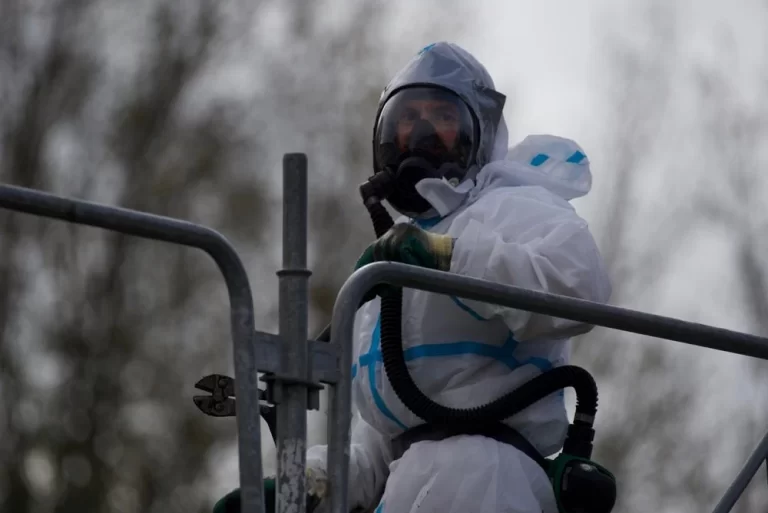
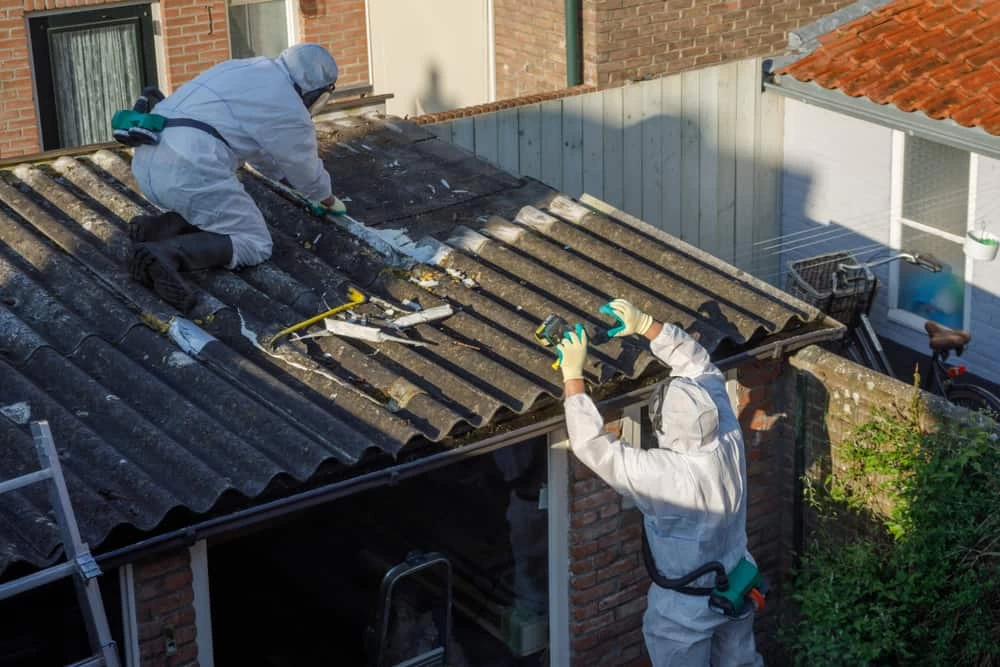
If abatement is required, we file the necessary project notification with the New York State Department of Labor before any work begins — that’s a legal requirement under ICR 56, and it’s non-negotiable. Work is performed under full containment protocols, with air monitoring throughout the project. Nothing gets opened up and left exposed. Waste is disposed of according to NYS DEC regulations for asbestos-containing materials, documented and manifested properly.
When the work is done, clearance air testing confirms the area is safe before containment comes down. You receive a complete documentation package — inspection report, project notification, air monitoring logs, waste disposal records, and clearance certificate. That’s what your building department, your lender, your attorney, or your insurance carrier needs to see, and we provide it as standard on every job.
Asbestos Tile and Popcorn Ceiling Removal, Carle Place
The Specific Materials Found in Homes Like Yours
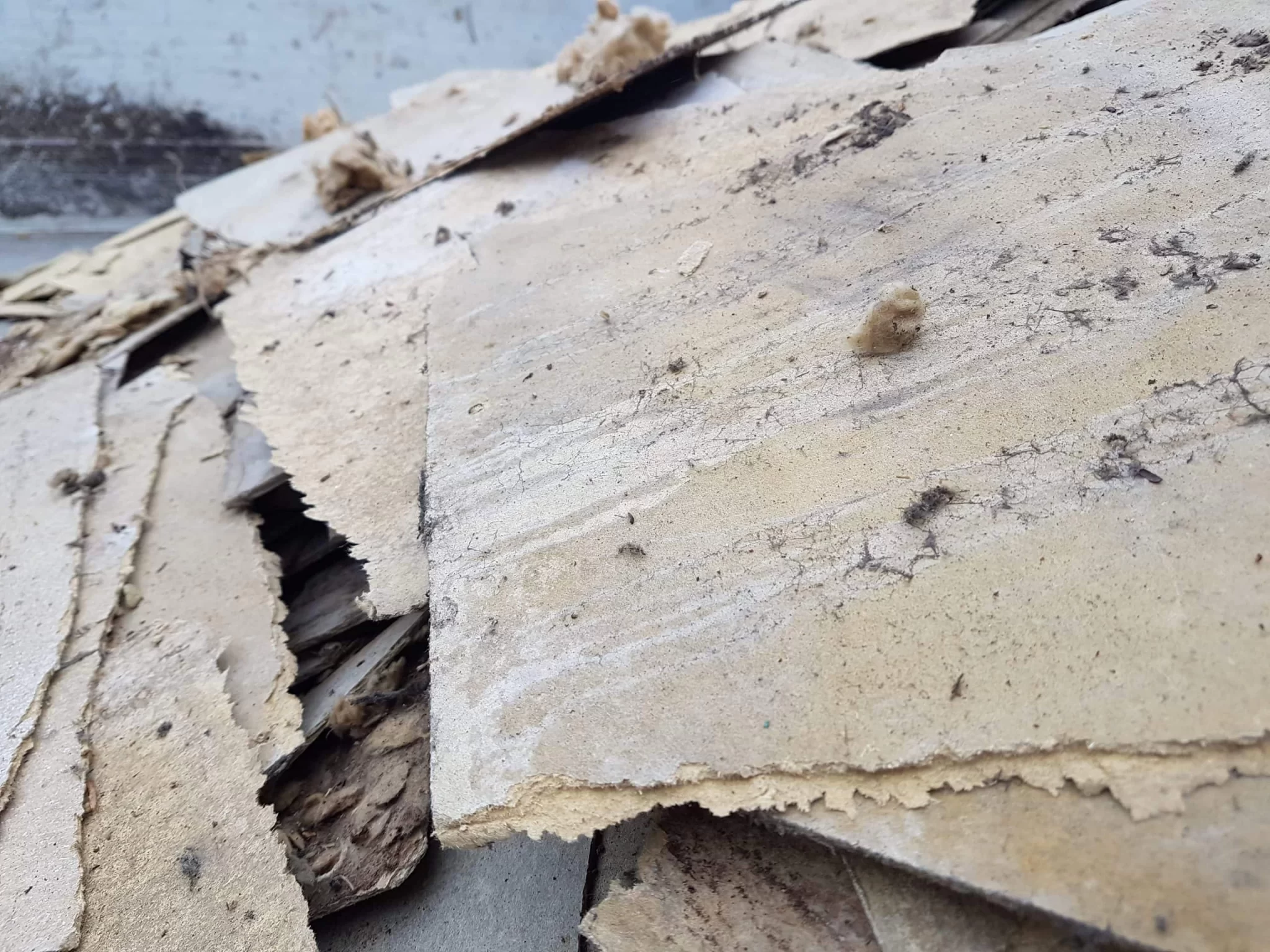
In Carle Place’s older housing stock, the most common asbestos-containing materials we encounter are floor tiles and the black mastic adhesive beneath them, pipe and boiler insulation in basement mechanical rooms, spray-applied popcorn ceiling texture applied before 1978, and joint compounds used in original wall and ceiling finishes. The tiles and mastic are particularly common in Levitt-era homes — the 9×9 vinyl tiles were almost universally manufactured with asbestos during that period, and the adhesive that bonded them to the subfloor frequently tested positive even when the tiles themselves didn’t.
Asbestos popcorn ceiling removal is another frequent request in Carle Place, particularly from homeowners updating interiors before a sale or during a larger renovation. The mistake people make is hiring a painter or general contractor to scrape it off without testing first. If the material contains asbestos, scraping it releases fibers into the air — and at that point, you have a much larger problem than a dated ceiling. We test first, and if it’s positive, we remove it under proper containment before any other trades come in.
Every service we provide in Carle Place is backed by full NYS DOL compliance — licensed contractor, certified crew, documented clearance. The Carle Place Union Free School District has conducted multiple phases of asbestos abatement at its own Rushmore Avenue School campus as part of interior upgrade projects. The same standard that applies to public institutions applies to your home, and we hold ourselves to it.
Does my Carle Place home built in the 1950s likely contain asbestos?
If your home was built before 1980 in Carle Place, the honest answer is: probably yes, in at least one location. The 600 homes William Levitt built here starting in 1946 — and the thousands of Cape Cods, ranches, and split-levels that followed through the 1960s and early 70s — were constructed during the era when asbestos was a standard building material. Floor tiles, pipe insulation, boiler block insulation, textured ceiling finishes, joint compounds, roofing materials — all of these were commonly manufactured with asbestos during that period.
That doesn’t mean every material in your home is a problem. Asbestos that’s intact and undisturbed generally doesn’t pose an immediate risk. The issue arises when those materials get cut, scraped, sanded, or demolished — which is exactly what happens during a kitchen remodel, a bathroom gut, a basement renovation, or a roof replacement. The right move before any of that starts is a professional inspection, not a guess.
How much does asbestos abatement typically cost for a Nassau County home?
Cost depends heavily on what materials are present, how much of it needs to be removed, and where it’s located in the home. A single contained area — like a boiler room with pipe insulation, or a section of floor tile — will cost significantly less than a whole-home abatement project involving multiple material types across several rooms. For most residential jobs in Nassau County, you’re looking at a range that starts around a few hundred dollars for a limited scope and can reach several thousand for more extensive work.
What’s worth keeping in mind in a market like Carle Place, where median home values sit above $744,000, is that the cost of proper abatement is a small fraction of what’s at stake in a real estate transaction or a major renovation. Cutting corners on this — or hiring an unlicensed contractor who doesn’t file the required NYS DOL project notification — can create legal exposure, permit complications, and remediation costs that dwarf what the original job would have run. Get a clear written estimate, understand exactly what’s included, and make sure you’re working with a licensed contractor.
Do I need a permit or government notification before asbestos removal in Carle Place?
Yes — and this is one of the most important things to understand before any work begins. Under New York State Industrial Code Rule 56, a project notification must be filed with the NYS Department of Labor’s Asbestos Control Bureau before any regulated asbestos abatement work starts. This isn’t optional, and it’s not something a homeowner can handle on their own. It has to be filed by a licensed asbestos abatement contractor.
Beyond the state notification, Nassau County building permits for renovation and demolition work increasingly require documentation that asbestos has been assessed — and abated where necessary — before construction proceeds. If you’re pulling a permit for a kitchen remodel, a bathroom renovation, or any project that involves disturbing pre-1980 construction materials in Carle Place, your building department may ask for asbestos survey documentation as part of the process. Working with a licensed contractor who handles all of this upfront keeps your project on track and keeps you out of a compliance problem you didn’t see coming.
What happens if a contractor disturbs asbestos during a renovation without knowing it?
This is more common than most people realize, especially in Carle Place’s older housing stock where multiple generations of flooring, drywall, and insulation can be layered on top of each other. A general contractor who doesn’t know what’s under the original floor or inside a wall cavity may disturb asbestos-containing materials without any awareness that it’s happening — and once those fibers are airborne, you have a very different situation on your hands.
From a legal standpoint, disturbing asbestos without proper notification and containment is a violation of NYS ICR 56, and the liability doesn’t fall only on the contractor. As a homeowner, you can face regulatory scrutiny, and your renovation project will be stopped until the situation is properly remediated — which almost always costs more than doing it right the first time. The practical answer is to schedule a pre-renovation inspection before your contractor starts, not after something goes wrong. It’s a straightforward step that protects your project, your home, and the people doing the work.
How long does the asbestos abatement process take for a typical Carle Place home?
Timeline varies based on scope, but for a typical residential project in Carle Place — say, floor tile removal in a kitchen or living area, or pipe insulation in a basement boiler room — the abatement work itself often takes one to three days. What adds time to the overall process is the inspection and lab analysis phase before work begins, and the clearance air testing phase after work is completed. Lab turnaround for sample analysis is typically a few business days, and clearance testing results generally come back within 24 to 48 hours.
The NYS DOL project notification requirement also factors into scheduling — there are minimum notice periods before certain types of regulated abatement can begin, so the earlier you start the process, the better. If you’re working against a renovation timeline or a real estate closing date in Carle Place, the right move is to reach out as early as possible so the inspection, notification, and scheduling can happen in parallel with your other project planning rather than creating a bottleneck at the end.
Can I stay in my home during asbestos abatement in Carle Place?
It depends on the scope and location of the work. For contained, limited projects — like abatement in a basement boiler room or a single room with proper isolation — it’s sometimes possible to remain in other parts of the home. For larger projects involving multiple rooms, significant demolition, or materials in central living areas, temporary relocation during the active abatement phase is the safer and more practical choice.
In Carle Place’s compact residential homes — many of which are the original Levitt-era Cape Cods and ranches with modest square footage — there’s often less physical separation between work areas and living spaces than you’d find in a larger home. That makes proper containment setup and air monitoring even more important, and it’s part of why the decision about occupancy during abatement should be made on a case-by-case basis after the scope of work is clearly defined. We’ll walk you through what’s realistic for your specific home and project before any work begins, so there are no surprises about what the process looks like day to day.