Carmel Hamlet's Older Homes Deserve More Than a Guess
If your home was built in the 1960s or 70s the ranch, the raised ranch, the split-level off Gleneida Avenue asbestos abatement isn’t a maybe. It’s the first call you make before anything else gets touched.
I needed a professional consultation explanation of procedure for safe removal of Asbestos in my apartment complex. Without having an account yet, I was very impressed with the caring, knowledgeable and generous advice offered by Jessica, and will look forward to doing business in the future. Thank you so much! I feel much more informed about a sometimes scary endeavor. Peace. Nancy Silva Mineola, NY.
Mia Munoz
Used this company to clean up some water flood in my house. They were fast and easy to work with.very professional, Would recommend to anyone!
Nini Valle
Great company, had a flood and they responded quickly and efficiently. Billed my insurance company directly. I highly recommend this company!
joe colapietro, jr
I had pipe freeze in my basement right before a snow storm and they made to within an hour to help start the clean up process. They we by our side throughout the entire process and even helped with the insurance company. They did such a great job with the cleanup, repair, remidiation, I contracted them to perform the repairs and finishes in the basement. They came with enough manpower and material to get the job done. Leo and Jessica were nothing but a pleasure to deal with!!
Cristian Arredondo c
I had some water damage in my home and Green Island was able to take care of my issue quickly and effectively. I am very pleased with the work they did. They responded quickly and were very professional.
Michael M
Outstanding service! From the office to the field crew everyone was friendly, helpful and responsive. I highly recommend Green Island Group.
Your renovation moves forward. Your contractor shows up on schedule. Your family isn’t breathing something they shouldn’t be. That’s what proper asbestos removal actually looks like not just a crew showing up with respirators, but a licensed process with documentation you can hold in your hand when the job is done.
Carmel Hamlet has a lot of homes that were built right in the middle of the asbestos era. The Taconic State Parkway opened up this area, and development took off through the 60s and 70s. Those ranch homes and raised ranches that define the neighborhoods here they were built when vinyl floor tiles, pipe insulation, popcorn ceilings, and joint compound all routinely contained asbestos. If you haven’t had your home tested, there’s a real chance something is still in there, undisturbed, waiting for a renovation to wake it up.
And because Lake Gleneida right here in Carmel Hamlet feeds into the New York City water supply, this isn’t a community where cutting corners on hazardous material disposal goes unnoticed. Proper containment, licensed waste transport, and EPA-compliant removal aren’t optional extras here. They’re what responsible abatement looks like in a watershed community. We handle all of it, start to finish, so you’re not piecing together compliance on your own.
We’ve been doing this for over 12 years. Not general contracting with a side of hazmat specifically licensed asbestos abatement, mold remediation, lead removal, and water damage restoration. The NYS Department of Labor Asbestos License we carry isn’t a marketing badge. It’s the credential required by New York State law before any abatement work can legally happen in Putnam County.
We’ve worked for the NYS Office of General Services, the NYS Office of Mental Health, and DASNY agencies that don’t hire contractors who cut corners. If you work in or around the Putnam County government complex on Gleneida Avenue in Carmel Hamlet, you already know what it takes to pass state procurement vetting. We’ve passed it, repeatedly.
We’re also NYS and NYC M/WBE Certified, fully insured for both liability and worker’s compensation, and carry a 4.7-star rating across verified reviews. When customers use the word “scary” to describe this process and then say we made them feel informed that’s the kind of track record that matters more than any brochure.
No Surprises Here's Exactly How the Work Gets Done
It starts with an inspection. Before anything is removed, a licensed inspector assesses the property and identifies any asbestos-containing materials the floor tiles, the pipe wrap around the boiler, the popcorn texture on the ceilings, the joint compound behind the drywall. In Carmel Hamlet, where most of the older housing stock predates 1974, New York State Industrial Code Rule 56 actually requires this survey before any renovation or demolition work begins. That’s not optional it’s the law.
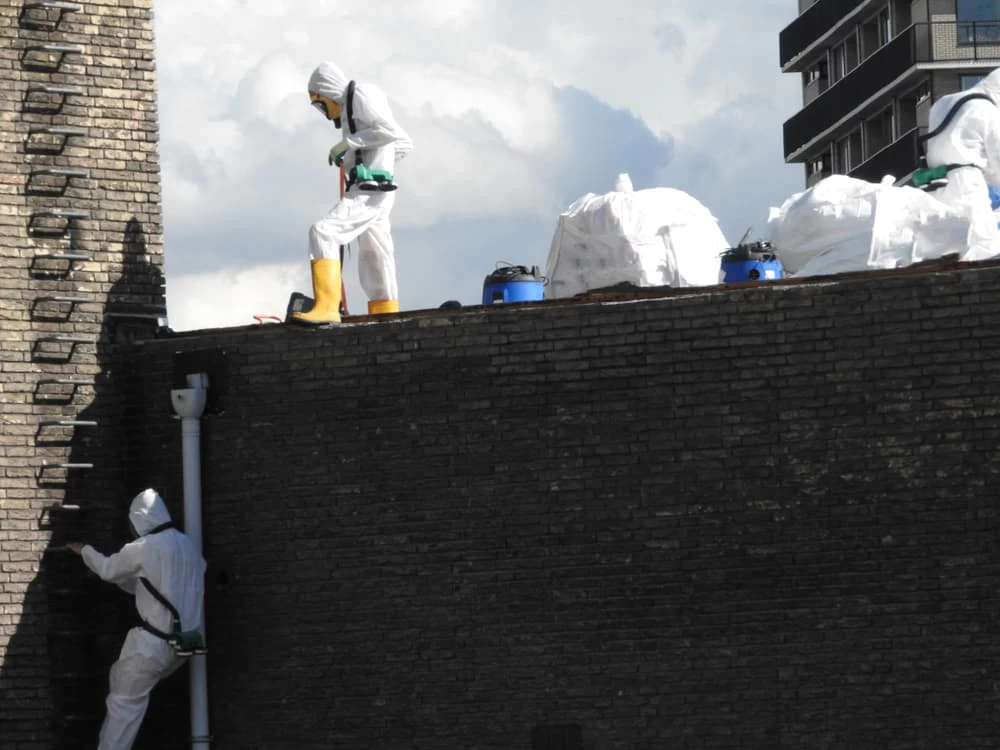
Once the scope is confirmed, we handle the permit application. That means filing with the appropriate NYS DOL regulatory office Putnam County falls under the Albany District and coordinating the compliance timeline so your renovation contractor isn’t sitting idle waiting on paperwork. The abatement itself uses wet removal methods, full containment, and negative air pressure to prevent fiber migration. All waste is sealed, labeled, and transported by a licensed hauler to an approved disposal facility under 6 NYCRR Part 360.
After the work is complete, an independent industrial hygienist performs air clearance testing. This is the step most people don’t know to ask for and it’s the one that matters most. You get a written clearance report confirming that airborne fiber levels meet OSHA and NIOSH standards. That document is what your real estate attorney, your renovation contractor, and any future buyer’s inspector will ask to see. We don’t hand you a verbal assurance and walk out the door. You get the paperwork.
The most common asbestos calls we get from Carmel Hamlet homeowners involve two things: floor tiles and popcorn ceilings. The 9×9 and 12×12 vinyl tiles in older kitchens, bathrooms, and basements along with the black mastic adhesive underneath were standard in 1960s and 70s construction. So was acoustic ceiling texture in virtually every room. Asbestos tile removal and asbestos popcorn ceiling removal are two of the most frequently requested services in homes of this vintage, and both require the same licensed process: containment, wet removal, air clearance, and documentation.
Beyond floors and ceilings, we also handle pipe and duct insulation around boilers and HVAC systems, attic insulation including vermiculite, transite siding on ranch and raised ranch exteriors, and joint compound throughout interior walls. If your home was built before 1980, there’s a reasonable chance more than one of these materials is present and they don’t always show up where you expect.
Because we also hold a NYS DOL Mold License and USEPA Lead/RRP Certification, we can assess and address co-occurring hazards in the same visit. Older Putnam County homes frequently have asbestos, lead paint, and basement mold in the same structure. Rather than coordinating three separate licensed contractors with three separate schedules, one call covers the full picture and one set of compliance documents covers everything your closing attorney or renovation contractor needs.
Does my Carmel Hamlet home actually need an asbestos inspection before renovating?
If your home was built before 1974, New York State Industrial Code Rule 56 requires a professional asbestos survey before any renovation, remodeling, or demolition work begins. That’s not a recommendation it’s a legal requirement. Since the dominant housing stock in Carmel Hamlet is 1960s and 70s ranch and raised ranch construction, the overwhelming majority of older homes here fall directly under that rule.
Even if your home was built between 1974 and 1980, asbestos-containing materials were still widely used in residential construction during that period. Vinyl floor tiles, pipe insulation, popcorn ceiling texture, and joint compound were all common through the late 70s. The safest approach and the one that protects you legally and financially is to have a licensed inspector assess the property before your contractor touches anything. Discovering asbestos mid-renovation is significantly more disruptive and more expensive than finding it beforehand.
How much does asbestos removal typically cost for a home in Putnam County?
The honest answer is that it depends on what’s there and how much of it needs to go. Nationally, asbestos removal costs range from around $462 on the low end for a small, contained area to $6,000 or more for a whole-home project with multiple material types. The national average sits around $2,239 for a mid-scope residential job.
In Putnam County, where home values average close to $500,000 and property taxes run over $11,000 a year, most homeowners aren’t looking to cut costs on this they’re looking to protect their investment and get the job done correctly the first time. The cost of skipping proper abatement a failed home inspection, a delayed closing, or a liability issue down the road almost always exceeds the cost of doing it right upfront. We provide a clear scope and cost estimate after the initial inspection, so there are no surprises once the work begins.
What materials in a 1960s or 70s ranch home are most likely to contain asbestos?
In the ranch homes and raised ranches that make up most of Carmel Hamlet’s older neighborhoods, the most common asbestos-containing materials are vinyl floor tiles especially the 9×9 inch tiles found in kitchens, bathrooms, and basements along with the black adhesive mastic underneath them. Popcorn ceiling texture is another extremely common find, applied in virtually every room of homes built before 1978.
Beyond those two, pipe and duct insulation around boilers and hot water heaters, attic insulation including vermiculite, joint compound used throughout interior walls, and transite panels on the exterior of some ranch homes are all materials that routinely tested positive for asbestos during this era. The basement is often where the most concentrated risk lives exposed mechanical systems, original floor tile, and decades of undisturbed insulation. If you’re planning any work in the basement of an older Carmel Hamlet home, that’s the first place to have assessed.
Is asbestos removal required before selling a house in Carmel Hamlet, NY?
New York State does not require sellers to remove asbestos before listing a home, but it does require disclosure. If asbestos-containing materials are known to be present, that information must be disclosed to buyers. Where this gets complicated and where most Carmel Hamlet sellers run into problems is during the buyer’s inspection. A home inspector who identifies suspected ACMs will flag it, buyers will ask for remediation as a condition of closing, and the timeline pressure becomes significant.
Getting ahead of it before you list is almost always the better move, especially in a market where homes are selling at or near $500,000. Buyers at that price point have attorneys who are thorough. Addressing asbestos before listing, with a full air clearance report and compliance documentation in hand, removes a major contingency from the table and keeps the transaction on track. We provide exactly that documentation package the kind your closing attorney will ask for by name.
How long does the asbestos abatement process take from start to finish?
For a typical residential project in Carmel Hamlet one or two material types, a contained area like a basement or kitchen the abatement work itself usually takes one to three days. But the full timeline from initial inspection to final air clearance documentation is longer, and that’s the number that matters most if you have a renovation contractor scheduled or a closing date approaching.
Permit filing with the NYS DOL Albany District Office, scheduling the independent air clearance test, and receiving the written clearance report all add time to the process. We manage the permit application and coordinate the clearance testing as part of the service, which removes the biggest source of delays. If you’re working toward a specific date a contractor start date, a listing date, a closing the earlier you call, the more runway there is to keep everything on schedule. Spring is the busiest season for abatement work in Putnam County, when renovation projects kick off after winter. Don’t wait until your contractor is standing in your driveway to start the process.
Does your company handle asbestos removal and mold or lead in the same visit?
Yes and for older homes in Carmel Hamlet, that multi-hazard capability matters more than most homeowners realize upfront. Homes built in the 1960s and 70s frequently have asbestos, lead paint, and mold present in the same structure. The basement alone can have asbestos pipe insulation, lead paint on the walls, and mold from decades of moisture. Treating each hazard separately means three contractors, three schedules, three sets of paperwork, and three opportunities for something to fall through the cracks.
We hold the NYS DOL Asbestos License, USEPA Lead/RRP Certification, NYS DOL Mold License, and IICRC Water and Fire Damage Certification. That means one licensed team can assess and address all of it under a single scope of work. For homeowners preparing for a renovation or a sale where the goal is a clean bill of health across every environmental hazard that’s a meaningful difference. One call, one process, one complete set of compliance documents when it’s done.