Gold Coast Estates Deserve More Than a Generic Abatement Crew
Centre Island’s older estate homes carry a lot of history — and in many cases, that includes asbestos. We provide certified asbestos abatement for Centre Island homeowners who need it done right, documented properly, and handled without disrupting a renovation that’s already in motion.
I needed a professional consultation explanation of procedure for safe removal of Asbestos in my apartment complex. Without having an account yet, I was very impressed with the caring, knowledgeable and generous advice offered by Jessica, and will look forward to doing business in the future. Thank you so much! I feel much more informed about a sometimes scary endeavor. Peace. Nancy Silva Mineola, NY.
Mia Munoz
Used this company to clean up some water flood in my house. They were fast and easy to work with.very professional, Would recommend to anyone!
Nini Valle
Great company, had a flood and they responded quickly and efficiently. Billed my insurance company directly. I highly recommend this company!
joe colapietro, jr
I had pipe freeze in my basement right before a snow storm and they made to within an hour to help start the clean up process. They we by our side throughout the entire process and even helped with the insurance company. They did such a great job with the cleanup, repair, remidiation, I contracted them to perform the repairs and finishes in the basement. They came with enough manpower and material to get the job done. Leo and Jessica were nothing but a pleasure to deal with!!
Cristian Arredondo c
I had some water damage in my home and Green Island was able to take care of my issue quickly and effectively. I am very pleased with the work they did. They responded quickly and were very professional.
Michael M
Outstanding service! From the office to the field crew everyone was friendly, helpful and responsive. I highly recommend Green Island Group.
What Changes When Asbestos-Containing Materials Are Actually Gone
When asbestos-containing materials are identified and properly removed, the most immediate thing that changes is your exposure risk. That matters everywhere, but it matters in a specific way on Centre Island — where homes built in the early to mid-twentieth century were constructed with the premium building materials of their era. Asbestos was one of them. Pipe insulation, floor tile, roofing, plaster, acoustic ceilings — it shows up in layers, especially in estates that have been renovated more than once over the decades.
The second thing that changes is your legal and financial standing. In a market where Centre Island homes list at over four million dollars, an undocumented asbestos issue — or worse, one that was disturbed without certified oversight — can derail a sale, trigger liability, or hold up a permit. Certified abatement by a licensed contractor creates a paper trail that protects you whether you’re renovating, selling, or simply maintaining a property you plan to hold for another generation.
There’s also the coastal factor. Centre Island’s position on a peninsula surrounded by Oyster Bay Harbor, Cold Spring Harbor, and Long Island Sound means every property here is exposed to salt air, humidity, and freeze-thaw cycling year-round. That kind of persistent moisture accelerates the deterioration of older building materials. When asbestos-containing materials start to break down from water intrusion or age, they become friable — meaning they can release fibers. Getting ahead of that isn’t just smart maintenance. In pre-1980 construction, it’s required by law before any renovation work begins.
Certified, Compliant, and Familiar With What Centre Island Properties Actually Contain
We’re a Nassau County-based environmental services contractor licensed under New York State Industrial Code Rule 56 — the state regulation that governs all asbestos removal, encapsulation, and disturbance work in New York. That certification isn’t a formality. It’s what separates legal, documented abatement from work that can expose you to regulatory penalties and health liability.
Our team has worked extensively across Nassau County’s North Shore, including the kind of large-scale estate properties that define Centre Island. These aren’t cookie-cutter jobs. Homes on the island often have original construction dating back to the 1920s and 1930s, layered with mid-century renovations that introduced their own asbestos-containing materials. Knowing where to look — and what to do when you find it — takes real field experience, not just a certification card.
When you’re on a peninsula accessible by a single road, you need a contractor who shows up prepared, communicates clearly with your architect or general contractor, and doesn’t create new problems while solving the one you called about. That’s the standard we hold ourselves to on every Centre Island project.
How Abatement Actually Unfolds on a Centre Island Property
It starts with a certified inspection. Before any material is touched, a licensed asbestos inspector surveys the areas of concern, collects samples, and sends them to an accredited laboratory. For pre-1980 structures — which covers most of Centre Island’s housing stock — New York State presumes asbestos is present in suspect materials until testing proves otherwise. That presumption drives the entire process, and skipping this step isn’t just risky, it’s illegal under NYS Industrial Code Rule 56.
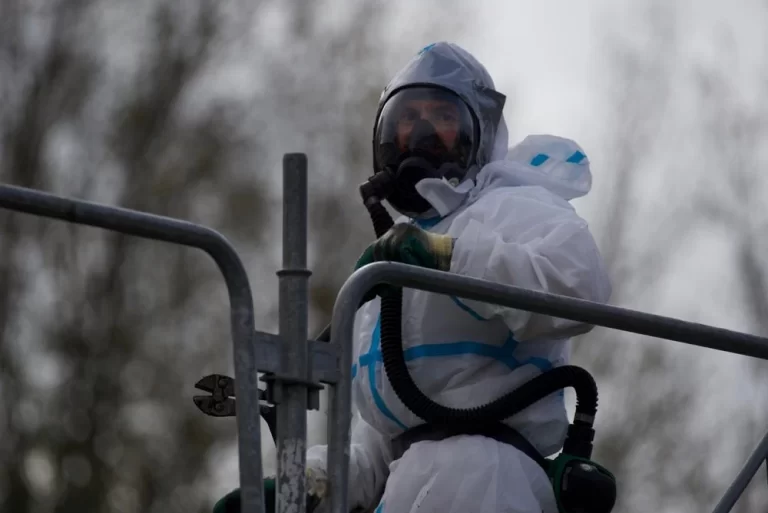
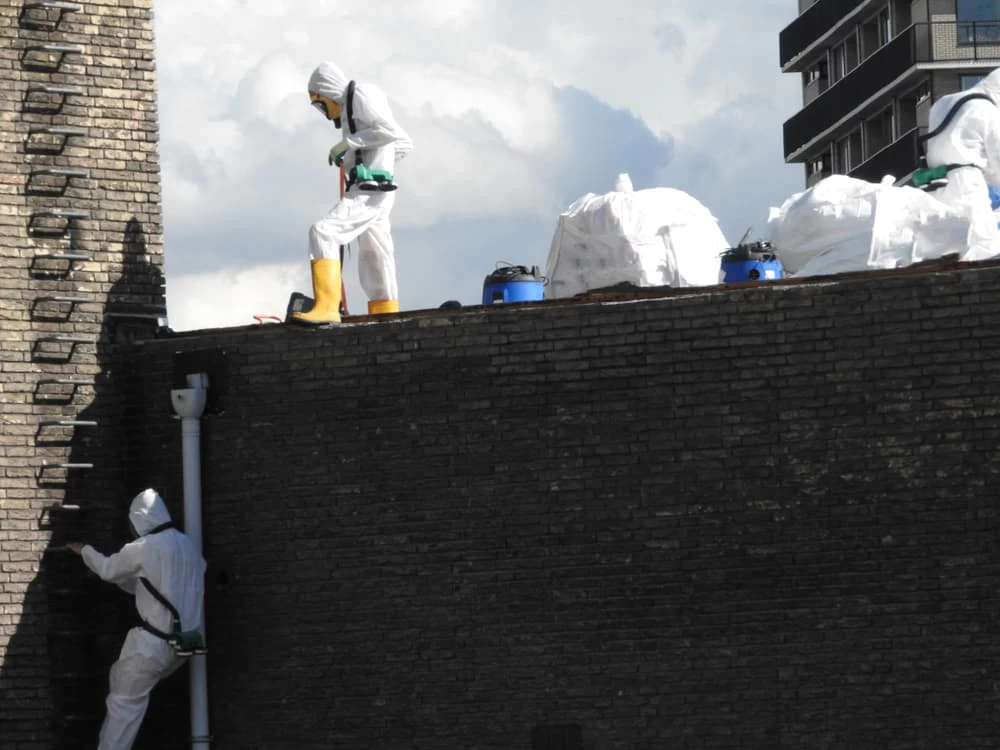
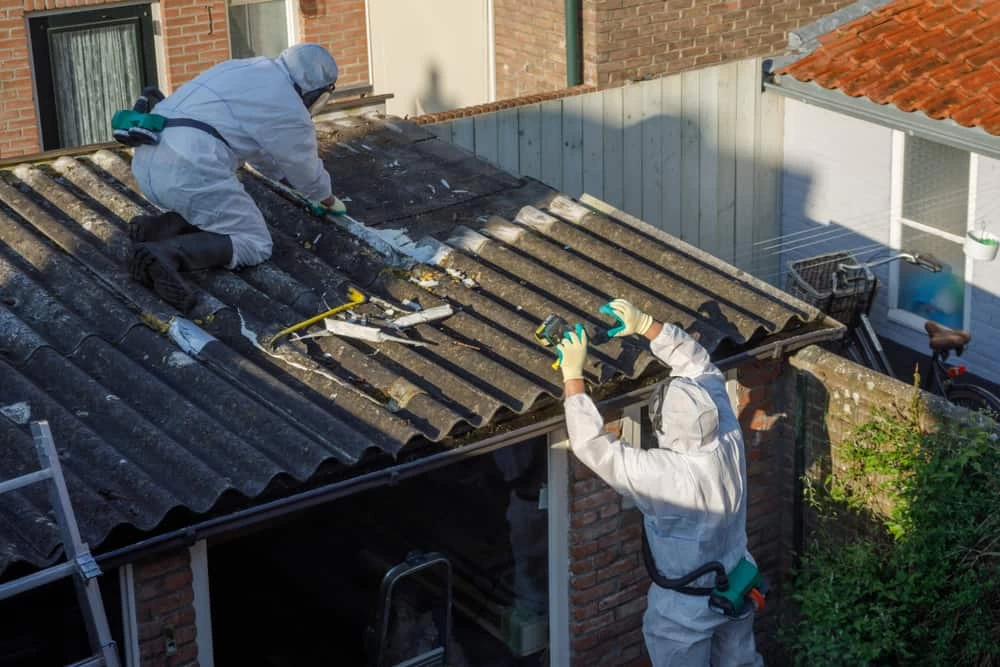
Once the lab results come back and asbestos-containing materials are confirmed, we develop an abatement plan. For larger estate properties on Centre Island, this plan may cover multiple rooms, outbuildings, or phases of a renovation. The scope determines whether the project requires advance notification to the New York State Department of Labor — a step we handle on your behalf so nothing falls through the cracks. Containment is established, negative air pressure systems are set up, and the removal or encapsulation work is performed by certified abatement workers following strict protocols.
After the physical work is complete, air clearance testing is conducted by an independent party to confirm that fiber levels meet state and federal standards. You receive full documentation — the survey report, the abatement records, and the clearance results — which becomes part of your property’s compliance record. For Centre Island homeowners navigating a renovation, a sale, or an estate transition, that documentation is often just as important as the work itself.
The Specific Materials That Show Up Most in Centre Island Estate Homes
Asbestos doesn’t look like anything. That’s part of what makes it complicated. In Centre Island’s older estate homes, the most common asbestos-containing materials tend to fall into a few recurring categories — and knowing which ones to expect in which type of construction helps move the process forward without unnecessary surprises.
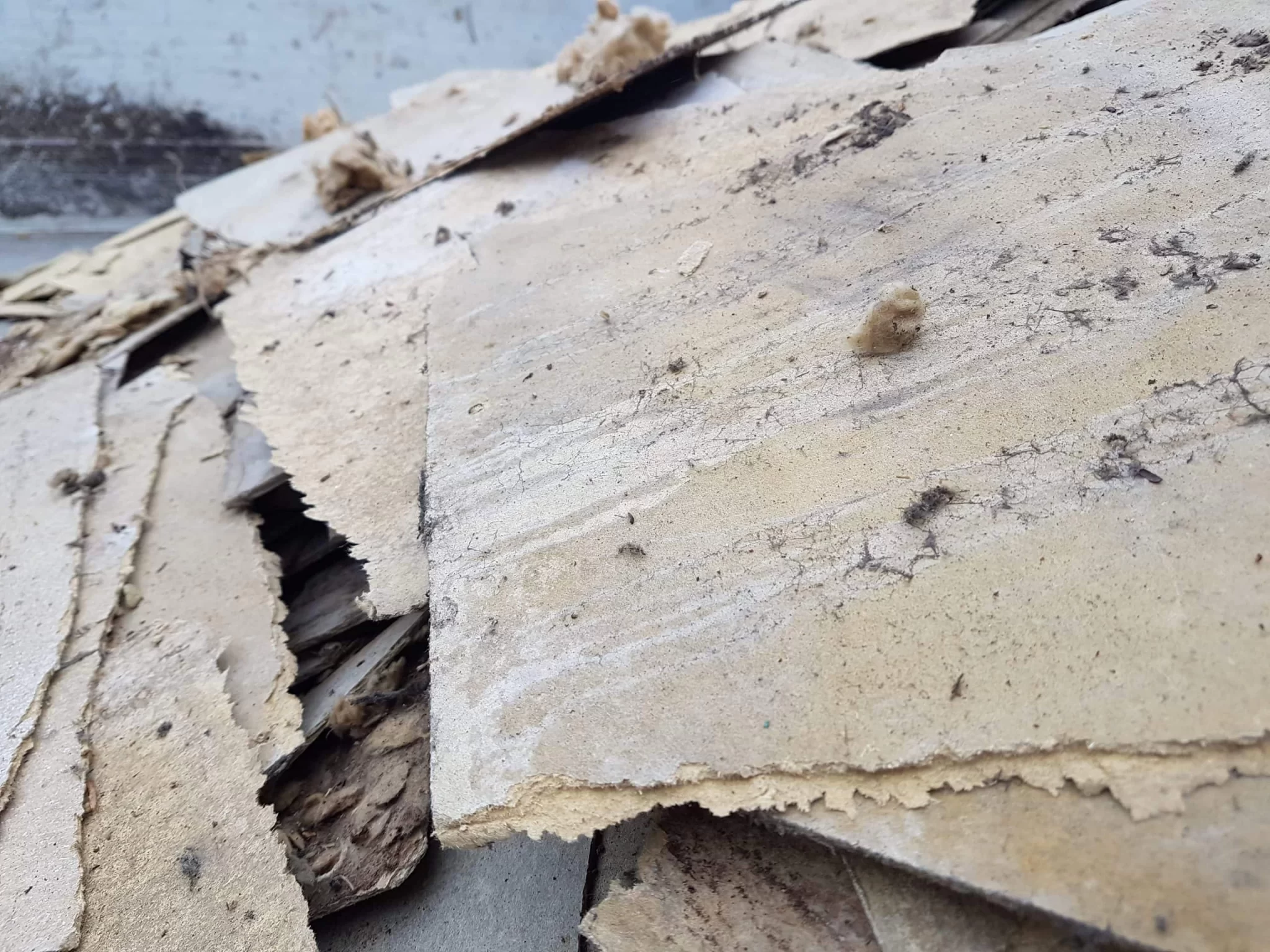
Asbestos floor tile is one of the most frequent finds in pre-1980 kitchens, utility rooms, and basements. The vinyl composite tiles used from the 1930s through the 1970s commonly contained chrysotile asbestos, and they’re still intact in a lot of older Centre Island homes that haven’t been fully gut-renovated. Asbestos popcorn ceiling removal is another common scope of work, particularly in mid-century additions or carriage house conversions where acoustic spray ceilings were applied before the EPA’s 1978 ban on asbestos in spray-applied surfacing materials. Pipe insulation, roofing shingles, exterior cement board siding, and textured plaster are also materials we regularly encounter in Nassau County’s North Shore estate properties.
The scope of asbestos remediation on a Centre Island property is typically broader than what you’d find in a postwar ranch home in another part of Nassau County. Larger square footage, multiple buildings on a single parcel, and decades of layered renovation history all factor into the project plan. We assess each Centre Island property individually, coordinate with the Oyster Bay Town building department where required, and manage the full scope from initial survey through final clearance — so you’re not stitching together multiple vendors to get one job done.
Does my Centre Island home require asbestos testing before a renovation project?
If your home was built before 1980 — which applies to a significant portion of Centre Island’s housing stock — New York State law presumes that suspect materials contain asbestos until a certified inspector tests and clears them. This isn’t optional language. Under NYS Industrial Code Rule 56, any renovation or demolition that could disturb those materials requires a certified asbestos survey before work begins. Your general contractor cannot legally proceed with demolition in those areas until the survey is complete and any identified asbestos-containing materials are either cleared or abated.
For Centre Island specifically, this matters because many of the estates on the peninsula have original construction from the early to mid-twentieth century, often with multiple rounds of renovation layered on top. That means the asbestos risk isn’t limited to one era of materials — it can show up in the original 1930s plaster, the 1960s floor tile added during a kitchen update, and the 1970s pipe insulation in a mechanical room. A thorough survey accounts for all of it, not just the most obvious suspect materials.
What types of asbestos-containing materials are most common in older Centre Island estate homes?
The most frequently encountered asbestos-containing materials in pre-1980 estate homes on Centre Island include floor tile and the mastic adhesive used to install it, pipe and boiler insulation, roofing shingles, exterior cement board siding, textured or skim-coat plaster, and spray-applied acoustic ceiling material — commonly called popcorn ceilings. In larger Centre Island estate properties, you’ll often find several of these materials in the same structure, sometimes in different wings or outbuildings that were renovated at different points in time.
Asbestos tile removal and asbestos popcorn ceiling removal are two of the most common scopes of work in Centre Island properties. The tile issue tends to come up during kitchen and bathroom renovations or basement finishing projects. The ceiling issue tends to surface when homeowners are updating older additions, converting carriage houses, or opening up spaces that haven’t been touched in decades. In both cases, the material needs to be tested before it’s disturbed — and if it tests positive, removed by a certified contractor under proper containment conditions.
How long does asbestos abatement typically take for a large estate property?
Timeline depends heavily on scope — how many materials tested positive, how many areas are affected, and whether the project involves a single room or multiple buildings on the same parcel. A focused single-room abatement, like asbestos tile removal in a kitchen or a popcorn ceiling removal in one wing, can often be completed in one to three days once the survey results are back and the abatement plan is in place. A multi-room or multi-building project on a larger Centre Island estate can take one to two weeks or more, depending on the materials involved and the complexity of containment.
One factor that affects timing in Nassau County is the state notification requirement for larger projects. Certain scopes of asbestos remediation require advance notification to the New York State Department of Labor before work can begin — typically ten business days. That’s not a delay caused by your contractor. It’s a legal requirement, and it’s part of what we account for when building your project timeline so your renovation schedule doesn’t get blindsided by a regulatory hold.
Can asbestos in my Centre Island home become more dangerous over time if left alone?
Yes — and Centre Island’s coastal environment makes this a more pressing concern than it would be for an inland property. Asbestos-containing materials that are intact and undisturbed are generally considered stable. The risk increases when those materials begin to deteriorate, crack, or crumble — a condition called friability — because that’s when fibers can become airborne. Moisture intrusion, freeze-thaw cycling, and salt air exposure all accelerate that deterioration process in building materials.
Every property on Centre Island is exposed to those conditions year-round. Pipe insulation in an older mechanical room, roofing materials on a coastal outbuilding, or exterior cement board siding on a waterfront structure can all degrade faster than comparable materials in a sheltered inland home. If water has gotten into areas of your property — through a roof leak, a storm event, or years of humidity — it’s worth having those materials assessed even if you’re not currently planning a renovation. Finding a deteriorating ACM before it becomes friable is significantly easier and less expensive to address than finding it after.
What happens to the asbestos materials after they're removed from my property?
All asbestos waste is classified as hazardous material under federal and New York State law, and its disposal is tightly regulated. Once materials are removed under proper containment conditions, they’re sealed in labeled, double-bagged containers or wrapped in approved packaging, then transported by a licensed hauler to a permitted disposal facility. The entire chain — removal, packaging, transport, and disposal — is documented, and that documentation becomes part of your project’s compliance record.
This is one of the reasons hiring a certified contractor matters beyond just the physical removal work. We manage the full disposal process and provide you with the waste manifests and disposal records that confirm the material left your property legally and was handled correctly from start to finish. For Centre Island homeowners going through a sale or working with an attorney on an estate transaction, those disposal records are part of the documentation package that demonstrates the abatement was done properly — not just completed, but verifiable.
Is asbestos abatement required before listing a home for sale in Centre Island, NY?
There’s no blanket legal requirement that forces a seller to abate asbestos before listing in New York, but the practical reality in Centre Island’s real estate market makes this question more nuanced than a simple yes or no. At the price point where Centre Island homes trade — routinely above four million dollars — buyers conduct rigorous due diligence. Home inspectors flag suspect materials. Buyers’ attorneys ask questions. And if an ACM issue surfaces during the inspection period, it can delay closing, reduce the sale price, or become a negotiating point that puts you in a reactive position.
Proactively testing and, where necessary, abating before you list gives you control over the process. You know what’s there, you have the documentation to show it was handled correctly, and you’re not scrambling to find a certified contractor on a compressed timeline because a buyer’s inspector found something during the sale. For an estate property with significant renovation history and pre-1980 construction, that kind of documented clean bill of health is a genuine asset — not just a legal formality.