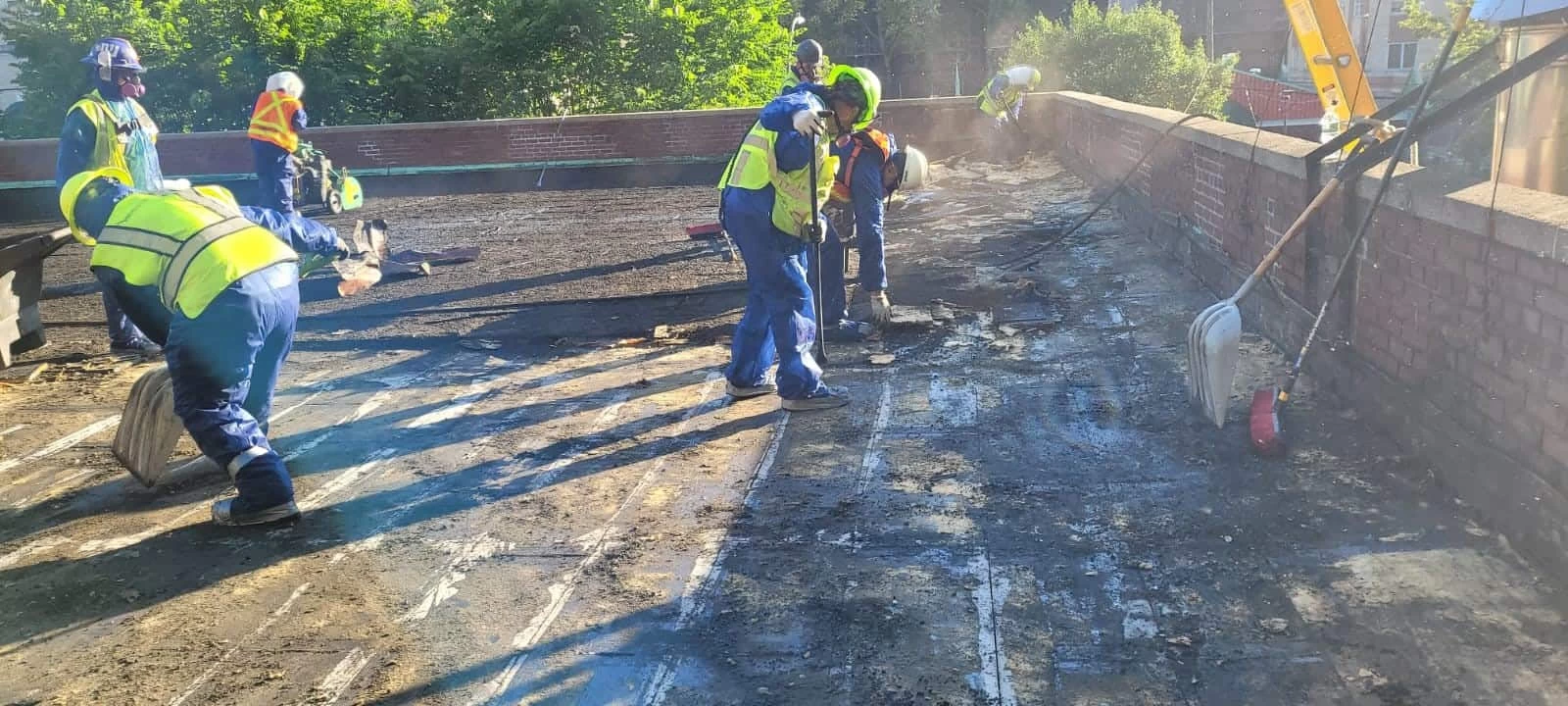
Chinatown's Tenements Have Layers So Does the Asbestos
Most buildings in Chinatown were built before 1950. That means pipe insulation, floor tiles, plaster, and boiler rooms that almost certainly contain asbestos and one renovation that goes wrong can stop everything. We handle certified asbestos abatement in Chinatown so you can move forward safely, legally, and without the regulatory guesswork.
I needed a professional consultation explanation of procedure for safe removal of Asbestos in my apartment complex. Without having an account yet, I was very impressed with the caring, knowledgeable and generous advice offered by Jessica, and will look forward to doing business in the future. Thank you so much! I feel much more informed about a sometimes scary endeavor. Peace. Nancy Silva Mineola, NY.
Mia Munoz
Used this company to clean up some water flood in my house. They were fast and easy to work with.very professional, Would recommend to anyone!
Nini Valle
Great company, had a flood and they responded quickly and efficiently. Billed my insurance company directly. I highly recommend this company!
joe colapietro, jr
I had pipe freeze in my basement right before a snow storm and they made to within an hour to help start the clean up process. They we by our side throughout the entire process and even helped with the insurance company. They did such a great job with the cleanup, repair, remidiation, I contracted them to perform the repairs and finishes in the basement. They came with enough manpower and material to get the job done. Leo and Jessica were nothing but a pleasure to deal with!!
Cristian Arredondo c
I had some water damage in my home and Green Island was able to take care of my issue quickly and effectively. I am very pleased with the work they did. They responded quickly and were very professional.
Michael M
Outstanding service! From the office to the field crew everyone was friendly, helpful and responsive. I highly recommend Green Island Group.
Work stops the moment asbestos is discovered. Contractors walk off the job. Renovation timelines collapse. And suddenly you’re dealing with a regulatory process you’ve never touched before NYC DEP filings, air clearance testing, permit holds at the Department of Buildings. It’s a lot, and it doesn’t move fast unless someone who knows the process is driving it.
When we complete an abatement project in Chinatown, you get more than cleared material. You get the ACP-21 completion certificate, post-abatement air clearance documentation, and a job that satisfies NYC DEP requirements from start to finish. Your contractor can come back. Your renovation can resume. Your building records are clean.
Chinatown’s building stock is older than almost anywhere else in Manhattan over half the neighborhood was built before 1950, and many of those buildings have never had a full asbestos assessment. Add the legacy contamination from the WTC collapse less than a mile away, and some properties are carrying more than just what was built into the walls. If you’re renovating, selling, or responding to a violation notice, a complete inspection here isn’t optional. It’s the only way to know what you’re actually dealing with.
We’re a full-service environmental remediation company based in New York, serving all five boroughs including Manhattan. When you call about asbestos in a Chinatown tenement on Mott Street, Mulberry Street, or the Two Bridges corridor, you’re not getting a single-trade crew that handles one thing and leaves the rest for someone else. You’re getting our licensed team that can manage asbestos abatement, water damage restoration, and mold remediation under one roof because in a pre-war building in this neighborhood, those problems rarely show up alone.
We operate 24 hours a day, every day of the year. That matters in Chinatown, where aging steam pipes fail in January and a burst line behind the walls can expose asbestos insulation and cause mold growth before morning. We handle the full scope, bill insurance directly when the event is covered, and manage the NYC DEP compliance process so you’re not left figuring out the ACP-7 filing on your own.
From First Call to Final Clearance Here's the Honest Walkthrough
It starts with a free inspection. One of our certified technicians comes to the property, assesses the materials in question, and collects samples for laboratory analysis. In Chinatown’s older tenements, that means checking the obvious places pipe insulation, floor tiles, boiler rooms and the less obvious ones, like plaster layers, ceiling texture, and duct insulation that’s been painted over or covered up during previous renovations.
Once asbestos-containing materials are confirmed, we file the ACP-7 Asbestos Project Notification with the NYC DEP’s Asbestos Technical Review Unit. This has to happen at least 10 business days before work begins it’s a hard regulatory requirement, not a suggestion. While the permit window runs, our team prepares the containment plan. In an occupied multi-unit building, that means accounting for shared walls, hallways, and neighboring units. Chinatown’s attached tenements require tighter containment planning than a standalone suburban property, and we build that into every project.
When the permit clears, the abatement work begins. Negative air pressure containment is established, materials are removed according to NYS 12 NYCRR Part 56 and NYC Administrative Code Title 24, and waste is properly packaged and disposed of through licensed channels. After removal, post-abatement air clearance testing is conducted by a certified industrial hygienist. Only after the air test passes does the job close and you receive the ACP-21 completion certificate that your contractor, your insurance carrier, and the NYC DOB will ask for.
What's Included When Chinatown's Building Stock Is This Old
Every asbestos abatement project with us includes a full material assessment, certified laboratory sample analysis, NYC DEP ACP-7 filing and permit management, containment setup, licensed removal, and post-abatement air clearance testing. The ACP-21 completion certificate is a standard deliverable not something you have to ask for separately.
For properties in Chinatown specifically, our inspection scope goes beyond surface materials. Buildings constructed before 1950 which describes more than half the neighborhood can contain asbestos in steam pipe insulation, boiler jacketing, original 9″x9″ vinyl floor tiles, textured plaster ceilings, roofing felt, and window glazing compounds. If the building has undergone multiple renovations over the decades, earlier abatement may have been incomplete or undocumented. A thorough inspection accounts for all of that.
We also handle the multi-service scenarios that are common in this neighborhood. A water damage event in an aging tenement often means exposed asbestos pipe insulation and active mold growth happening at the same time. Rather than coordinating two or three separate contractors each with their own timeline and invoice our team manages asbestos abatement, water damage restoration, and mold remediation together. For building managers overseeing occupied residential properties near Canal Street, Knickerbocker Village, or the Two Bridges corridor, that single-contractor model cuts weeks off the project and keeps the scope from falling through the cracks between trades.
Does my Chinatown apartment building actually need an asbestos inspection before renovation?
Yes and in New York City, it’s not optional. The NYC Department of Buildings requires that any building constructed before 1987 undergo an asbestos assessment by a Certified Asbestos Investigator before a renovation permit is issued. In Chinatown, where the median construction year is 1946 and more than half the buildings predate 1950, that requirement applies to virtually every property in the neighborhood.
What that means practically is that your contractor cannot legally begin demolition, gut renovation, or significant structural work until the assessment is complete and the results are on file. If asbestos-containing materials are identified, abatement must be completed and the NYC DEP ACP-21 clearance certificate must be obtained before work resumes. Skipping this step doesn’t just create a health risk it exposes the property owner to stop-work orders, fines, and potential liability if workers or tenants are exposed. Getting the inspection done upfront is the faster path, not the slower one.
How much does asbestos removal cost in Manhattan, and what affects the price?
Residential asbestos removal in New York City typically runs between $1,500 and $30,000 or more, depending on the scope of the project. The range is wide because the variables are significant: how much material needs to be removed, what type of material it is, how accessible it is, and whether the building is occupied during the work.
In Chinatown specifically, a few factors tend to push projects toward the higher end of that range. Pre-war tenements often have multiple layers of asbestos-containing materials original floor tiles covered by newer flooring, pipe insulation wrapped under years of paint, plaster ceilings that have been textured and retextured over decades. Identifying and removing all of it takes more time and more careful containment than a single-material removal in a newer building. NYC also requires post-abatement air clearance testing as part of the ACP-21 completion process, and that testing adds to the total cost. We provide free inspections and itemized estimates upfront, so you know what you’re looking at before any work begins.
What is the ACP-7 form, and does the contractor handle it or do I have to?
The ACP-7 is the Asbestos Project Notification form required by the NYC Department of Environmental Protection. It has to be filed through the DEP’s online ARTS system at least 10 business days before any asbestos abatement work begins. Once filed, the DEP’s Asbestos Technical Review Unit reviews the project and issues a permit. Work cannot legally start until that permit is in hand.
Most property owners in Chinatown have never dealt with this process before, and there’s no reason you should have to navigate it alone. We handle the ACP-7 filing on your behalf, manage the communication with the DEP’s A-TRU, and track the permit timeline so work is ready to begin the moment the window clears. When the project is complete, we also secure the ACP-21 completion certificate the document that confirms post-abatement air clearance was performed and the space is safe for reoccupancy. Both filings are included in the project scope, not billed as extras.
Is it true that some Chinatown buildings still have asbestos contamination from 9/11?
It’s a legitimate concern. The collapse of the World Trade Center on September 11, 2001 released an estimated 2,000 tons of asbestos into the air over Lower Manhattan. Chinatown less than a mile from Ground Zero was directly in the path of that dust cloud. EPA testing in the months and years that followed found asbestos levels above acceptable thresholds in more than one-third of samples collected in the area. WTC debris trucks were staged on streets including Henry Street and Clinton Street before hauling material to Fresh Kills.
The EPA conducted a Lower Manhattan Test and Clean Program in the years after 9/11, but coverage was not universal, and older tenements with porous surfaces, aging HVAC systems, and unsealed gaps may not have been fully remediated. If your Chinatown building has not had a professional asbestos assessment since 2001 or if you’re beginning a renovation that involves opening walls, ceilings, or ductwork there’s a real possibility of encountering WTC-related contamination on top of whatever asbestos was already present in the building materials. A complete inspection accounts for both.
What types of asbestos-containing materials are most common in Chinatown tenement buildings?
The most common sources in Chinatown’s pre-war building stock are steam pipe insulation, boiler jacketing, and 9″x9″ vinyl floor tiles the standard flooring material in New York City tenements built before 1960. These tiles, and the black mastic adhesive used to install them, almost always contain asbestos and are frequently found under newer layers of flooring that were installed on top rather than removed.
Other common sources include spray-applied acoustic ceiling texture (popcorn ceilings), drywall joint compound in buildings renovated between the 1940s and 1970s, roofing felt, window glazing compounds, and plaster in older walls and ceilings. In buildings that have been renovated multiple times which describes most of Chinatown’s tenement stock you may encounter several of these materials in the same unit, at different depths. That’s why a surface-level inspection isn’t enough. A thorough assessment looks at what’s visible and what’s been covered, because in a building that’s been through five decades of renovation, the most significant hazards are often the ones that aren’t immediately obvious.
Can Green Island Group handle asbestos abatement in an occupied Chinatown building with multiple tenants?
Yes, and it’s one of the more common project types in this neighborhood. Chinatown’s attached tenements and mixed-use buildings mean that abatement work in one unit often shares walls, ceilings, or mechanical systems with occupied neighboring units. That requires a different containment approach than a single-family home or a vacant commercial space.
We build multi-unit containment planning into every occupied-building project. That means negative air pressure containment that accounts for shared building systems, clear communication with building management about access and timing, and air quality monitoring that covers adjacent spaces not just the unit being abated. In larger residential properties near Two Bridges or along East Broadway, where a single building may house dozens of families, that level of planning isn’t optional. The post-abatement air clearance testing covers the full affected area, and the ACP-21 completion documentation reflects that scope. If you’re a building manager dealing with an active asbestos issue in an occupied property, the conversation starts with a free inspection and a clear picture of what the project actually involves.