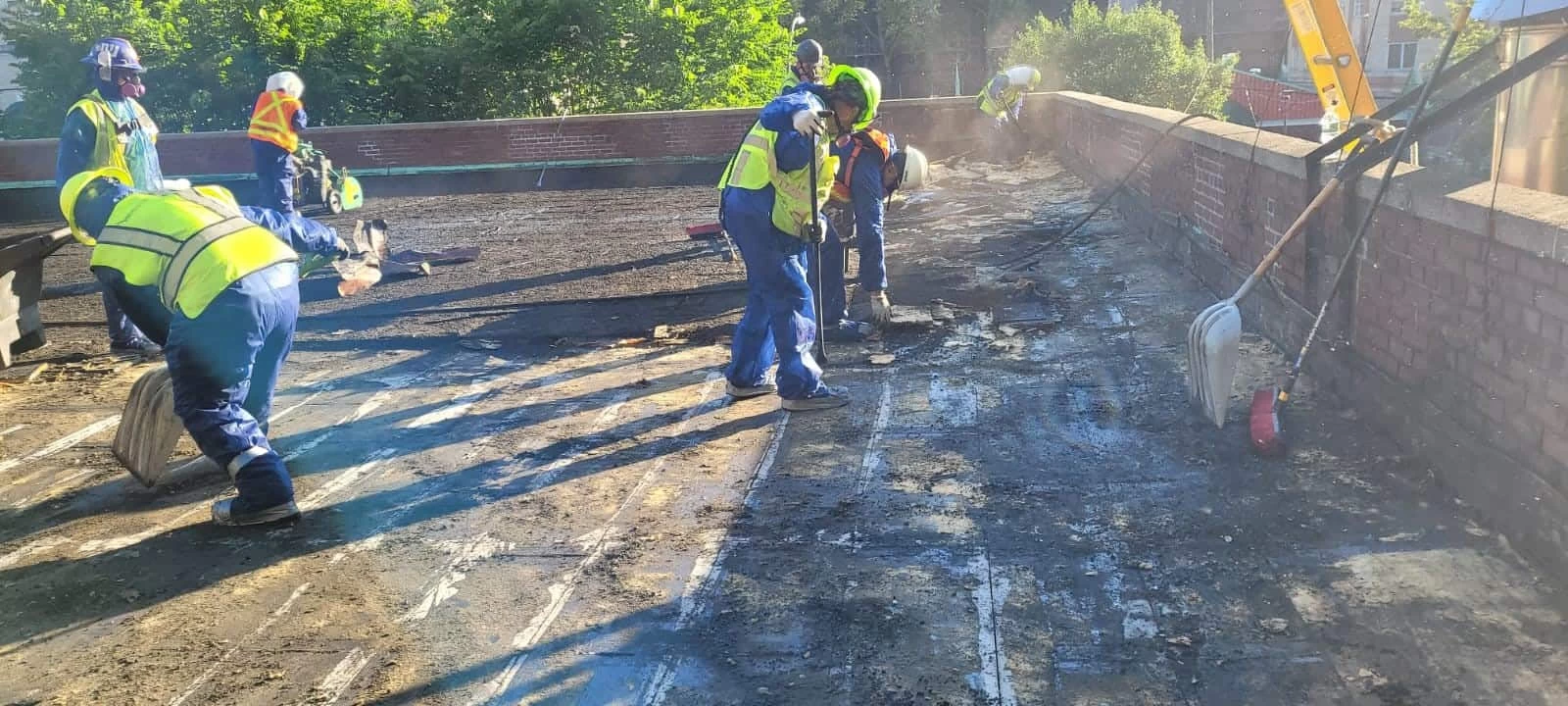
From TriBeCa loft conversions to mid-century office towers along Church Street if your building went up before 1987, asbestos abatement isn’t a maybe. We get you through it fast, compliant, and without the runaround.
I needed a professional consultation explanation of procedure for safe removal of Asbestos in my apartment complex. Without having an account yet, I was very impressed with the caring, knowledgeable and generous advice offered by Jessica, and will look forward to doing business in the future. Thank you so much! I feel much more informed about a sometimes scary endeavor. Peace. Nancy Silva Mineola, NY.
Mia Munoz
Used this company to clean up some water flood in my house. They were fast and easy to work with.very professional, Would recommend to anyone!
Nini Valle
Great company, had a flood and they responded quickly and efficiently. Billed my insurance company directly. I highly recommend this company!
joe colapietro, jr
I had pipe freeze in my basement right before a snow storm and they made to within an hour to help start the clean up process. They we by our side throughout the entire process and even helped with the insurance company. They did such a great job with the cleanup, repair, remidiation, I contracted them to perform the repairs and finishes in the basement. They came with enough manpower and material to get the job done. Leo and Jessica were nothing but a pleasure to deal with!!
Cristian Arredondo c
I had some water damage in my home and Green Island was able to take care of my issue quickly and effectively. I am very pleased with the work they did. They responded quickly and were very professional.
Michael M
Outstanding service! From the office to the field crew everyone was friendly, helpful and responsive. I highly recommend Green Island Group.
Your renovation doesn’t stall. Your permit doesn’t get held. Your co-op board stops asking questions. That’s what proper asbestos abatement actually does for you it removes the obstacle that was quietly sitting between you and moving forward.
In Lower Manhattan, that obstacle shows up more often than most people expect. The building stock along and around Church Street is dense with pre-war steam systems, mid-century floor tiles, and spray-on fireproofing from an era when asbestos was standard practice. The office-to-residential conversion wave sweeping the Financial District has only accelerated how often these materials are getting discovered and every single pre-1987 building in New York City requires a mandatory asbestos assessment before a DOB permit gets issued. That’s not optional, and it’s not something you can work around.
What you gain on the other side of this process is clarity. You know exactly what’s in your building, what’s been removed, and what the air clearance results show. For building owners, co-op boards, and developers managing projects along Church Street, that documentation isn’t just peace of mind it’s the paper trail that keeps your project legally protected and on schedule.
Green Island Group is a full-service environmental remediation company serving all five boroughs and the surrounding metro area. Asbestos abatement is one piece of what we handle but in buildings like the ones along Church Street, it rarely shows up alone. Water damage exposes pipe insulation. A gut renovation uncovers asbestos tile under three layers of flooring. Mold follows a flood. When that happens, having one contractor who handles all of it isn’t a convenience it’s the difference between a project that stays on track and one that doesn’t.
We are certified and compliant with NYC DEP, NYS NYSDOL, EPA, and OSHA requirements, including the 2025 DEP rule amendments that now require dual certification for all asbestos workers. We bill insurance carriers directly and have the documentation process ACP-5s, ACP-7s, post-abatement clearance reports handled without putting that burden back on you. Available 24 hours a day, seven days a week, including emergency response when something gets discovered mid-project and the clock is already running.
It starts with a free inspection. A certified asbestos investigator comes to the property, assesses the materials in question, and gives you a straight answer about what you’re dealing with. In New York City, that investigator needs to be DEP-certified and that assessment needs to happen before any DOB permit can move forward. If you’re in the middle of a renovation and work has already stopped, that first visit happens fast.
If abatement is required, we file the ACP-7 notification through the NYC DEP’s ARTS system at least one week before work begins that’s a regulatory requirement, not a formality. The abatement itself is done under full containment: negative air pressure, sealed work zones, and HEPA filtration throughout. In an occupied building which describes most of the residential and mixed-use properties along Church Street that containment protocol is what keeps the rest of the building safe while the work is happening.
When the removal is complete, post-abatement air clearance testing confirms that fiber levels meet safe reoccupancy standards. You get the ACP-21 completion documentation, the clearance report, and everything you need for DOB sign-off. If insurance is involved, we handle that coordination directly. You don’t have to be the go-between.
Built for the Complexity of Pre-War Manhattan Buildings
The buildings along Church Street aren’t simple. You’ve got federal office structures from the 1940s, commercial towers from the 1950s like 100 Church Street, and former industrial warehouses that have been converted into some of the most expensive residential real estate in the country. Each building type carries its own asbestos profile pipe insulation in old steam heating systems, floor tiles and ceiling tiles in mid-century builds, spray-on fireproofing in high-rise office towers, textured coatings in converted loft spaces. The inspection process accounts for all of it.
Our asbestos removal services cover the full scope: floor tile removal, popcorn ceiling removal, pipe and duct insulation, roofing materials, drywall joint compound, and spray-applied fireproofing. If the material is there and it needs to come out, it gets handled under proper containment with licensed disposal at a certified facility. That’s true whether you’re managing a single-unit renovation in a TriBeCa co-op or coordinating a full floor abatement in a Financial District office conversion.
The 2025 NYC DEP rule amendments added new certification requirements and tightened procedures for partition work, flooring abatements, and multi-phase projects. Every job we complete is current with those requirements not the rules from three years ago. That matters when your DOB inspector or DEP representative is reviewing the paperwork.
Do I need an asbestos inspection before renovating my Church Street building?
Yes and in New York City, this isn’t discretionary. NYC DOB rules require that any renovation, alteration, or demolition of a pre-1987 building be preceded by an asbestos assessment performed by a DEP-certified Asbestos Investigator. Until that assessment is complete and the appropriate form either an ACP-5 or ACP-7 is filed with the DEP and verified by the DOB, your permit will not be issued.
For buildings along Church Street and throughout Lower Manhattan, this applies to the vast majority of the building stock. Whether you’re renovating a unit in a converted TriBeCa warehouse, doing a build-out in a Financial District office tower, or upgrading infrastructure in a mid-century federal building, the assessment requirement applies. The practical takeaway is this: if your building was constructed before 1987, schedule the inspection before you schedule anything else. Trying to work around it or move it to later in the process creates delays that are much harder to recover from than the inspection itself.
What is the difference between an ACP-5 and ACP-7 form in NYC?
Both forms are part of New York City’s asbestos compliance process, but they apply to different situations. An ACP-5 is filed when a DEP-certified Asbestos Investigator determines that the scope of your project does not constitute an Asbestos Project meaning the amount of asbestos-containing material being disturbed falls below the regulatory thresholds. It’s essentially a certification that the work can proceed without a full abatement project notification.
An ACP-7 is required when the scope does constitute an Asbestos Project. It must be filed through the NYC DEP’s Asbestos Reporting and Tracking System at least one week before abatement work begins, and it’s valid for one year from the original filing date. When the abatement is complete, an ACP-21 is issued by the DEP and that document is what you need for DOB permit sign-off. For building owners and developers managing projects along Church Street, understanding which form applies to your situation early in the process is what keeps the project timeline intact.
How long does asbestos abatement typically take in a Lower Manhattan building?
It depends on the scope, but most residential abatement projects a single room, a section of pipe insulation, floor tile removal in one unit can be completed within one to three days once the containment is set up and the regulatory notification period has passed. Larger commercial projects, full-floor abatements, or multi-phase work in occupied office buildings will take longer and typically require phased scheduling to minimize disruption.
The ACP-7 filing requirement adds a mandatory one-week lead time before work can begin that’s non-negotiable under NYC DEP rules. So if you’re working against a renovation deadline or a real estate closing, building that week into your timeline from the start is important. Emergency situations where there’s an immediate health risk can sometimes be handled under expedited procedures, but that determination is made on a case-by-case basis with DEP involvement. The cleaner your pre-project documentation is, the faster everything moves once the abatement crew is on-site.
Can asbestos be found in TriBeCa loft conversions and Financial District office buildings?
Consistently, yes. TriBeCa’s building stock is largely former industrial and warehouse construction from the early to mid-20th century exactly the era when asbestos was used in floor tiles, pipe insulation, plaster, roofing materials, and joint compound. When those buildings were converted to residential lofts, the asbestos often stayed in place unless a renovation specifically disturbed it. If you’re doing any work that breaks into walls, removes flooring, or touches the building’s mechanical systems, there’s a real chance you’ll encounter it.
Financial District office towers present a different but equally common profile. Buildings from the 1950s and 1960s like 100 Church Street, constructed in 1958 frequently used spray-on fireproofing that contained asbestos, particularly on structural steel. As those buildings undergo office-to-residential conversions, that fireproofing gets disturbed during demolition and reconfiguration. The surge in conversion activity across Lower Manhattan which has grown from under 1.2 million square feet annually before 2020 to over 4 million square feet as of 2025 has made this a routine discovery in the neighborhood. It’s not a worst-case scenario anymore. It’s just part of what renovation looks like in these buildings.
Does Green Island Group work directly with insurance companies on asbestos claims?
Yes, and it’s one of the more practical things we do. When asbestos is discovered following water damage, a flood event, or storm-related building damage all of which are real and recurring risks in Lower Manhattan given the area’s waterfront exposure and documented vulnerability to storm surge the last thing you need is to be managing the insurance company and the abatement contractor simultaneously.
We bill insurance carriers directly and help guide clients through the claims process. That means fewer phone calls for you, faster documentation turnaround, and a cleaner paper trail for the insurer. For building managers and co-op boards dealing with an emergency situation, this matters a lot. We handle the communication, the documentation, and the coordination you stay focused on the building and the people in it. If you’re not sure whether your situation is covered, we can help you work through that conversation with your carrier before any work begins.
What happens if asbestos is discovered mid-renovation on a Church Street project?
Work stops, and that’s the right call. Disturbing asbestos-containing materials without proper containment and licensing isn’t just a regulatory violation it’s a health risk to everyone in the building, and in a dense, occupied Manhattan building, that circle of exposure is wide. The general contractor should stop work in the affected area, seal it off as best they can, and get a certified asbestos contractor on-site to assess the situation.
Our response time in situations like this is typically 30 minutes to one hour. Once on-site, we assess what was disturbed, set up proper containment, and determine whether an emergency DEP notification is required or whether the standard ACP-7 process applies. Either way, the goal is to get the situation stabilized quickly and get the abatement completed correctly so the renovation can resume. Mid-project discoveries are stressful, but they’re also manageable when the contractor knows the NYC DEP process and can move fast. The worst outcomes happen when people try to work around the discovery rather than through it.