Clark Heights Homes Hide This Most Owners Never Know
Most homes in Clark Heights were built when asbestos was standard. If yours went up between 1940 and 1985, it’s worth knowing what’s behind the walls before your next renovation uncovers it for you.
I needed a professional consultation explanation of procedure for safe removal of Asbestos in my apartment complex. Without having an account yet, I was very impressed with the caring, knowledgeable and generous advice offered by Jessica, and will look forward to doing business in the future. Thank you so much! I feel much more informed about a sometimes scary endeavor. Peace. Nancy Silva Mineola, NY.
Mia Munoz
Used this company to clean up some water flood in my house. They were fast and easy to work with.very professional, Would recommend to anyone!
Nini Valle
Great company, had a flood and they responded quickly and efficiently. Billed my insurance company directly. I highly recommend this company!
joe colapietro, jr
I had pipe freeze in my basement right before a snow storm and they made to within an hour to help start the clean up process. They we by our side throughout the entire process and even helped with the insurance company. They did such a great job with the cleanup, repair, remidiation, I contracted them to perform the repairs and finishes in the basement. They came with enough manpower and material to get the job done. Leo and Jessica were nothing but a pleasure to deal with!!
Cristian Arredondo c
I had some water damage in my home and Green Island was able to take care of my issue quickly and effectively. I am very pleased with the work they did. They responded quickly and were very professional.
Michael M
Outstanding service! From the office to the field crew everyone was friendly, helpful and responsive. I highly recommend Green Island Group.
When asbestos is handled correctly, you get your home back not just cleaned up, but documented, cleared, and certified safe. That means air clearance testing results you can hand to a buyer, a lender, or an insurance adjuster without hesitation. It means your renovation contractor can come back and finish the job. It means no lingering questions about whether the work was actually done to code.
For Clark Heights homeowners, that certainty matters more than most people realize. The housing stock here a lot of it built in the 1950s, 60s, and 70s regularly contains asbestos floor tiles, pipe insulation, boiler wrap, and popcorn ceilings. These materials aren’t dangerous when they’re left alone. But the moment a renovation starts, or a pipe bursts and soaks the insulation in a basement that hasn’t been touched in 30 years, the situation changes fast.
Dutchess County’s freeze-thaw winters do real damage to older building materials over time. Pipe insulation in unheated crawl spaces deteriorates. Exterior siding cracks. What was stable last spring may not be by the time your contractor pulls it. Getting ahead of that rather than discovering it mid-project is what separates a smooth renovation from a work stoppage that drags on for weeks.
Licensed Asbestos Contractor Serving Clark Heights
12 Years In, 5,000 Projects Deep Including Clark Heights
We’ve been doing this work across Dutchess County and the broader Hudson Valley for over 12 years. More than 5,000 completed projects. NYS DOL licensed. MWBE certified. State-agency approved which means New York State has vetted our company to a standard most residential contractors never have to meet.
Clark Heights is explicitly part of our service area, and that’s not a technicality. We know the housing stock along the Route 44 corridor, the mid-century ranches and split-levels that make up much of the neighborhood, and the specific materials those homes were built with. When you call, you’re not explaining your town to someone dispatching from a call center three states away. You’re talking to people who’ve worked in Clark Heights homes.
Our reviews say something that credentials can’t fully capture: people describe being walked through a genuinely stressful process in plain language, without pressure, before they ever committed to anything. That’s the standard every job is held to.
It starts with an assessment. Before any work happens, the space gets inspected and suspect materials get tested. If asbestos is confirmed, you’ll know exactly what you’re dealing with where it is, what type, and what the removal scope looks like. No vague estimates, no surprises after the crew shows up.
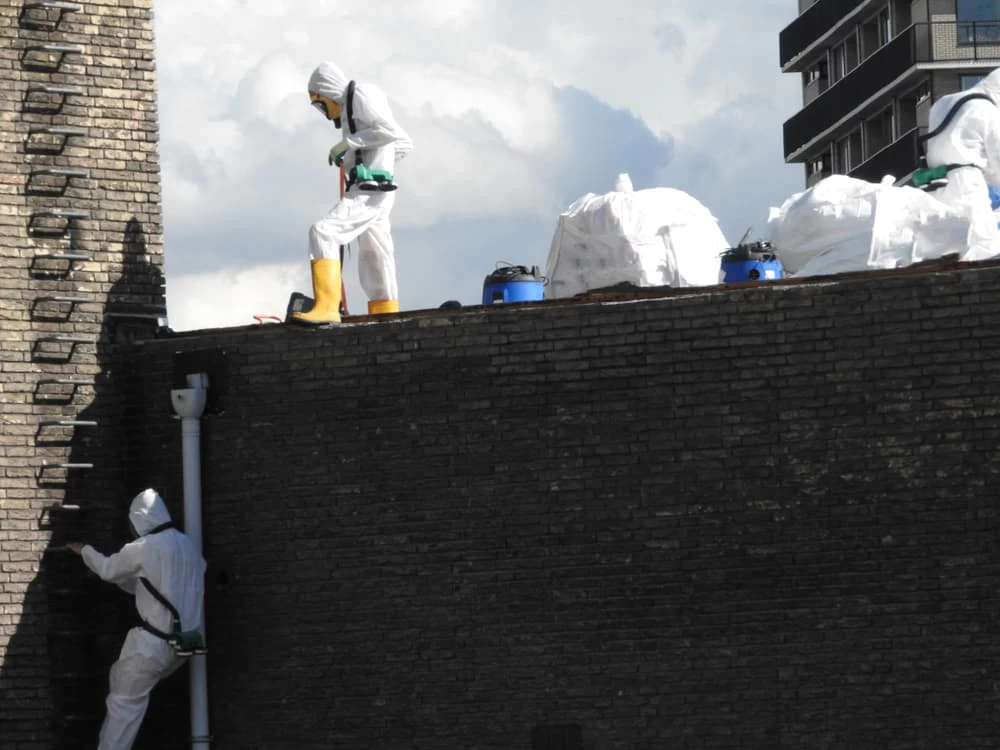
Once the scope is clear, the abatement work is performed under full NYS Industrial Code Rule 56 compliance. That’s the state regulation governing asbestos work in Dutchess County, enforced by the NYS Department of Labor’s Asbestos Control Bureau out of the Albany district office. Every handler on our site holds a current NYS DOL Asbestos Handler license. Every supervisor is certified. The work area is contained, negative air pressure is maintained, and materials are packaged and transported by licensed haulers to an approved disposal facility no cut corners, no improvised solutions.
When the removal is done, a qualified professional conducts post-abatement air clearance testing before anyone re-enters the space. You get written documentation of the results. If you’re selling your home, refinancing, or just want proof for your own records, that clearance report is what makes the work official. From first call to final clearance, there’s one point of contact and one company accountable for the outcome.
Asbestos Removal and Abatement Services, Clark Heights
Every Type of Asbestos Found in Clark Heights Homes
The asbestos-containing materials most commonly found in Clark Heights homes aren’t exotic or unusual they’re the standard materials used in residential construction from the 1940s through the mid-1980s. Nine-inch vinyl asbestos floor tiles in kitchens and basements. Pipe and boiler insulation in mechanical rooms. Textured popcorn ceilings in living areas and bedrooms. Roofing shingles and exterior siding on homes built before 1980. Plaster and wallboard in pre-war and early post-war construction. All of it falls within the scope of what we handle.
Asbestos tile removal, popcorn ceiling removal, pipe insulation abatement, full residential asbestos remediation these aren’t separate service lines with separate crews. It’s one team, trained across all material types, working under the same NYS DOL licensing standard on every job. If your renovation uncovers multiple material types in the same space, that’s handled in one mobilization, not two separate contractor visits.
One thing worth knowing for Clark Heights homeowners dealing with water damage or storm damage alongside an asbestos discovery: we also handle mold remediation, water damage restoration, and fire damage restoration. If your flooded basement has both compromised pipe insulation and a mold problem, you don’t have to manage two separate contractors. That’s handled under one roof, with direct insurance billing meaning we work with your insurer directly so you’re not stuck in the middle managing paperwork during an already stressful situation.
Do Clark Heights homes actually contain asbestos, or is that overstated?
It’s not overstated. The majority of Clark Heights’ housing stock was built between 1940 and 1999, with a significant portion from the 1940s through the late 1970s the exact window when asbestos was a standard component in residential construction across the United States. Floor tiles, pipe insulation, attic insulation, roofing materials, exterior siding, textured ceilings, and plaster all served as common delivery vehicles for asbestos during that era.
The important distinction is that asbestos-containing materials aren’t automatically dangerous. When they’re intact and undisturbed, the risk is low. The risk increases when those materials are disturbed during renovation, demolition, or as a result of physical damage from water, impact, or age-related deterioration. Given how many Clark Heights homes are now 50 to 80 years old, and given the active renovation market in the Pleasant Valley and Poughkeepsie area, the chances of encountering asbestos during a home project are real and worth taking seriously before work begins rather than after.
What happens if asbestos is found during a renovation in my Clark Heights home?
Work stops. That’s not a suggestion under New York State regulations, a renovation contractor who discovers suspect asbestos-containing material is required to halt work in that area until a licensed abatement contractor has assessed and addressed the situation. Continuing to work through a suspected asbestos discovery isn’t just a health risk; it’s a regulatory violation that can create serious liability for both the homeowner and the contractor.
The practical reality for Clark Heights homeowners is that this situation happens more often than people expect, especially in kitchens, bathrooms, and basements of mid-century homes. The good news is that it doesn’t have to derail your entire project. We respond 24/7 in documented cases, our crews have arrived on-site within two hours of an initial call. The faster the abatement is handled correctly, the faster your renovation contractor can get back to work. Delays compound costs, so speed and compliance aren’t in conflict here they’re the same goal.
How much does asbestos removal cost for a home in Dutchess County?
In New York, most homeowners pay somewhere between $1,296 and $3,050 for asbestos removal, with an average around $2,170. That range moves depending on the type of material, the size of the area, the number of material types involved, and whether post-abatement air clearance testing is included which it should be, and which responsible contractors include as a standard part of the job.
Costs in the Dutchess County market have risen noticeably in recent years roughly 8 to 12 percent driven by updated NYS DOL licensing requirements, higher disposal fees at the approved facilities serving this region, and the now-standard expectation of clearance testing before reoccupancy. That cost increase isn’t arbitrary. It reflects what it actually takes to do the job legally and correctly under New York State law. When you see a quote that’s significantly below market, the question worth asking is which of those required steps is being skipped. A licensed contractor isn’t more expensive because of overhead it’s more expensive because it’s accountable to a regulatory standard that protects you.
Can I stay in my home during asbestos abatement in Clark Heights?
It depends on the scope and location of the work. For a contained removal a single room, a section of basement, or a specific mechanical space it’s often possible to remain in other parts of the home while work is in progress, as long as proper containment barriers are in place and the work area is under negative air pressure to prevent fiber migration. For larger-scale projects, or work in central areas of the home like a main living space or HVAC system, temporary displacement is typically the safer and more practical choice.
This is something that gets assessed during the initial inspection, not assumed. The answer for a Clark Heights homeowner removing pipe insulation from a detached basement utility room is different from someone dealing with asbestos floor tiles throughout an entire first floor. What you should expect regardless of scope: the work area is fully contained before abatement begins, and no one re-enters it until post-abatement air clearance testing confirms it’s safe. That clearance test is the line between “the work is done” and “the space is safe” and they’re not the same thing.
Is a permit required for asbestos abatement in Dutchess County, NY?
Dutchess County falls under New York State jurisdiction for asbestos abatement specifically NYS Industrial Code Rule 56, enforced by the NYS Department of Labor’s Asbestos Control Bureau. This is distinct from New York City, which has its own DEP permitting system with separate notification requirements. In Dutchess County, the key regulatory requirement is that all asbestos abatement work must be performed by a contractor holding a current NYS DOL Asbestos Contractor License, with certified handlers and supervisors on every job.
Depending on the scale of the project, notification to the NYS DOL Asbestos Control Bureau may be required before work begins. We handle that notification process as part of the job it’s not something the homeowner manages independently. Asbestos waste disposal is also regulated separately under NYSDEC rules, requiring licensed haulers and approved disposal facilities with full tracking documentation. We operate within all of these regulatory frameworks on every project, which is what makes the post-abatement clearance documentation we provide legally defensible and usable in real estate transactions.
Why should I choose Green Island Group for asbestos abatement in Clark Heights?
There are a few things that genuinely set us apart in the Dutchess County market, and they’re worth knowing before you make a decision. First, the credentials: NYS DOL licensed, MWBE certified, and state-agency approved. That last designation means New York State has evaluated and approved us to perform work on government and municipal contracts a vetting standard that most private residential contractors never go through. Second, the scope: most asbestos contractors in this area handle abatement and stop there. We also handle mold remediation, water damage restoration, and fire damage restoration, and bill insurance directly. For Clark Heights homeowners dealing with a storm-damaged roof or a flooded basement that involves asbestos, that full-service capability and direct insurance billing removes a significant amount of friction from an already difficult situation.
And third something that doesn’t show up on a license certificate but shows up in our reviews we have a documented track record of explaining what’s happening, in plain language, before the sale is even made. For homeowners navigating an asbestos discovery for the first time in a home they’ve lived in for decades, that matters. The process is unfamiliar, the stakes feel high, and having a contractor who treats the conversation as a consultation rather than a close makes a real difference in how the whole experience goes.