If your home was built before 1980, there’s a real chance asbestos is somewhere inside it and we’re the NYS-licensed team that handles it the right way in Clintondale.
I needed a professional consultation explanation of procedure for safe removal of Asbestos in my apartment complex. Without having an account yet, I was very impressed with the caring, knowledgeable and generous advice offered by Jessica, and will look forward to doing business in the future. Thank you so much! I feel much more informed about a sometimes scary endeavor. Peace. Nancy Silva Mineola, NY.
Mia Munoz
Used this company to clean up some water flood in my house. They were fast and easy to work with.very professional, Would recommend to anyone!
Nini Valle
Great company, had a flood and they responded quickly and efficiently. Billed my insurance company directly. I highly recommend this company!
joe colapietro, jr
I had pipe freeze in my basement right before a snow storm and they made to within an hour to help start the clean up process. They we by our side throughout the entire process and even helped with the insurance company. They did such a great job with the cleanup, repair, remidiation, I contracted them to perform the repairs and finishes in the basement. They came with enough manpower and material to get the job done. Leo and Jessica were nothing but a pleasure to deal with!!
Cristian Arredondo c
I had some water damage in my home and Green Island was able to take care of my issue quickly and effectively. I am very pleased with the work they did. They responded quickly and were very professional.
Michael M
Outstanding service! From the office to the field crew everyone was friendly, helpful and responsive. I highly recommend Green Island Group.
You stop guessing. That’s the biggest shift. When asbestos is properly abated not just covered up, not just worked around you get documented proof that your home is safe to live in, renovate, and eventually sell. That’s not a small thing when you’re raising a family in a pre-1980 house off Route 44 in Clintondale.
A significant portion of Clintondale’s housing stock was built right at the threshold of the asbestos era. Homes with a median build year of 1978 tend to carry asbestos in places most people never think to check under vinyl floor tiles, wrapped around basement pipes, in the texture of a popcorn ceiling, behind the drywall seams. The Hudson Valley’s freeze-thaw cycles don’t help. When materials crack and crumble from years of temperature swings, that’s exactly when fibers become airborne.
What you get on the other side of a proper abatement is clearance actual air monitoring results showing the space is clean. Your renovation can move forward. Your home inspection won’t get derailed. And you’re not managing the anxiety of wondering what’s still in the walls.
In New York State, performing asbestos abatement without a NYS Department of Labor Asbestos Handling License isn’t just cutting corners it’s illegal. We hold that license. That matters more than any tagline.
Beyond the DOL license, we carry IICRC certification for water and fire damage, USEPA Lead and RRP certifications, and NYS DOL Mold licensing. For homeowners in Clintondale and the broader Plattekill area dealing with older properties where asbestos, mold, and lead paint often show up together that means one contractor handles everything. You’re not juggling three different companies while your renovation sits on hold.
We serve Clintondale directly and list it as an active Ulster County service area. This isn’t a franchise routing calls from somewhere else. We know what’s inside these homes.
It starts with an inspection. Before anything is touched, a licensed inspector identifies where asbestos-containing materials are located, what condition they’re in, and whether disturbance is a real risk. In Clintondale homes particularly those with original flooring, older mechanical systems, or textured ceilings this step often turns up more than one material that needs attention.
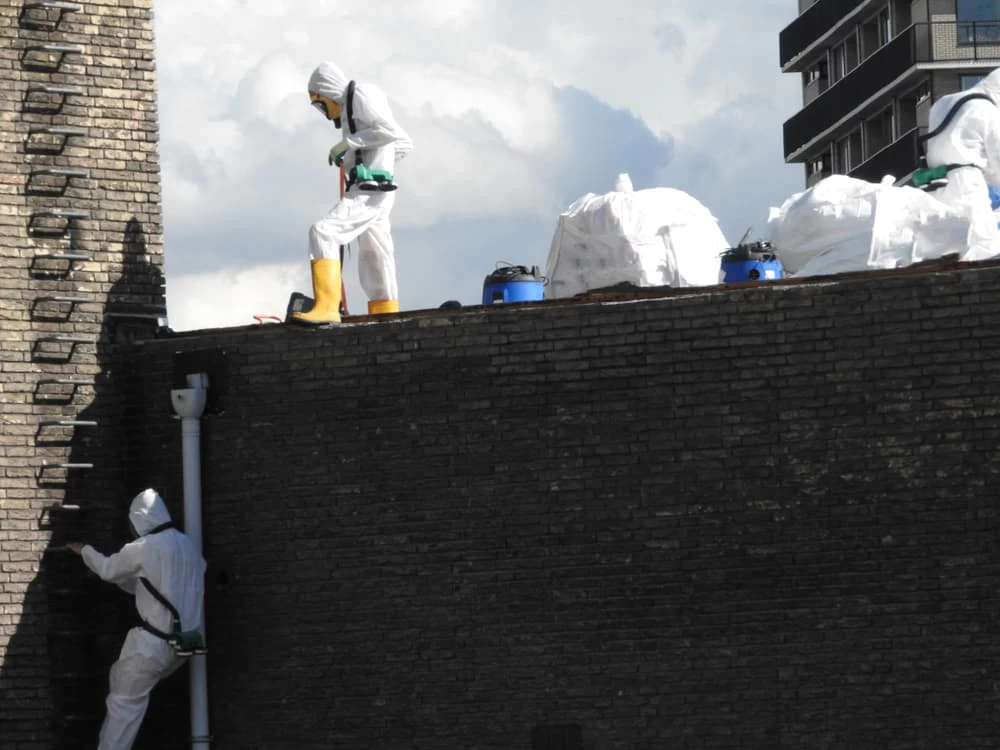
Once the scope is confirmed, our abatement team sets up proper containment. That means negative air pressure, sealed work zones, and full personal protective equipment. Under NYS Industrial Code Rule 56, any disturbance of 10 square feet or 25 linear feet of asbestos-containing material requires licensed procedures, advance project notification to the state, and documented waste disposal. We handle all of that including permit applications through the Town of Plattekill if your renovation requires one.
After the removal is complete, post-abatement air clearance testing is conducted. You get the results in writing. That documentation is what your contractor needs to proceed, what a home inspector will want to see, and what gives you actual peace of mind not just a verbal assurance that it’s done.
Asbestos Tile and Ceiling Removal in Ulster County
What's Included Goes Further Than Just Removal
Asbestos abatement isn’t one-size-fits-all, and the older homes in Clintondale reflect that. We handle the full range of materials vinyl floor tile and the black mastic adhesive beneath it, pipe and boiler insulation in basements, popcorn and textured ceiling finishes, joint compound, cement board siding, and attic vermiculite. If you’ve got an older farmhouse or outbuilding on a Plattekill-area property, agricultural structures from the early-to-mid 20th century frequently contain asbestos in roofing panels and insulation that’s never been formally assessed.
Every project includes containment setup, licensed removal, proper waste disposal with documentation, and post-abatement air clearance testing. That final step the air monitoring is what separates a compliant job from one that just looks done. You’ll have the paperwork to prove it.
We also handle direct insurance billing when abatement is part of a storm damage or water damage claim. Given the Hudson Valley’s weather patterns ice storms, nor’easters, pipe failures from hard freezes that comes up more than you’d expect. If your situation involves mold or lead alongside the asbestos, those can be addressed under the same licensed roof without bringing in a second or third contractor.
Does my Clintondale home actually need asbestos testing before I renovate?
If your home was built before 1980, yes and in most cases it’s not optional. Under New York State Industrial Code Rule 56, any renovation that will disturb 10 square feet or more of suspect material requires an asbestos survey before work begins. The Town of Plattekill’s building permit process for older structures typically aligns with this requirement, meaning your contractor may not be able to pull a permit without a prior inspection on record.
The reason this matters specifically in Clintondale is that the local housing stock skews older. Homes built in the late 1960s and 1970s routinely contain asbestos in places that get disturbed during standard renovations floor tile adhesive when you pull up old flooring, pipe insulation when you replace a boiler, joint compound when you open a wall. Getting the inspection done first doesn’t slow your project down. It prevents a much bigger stop-work situation after demolition has already started.
How much does asbestos removal typically cost in the Hudson Valley area?
The range is wide because the scope varies significantly. A straightforward asbestos tile removal in a single room might run $1,500 to $3,000. A larger project pipe insulation throughout a basement, popcorn ceilings across multiple rooms, or a full-structure survey on an older farmhouse can reach $10,000 to $30,000 or more depending on the material volume and site conditions.
What drives cost in Ulster County specifically is a combination of material type, accessibility, and the regulatory requirements that come with licensed NYS abatement. Every project requires advance notification, proper containment, licensed waste disposal, and post-abatement air clearance those aren’t optional line items, they’re part of what makes the work legal and documentable. Getting a quote from an unlicensed operator who skips those steps might look cheaper upfront, but it creates real liability for you as the property owner if the work is ever audited or if a future buyer’s inspector raises a flag.
What materials in older homes most commonly contain asbestos?
The ones that surprise people most are the ones hidden in plain sight. Nine-inch vinyl floor tiles extremely common in homes built between the 1950s and late 1970s almost always contain asbestos, and so does the black adhesive mastic beneath them. Popcorn and textured acoustic ceilings were another standard feature in late-1970s construction, and many of them were applied with asbestos-containing compounds. Pipe and boiler insulation in older basements is another frequent find, particularly in homes with original heating systems.
In Clintondale and the broader Plattekill area, there’s an additional category worth noting: agricultural outbuildings. Corrugated cement-asbestos roofing panels were widely used on barns, cold storage buildings, and equipment sheds throughout the mid-20th century. If you’ve purchased or inherited a farmstead property and haven’t had the outbuildings assessed, that’s worth putting on the list before any demolition or renovation work begins.
Do I have to leave my home during asbestos abatement in New York?
It depends on the scope and location of the work. For contained projects a single room, a section of basement pipe insulation, or a localized ceiling area it’s sometimes possible to remain in unaffected parts of the home while work is in progress, provided proper containment barriers are in place and negative air pressure is maintained in the work zone. For larger projects involving multiple areas or whole-floor abatement, temporary relocation is typically the safer and more practical choice.
We discuss occupancy expectations upfront during the initial assessment, not after the crew shows up. This matters especially if you have children at home, which is the case for many Clintondale households. Post-abatement air clearance testing confirms when the space is safe to re-enter, and you’ll have that result in writing before anyone moves back in.
What happens if asbestos is found during a home inspection before a sale in Clintondale?
It’s one of the more stressful scenarios in a real estate transaction, but it’s also one of the most manageable when you act quickly. If a buyer’s inspector identifies suspect asbestos-containing materials, the deal doesn’t have to fall apart but the clock starts ticking. Most purchase contracts in New York include contingency language that gives buyers the right to request remediation or renegotiate based on inspection findings.
The fastest path forward is getting a licensed abatement contractor involved immediately to assess scope, provide a written estimate, and confirm a realistic timeline. We understand real estate transaction timelines and can move quickly when a closing date is in play. Once abatement is complete and air clearance documentation is in hand, you have something concrete to provide to the buyer’s attorney not a promise, but a paper trail. In a market like Clintondale, where property values have risen considerably and buyers are often coming from outside the area, that documentation carries real weight.
Can storm damage to my Clintondale home trigger an asbestos hazard?
Yes, and it happens more often than most homeowners realize. When a nor’easter, ice storm, or hard freeze damages roofing, siding, or interior walls on a pre-1980 home, it can disturb asbestos-containing materials that were previously intact and stable. Cement board siding, pipe insulation exposed by a burst, or ceiling materials cracked by water infiltration can all release fibers once they’re disturbed even if the original material was in acceptable condition before the weather event.
This is particularly relevant in the Hudson Valley, where freeze-thaw cycles are a seasonal reality and older homes take a beating over the winter months. If you’ve had storm damage and your home was built before 1980, it’s worth having an asbestos assessment done before any repair work begins not after. We handle direct insurance billing for situations like this, so if the damage is part of a covered claim, you’re not managing the paperwork on top of everything else. We’re available around the clock for situations that don’t wait for business hours.