Clove Valley's Older Homes Deserve More Than a Guess
If your home was built before 1980 and a lot of them out here were asbestos abatement isn’t a maybe. We get you from discovery to clearance, fast and fully documented.
I needed a professional consultation explanation of procedure for safe removal of Asbestos in my apartment complex. Without having an account yet, I was very impressed with the caring, knowledgeable and generous advice offered by Jessica, and will look forward to doing business in the future. Thank you so much! I feel much more informed about a sometimes scary endeavor. Peace. Nancy Silva Mineola, NY.
Mia Munoz
Used this company to clean up some water flood in my house. They were fast and easy to work with.very professional, Would recommend to anyone!
Nini Valle
Great company, had a flood and they responded quickly and efficiently. Billed my insurance company directly. I highly recommend this company!
joe colapietro, jr
I had pipe freeze in my basement right before a snow storm and they made to within an hour to help start the clean up process. They we by our side throughout the entire process and even helped with the insurance company. They did such a great job with the cleanup, repair, remidiation, I contracted them to perform the repairs and finishes in the basement. They came with enough manpower and material to get the job done. Leo and Jessica were nothing but a pleasure to deal with!!
Cristian Arredondo c
I had some water damage in my home and Green Island was able to take care of my issue quickly and effectively. I am very pleased with the work they did. They responded quickly and were very professional.
Michael M
Outstanding service! From the office to the field crew everyone was friendly, helpful and responsive. I highly recommend Green Island Group.
When asbestos is handled correctly, you stop holding your breath every time someone mentions renovation. Your project moves again. You get documentation that satisfies your real estate agent, your buyer, and your insurance company not just a verbal assurance from a contractor who showed up and left.
Clove Valley sits in a natural drainage basin. Fishkill Creek has its headwaters right here, and the limestone geology underneath this valley means groundwater moves through these properties in ways that catch homeowners off guard. When water gets into a crawl space, a basement, or around old pipe insulation which it does, especially after a hard spring thaw it can disturb materials that were sitting quietly for decades. That’s when asbestos stops being a future concern and becomes a right-now problem.
The housing stock here spans centuries. There are 19th-century farmhouses, mining-era cottages built during the limonite boom, mid-century ranches all of them candidates for asbestos in insulation, floor tiles, roofing, or ceiling materials. Getting a licensed team in before you start cutting, pulling, or demoing anything isn’t overcaution. It’s the only move that makes sense.
12 Years In. 5,000 Projects Done. Still Answering the Phone.
We’ve been doing this work across New York State for over 12 years more than 5,000 completed abatement and environmental restoration projects. That’s not a number we throw out to sound impressive. It means our team has seen the full range of what older Hudson Valley homes throw at you, from boiler wrap in century-old farmhouses to vinyl floor tiles in post-war builds off Route 216.
We’re a certified Minority and Woman-Owned Business Enterprise (MWBE) and an approved contractor for New York State agencies. When the state of New York puts us on its approved list, that’s a credential that carries weight and it’s one no competitor specifically serving Clove Valley and Beekman appears to hold.
We cover Dutchess County fully, including Clove Valley, North Clove, Poughquag, and the surrounding area. We’re available around the clock, and our customers have documented us on-site within two hours of a call. In a rural hamlet where services can feel far away, that matters.
No Surprises Here's Exactly What the Process Looks Like
It starts with testing. Before anything is touched, we identify what you’re dealing with where it is, what type, and what condition it’s in. For a lot of Clove Valley homeowners, this happens mid-renovation when a contractor pulls something up and work stops cold. We can move quickly in that scenario because we’ve been there before.
Once the scope is confirmed, we handle the NYS Department of Labor notification requirements because in New York, abatement above certain thresholds requires advance notice to the state before work begins. That’s not something you want to skip. The NYS DOL’s Albany district office oversees Dutchess County specifically, and compliance isn’t optional. We manage that paperwork so you don’t have to figure out a regulatory process while you’re already stressed about the material in your home.
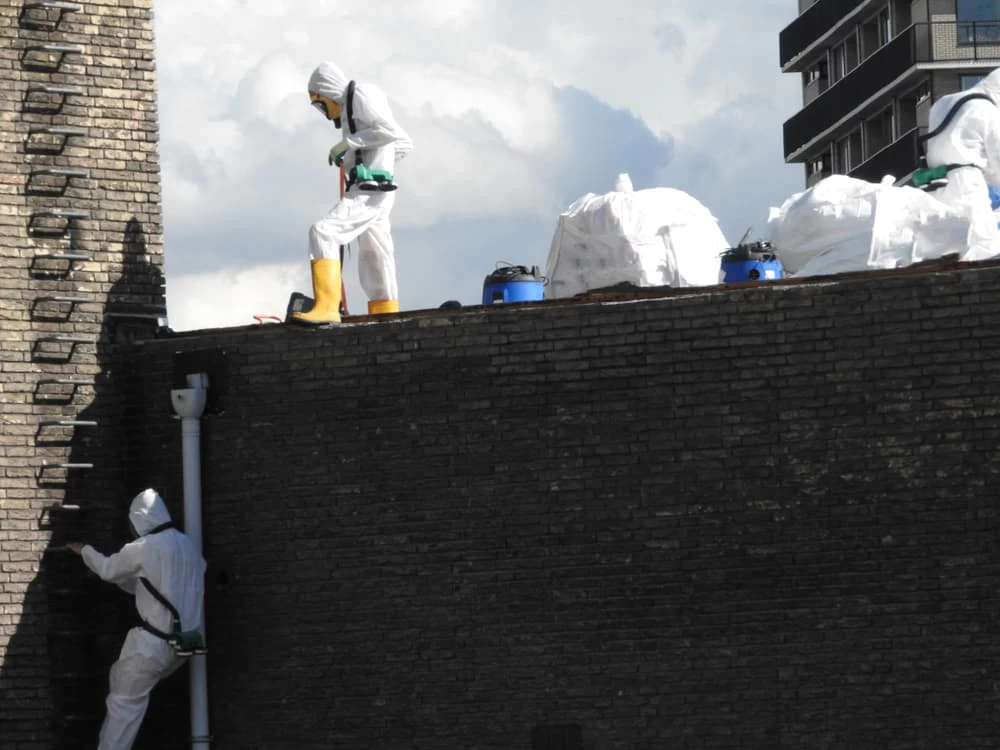
Then comes the actual removal full containment, licensed handlers, proper HEPA filtration, and waste packaged and transported by licensed haulers to an approved disposal facility. When the work is done, we conduct post-abatement air clearance testing. That test is what gives you the written documentation proving the space is safe. It’s the piece that satisfies buyers, insurers, and your own peace of mind. We don’t hand you a verbal and walk out the door.
Every Material Type. Every Structure on Your Property.
Asbestos doesn’t limit itself to one room or one material, and neither do we. We handle the full range of asbestos removal services pipe and boiler insulation, asbestos tile removal, popcorn ceiling removal, roofing materials, drywall compound, and more. If it was built before 1980 and it’s in Dutchess County, we’ve likely seen it.
One thing that comes up a lot in Clove Valley specifically: outbuildings. Barns, garages, old storage structures corrugated asbestos cement roofing was standard on farm buildings throughout the mid-20th century, and older heating systems in detached structures almost always have asbestos-containing insulation. A lot of homeowners focus on the main house and overlook everything else on the property. That’s a mistake, especially if you’re planning to renovate, repurpose, or demolish any of those secondary structures.
We also handle the situations where asbestos isn’t the only problem. Because Clove Valley’s valley-floor properties are prone to moisture infiltration, we frequently come in on jobs where water damage has already occurred alongside the asbestos disturbance. We provide mold remediation and water damage restoration as well so if your basement flood triggered an asbestos problem, you’re not coordinating three separate contractors. You’re making one call.
Does my older Clove Valley home actually have asbestos, or is it just a possibility?
If your home was built before 1980, the honest answer is: probably yes, in at least one material. Asbestos was used in so many building products during the mid-20th century that it’s more common than not in homes from that era floor tiles, pipe insulation, roofing shingles, ceiling texture, joint compound, and more. It’s not everywhere in every home, but it shows up often enough that assuming it’s not there without testing is a real risk.
In Clove Valley specifically, the housing stock spans a wide range of construction eras. There are homes with roots in the 19th century, mining-era cottages built during the limonite boom of the 1800s, and a significant wave of mid-century residential development as Beekman transitioned into a bedroom community. Each of those eras has its own asbestos risk profile. The only way to know for certain what you’re dealing with is to have a licensed professional test the materials before any renovation or demolition work begins. Don’t guess test.
What happens if I find asbestos during a renovation in Beekman do I stop work?
Yes stop work immediately. Don’t try to cover it back up, don’t continue cutting or pulling, and don’t let anyone else in the area until a licensed contractor has assessed it. Disturbing asbestos-containing materials without proper containment releases fibers into the air, and those fibers don’t settle quickly. Once they’re airborne, they can spread through an HVAC system or migrate to other parts of the home.
This is one of the most common scenarios we respond to in Dutchess County a renovation is underway, something gets pulled up, and the homeowner or their contractor realizes they may be looking at asbestos. The project stops, the clock starts ticking on costs, and everyone needs answers fast. We’re available 24/7 for exactly this situation. We can assess quickly, confirm what you’re dealing with, and get the abatement process moving so your renovation isn’t sitting idle for weeks. Under New York State regulations, abatement must be completed by a licensed contractor before that work can resume that’s not negotiable.
How much does asbestos removal typically cost for a home in Dutchess County?
For a standard residential project in New York, most homeowners pay somewhere between $1,300 and $3,100, with the average landing around $2,200. Where your project falls in that range depends on how much material needs to be removed, what type it is, and how accessible it is. A single room of asbestos floor tile is a very different scope than full pipe insulation removal throughout a basement and crawl space.
In New York, costs run higher than the national average for a few reasons that are worth understanding. The NYS DOL requires licensed contractors, certified handlers, and supervisors with documented training hours. Waste has to be packaged properly and transported by licensed haulers to approved disposal facilities that’s not optional, and it adds real cost. Post-abatement air clearance testing is also part of a compliant project. These aren’t inflated line items; they’re the regulatory requirements that protect you, your family, and anyone who buys your home later. A quote that skips any of those steps isn’t a deal it’s a liability.
Can asbestos in my home affect a real estate sale in Clove Valley?
It can and it does, regularly. When a home inspection surfaces suspected asbestos-containing materials, buyers get nervous. Some walk away entirely. Others demand remediation before closing, which puts the seller in a position of managing abatement under time pressure with a transaction on the line.
With median home values in Beekman approaching $460,000 and continuing to rise, the financial stakes of a failed or delayed closing are significant. The good news is that properly completed abatement with documented air clearance testing gives you exactly what you need to move the transaction forward. A licensed contractor’s post-abatement clearance report tells the buyer’s agent, the buyer’s inspector, and the title company that the material has been removed and the space has been tested and confirmed safe. That documentation is what keeps deals alive. If you’re listing a pre-1980 home in Clove Valley, getting ahead of this before the inspection is almost always the smarter move.
Does asbestos abatement in New York require permits or government notification?
Yes, depending on the scope of the project. Under New York State regulations and federal EPA NESHAP rules, asbestos abatement projects that disturb material above certain threshold quantities require advance notification to the appropriate state agency before work begins. In New York, that notification goes to the NYS Department of Environmental Conservation. Skipping that step is a federal environmental violation not a technicality, an actual enforcement risk.
For Clove Valley homeowners, all of this falls under the oversight of the NYS DOL’s Asbestos Control Bureau, with the Albany district office specifically responsible for Dutchess County. That office handles inspections during rehabilitation, reconstruction, and demolition projects involving asbestos-containing materials, and they respond to complaints about improper handling. When you hire us, we manage the notification and compliance requirements as part of the project you don’t have to navigate the regulatory process on top of everything else you’re already managing.
Can Green Island Group handle both asbestos and water damage in the same project?
Yes and for a lot of Clove Valley properties, that combination comes up more than people expect. The valley’s limestone geology and natural spring system means groundwater infiltration and basement flooding are recurring issues for homes in low-lying areas near Fishkill Creek and its tributaries. When water gets into a crawl space or basement and damages old pipe insulation or ceiling materials, you’re often looking at both a water damage problem and a potential asbestos disturbance in the same space.
Most contractors handle one or the other. You’d be coordinating between a water damage company and a separate abatement firm, managing timelines, access, and billing across two different crews. We handle asbestos abatement, mold remediation, and water damage restoration under one roof. We also bill insurance directly when the damage is covered which takes one more thing off your plate when you’re already dealing with a stressful situation. One call, one team, one project managed start to finish.