Older Red Hook-Area Homes Deserve More Than a Guess
If your Cokertown home was built before 1980, there’s a real chance asbestos is somewhere inside it. We find it, remove it legally, and give you the documentation to prove it’s gone.
I needed a professional consultation explanation of procedure for safe removal of Asbestos in my apartment complex. Without having an account yet, I was very impressed with the caring, knowledgeable and generous advice offered by Jessica, and will look forward to doing business in the future. Thank you so much! I feel much more informed about a sometimes scary endeavor. Peace. Nancy Silva Mineola, NY.
Mia Munoz
Used this company to clean up some water flood in my house. They were fast and easy to work with.very professional, Would recommend to anyone!
Nini Valle
Great company, had a flood and they responded quickly and efficiently. Billed my insurance company directly. I highly recommend this company!
joe colapietro, jr
I had pipe freeze in my basement right before a snow storm and they made to within an hour to help start the clean up process. They we by our side throughout the entire process and even helped with the insurance company. They did such a great job with the cleanup, repair, remidiation, I contracted them to perform the repairs and finishes in the basement. They came with enough manpower and material to get the job done. Leo and Jessica were nothing but a pleasure to deal with!!
Cristian Arredondo c
I had some water damage in my home and Green Island was able to take care of my issue quickly and effectively. I am very pleased with the work they did. They responded quickly and were very professional.
Michael M
Outstanding service! From the office to the field crew everyone was friendly, helpful and responsive. I highly recommend Green Island Group.
Renovation projects move forward. Real estate closings don’t stall. Your family isn’t breathing something that was standard building material in 1962 and a known health risk by 1980. That’s what proper asbestos abatement actually does it removes the thing that was quietly sitting in your floor tiles, your pipe insulation, or your popcorn ceiling, and it replaces uncertainty with a signed clearance certificate.
In Cokertown and the broader northeastern corner of the Town of Red Hook, roughly 60% of all housing units were built before 1980. That’s not a regional statistic pulled from somewhere far away that’s the actual composition of the housing stock along County Route 56 and the surrounding roads. Farmhouses, mid-century ranches, older colonials they were all built during the era when asbestos was in everything from boiler wrap to floor adhesive. If you’re renovating, selling, or just dealing with a pipe that burst over the winter and disturbed insulation you didn’t know existed, you need someone who understands what’s actually inside these homes.
Median home values in Red Hook have nearly doubled since 2016, sitting close to $540,000 today. That’s a significant asset. Undisclosed asbestos or asbestos removed by someone without the proper NYS Department of Labor license can derail a sale, complicate a closing, or expose you to liability you didn’t see coming. Doing this right the first time protects the investment you already have.
12 Years In, 5,000 Projects Deep We Know Cokertown's Homes
We’ve been doing asbestos abatement and environmental remediation across New York State for over 12 years. More than 5,000 completed projects. NYS Department of Labor licensed. MWBE certified and approved as a contractor for New York State agencies a credential that requires external verification and puts us in a category most regional competitors simply aren’t in.
We already serve Cokertown and the Town of Red Hook, including the neighboring hamlet of Red Hook Mills. That means we know the roads, the building types, and the specific materials that show up in homes off County Route 56 and Albany Post Road. A pre-war farmhouse in Cokertown is not the same as a 1990s subdivision house in Poughkeepsie. We’ve been inside enough of them to know the difference.
We’re also available around the clock 24 hours a day, seven days a week with documented response times as fast as two hours. When asbestos shows up mid-renovation or after a storm, that kind of availability matters more than most people expect until they actually need it.
No Surprises Here's Exactly What the Process Looks Like
It starts with an inspection. A licensed inspector comes to your Cokertown property, identifies any materials that may contain asbestos, and takes samples for laboratory analysis. Under New York State’s Industrial Code Rule 56, any building where construction began before 1974 requires this survey before renovation or demolition work can legally proceed. The Town of Red Hook’s building department will flag this requirement when you pull permits so it’s not something you can skip and hope no one notices.
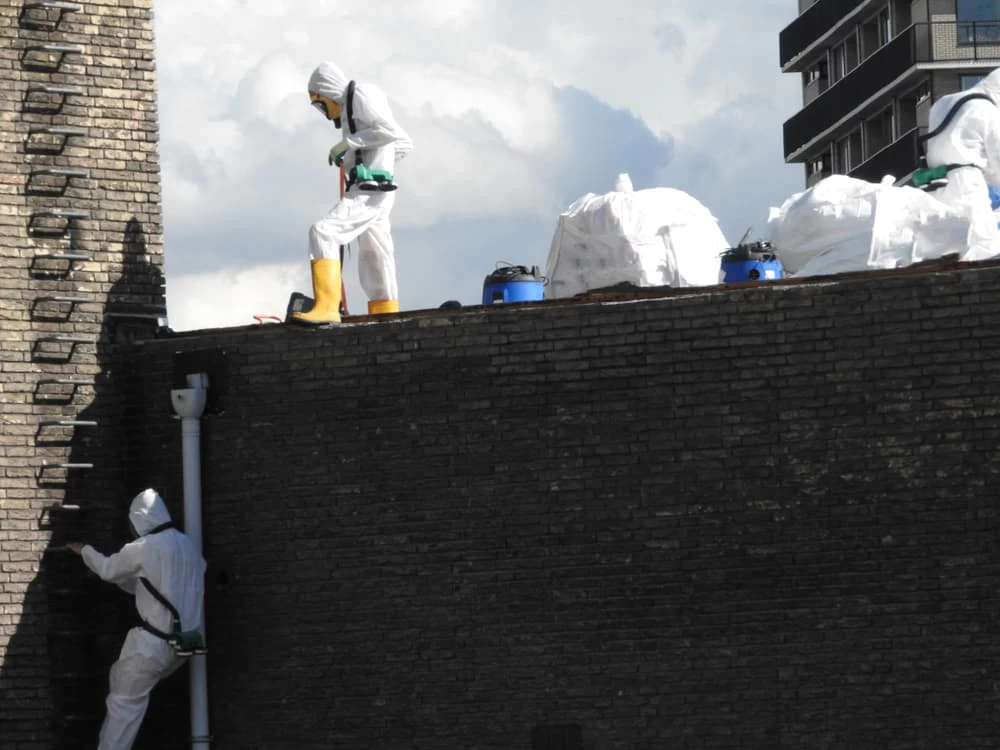
Once the lab results confirm what’s present, we put together an abatement plan. The work area gets contained and sealed off. Our certified handlers remove the material using methods that meet NYS DOL standards, and everything gets packaged and transported by licensed haulers to an approved disposal facility. There’s no gray area in how this is done the state is specific about every step, and so are we.
After removal, we conduct post-abatement air clearance testing. That’s the step that actually proves the space is safe not just our word, but a documented measurement of airborne fiber levels that meets the standard required by New York State. You receive that clearance certificate at the end, which is what your real estate agent, your contractor, or the Town of Red Hook building department will want to see. One call, one team, one complete package of documentation when it’s done.
Asbestos abatement isn’t a single task it’s a sequence of regulated steps, and every one of them matters. When you work with us in Cokertown, you’re getting the full scope: licensed inspection and sampling, lab analysis, contained removal by NYS DOL-certified handlers and supervisors, compliant waste transport and disposal, and post-abatement air clearance testing with written documentation. Nothing gets handed off to a subcontractor you’ve never met.
The specific materials we commonly find in older Dutchess County homes include 9×9 vinyl floor tiles, pipe and boiler insulation, plaster, popcorn ceilings, roofing shingles, and attic insulation particularly vermiculite in pre-war structures. If you have an older barn, outbuilding, or agricultural structure on your Cokertown property, corrugated asbestos-cement roofing was widely used on farm buildings through the 1970s and is something we assess and handle regularly in this part of the county.
We also handle mold remediation, water damage restoration, and fire damage restoration under the same roof. In a part of Dutchess County where Hudson Valley winters are hard on older homes freeze-thaw cycles, pipe bursts, basement flooding asbestos and water damage often show up together. We bill insurance directly, which multiple customers have specifically called out as a genuine relief when they’re already dealing with a stressful situation. One contractor, one invoice, one point of contact from start to finish.
Does my Cokertown home actually need an asbestos survey before I renovate?
If your home was built before 1974, yes it’s required by law. New York State’s Industrial Code Rule 56 mandates a licensed asbestos survey before any demolition or renovation work begins on a pre-1974 structure. This isn’t a suggestion or a best practice it’s an enforceable regulation overseen by the NYS Department of Labor’s Asbestos Control Bureau, which covers Dutchess County through the Albany District Office.
When you pull a building permit through the Town of Red Hook, this requirement will come up. If your contractor starts work without a survey and asbestos-containing materials are disturbed, the liability falls on the property owner not just the contractor. Given that the majority of homes in the Cokertown area predate 1980, and a significant portion predate 1974, this applies to most renovation projects in the hamlet. Getting the survey done before work starts is the straightforward way to avoid a stop-work order, a fine, or worse.
How much does asbestos removal typically cost for a home in Dutchess County?
The honest answer is that it depends on what’s there and how much of it needs to come out. For a typical residential project in New York a section of pipe insulation, a floor tile removal, or a popcorn ceiling you’re generally looking at somewhere between $1,300 and $3,100, with the average landing around $2,200. Larger projects involving multiple materials or whole-room abatement will run higher.
What you should know about the New York market specifically is that the regulatory requirements under ICR 56 add real cost compared to states with less rigorous oversight. Licensed contractors, certified workers, approved disposal facilities, air clearance testing none of that is free, and it’s all required. A quote that comes in significantly below that range from an unlicensed operator isn’t a deal it’s a liability. In a real estate market where your Cokertown home may be worth close to $540,000, the difference between a properly documented abatement and a cut-rate job that can’t produce clearance paperwork is not a small thing.
What are the most common places asbestos hides in older Red Hook-area homes?
In pre-1980 homes throughout Cokertown and the Town of Red Hook, the most common locations are floor tiles particularly the 9×9 vinyl tiles that were standard in mid-century construction and almost always contain asbestos along with the adhesive used to install them. Pipe insulation around older boilers and heating systems is another frequent find, especially in homes with original cast-iron radiator systems. Popcorn or textured ceilings applied before the mid-1980s commonly contain asbestos, as does plaster in older walls.
Beyond those, attic insulation is worth examining vermiculite insulation, which was widely used in pre-war and mid-century homes, is frequently contaminated with asbestos. Exterior and roofing materials including certain shingles and siding products also contained asbestos through the 1970s. If your property includes older outbuildings or a barn, corrugated fiber-cement roofing sheets were a common agricultural building material in this part of Dutchess County and should be assessed before any demolition or repair work begins.
What happens if asbestos is disturbed during a renovation before we knew it was there?
Stop work immediately. That’s the first and most important step. If a contractor has already cut into, sanded, or broken apart a material that turns out to contain asbestos, the area needs to be sealed off and left undisturbed until a licensed abatement contractor can assess and remediate it. Do not try to clean it up, vacuum it, or continue working around it standard vacuums and cleaning methods spread asbestos fibers rather than containing them.
This scenario happens more often than people expect, particularly in Cokertown-area homes where older materials have been painted over, tiled over, or built around for decades without anyone knowing what was underneath. When a renovation contractor hits something suspicious and stops work which a responsible contractor should do that’s actually the best-case version of this situation. We’re available 24 hours a day and have responded to exactly these calls in as little as two hours. The faster the area gets properly contained and assessed, the less disruption there is to your project timeline and your family’s safety.
Do I need asbestos testing if I'm selling my home in the Town of Red Hook?
You’re not legally required to test for asbestos before listing a home in New York but in practice, it comes up almost every time an older home goes under contract. Buyers and their inspectors routinely flag suspected asbestos-containing materials in pre-1980 homes, and when that happens mid-transaction, it creates exactly the kind of delay and price negotiation that sellers want to avoid. In a market where Red Hook homes are selling close to $540,000, an asbestos finding that surfaces during a buyer’s inspection can knock tens of thousands off your sale price or kill the deal entirely.
Getting a licensed asbestos inspection done before you list and having a completed abatement with air clearance documentation in hand puts you in a much stronger position. You can disclose accurately, price confidently, and hand buyers a document that proves the issue was handled by a licensed NYS DOL contractor. That clearance certificate is increasingly something buyers and their lenders want to see, and having it ready removes one of the most common friction points in an older home sale.
Can Green Island Group handle asbestos removal and water damage in the same project?
Yes and in older Cokertown homes, the two problems show up together more often than most homeowners expect. Hudson Valley winters are hard on aging structures. Freeze-thaw cycles stress old pipe insulation. A burst pipe in a basement with a 1940s boiler system can disturb asbestos-containing wrap that’s been stable for decades. Spring flooding can reach floor assemblies that contain asbestos tile and adhesive. When water damage triggers an asbestos exposure, you’re suddenly dealing with two separate remediation needs at the same time.
We handle both under one roof asbestos abatement and water damage restoration, managed by the same team, on the same project timeline. We also bill insurance directly, which matters when you’re already stressed about the damage itself and don’t want to be coordinating between two separate contractors and two separate insurance claims. Multiple customers have specifically mentioned this in their reviews, and it’s one of the more practical reasons to have a single contractor who can handle the full scope of what an older Dutchess County home throws at you.