College Point Homes Hide What the 1920s Left Behind
Most homes on this peninsula were built decades before asbestos was ever a concern and that’s exactly why asbestos abatement in College Point starts with knowing what you’re actually dealing with.
I needed a professional consultation explanation of procedure for safe removal of Asbestos in my apartment complex. Without having an account yet, I was very impressed with the caring, knowledgeable and generous advice offered by Jessica, and will look forward to doing business in the future. Thank you so much! I feel much more informed about a sometimes scary endeavor. Peace. Nancy Silva Mineola, NY.
Mia Munoz
Used this company to clean up some water flood in my house. They were fast and easy to work with.very professional, Would recommend to anyone!
Nini Valle
Great company, had a flood and they responded quickly and efficiently. Billed my insurance company directly. I highly recommend this company!
joe colapietro, jr
I had pipe freeze in my basement right before a snow storm and they made to within an hour to help start the clean up process. They we by our side throughout the entire process and even helped with the insurance company. They did such a great job with the cleanup, repair, remidiation, I contracted them to perform the repairs and finishes in the basement. They came with enough manpower and material to get the job done. Leo and Jessica were nothing but a pleasure to deal with!!
Cristian Arredondo c
I had some water damage in my home and Green Island was able to take care of my issue quickly and effectively. I am very pleased with the work they did. They responded quickly and were very professional.
Michael M
Outstanding service! From the office to the field crew everyone was friendly, helpful and responsive. I highly recommend Green Island Group.
When asbestos shows up during a renovation, a home inspection, or a water damage situation everything stops. The contractor pauses. The closing gets complicated. The renovation budget starts bleeding. What you actually need is someone who can move quickly, handle the process correctly, and hand you documentation that holds up with your real estate attorney, your insurance company, and the NYC Department of Buildings.
College Point’s housing stock is older than most people realize. The median home here was built in 1962, and a significant portion of the neighborhood’s single-family homes date back to the 1920s. That means floor tiles, pipe insulation around old boilers, textured ceilings, and joint compound that were all standard materials during the asbestos era. It’s not a remote possibility in these homes it’s a statistical likelihood.
The peninsula’s position between Flushing Bay and the East River adds another layer. Coastal humidity, freeze-thaw cycles, and storm-driven moisture intrusion are real here in ways they aren’t in landlocked Queens neighborhoods. Moisture is one of the main ways previously stable asbestos-containing materials become damaged and start releasing fibers. That’s why timing matters and why a thorough inspection, not just a visual check, is always the right first move.
Licensed Asbestos Contractor Serving College Point
Every Credential That NYC Actually Requires
We hold NYS DOL Asbestos licensing, USEPA Lead/RRP certification, NYC BIC registration, and NYC General Contractor licensing the full stack required to legally perform asbestos abatement work in New York City, including right here in College Point. This isn’t a company that does abatement work in Suffolk County and figures out the NYC DEP paperwork as we go. The ACP-5 exemption process, the ACP-7 project notification, post-abatement air clearance documentation this is standard operating procedure for every job we run in Queens.
We also hold IICRC, NADCA, NYS DOL Mold, and NYS/NYC MBE/WBE certifications, which matters for College Point Corporate Park clients with compliance or diversity spend requirements. Whether you’re a homeowner off College Point Boulevard or a property manager in the Corporate Park, you’re working with a team that has done this before in this borough, under these regulations.
It starts with an inspection by a certified asbestos investigator. In New York City, this isn’t optional any renovation or demolition work that could disturb building materials requires a DEP-certified survey before work begins. If you’re in the middle of a renovation and work has already stopped, that inspection happens first, and it happens fast.
If asbestos-containing materials are identified, we file the appropriate NYC DEP notification either an ACP-5 if no regulated materials will be disturbed, or an ACP-7 project notification if abatement is required. The NYC Department of Buildings will not issue a renovation or demolition permit until DEP requirements are satisfied, so getting this paperwork right the first time is what keeps your project moving. We handle all of it.
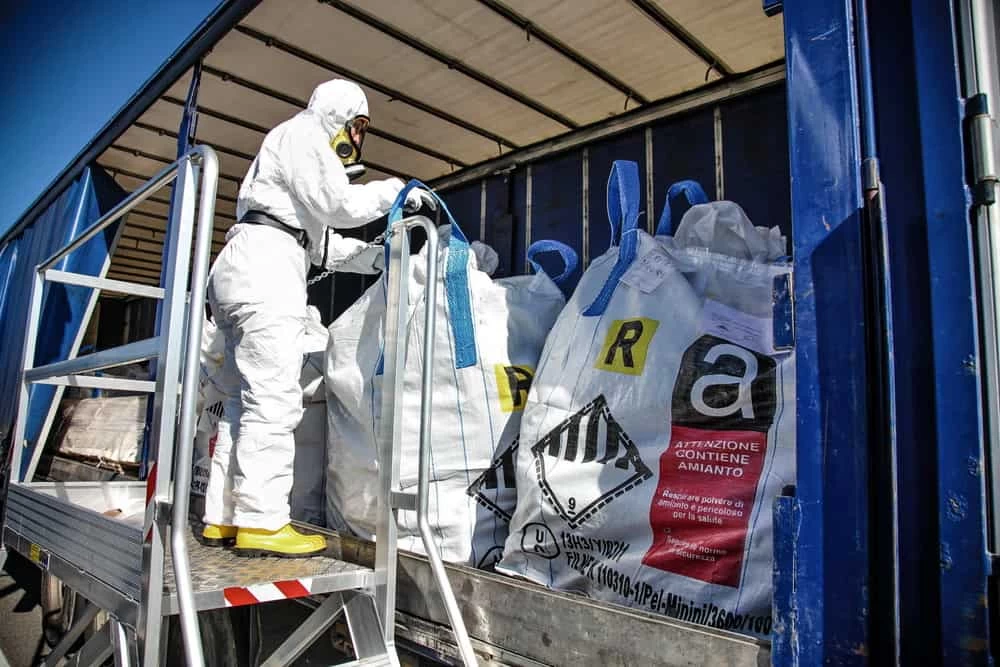
During abatement, we use Microtrap air scrubbers throughout the work area and follow full containment protocols. When the removal is complete, post-abatement air monitoring is conducted to verify that airborne fiber levels have returned to safe levels. You receive written clearance documentation the same paperwork your contractor, your attorney, and your insurer will ask for. If your home also has lead paint concerns, which is common in College Point’s pre-1950 housing stock, we’re USEPA Lead/RRP certified to address both in a single project.
From First Call to Clearance Certificate All of It
Most abatement contractors in the College Point area handle removal and stop there. We handle the complete sequence: inspection, testing, abatement, post-removal air clearance verification, and full reconstruction. That means after the asbestos is gone, we put the room back together new flooring, restored ceilings, re-insulated pipes. You’re not left coordinating a second contractor to finish what we started.
For homeowners in College Point’s older single-family stock, the most common materials we address are vinyl asbestos floor tiles, pipe and boiler insulation, textured popcorn ceilings, and drywall joint compound all standard in homes built between the 1920s and late 1970s. For commercial clients in the College Point Corporate Park, we handle asbestos remediation in office, industrial, and mixed-use buildings, with full NYC DEP compliance documentation for every project.
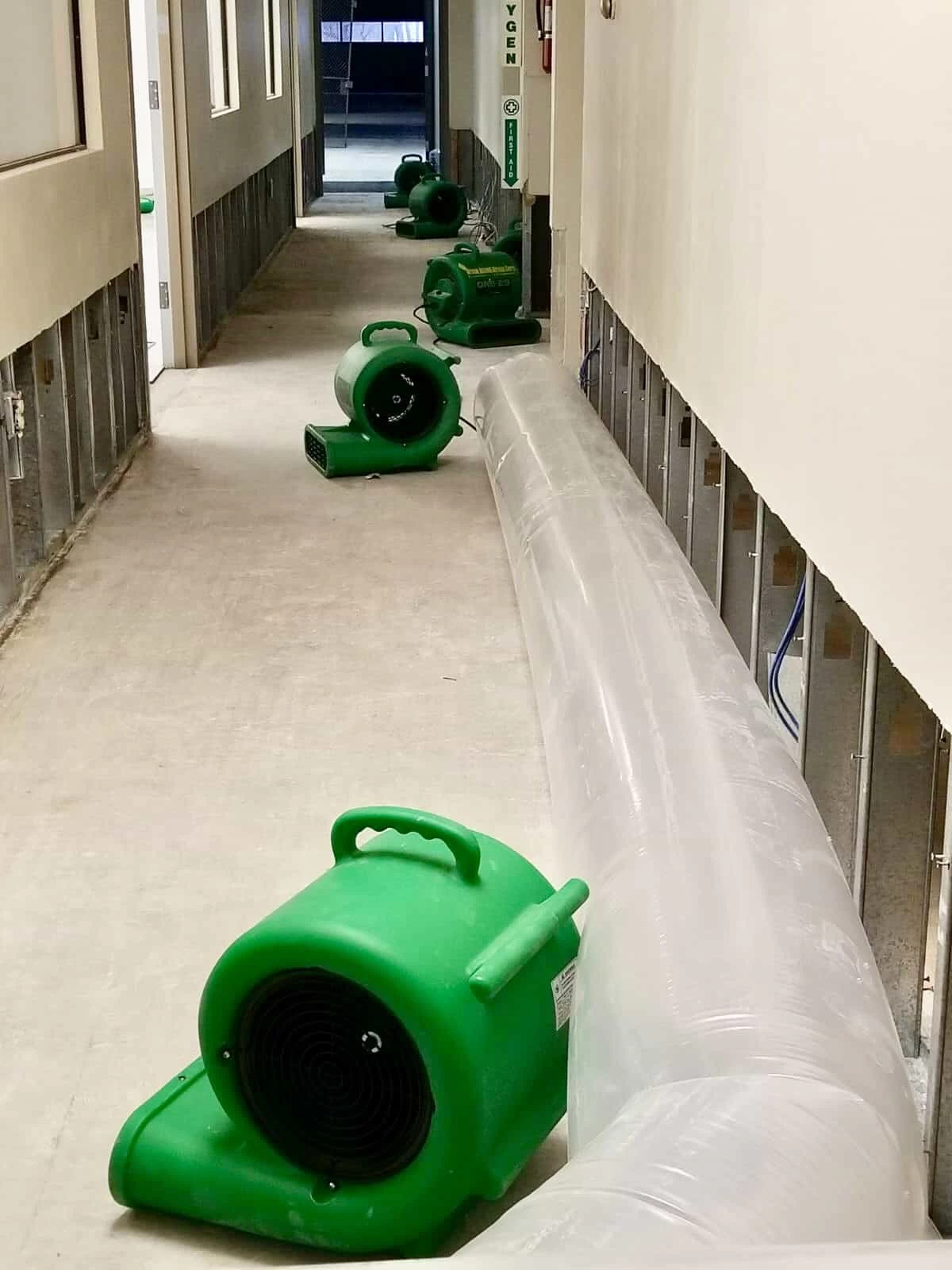
We also bill insurance companies directly. If asbestos is discovered during a water damage event a burst pipe in an older home, storm damage from a nor’easter off Flushing Bay we work with your insurer from the start so you’re not fronting costs and waiting for reimbursement. Every project ends with documented air clearance results, not just a verbal sign-off. That documentation is what protects you at closing, during a permit application, and with your insurance carrier.
Does a College Point homeowner need a NYC DEP permit before asbestos removal?
In New York City, asbestos abatement is regulated by the NYC Department of Environmental Protection which is a separate layer on top of the state-level NYS DOL requirements. Before any renovation, alteration, or demolition work that could disturb building materials, a DEP-certified asbestos investigator must conduct a survey. Depending on what that survey finds, you’ll either file an ACP-5 form (documenting that no regulated materials will be disturbed) or an ACP-7 project notification (required when asbestos-containing materials are present and work will disturb them).
The NYC Department of Buildings will not issue a renovation or demolition permit until DEP asbestos requirements are satisfied. That means if you’re planning a kitchen gut renovation, bathroom update, or basement finishing project in a pre-1980 College Point home, this step has to happen before your contractor can legally proceed. Skipping it or hiring someone who doesn’t know the NYC DEP process can halt your project, expose you to fines, and create liability issues that follow the property. We handle all DEP filings as part of every abatement project.
How do I know if my older College Point home actually contains asbestos?
The honest answer is: you can’t know without testing. Visual inspection alone isn’t enough asbestos-containing materials don’t look different from non-asbestos versions of the same product. What you can do is look at the age and construction type of your home. If it was built before 1980 and in College Point, the median construction year is 1962, with roughly 31% of homes built before 1950 there’s a realistic probability that asbestos is present in one or more materials.
The most common locations in College Point’s older single-family homes are vinyl floor tiles and the adhesive beneath them, pipe and boiler insulation in the basement, textured ceiling coatings, and drywall joint compound. The only way to confirm is bulk sample testing by a licensed asbestos investigator. Samples are collected from suspect materials and sent to an accredited laboratory for analysis. Results typically come back within a few days, and from there you’ll have a clear picture of what’s present, where it is, and what the appropriate response is whether that’s abatement, encapsulation, or continued monitoring.
What happens if asbestos is found during a renovation in College Point, NY?
Work stops legally, it has to. If asbestos-containing materials are identified or suspected during an active renovation, the contractor is required to halt work in the affected area until a licensed abatement contractor has assessed the situation, completed any required removal, and provided post-abatement air clearance documentation. In New York City, this also triggers the NYC DEP notification process, which has to be completed before the renovation can resume.
The practical impact is real: your contractor’s schedule gets disrupted, costs can accumulate, and the timeline for your project shifts. The fastest path through that situation is a licensed contractor who already knows the NYC DEP filing process and can move quickly. We operate 24/7, respond to renovation-stoppage situations as a priority, and handle the DEP paperwork from the first call. The goal is to get you tested, cleared, and back to work as fast as the safety process allows not to drag out a process that doesn’t need to be complicated.
Can asbestos be encapsulated instead of removed in a New York City home?
Sometimes, yes but it depends on the condition of the material, where it is, and what you’re planning to do with the space. Encapsulation involves sealing asbestos-containing materials with a specialized coating or barrier so that fibers cannot become airborne. It’s a legitimate option when the material is in good condition, not friable (meaning it can’t be crumbled by hand), and won’t be disturbed by future renovation work.
In practice, College Point’s older housing stock complicates that calculus. Coastal humidity, freeze-thaw cycles, and the moisture intrusion that comes with being on a water-bounded peninsula can degrade previously stable materials over time. Pipe insulation that has been wet, floor tiles that have absorbed moisture from a basement flood, or ceiling texture damaged by a roof leak may no longer be candidates for encapsulation. A licensed asbestos investigator will assess the current condition of the material and give you an honest recommendation. In New York City, any encapsulation work in a regulated setting still requires proper documentation and DEP compliance it’s not a shortcut around the process, just a different path through it.
How long does asbestos abatement typically take in a single-family home?
For a typical single-family home in College Point say, a 1920s or 1940s-era house with asbestos in the floor tiles, pipe insulation, or a textured ceiling abatement usually takes one to three days for the removal work itself. The full timeline from initial inspection to final clearance documentation is generally one to two weeks, depending on the scope of work, how quickly lab results come back, and how long the NYC DEP notification process takes.
A few factors can extend that timeline. If multiple material types are involved floor tiles, boiler insulation, and ceiling texture all in the same project the work takes longer and requires more careful containment. If reconstruction is needed after removal (new flooring, ceiling restoration, re-insulation), that adds time as well, though with us handling both abatement and reconstruction, you’re not waiting on a second contractor to get started. The DEP filing timeline is also worth factoring in if you’re working against a real estate closing date or a contractor schedule the earlier you start the inspection process, the more flexibility you have on the back end.
Does homeowners insurance cover asbestos removal in College Point, NY?
It depends on how the asbestos was discovered and what triggered the claim. Standard homeowners insurance policies in New York typically do not cover asbestos removal as a standalone event meaning if you simply find asbestos during a planned renovation, that’s generally not a covered loss. However, if asbestos-containing materials are disturbed or damaged as a result of a covered event a burst pipe, a roof failure during a nor’easter, storm surge damage from a coastal weather event the asbestos remediation associated with that damage may be covered under your policy.
College Point’s location on a peninsula between Flushing Bay and the East River makes it more exposed to the kinds of weather events that trigger these situations than most inland Queens neighborhoods. Older homes here particularly those with aging plumbing, original roofing, and basement boiler systems see water damage events that can expose previously stable asbestos materials. We bill insurance companies directly, which means you’re not out of pocket waiting for reimbursement while the work is underway. If you’re unsure whether your situation is covered, we can walk through the specifics with you before any work begins.