Colonial Heights Homes Hide This Most Owners Don't Know Until It's Too Late
If your home was built before 1980 in Colonial Heights or the surrounding Town of Poughkeepsie, asbestos abatement isn’t a precaution it’s almost certainly a necessity. We remove it safely, legally, and completely.
I needed a professional consultation explanation of procedure for safe removal of Asbestos in my apartment complex. Without having an account yet, I was very impressed with the caring, knowledgeable and generous advice offered by Jessica, and will look forward to doing business in the future. Thank you so much! I feel much more informed about a sometimes scary endeavor. Peace. Nancy Silva Mineola, NY.
Mia Munoz
Used this company to clean up some water flood in my house. They were fast and easy to work with.very professional, Would recommend to anyone!
Nini Valle
Great company, had a flood and they responded quickly and efficiently. Billed my insurance company directly. I highly recommend this company!
joe colapietro, jr
I had pipe freeze in my basement right before a snow storm and they made to within an hour to help start the clean up process. They we by our side throughout the entire process and even helped with the insurance company. They did such a great job with the cleanup, repair, remidiation, I contracted them to perform the repairs and finishes in the basement. They came with enough manpower and material to get the job done. Leo and Jessica were nothing but a pleasure to deal with!!
Cristian Arredondo c
I had some water damage in my home and Green Island was able to take care of my issue quickly and effectively. I am very pleased with the work they did. They responded quickly and were very professional.
Michael M
Outstanding service! From the office to the field crew everyone was friendly, helpful and responsive. I highly recommend Green Island Group.
The moment asbestos is properly removed and cleared, the weight of the whole situation lifts. You’re not pausing a renovation anymore. You’re not holding up a real estate closing. You’re not wondering whether the dust your family breathed last week was something to worry about. You have documentation, you have clearance, and you can move forward.
For homeowners in Colonial Heights and MacDonnell Heights, that moment matters more than most people realize going in. The housing stock here much of it built between the 1940s and 1970s, with some homes dating back before 1939 is exactly the kind of construction where asbestos-containing materials were standard. Vinyl floor tiles in the kitchen, pipe insulation wrapped around the basement heating system, popcorn ceilings in the bedrooms, boiler wrap. These weren’t shortcuts. They were the norm for that era, and they’re sitting undisturbed in thousands of homes along the Route 9 corridor right now.
What you get on the other side of a proper abatement isn’t just a cleaner space. It’s a home you can renovate without stopping mid-project. It’s a property you can sell without a buyer’s attorney flagging an unresolved hazard. It’s peace of mind that doesn’t require you to just hope for the best. The Arlington Central School District families who live in Colonial Heights people who bought here because they wanted a stable, safe neighborhood deserve to know their homes match that standard inside the walls, too.
Licensed Asbestos Contractor, Town of Poughkeepsie
12 Years In, 5,000 Projects Deep We Know What's In Colonial Heights Walls
We’ve been doing this work across New York State for over 12 years, with more than 5,000 completed abatement and restoration projects behind us. We’re not a general contractor who occasionally handles hazardous materials asbestos abatement is a core part of what we do, handled by a team of NYS Department of Labor licensed technicians and supervisors who follow the same rigorous process every time, regardless of job size.
We hold a Minority and Woman-Owned Business Enterprise (MWBE) certification and are an approved contractor for New York State agencies a level of institutional vetting that most contractors in the Dutchess County market simply don’t have. We understand the difference between the Town of Poughkeepsie’s Building Department and the City’s permitting process, and we know the NYS DOL and DEC requirements that govern every abatement project in this area, including the specific challenges of Colonial Heights’ older housing stock.
We also bill insurance directly. If your abatement involves a covered event a burst pipe that exposed insulation, water damage that disturbed flooring you don’t have to manage that paperwork on top of everything else. We handle it.
It starts with an inspection. Before anything is touched, a licensed professional assesses the affected area, identifies the materials in question, and determines the scope of what needs to be removed. In Colonial Heights homes especially those built in the 1950s and 1960s that often means looking beyond the obvious. Asbestos doesn’t always announce itself. It can be under the flooring you were planning to replace, inside the walls you were going to open up, or wrapped around pipes you haven’t thought about in years.
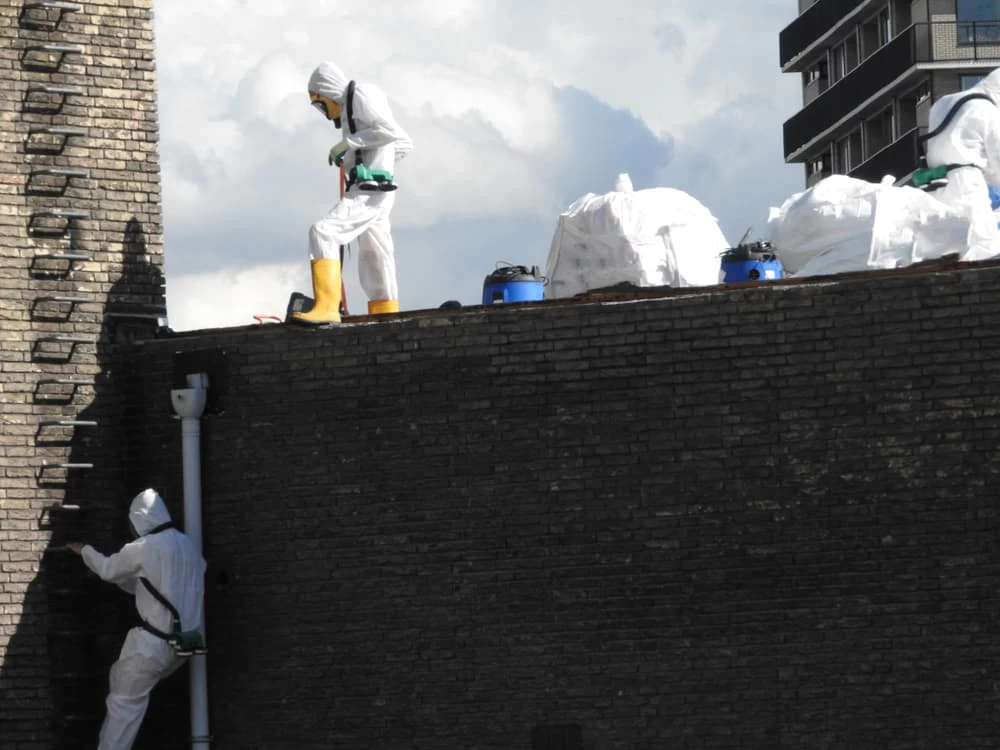
Once the scope is confirmed, we handle all required notifications to the NYS Department of Labor before work begins, as state law requires for projects above a certain threshold. The abatement itself is done under strict containment protocols negative air pressure, sealed work zones, full PPE for every technician on site. Materials are packaged, labeled, and transported by licensed haulers to approved disposal facilities. Nothing gets cut loose on this.
When the removal is complete, post-abatement air clearance testing is conducted before the containment comes down. You get the results in writing. That documentation matters for your own records, for future renovation work, and especially if you’re selling your home in a market where buyers and their attorneys are paying attention. We don’t consider the job done until the clearance test passes and you have paper proof in hand.
Asbestos Tile and Popcorn Ceiling Removal, Dutchess County
Every Material, Every Room Built for Pre-War and Mid-Century Colonial Heights Homes
The asbestos-containing materials most commonly found in Colonial Heights homes reflect exactly what was being built here between the 1940s and 1970s. Nine-by-nine vinyl asbestos floor tiles in kitchens and bathrooms. Pipe insulation and boiler wrap in basements. Popcorn ceiling texture in living rooms and bedrooms applied through the mid-1970s. Roofing shingles and exterior siding on older structures. Some of the pre-1939 homes in Colonial Heights also contain asbestos in wall plaster and attic insulation materials that require a different approach than standard tile or ceiling removal.
We handle all of it. Asbestos tile removal, popcorn ceiling removal, pipe and boiler insulation abatement, full-structure remediation ahead of demolition or major renovation the scope adjusts to what’s actually in your home, not a one-size package that may not fit. Every project includes proper containment, licensed disposal, and post-abatement air clearance testing as standard. No add-ons, no surprises.
For homeowners in Colonial Heights navigating a real estate transaction, we can also move quickly. The 12603 zip code’s housing market is tight and active closings don’t wait, and neither do we. If asbestos was flagged in an inspection report and your timeline is compressed, call us first. We’re available 24 hours a day, seven days a week, and we’ve handled plenty of transaction-driven abatements in Dutchess County where speed and documentation both mattered.
Do homes in Colonial Heights, NY actually have a high chance of containing asbestos?
Yes and it’s not a close call. The housing stock in Colonial Heights and the surrounding MacDonnell Heights area was largely built between the 1940s and 1970s, with some homes dating to before 1939. That puts the majority of this neighborhood squarely within the peak era of asbestos use in American residential construction. Asbestos was used in floor tiles, pipe insulation, boiler wrap, ceiling texture, roofing shingles, siding, and wall plaster during those decades not occasionally, but as standard practice.
If you’re in a home built before 1980 in Colonial Heights and you haven’t had a professional inspection, you should assume asbestos-containing materials are present somewhere in the structure. That doesn’t mean you’re in immediate danger undisturbed asbestos is generally not a health risk. But the moment you start renovating, drilling, cutting, or demoing, the risk changes. An inspection before any renovation project is the smartest first step you can take.
How much does asbestos removal cost for a home in Dutchess County, NY?
Costs vary based on the type of material, the square footage involved, and the complexity of containment and disposal required. For most residential projects in the Dutchess County area, homeowners typically pay somewhere between $1,300 and $3,100, with the national average landing around $2,170. Larger projects full-house abatement ahead of a gut renovation, or multiple material types across several rooms can run higher.
What drives cost in New York specifically is the regulatory layer. NYS DOL licensing requirements, proper waste packaging, licensed haulers, and approved disposal facilities all add legitimate cost that you won’t see with an unlicensed operator who’s just going to bag it and move on. The difference matters not just for your health, but for your legal exposure if improperly handled asbestos waste is ever traced back to your property. Get a clear, itemized estimate and make sure you understand what’s included before anyone starts work.
What types of asbestos-containing materials are most common in 1950s and 1960s homes?
The most frequently encountered materials in homes built during that era are nine-by-nine inch vinyl floor tiles the kind you’d find in kitchens, bathrooms, and basements. They’re a giveaway for the period and almost always contain asbestos. Pipe insulation is another common one, especially the gray, fibrous wrap around heating pipes and boilers in basements. Popcorn ceiling texture, applied widely through the mid-1970s, is a third. Roofing shingles, exterior siding panels, and certain types of wall plaster also contain asbestos in homes from this era.
In Colonial Heights specifically, the combination of pre-war homes and mid-century construction means some properties have multiple material types present sometimes in different parts of the same house. A proper inspection looks at all of it, not just the obvious spot that triggered the concern. Knowing the full picture before you start any renovation saves you from stopping mid-project when a second material turns up unexpectedly.
Is asbestos removal required before selling a home in the Town of Poughkeepsie?
There’s no blanket legal requirement that asbestos must be removed before a home sale in the Town of Poughkeepsie but that’s not the whole story. New York State law requires sellers to disclose known material defects, and asbestos flagged in an inspection report becomes a known defect the moment it’s documented. From that point, a buyer’s attorney, lender, or the buyer themselves can require remediation as a condition of closing.
In a market as active as Colonial Heights where the housing inventory is tight and buyers have options an unresolved asbestos issue can kill a deal or significantly reduce your negotiating position. Sellers who handle it proactively, with licensed abatement and post-clearance documentation in hand, tend to close faster and with fewer complications. If you’re planning to list a home in the 12603 zip code, it’s worth getting ahead of this before the inspection report does it for you.
What happens if asbestos is discovered during a renovation in Colonial Heights?
Stop work immediately. This is the most important thing, and it’s not an overreaction it’s the correct response. Once a material suspected to contain asbestos is disturbed, continuing work without containment spreads fibers through the air and potentially through your HVAC system and the rest of the home. The damage from that kind of exposure can be significant, and it’s entirely preventable.
Once work stops, call a licensed abatement contractor not the renovation contractor, not a general handyman. In New York, asbestos abatement must be performed by a contractor holding a current NYS DOL Asbestos Contractor License. We’re available 24/7, which matters here because renovation discoveries rarely happen at a convenient moment. We’ll assess the situation, contain the affected area, and give you a clear scope of what needs to happen before your renovation crew can come back. Most mid-project abatements in Colonial Heights can be completed without derailing the full renovation timeline if they’re handled quickly and correctly from the start.
How do I know if a contractor is actually licensed for asbestos abatement in New York State?
You can verify it directly through the New York State Department of Labor. The NYS DOL maintains a public database of licensed asbestos contractors, and any contractor working in Colonial Heights or anywhere else in the state should be listed there with a current, active license. If they can’t give you their license number or tell you to just trust them, that’s your answer.
In New York, the licensing requirements are specific: contractors must hold an NYS DOL Asbestos Contractor License, individual workers must hold Handler certifications earned through a mandatory 32-hour training course, and supervisors need an additional certification on top of that. These aren’t formalities they’re the baseline for anyone legally allowed to touch asbestos-containing materials in this state. Dutchess County homeowners who hire unlicensed operators aren’t just taking a health risk; they’re potentially taking on legal liability for improper hazardous waste handling. The license verification takes two minutes and is worth every second.