If your split-level or hi-ranch was built before 1980, asbestos abatement isn’t a maybe it’s a real conversation worth having before your next renovation or home sale.
I needed a professional consultation explanation of procedure for safe removal of Asbestos in my apartment complex. Without having an account yet, I was very impressed with the caring, knowledgeable and generous advice offered by Jessica, and will look forward to doing business in the future. Thank you so much! I feel much more informed about a sometimes scary endeavor. Peace. Nancy Silva Mineola, NY.
Mia Munoz
Used this company to clean up some water flood in my house. They were fast and easy to work with.very professional, Would recommend to anyone!
Nini Valle
Great company, had a flood and they responded quickly and efficiently. Billed my insurance company directly. I highly recommend this company!
joe colapietro, jr
I had pipe freeze in my basement right before a snow storm and they made to within an hour to help start the clean up process. They we by our side throughout the entire process and even helped with the insurance company. They did such a great job with the cleanup, repair, remidiation, I contracted them to perform the repairs and finishes in the basement. They came with enough manpower and material to get the job done. Leo and Jessica were nothing but a pleasure to deal with!!
Cristian Arredondo c
I had some water damage in my home and Green Island was able to take care of my issue quickly and effectively. I am very pleased with the work they did. They responded quickly and were very professional.
Michael M
Outstanding service! From the office to the field crew everyone was friendly, helpful and responsive. I highly recommend Green Island Group.
Commack’s housing stock tells a very specific story. The split-levels and hi-ranch homes that line the streets off Jericho Turnpike and Veterans Memorial Highway were built during the height of asbestos use in residential construction the 1950s and 1960s. That means floor tiles, pipe insulation, popcorn ceilings, and joint compound in thousands of Commack homes may still contain asbestos-containing materials that nobody has touched since the original build. Most homeowners don’t find out until a renovation is already in progress.
When we complete asbestos abatement correctly, you stop the clock on a problem that only gets more complicated the longer it sits. You get clearance documentation that satisfies buyers, lenders, and real estate attorneys which matters a lot in a market where homes are trading at $700,000 and above. You move forward with your renovation knowing the air in your home has been tested and confirmed clean.
For families in the Commack School District area, that peace of mind isn’t abstract. It’s knowing your kids aren’t breathing in disturbed fibers while you gut a bathroom or replace flooring that’s been there since 1967. Proper asbestos removal removes the risk and gives you the paperwork to prove it.
Green Island Group is a licensed asbestos abatement contractor serving Commack and the broader Suffolk County area. We hold full licensing under NYS DEC Code Rule 56, which governs every asbestos abatement project in New York State from the supervisors on-site to the handlers doing the work to the permitted disposal of every material we remove. This isn’t a franchise routing your call to a subcontractor. It’s a real crew with real credentials.
Commack sits across two towns Huntington and Smithtown with Townline Road as the dividing line. That dual-municipality setup means your permit could go to either building department depending on your address, and the notification requirements, fees, and inspection processes differ between the two. We know both. We handle the permit applications, the regulatory notifications, and the compliance paperwork, so you’re not left figuring out which town you actually belong to before work can even start.
It starts with an inspection. Before anything is removed, we assess the materials in question floor tiles, ceiling texture, pipe wrap, insulation, joint compound and confirm whether asbestos-containing materials are present and what condition they’re in. If testing is needed, that happens first. You don’t move forward on assumptions.
Once the scope is clear, we handle the permit. In Commack, that means filing with either the Town of Huntington or the Town of Smithtown building department depending on your address and submitting the required pre-abatement notification to the state. This step alone trips up a lot of homeowners who try to manage it themselves, especially when they’re mid-renovation and working against a timeline. We take that off your plate entirely.
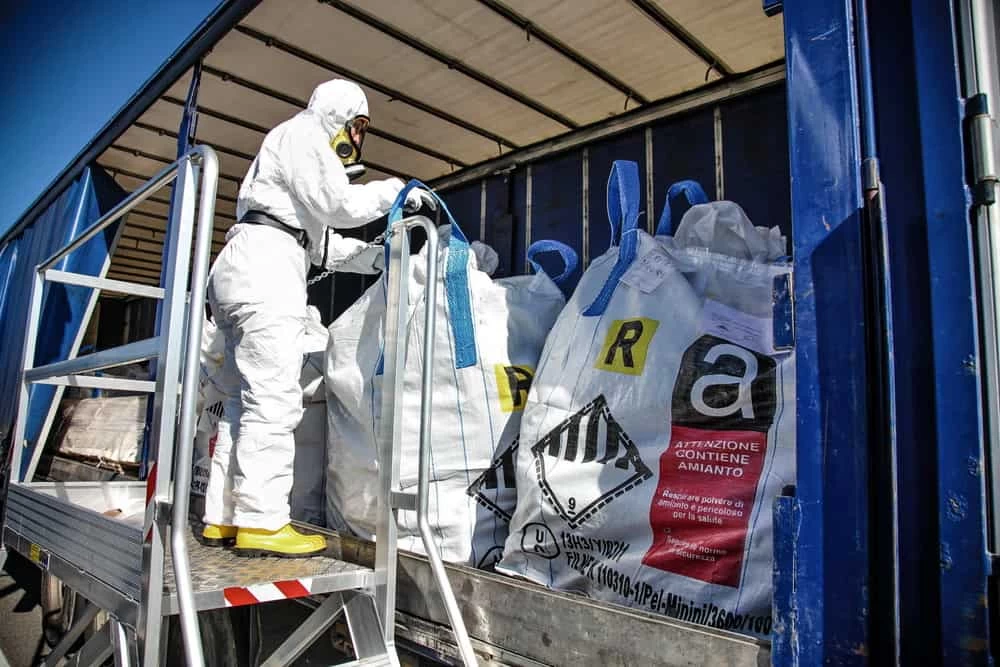
The abatement itself follows strict containment protocol negative air pressure, sealed work zones, licensed supervisors and handlers on-site from start to finish. When the work is done, post-clearance air testing confirms the space is clean before containment comes down. You receive a full documentation package: waste manifests, clearance certificates, and everything a buyer, lender, or attorney would need to see. For a real estate transaction in Commack’s active market, that paperwork is what keeps a closing on schedule.
Asbestos Tile and Popcorn Ceiling Removal, Commack
What We Remove Most Often in Commack Homes
The most common asbestos abatement requests we handle in Commack come down to a few specific materials. Asbestos tile removal is at the top of the list vinyl asbestos floor tiles were standard in virtually every home built during Commack’s development boom, and they show up in kitchens, bathrooms, basements, and entryways of 1960s split-levels across the 11725 zip code. If you’re replacing flooring in a home of that era, testing before you pull anything up is not optional.
Asbestos popcorn ceiling removal is the second most common call we get from Commack homeowners. Textured ceilings applied in the 1960s and 1970s frequently tested positive for asbestos, and many residents discover this mid-renovation when they try to scrape or paint over the surface. We handle full containment, licensed removal, and post-clearance air testing the complete process, not just the scraping.
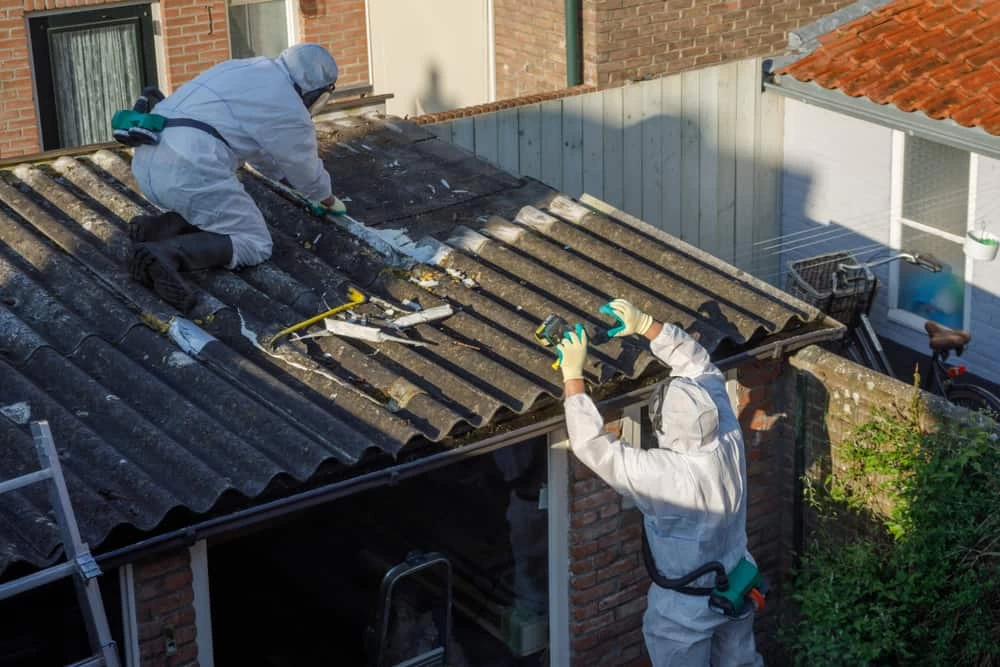
Beyond tile and ceilings, we also handle pipe and duct insulation, boiler jacket material, roofing and siding abatement, and joint compound removal. For commercial properties along Commack’s Jericho Turnpike corridor or near the Hauppauge Industrial Park, we carry the commercial licensing and insurance required for larger-scale projects including the Town of Smithtown approvals that commercial abatement work in this area requires. Every residential and commercial project includes the full documentation package: pre-abatement reports, waste manifests, and clearance certificates.
Do I need a permit for asbestos removal in Commack, NY?
Yes and in Commack specifically, the permit process is a little more involved than in most Long Island communities. Because Commack straddles both the Town of Huntington and the Town of Smithtown, which building department you file with depends entirely on where your property sits relative to Townline Road. The two towns have different permit fees, different inspection procedures, and different notification timelines, so knowing your jurisdiction before you start is important.
Beyond the local permit, New York State requires pre-abatement notification to the NYS Department of Environmental Conservation under Code Rule 56 before any licensed abatement work begins. This applies to all projects residential and commercial. Skipping this step isn’t just a fine risk; it can invalidate your clearance documentation, which creates real problems if you’re in the middle of a real estate transaction. We handle both the local permit and the state notification as part of every project we take on in Commack.
How much does asbestos removal typically cost in Commack, NY?
Based on completed projects in the Commack area, asbestos removal typically runs between $20 and $65 per square foot, with most residential projects landing somewhere between $1,200 and $3,000. Where your project falls in that range depends on what material is involved, how much of it there is, and how accessible the work area is. Asbestos tile removal in a finished basement is a different job than popcorn ceiling abatement across an entire first floor.
For Commack homeowners, it’s also worth factoring in the permit costs associated with filing in either the Town of Huntington or the Town of Smithtown those fees vary and are separate from the abatement work itself. The best way to get an accurate number is a proper site assessment before any pricing conversation happens. We provide free estimates, and we’ll give you a clear breakdown of what’s driving the cost so you’re not guessing.
Is there likely asbestos in my 1960s split-level or hi-ranch in Commack?
Statistically, yes it’s a real possibility. The split-level and hi-ranch homes that make up the majority of Commack’s residential stock were built during the peak years of asbestos use in American construction. Asbestos was added to dozens of building materials during that era because it was cheap, durable, and fire-resistant. Floor tiles, ceiling texture, pipe insulation, boiler jackets, roofing shingles, siding, and joint compound in homes built between the late 1940s and the late 1970s all commonly contained asbestos.
That doesn’t mean every material in your home is a problem. Asbestos-containing materials that are in good condition and left undisturbed generally don’t pose an immediate risk. The issue comes when those materials are disturbed during a renovation, a flooring replacement, or an HVAC upgrade. If you’re planning any work in a Commack home built before 1980, testing the materials in the affected area before you start is the right call. It’s a straightforward process, and it tells you exactly what you’re dealing with before anything gets opened up.
What happens if asbestos is found during a home sale in Commack?
It’s more common than most people expect in Commack’s real estate market, and it doesn’t have to derail a transaction if it’s handled correctly. When asbestos is identified during a home inspection or due diligence process, buyers and lenders typically require either professional abatement or a formal assessment confirming the materials are in stable, non-friable condition before closing. With Commack home values regularly exceeding $700,000, neither side of a transaction wants to leave this unresolved.
The key is moving quickly and having the right documentation when the work is done. Clearance certificates, waste manifests, and post-abatement air testing results are what buyers’ attorneys and mortgage lenders actually need to see. A verbal assurance that “it’s been taken care of” doesn’t close a deal. We understand real estate timelines and can schedule inspections, complete abatement, and deliver the full documentation package on a timeline that keeps your closing on track rather than pushing it back.
Can I remove asbestos myself in New York State?
Legally, no not for most scenarios. New York State requires that all asbestos abatement work be performed by a licensed asbestos contractor under NYS DEC Code Rule 56. That means a licensed company, licensed supervisors on-site, and licensed handlers doing the physical work. There is a narrow exception for homeowners performing work on their own single-family residence, but even that exception comes with strict limitations on the amount of material involved, and it does not exempt you from disposal requirements.
The practical problem with DIY asbestos removal in Commack or anywhere in Suffolk County is disposal. Licensed municipal facilities on Long Island do not accept asbestos waste from unlicensed individuals. That means you could remove the material and then have nowhere legal to take it. Beyond the legal exposure, improperly disturbed asbestos creates airborne fibers that are genuinely hazardous. The cost of professional abatement, especially for the most common residential projects in Commack, is far more manageable than most homeowners expect and it comes with the clearance documentation that DIY work simply cannot produce.
How do I know if my Commack home's popcorn ceiling contains asbestos?
You can’t tell by looking at it that’s the honest answer. Popcorn or acoustic ceiling texture applied before 1980 may or may not contain asbestos, and the only way to know is to have a sample tested by a certified laboratory. The texture itself gives no visual indication. Some batches from the same era tested positive; others didn’t. The only reliable way to find out is proper sampling and lab analysis.
In Commack, this comes up constantly with 1960s and 1970s homes where owners are updating interiors or preparing a property for sale. The important thing to know is that you should not scrape, sand, or paint over a popcorn ceiling in a pre-1980 home before testing. Disturbing the material before you know what’s in it is exactly how asbestos fibers become airborne. If testing confirms asbestos is present, we handle the full removal containment, licensed abatement, post-clearance air testing, and the documentation you need. If it comes back clean, you proceed with your renovation without any additional steps. Either way, you know what you’re working with before anything gets disturbed.