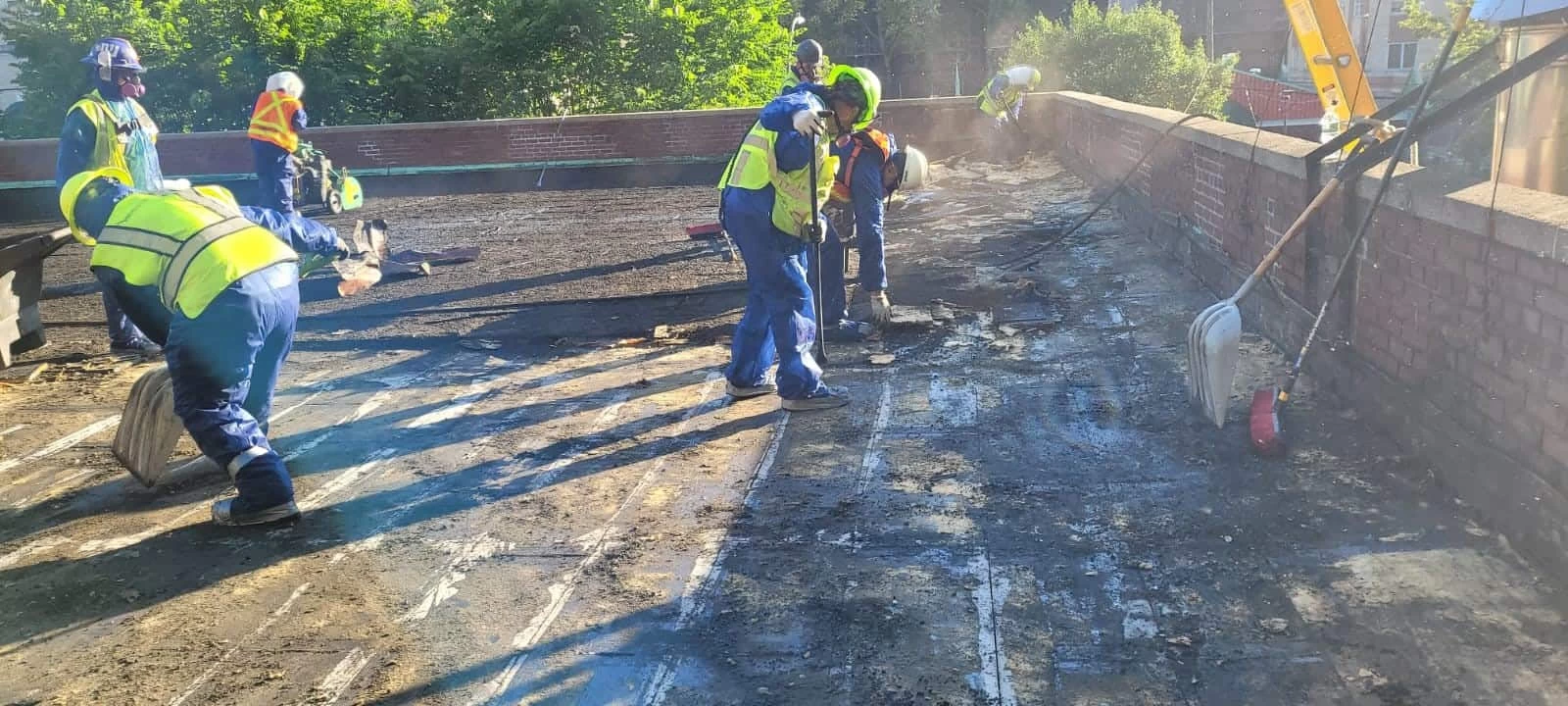
Cooper Square sits at the center of some of Manhattan’s oldest residential blocks and most of them were built when asbestos was standard. If you’ve found something suspicious during a renovation or water damage event, we handle asbestos abatement in Cooper, NY and get the NYC DEP process moving immediately.
I needed a professional consultation explanation of procedure for safe removal of Asbestos in my apartment complex. Without having an account yet, I was very impressed with the caring, knowledgeable and generous advice offered by Jessica, and will look forward to doing business in the future. Thank you so much! I feel much more informed about a sometimes scary endeavor. Peace. Nancy Silva Mineola, NY.
Mia Munoz
Used this company to clean up some water flood in my house. They were fast and easy to work with.very professional, Would recommend to anyone!
Nini Valle
Great company, had a flood and they responded quickly and efficiently. Billed my insurance company directly. I highly recommend this company!
joe colapietro, jr
I had pipe freeze in my basement right before a snow storm and they made to within an hour to help start the clean up process. They we by our side throughout the entire process and even helped with the insurance company. They did such a great job with the cleanup, repair, remidiation, I contracted them to perform the repairs and finishes in the basement. They came with enough manpower and material to get the job done. Leo and Jessica were nothing but a pleasure to deal with!!
Cristian Arredondo c
I had some water damage in my home and Green Island was able to take care of my issue quickly and effectively. I am very pleased with the work they did. They responded quickly and were very professional.
Michael M
Outstanding service! From the office to the field crew everyone was friendly, helpful and responsive. I highly recommend Green Island Group.
What Changes When Asbestos Is Actually Gone From Your Cooper Building
In the East Village and NoHo buildings that surround Cooper Square, asbestos doesn’t announce itself. It’s in the pipe insulation that’s been there since the building went up. It’s under the floor tiles in a kitchen that hasn’t been touched in forty years. It shows up when a pipe bursts at 2 a.m. and the super pulls back insulation that should have been tested a long time ago. Once it’s disturbed, the clock starts and what you do in the next 24 to 48 hours matters.
When asbestos abatement is done correctly, you get more than a clean space. You get documentation. You get the NYC DEP air clearance confirmation that lets your co-op board sign off, your tenants move back in, and your renovation continue without legal exposure. That paperwork isn’t optional in New York City it’s the finish line, and it’s what separates a properly closed project from a liability that follows you.
The pre-war building stock in Cooper and the surrounding neighborhood tenements, cast-iron lofts, Federal-era row houses almost universally contains asbestos-containing materials in some form. That’s not alarmist, it’s just the reality of buildings constructed before 1970. Knowing that going in means you can plan around it, budget for it, and handle it before it becomes an emergency rather than after.
We Know the NYC DEP Process Before We Know Your Address
We’re a full-service environmental remediation company serving all five NYC boroughs, including Manhattan. Asbestos abatement is one part of what we do but it’s rarely the only thing a Cooper property needs. Water damage that disturbs pipe insulation, mold that follows a roof leak, demolition that uncovers materials no one tested these situations don’t stay in one lane, and neither do we.
We’re licensed and compliant with NYC DEP, NYS Department of Labor, EPA, and OSHA requirements. That matters in Cooper specifically because Manhattan’s regulatory process the ACP-7 filing, the ARTS system, the post-abatement clearance testing is more layered than what most suburban contractors deal with. We’ve done this in pre-war buildings throughout Lower Manhattan, including the neighborhoods that feed directly into Cooper Square: the East Village, NoHo, and the Bowery corridor.
We’re available 24 hours a day, every day of the year. When a building emergency doesn’t wait, neither do we.
No Surprises Here's Exactly What the Process Looks Like
It starts with an on-site inspection and assessment. Before anything is quoted, touched, or filed, someone comes out to look at the actual building because a pre-war tenement on East 7th Street and a cast-iron loft conversion on the Bowery are not the same job, and a phone estimate isn’t worth much when the scope depends entirely on what’s in your walls, floors, and mechanical systems.
Once the assessment confirms asbestos-containing materials, the ACP-7 notification gets filed with the NYC DEP through the ARTS system. This is mandatory before any abatement work can begin in New York City, and the filing must happen at least 10 business days before work starts. We handle that filing immediately so your 10-day window starts the day you hire us, not the day we figure out the paperwork. If your project also involves a demolition component, the ACP-5 filing for the NYC Department of Buildings gets coordinated at the same time.
Once the notification window closes, the abatement work begins under full containment. Certified technicians remove the asbestos-containing materials, package them for licensed disposal, and prep the area for post-abatement air clearance testing. That testing is required by NYC DEP before anyone can reoccupy the space and it’s standard in every project, not an add-on. When clearance is confirmed, you get the ACP-21 completion documentation that your co-op board, building management office, or insurance carrier will need to close the file.
Every Material Type, Every Pre-War Scenario, Covered
Asbestos shows up differently depending on the building and what’s being done to it. In the Cooper area, the most common scenarios involve pipe and boiler insulation in older heating systems, vinyl floor tiles in kitchens and bathrooms, plaster and joint compound in walls, ceiling tiles, and ductwork insulation in buildings that haven’t had a mechanical upgrade in decades. We handle asbestos removal across all of these material types not just the straightforward ones.
For residential clients in the 10003 ZIP co-op shareholders, condo owners, landlords managing East Village walk-ups the scope of work typically covers pre-renovation asbestos surveys, full abatement with containment, licensed disposal, and post-abatement air clearance testing with DEP documentation. For commercial property owners and developers working along the Bowery or NoHo corridor, pre-demolition asbestos surveys and integrated abatement-plus-demolition projects are available under one contractor, which matters when DOB permits and DEP filings need to move in parallel.
If the initial assessment also uncovers mold, water damage, or structural issues which is common in buildings of this age we can address those as part of the same project. You don’t need a second contractor, a second set of scheduling calls, or a second invoice. That’s just how we work when one company is equipped to handle the full picture.
Does asbestos abatement in Cooper Square require NYC DEP filing before work starts?
Yes and this is one of the most important things to understand before you hire anyone for asbestos abatement in Manhattan. New York City requires contractors to file an ACP-7 Asbestos Project Notification Form with the NYC Department of Environmental Protection through the online ARTS system at least 10 business days before any abatement work begins. There is no exception to this window, and work cannot legally start until it closes.
This means that when you discover asbestos in Cooper whether during a planned renovation in your East Village co-op or after a water damage event that disturbed pipe insulation the contractor you hire needs to file that paperwork immediately. A contractor who doesn’t know the system, files incorrectly, or delays submission restarts your clock and delays your project. We file the ACP-7 the same day we’re engaged, so the 10-business-day window starts working for you right away rather than sitting idle while someone figures out the process.
How much does asbestos removal typically cost in a Manhattan apartment or co-op?
Cost depends on what materials are involved, how much of them there are, and how accessible they are which is why an on-site inspection matters more than a phone quote. That said, for smaller single-room residential projects in Manhattan, you’re generally looking at a range of $2,200 to $6,500 all-in. Larger projects full bathroom gut-renovations, whole-floor pipe insulation removal, or pre-demolition abatement in a commercial building can run from $5,000 to well over $30,000 depending on scope.
It’s also worth knowing that NYC asbestos removal costs increased 8 to 12 percent in 2025 and 2026 due to updated NYS licensing requirements, higher disposal fees, and mandatory post-abatement air clearance testing. Those costs are built into every compliant project they’re not optional line items a licensed contractor can skip. If you get a quote that seems significantly lower than the ranges above, ask whether the ACP-7 filing, certified disposal, and DEP clearance testing are actually included.
Can I stay in my apartment while asbestos abatement is happening in my Cooper building?
It depends on where the work is happening and how the containment is set up. For abatement confined to a single unit a bathroom, a kitchen, a specific room residents in other parts of the building can typically remain in place, provided proper containment barriers are established and the HVAC system serving the work area is isolated. For larger projects that affect common areas, mechanical rooms, or building-wide systems, temporary displacement may be required for the affected units.
In a dense residential building like the pre-war walk-ups and co-op buildings common in Cooper and the East Village, this is a conversation that involves building management and sometimes the co-op board. We work within building protocols approved working hours, elevator use, waste removal procedures, and neighbor notification because in a building where other residents share walls and hallways, those logistics aren’t optional. If you’re a co-op shareholder or landlord managing tenant communications, we can walk you through what the containment plan looks like and what residents in adjacent units should expect.
What happens if asbestos is found during a water damage emergency in my Cooper Square building?
This is one of the most common scenarios in the pre-war buildings around Cooper Square. A pipe fails often heating system pipes that have been in place for a century water soaks the insulation, and suddenly you’re dealing with both a water damage event and a potential asbestos exposure at the same time. Mold can begin growing within 24 to 72 hours of water intrusion, which means the timeline for getting both issues addressed is short.
When this happens, the priority is containment. The area needs to be isolated before any drying or restoration work disturbs the asbestos-containing materials further. We respond 24 hours a day and can be on-site within 30 to 60 minutes of a call which matters when the difference between a manageable abatement project and a building-wide contamination event is measured in hours. Because we handle both asbestos abatement and water damage restoration, we can address both problems under one project rather than handing off between contractors while the mold clock keeps running.
Is my pre-war East Village or NoHo building likely to have asbestos?
Almost certainly, yes at least in some form. The NYC Department of Environmental Protection states that asbestos can be found in virtually all buildings constructed prior to 1989. In the East Village, NoHo, and the blocks immediately surrounding Cooper Square, the vast majority of residential buildings were constructed between the 1880s and the 1940s the height of the era when asbestos was routinely used in pipe insulation, floor and ceiling tiles, plaster, joint compound, roofing materials, and ductwork.
That doesn’t mean every material in your building is a hazard. Asbestos-containing materials that are in good condition and not being disturbed are typically not an immediate risk. The problem arises when those materials are disturbed during a renovation, a repair, or a water damage event. Under NYC law, any renovation in a pre-1987 building that could disturb these materials requires a prior asbestos assessment. That’s not optional, and proceeding without one puts both the contractor and the property owner in regulatory violation. Getting a survey done before work starts is the right move and it’s where the process with us begins.
Does homeowner's or building insurance cover asbestos abatement costs in New York City?
Sometimes and it depends heavily on what triggered the asbestos discovery. If asbestos-containing materials were disturbed by a covered event like a burst pipe, a roof leak, or flooding from an adjacent unit, the abatement work may be covered under your homeowner’s policy or the building’s master insurance policy as part of the broader water damage claim. In those cases, the abatement is typically treated as a necessary step in the restoration process rather than a standalone environmental remediation project.
If the asbestos was discovered during a planned renovation a kitchen gut, a bathroom remodel, a flooring replacement coverage is less likely, since most standard policies exclude routine renovation-related abatement. The best way to find out is to file the claim and let an experienced contractor help you document the scope correctly from the start. We work directly with insurance carriers and handle claims coordination on behalf of property owners, which is particularly useful in the Cooper area where water damage events in older buildings frequently trigger both an insurance claim and a DEP abatement process at the same time.