Coram's Ranch Homes Deserve More Than a Generic Fix
Most homes along Middle Country Road were built in the era when asbestos was standard and when it turns up mid-renovation, you need asbestos abatement handled right the first time.
I needed a professional consultation explanation of procedure for safe removal of Asbestos in my apartment complex. Without having an account yet, I was very impressed with the caring, knowledgeable and generous advice offered by Jessica, and will look forward to doing business in the future. Thank you so much! I feel much more informed about a sometimes scary endeavor. Peace. Nancy Silva Mineola, NY.
Mia Munoz
Used this company to clean up some water flood in my house. They were fast and easy to work with.very professional, Would recommend to anyone!
Nini Valle
Great company, had a flood and they responded quickly and efficiently. Billed my insurance company directly. I highly recommend this company!
joe colapietro, jr
I had pipe freeze in my basement right before a snow storm and they made to within an hour to help start the clean up process. They we by our side throughout the entire process and even helped with the insurance company. They did such a great job with the cleanup, repair, remidiation, I contracted them to perform the repairs and finishes in the basement. They came with enough manpower and material to get the job done. Leo and Jessica were nothing but a pleasure to deal with!!
Cristian Arredondo c
I had some water damage in my home and Green Island was able to take care of my issue quickly and effectively. I am very pleased with the work they did. They responded quickly and were very professional.
Michael M
Outstanding service! From the office to the field crew everyone was friendly, helpful and responsive. I highly recommend Green Island Group.
A Clean, Documented Result Not Just a Removed Material
When asbestos shows up in a Coram home, the problem isn’t just the material itself it’s everything that stops because of it. A renovation that was moving along suddenly can’t continue. A closing date starts looking uncertain. A contractor you already scheduled is now waiting on you. What you actually need is a team that can step in, assess what’s there, and get the project moving again without creating a second problem in the process.
Coram’s housing stock tells a specific story. The majority of homes here were built between the late 1940s and early 1980s ranch homes, Cape Cods, split-levels and those construction eras are exactly when asbestos was woven into floor tiles, popcorn ceiling texture, pipe insulation, and joint compound as a matter of routine. It wasn’t careless. It was standard practice. But that means a kitchen gut, a bathroom remodel, or even a ceiling update in a home off Route 112 or Coram-Mount Sinai Road carries a real probability of uncovering asbestos-containing materials.
The outcome you’re looking for isn’t just “asbestos gone.” It’s a home you can renovate safely, a property you can sell cleanly, and documentation that satisfies your Brookhaven Town permit, your real estate attorney, and any future buyer who asks. That’s what proper asbestos remediation delivers and that’s what we’re built to provide.
We’re a Long Island environmental services company not a national chain with a local phone number. Our team has worked throughout central Brookhaven Town, including Coram and the surrounding hamlets of Middle Island, Medford, Selden, and Ridge. That means when we look at a 1970s ranch home near Diamonds in the Pines or a split-level off County Route 83, we already know what we’re likely to find and what it takes to handle it correctly under New York State law.
Every project is handled by technicians who are individually certified under New York State Industrial Code Rule 56 the regulation that governs all asbestos abatement work in this state. We file the required notifications with the NYSDOL Asbestos Control Bureau, we use licensed waste transporters, and we close every job with a clearance air test and a complete documentation package. That’s not extra that’s the baseline for doing this work legally and responsibly in Suffolk County.
It starts with an inspection. Before anything is touched, a certified inspector evaluates the material in question whether that’s floor tile adhesive in a mid-century kitchen, popcorn ceiling texture in a bedroom, or pipe insulation around a boiler in the basement. Samples are collected and sent to an accredited lab. You get a clear answer on what you’re dealing with before any work begins.
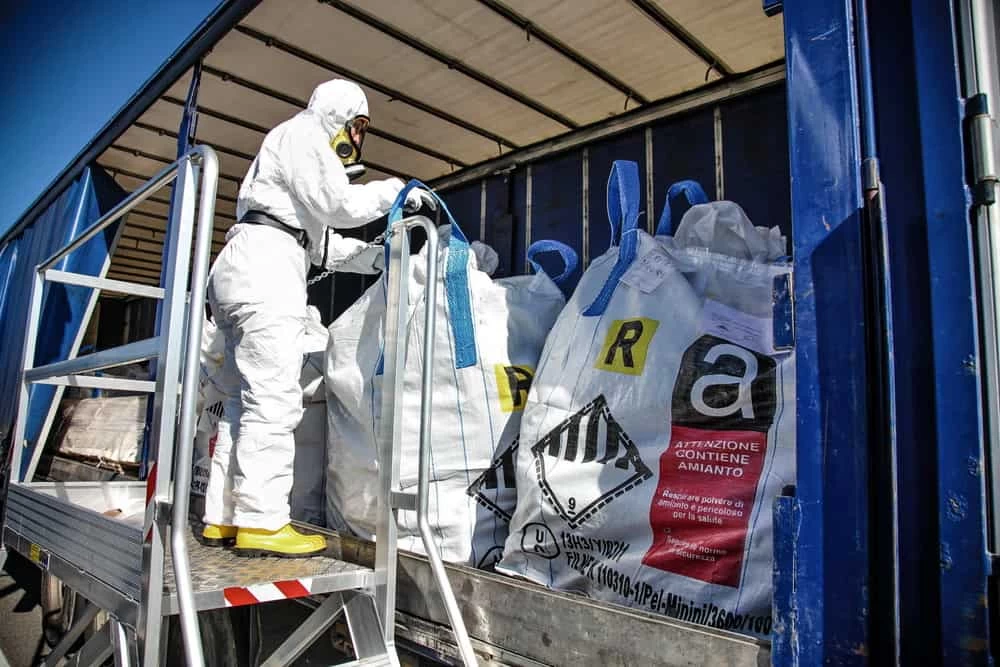
If asbestos is confirmed, we file the required pre-notification with the New York State Department of Labor’s Asbestos Control Bureau before any abatement starts this is a mandatory step under ICR 56 and one that many homeowners don’t realize applies to their project. From there, we seal the work area under negative air pressure using HEPA filtration, remove the material using wet methods to suppress fiber release, and package all asbestos waste for transport by a licensed carrier to an approved disposal facility. There’s no gray area in how this gets handled.
Once the abatement is complete, an independent certified industrial hygienist performs a clearance air test. Only after that test confirms the space is clean do we hand you the final documentation inspection reports, work notifications, disposal manifests, and clearance results. That package is what your Brookhaven Town building permit, your real estate attorney, and your own records need. For Coram homeowners navigating a renovation or a sale on a deadline, that clean handoff matters.
Asbestos tile removal is one of the most frequent calls we get from Coram homeowners. The 9-inch and 12-inch vinyl floor tiles common in kitchens, bathrooms, and finished basements of mid-century ranch homes are a known ACM source but the black mastic adhesive beneath those tiles often contains asbestos at higher concentrations and becomes friable when disturbed. Both the tile and the adhesive need to be addressed together, not separately, and not by a general contractor who treats it as a minor step in a bigger remodel.
Asbestos popcorn ceiling removal is the other common scenario. Acoustic ceiling texture applied before 1978 frequently contains asbestos, and because it’s inherently friable, any scraping, sanding, or water intrusion can release fibers into the air. Coram homes from the 1960s and 1970s particularly those in established neighborhoods off Middle Country Road commonly have this material in living rooms, bedrooms, and hallways. We handle popcorn ceiling asbestos removal under full containment with negative air pressure, so fibers stay contained and your family stays protected.
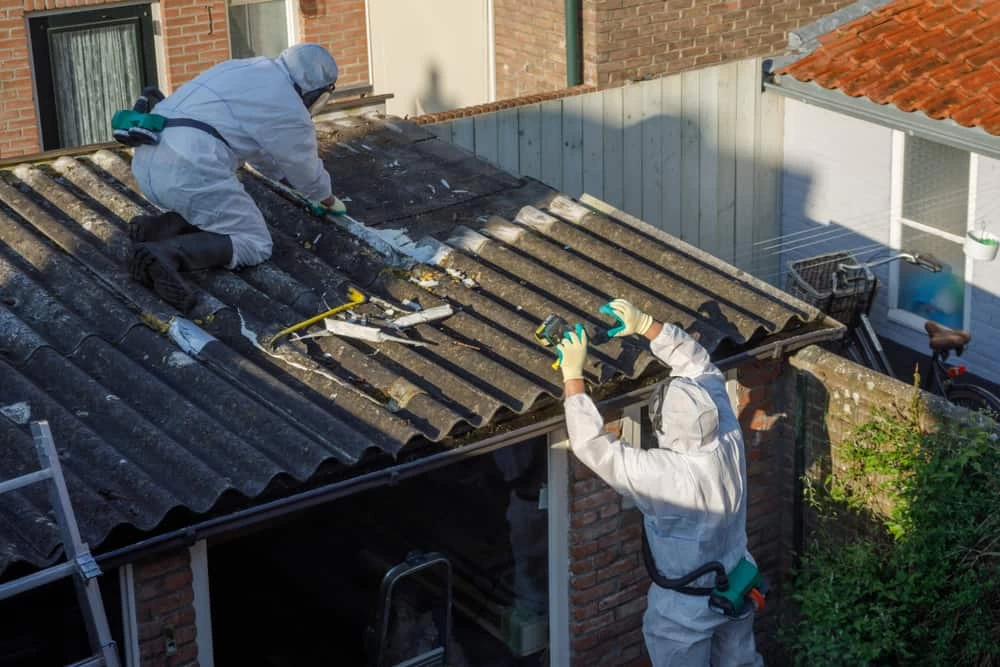
Beyond tile and ceilings, we also handle pipe insulation, joint compound, roofing materials, and siding all of which appear in Coram’s post-war housing stock. Every scope of work is assessed individually. You get a written estimate that defines exactly what’s being done, and we don’t add charges mid-project for things we should have caught upfront.
Does my Coram home actually need asbestos testing before I start renovating?
If your home was built before 1980 which describes most of Coram’s residential stock then yes, testing before any renovation is the right call and, in many cases, a legal requirement. New York State Industrial Code Rule 56 requires that asbestos-containing materials be identified and properly abated before any demolition or renovation work that could disturb them. That applies whether you’re gutting a kitchen, replacing flooring, or tearing out a bathroom.
The practical reason matters just as much as the legal one. A contractor who disturbs asbestos-containing floor tile or ceiling texture without proper containment can spread fibers throughout your home into your HVAC system, your furniture, your living space. Remediation after that kind of contamination is far more involved and expensive than a straightforward abatement before the renovation starts. Testing first is the step that keeps everything else on track.
How long does asbestos abatement take for a typical Coram home?
It depends on the scope, but for a single-room abatement a kitchen floor, a bathroom ceiling, a section of pipe insulation most projects in a Coram home are completed within one to three days of actual work. Larger projects involving multiple rooms or material types take longer, and the pre-notification requirement under ICR 56 means there’s a mandatory window between filing with the NYSDOL and starting work, so the total timeline from first call to clearance is typically one to two weeks for a standard residential project.
What affects the timeline most is how quickly the inspection and lab results come back, how complex the containment setup needs to be, and whether the project is tied to a renovation schedule or a real estate closing. If you’re working against a deadline a contractor waiting to proceed or a closing date approaching let us know upfront. We factor that into how we schedule and sequence the work.
What happens if I try to remove asbestos myself in New York State?
In New York State, DIY asbestos removal is not a legal option for most projects. ICR 56 requires that abatement work be performed by a licensed asbestos contractor using certified workers. Beyond the licensing requirement, asbestos waste must be transported by a licensed carrier and disposed of at an approved facility under state environmental law something a homeowner cannot legally arrange on their own. Attempting to bag and trash asbestos waste is a criminal violation, not just a code issue.
The health risk is the more immediate concern. Asbestos fibers are microscopic, and disturbing asbestos-containing material without proper containment and HEPA filtration releases them into the air where they can stay suspended for hours. There’s no safe exposure threshold for asbestos the risk is cumulative, and the diseases it causes, including mesothelioma and asbestosis, can take decades to develop. The fact that you can’t see or smell the fibers makes it easy to underestimate the exposure.
Can asbestos abatement in Coram affect my Brookhaven Town building permit?
Yes, and this catches a lot of Coram homeowners off guard. If you’re pulling a building permit from Brookhaven Town for a renovation or demolition project in a home built before 1980, you may be required to demonstrate that asbestos has been properly addressed before the permit work can proceed. This isn’t a separate asbestos permit it’s a condition tied to your building permit, and it means that skipping abatement or doing it improperly can stall your entire project at the permit stage.
The documentation we provide at the end of every project inspection reports, NYSDOL notifications, disposal manifests, and clearance test results is exactly what satisfies that requirement. Having that paperwork in hand before you show up at the Brookhaven Town building department is the difference between a smooth permit process and an unexpected delay. If you’re not sure whether your project triggers this requirement, that’s a good question to raise with us during the initial inspection.
Is the asbestos popcorn ceiling in my Coram home dangerous if it's not damaged?
Intact, undisturbed asbestos-containing popcorn ceiling texture is generally considered non-friable meaning it’s not actively releasing fibers into the air. In that condition, the immediate health risk is low. But “undisturbed” is the key word. Popcorn ceiling texture is fragile by nature. Water damage from a roof leak or an upstairs bathroom, a ceiling fan installation, a light fixture replacement, or even repeated contact during cleaning can disturb the material and make it friable.
In Coram’s older housing stock particularly homes from the 1960s and 1970s these ceilings have been in place for 50 or more years. The material degrades over time, and Long Island’s humid summers and freeze-thaw winters accelerate that process. If your popcorn ceiling shows any signs of cracking, water staining, or flaking, it should be treated as a potential hazard and tested before anyone touches it. If you’re planning to update the ceiling as part of a renovation, abatement before any disturbance is the only responsible path.
What does asbestos abatement actually cost for a home near Coram, NY?
Cost varies based on what’s there, how much of it there is, and where it’s located. A single-room asbestos tile removal in a Coram ranch home say, a kitchen or bathroom floor typically runs in the range of $1,500 to $3,500 depending on square footage and the condition of the adhesive beneath the tiles. Popcorn ceiling removal for a standard bedroom or living room is in a similar range. Projects involving multiple rooms, pipe insulation, or a combination of material types will cost more, and any project that requires more complex containment setup adds to the labor side of the estimate.
What drives cost up more than anything is scope that wasn’t identified upfront. That’s why the inspection matters a thorough pre-project assessment that identifies all ACMs in the work area lets us give you a written estimate that holds. Coram homeowners who get a low number from a contractor who hasn’t done a proper inspection often end up paying more when additional material is discovered mid-project. We’d rather give you an accurate number at the start than a comfortable one that changes later.