Nearly Half the Homes in Cortlandt Were Built With Asbestos
Nearly half the homes in Cortlandt Manor were built before 1960 and most of them were built with asbestos. If you’re renovating, dealing with water damage, or preparing to sell, get a licensed answer before the work starts.
I needed a professional consultation explanation of procedure for safe removal of Asbestos in my apartment complex. Without having an account yet, I was very impressed with the caring, knowledgeable and generous advice offered by Jessica, and will look forward to doing business in the future. Thank you so much! I feel much more informed about a sometimes scary endeavor. Peace. Nancy Silva Mineola, NY.
Mia Munoz
Used this company to clean up some water flood in my house. They were fast and easy to work with.very professional, Would recommend to anyone!
Nini Valle
Great company, had a flood and they responded quickly and efficiently. Billed my insurance company directly. I highly recommend this company!
joe colapietro, jr
I had pipe freeze in my basement right before a snow storm and they made to within an hour to help start the clean up process. They we by our side throughout the entire process and even helped with the insurance company. They did such a great job with the cleanup, repair, remidiation, I contracted them to perform the repairs and finishes in the basement. They came with enough manpower and material to get the job done. Leo and Jessica were nothing but a pleasure to deal with!!
Cristian Arredondo c
I had some water damage in my home and Green Island was able to take care of my issue quickly and effectively. I am very pleased with the work they did. They responded quickly and were very professional.
Michael M
Outstanding service! From the office to the field crew everyone was friendly, helpful and responsive. I highly recommend Green Island Group.
You stop guessing. That’s the first thing. When asbestos-containing materials are properly identified, contained, and removed by a licensed contractor, you’re not just solving a health problem you’re removing the uncertainty that’s been sitting in the back of your mind since someone first said the word.
For Cortlandt homeowners, that uncertainty tends to show up in specific moments. You’re pulling up old floor tiles in a 1957 Cortlandt Manor split-level and one of them cracks. You’re finishing the basement your family has been using for thirty years and you notice the pipe insulation looks different than it should. You’re getting ready to list a home and the inspector flags something in the utility room. These aren’t edge cases they’re the everyday reality of owning a pre-1980 home in Cortlandt, where close to half the housing stock was built during the peak era of asbestos use.
What changes after a proper abatement is concrete: your renovation contractor can come back. Your insurance claim can move forward. Your real estate transaction doesn’t fall apart at the closing table. And if flooding near the Hudson River corridor ever sends water into your home again which in Cortlandt is a real possibility, not a hypothetical you’ll already know what’s in your walls and what isn’t.
We hold the NYS Department of Labor Asbestos Handling License, EPA certification, and NYS DEC compliance for disposal every credential required to legally perform asbestos abatement in Westchester County, including every hamlet in the Town of Cortlandt. These aren’t industry memberships. They’re government-issued licenses with public license numbers you can look up yourself on the NYS DOL website.
With more than 5,000 completed projects across the New York metro area, we’ve worked in the exact housing stock that defines Cortlandt postwar colonials, Cape Cods, and split-levels in Cortlandt Manor, older riverfront properties in Montrose and Verplanck, mid-century homes throughout Crugers and Buchanan. We also hold M/WBE certification from the NYS Office of General Services, a formal state credential that no competitor appearing in local search results for this area holds or mentions.
If you’re near the Hendrick Hudson school district or commuting out of Cortlandt Station, you’re in our service area. Free inspection, no obligation.
No Surprises Here's What Happens in Your Cortlandt Home
It starts with a free on-site inspection. We come to your property, look at the materials in question, and tell you plainly what we’re seeing. If testing is warranted, samples are collected and sent to an accredited laboratory. You get results, not guesses. If asbestos is confirmed, you get a written scope of work before anything else happens.
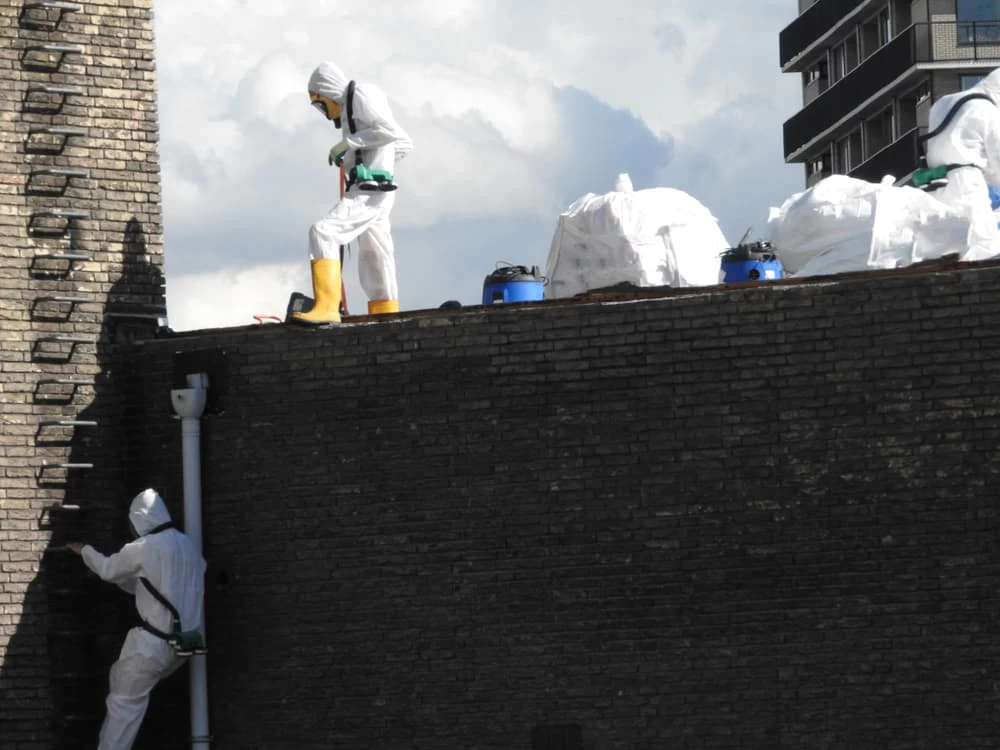
Once the project begins, the work area is fully contained negative air pressure, sealed barriers, and HEPA filtration. Workers on every Green Island Group project hold individual NYS DOL asbestos handler or supervisor certifications, which is a state requirement under Industrial Code Rule 56. That rule governs all asbestos abatement in New York, and it’s stricter than federal OSHA standards in several areas. In Cortlandt, the Town’s Code Enforcement Division may also require abatement documentation as part of the permit review process for renovations of pre-1980 structures something worth knowing before your renovation contractor pulls the permit.
After the abatement is complete, air clearance testing is conducted by a third party. You receive formal written documentation confirming the space is clear. That document is what your renovation contractor, your insurance carrier, and any future buyer will ask for and it’s a standard deliverable on every project, not an add-on.
Asbestos Tile and Popcorn Ceiling Removal Cortlandt
Every Material Type Found in Cortlandt's Older Homes
The homes built in Cortlandt Manor, Montrose, and Verplanck between the 1940s and 1970s contain asbestos in a predictable range of materials, and we handle all of them. Asbestos tile removal specifically the 9×9 and 12×12 inch vinyl asbestos tiles that were standard in postwar construction is one of the most common projects in this area. Asbestos popcorn ceiling removal is another. Acoustic ceiling texture was applied widely from the 1950s through the late 1970s, and it’s still sitting on the ceilings of thousands of Cortlandt homes right now.
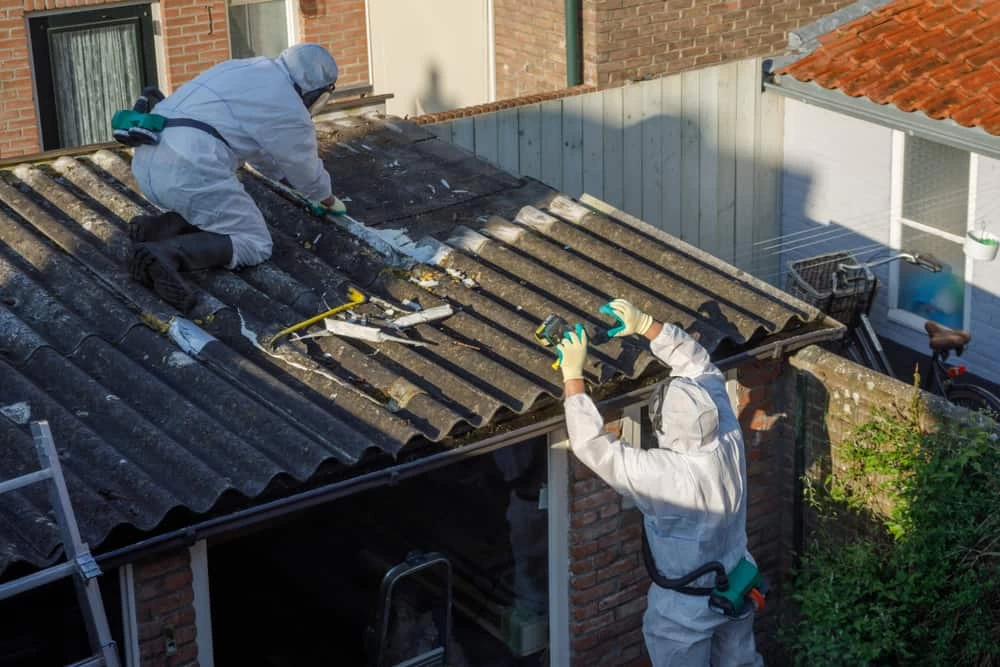
Beyond floors and ceilings, we handle pipe and duct insulation around older boilers and heating systems, drywall joint compound used in homes built through the mid-1970s, and exterior transite siding panels found on some postwar construction throughout the town. There’s no need to hire separate contractors for separate materials one scope, one point of contact, one complete documentation package.
For homeowners dealing with a water damage event and given the Annsville Circle’s documented flooding and the town’s Hudson River exposure, that’s a real and recurring situation we work directly with insurance carriers and handle billing on your behalf. The abatement, the documentation, and the insurance coordination all move through one team, so you’re not the go-between when you’re already dealing with enough.
Do I need asbestos testing before renovating my Cortlandt Manor home?
In New York State, if you’re renovating a home built before 1980, you’re required to have suspect materials tested before any work begins that could disturb them. This isn’t optional it’s part of Industrial Code Rule 56, which governs asbestos abatement statewide and applies to every project in Westchester County, including Cortlandt. The Town of Cortlandt’s Code Enforcement Division may also require documentation as part of the permit review process for older structures.
In practical terms, if your home was built during the 1940s, 1950s, or 1960s which describes close to half of all homes in Cortlandt Manor there’s a meaningful chance asbestos-containing materials are present somewhere in the structure. Floor tiles, ceiling texture, pipe insulation, and joint compound are the most common locations. Testing before demolition or renovation isn’t just about compliance. It protects you from discovering the problem mid-project, when your contractor has already started and the timeline and budget have already shifted.
How much does asbestos removal typically cost for a Cortlandt, NY home?
Cost depends on the material type, the square footage involved, the number of locations, and the accessibility of the work area. A single-room vinyl asbestos tile removal in a Cortlandt Manor basement might run in the range of $1,500 to $3,000. A popcorn ceiling removal across multiple rooms, or pipe insulation removal around an older boiler system, can range from $3,000 to $8,000 or more depending on scope. These are real ranges not guarantees and the only way to get an accurate number is with an on-site inspection.
What’s worth understanding is that the cost of professional, licensed abatement is modest relative to what an undisclosed asbestos situation can cost you in a real estate transaction. With median home values in Cortlandt running between $650,000 and $750,000, a buyer’s discovery of unaddressed asbestos during inspection is a negotiating event and not in your favor. Abatement done right, with full documentation, is a line item that protects your investment. We offer free on-site inspections with no obligation, so you can get a real number before you commit to anything.
What types of materials in older Cortlandt homes are most likely to contain asbestos?
The most common locations in Cortlandt’s postwar housing stock are vinyl floor tiles specifically the 9×9 and 12×12 inch tiles that were standard in homes built from the late 1940s through the 1960s and acoustic ceiling texture, commonly called popcorn ceiling, which was applied widely from the 1950s through the late 1970s. Both are extremely common in the split-levels, Cape Cods, and colonials that make up the majority of Cortlandt Manor’s housing inventory.
Beyond those two, pipe and boiler insulation is a high-priority material in homes with older heating systems, which is a common situation in a town where close to half the housing stock is 60 to 80 years old. Drywall joint compound used in homes built before 1977 is another. Exterior transite siding a cement-asbestos composite appears on some postwar construction as well. The materials aren’t always obvious, and some of them look completely normal until they’re disturbed. That’s why a professional inspection before any renovation work is the right first step, not an optional one.
Can water damage from flooding trigger an asbestos problem in my Cortlandt home?
Yes and it’s one of the more common scenarios we handle in this area. When water enters a pre-1980 home, it frequently disturbs asbestos-containing materials. Vinyl floor tiles buckle and crack. Pipe insulation absorbs moisture and becomes friable, meaning it can release fibers into the air. Ceiling tiles swell and deteriorate. Once those materials are disturbed, abatement is required before any restoration work can legally proceed.
For Cortlandt homeowners, this isn’t a remote possibility. The Annsville Circle, where Routes 6 and 202 meet Route 9, floods roughly 10 to 15 times per year from Hudson River high tides. Storm events have closed roads throughout the town, including Sprout Brook Road and Gallows Hill Road. Properties near the Hudson River corridor and low-lying areas face ongoing flood exposure. When a water damage event triggers an asbestos situation, we work directly with your insurance carrier and handle billing on your behalf, so you’re not managing two separate processes at the worst possible time.
Do I have to leave my home during asbestos abatement?
It depends on the scope and location of the work. For contained, room-specific projects a basement tile removal, a single-room ceiling abatement it’s often possible to remain in other parts of the home while work is underway, provided the containment is properly established and the rest of the living space is not affected. For larger projects involving multiple areas or materials throughout the home, temporary relocation during active abatement is the safer and more practical approach.
We’ll give you a clear, honest answer about this during the inspection not a vague “it depends” that leaves you guessing. The containment setup involves sealed barriers, negative air pressure, and HEPA filtration to prevent fiber migration outside the work area. After abatement is complete, air clearance testing confirms the space is safe before the barriers come down and the area is reopened. Timeline varies by scope, but most residential projects in the Cortlandt area are completed within one to three days, which matters if you’re a commuter working around a schedule built around Cortlandt Station or a local school calendar.
How do I know if a contractor is actually licensed to do asbestos work in Cortlandt, NY?
The credential to ask for first is the NYS Department of Labor Asbestos Handling License. This is the state-level authorization required for any contractor performing asbestos abatement in New York, including all of Westchester County. It’s a public record you can search it directly on the NYS DOL website using the contractor’s name or license number. If a contractor can’t provide that number immediately, that’s your answer.
Beyond the company license, every individual worker on-site is required to hold a personal NYS DOL asbestos handler or supervisor certificate under Industrial Code Rule 56. That means it’s not enough for the company to be licensed the people actually doing the work need to be certified individually. We hold the NYS DOL license, EPA certification, and NYS DEC compliance for disposal, and every crew member carries their individual certification. These aren’t claims they’re verifiable documents. In a town where the housing stock is as old as Cortlandt’s, and where the stakes of getting this wrong show up in your health, your renovation timeline, and your property value, knowing exactly who is authorized to do this work is the right question to ask before anyone sets foot in your home.