If your Cottekill home was built before 1980, asbestos isn’t a remote possibility it’s a real one. We handle licensed asbestos abatement the right way, with documented air clearance when the job is done.
I needed a professional consultation explanation of procedure for safe removal of Asbestos in my apartment complex. Without having an account yet, I was very impressed with the caring, knowledgeable and generous advice offered by Jessica, and will look forward to doing business in the future. Thank you so much! I feel much more informed about a sometimes scary endeavor. Peace. Nancy Silva Mineola, NY.
Mia Munoz
Used this company to clean up some water flood in my house. They were fast and easy to work with.very professional, Would recommend to anyone!
Nini Valle
Great company, had a flood and they responded quickly and efficiently. Billed my insurance company directly. I highly recommend this company!
joe colapietro, jr
I had pipe freeze in my basement right before a snow storm and they made to within an hour to help start the clean up process. They we by our side throughout the entire process and even helped with the insurance company. They did such a great job with the cleanup, repair, remidiation, I contracted them to perform the repairs and finishes in the basement. They came with enough manpower and material to get the job done. Leo and Jessica were nothing but a pleasure to deal with!!
Cristian Arredondo c
I had some water damage in my home and Green Island was able to take care of my issue quickly and effectively. I am very pleased with the work they did. They responded quickly and were very professional.
Michael M
Outstanding service! From the office to the field crew everyone was friendly, helpful and responsive. I highly recommend Green Island Group.
Most Cottekill homes sit right at the pre-1980 threshold the cutoff where asbestos was still a standard building material. Floor tiles, pipe insulation, popcorn ceilings, joint compound these weren’t rare choices back then. They were the norm. And in a valley where freeze-thaw cycles hit hard every winter, those older materials don’t stay stable forever. When they degrade, fibers release.
When abatement is done correctly, you stop managing a risk you can’t see and start living in a home you actually trust. You can move forward with a renovation without stopping mid-project. You can list your home without a buyer’s inspector flagging something that kills the deal. You can replace that old furnace or open up that wall without wondering what’s behind it.
The Rondout Valley’s industrial history the cement works, the worker housing, the support structures built throughout the mid-20th century left behind a built environment that looks quiet from the road but carries real material history inside its walls. Knowing your Cottekill home has been properly assessed and cleared isn’t just peace of mind. It’s the foundation for every project that comes after it.
In New York State, asbestos abatement requires a specific NYS Department of Labor Asbestos Handling License under Industrial Code Rule 56. Not a general contractor license. Not a certification from a weekend course. A regulated, state-issued credential that governs every legal abatement project in Ulster County. We hold that license and it’s the first thing you should ask any contractor to show you before work begins.
Beyond our asbestos license, we carry IICRC certification for water and fire damage, USEPA Lead and RRP certifications, NYS DOL Mold certification, and NADCA HVAC credentials. For a Cottekill homeowner dealing with an older property, that matters because asbestos rarely shows up alone. Mold, lead, moisture damage they tend to travel together in the same walls and floors.
We serve the Town of Rosendale and the surrounding Rondout Valley communities as part of a genuine Ulster County commitment. The Rondout Municipal Center the Town of Rosendale’s own government offices sits at 1915 Lucas Ave right here in Cottekill. This isn’t a franchise covering a ZIP code. We’re a regional team that knows this area.
No Surprises Here Is What the Process Actually Looks Like
It starts with an assessment. Before anything is removed, the materials in question need to be identified and tested. Bulk samples are collected and sent to an accredited lab. If asbestos-containing materials are confirmed, the scope of work is defined what needs to come out, how much, and what approach is appropriate for your specific situation.
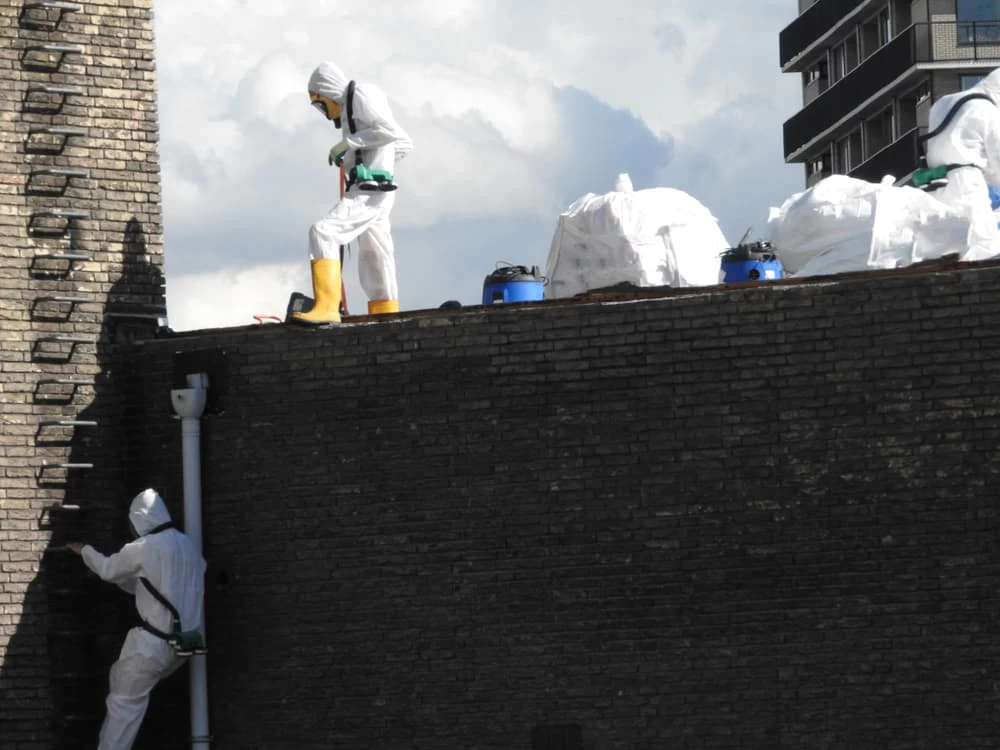
From there, we handle the project notification with the NYS DOL Asbestos Control Bureau’s Albany district office, which governs all asbestos projects in Ulster County. You don’t have to navigate that process yourself. Once permits are in order, the work area is contained using negative air pressure and HEPA filtration to prevent fibers from traveling to other parts of your home. The material is removed, properly packaged, and transported to an approved disposal facility following NYSDEC regulations.
What happens after removal is just as important as the removal itself. Air monitoring is conducted post-abatement, and you receive documented clearance results written confirmation that fiber levels meet the standard required by New York State. For Cottekill homeowners dealing with older housing stock where one problem often connects to another, we can also assess and address any co-occurring mold, water damage, or lead issues found during the same project, so you’re not left coordinating multiple contractors on your own.
Asbestos abatement covers more ground than most homeowners expect going in. In Cottekill’s older housing stock, the most common materials we encounter are 9×9 vinyl floor tiles and the black mastic adhesive underneath them both of which frequently contain asbestos in homes built before 1980. Removing the tile without addressing the adhesive leaves the job incomplete. We remove both layers and document the clearance accordingly.
Textured acoustic ceilings the popcorn finish common in homes built through the late 1970s are another frequent find in this area. When those ceilings test positive, scraping them without full containment and HEPA filtration can spread fibers throughout an entire HVAC system. The abatement process here involves proper sealing, controlled removal, and post-clearance air monitoring before the containment comes down.
Pipe insulation, attic insulation, roofing materials, and siding are also common sources in the Rondout Valley’s older properties including structures near the Snyder Estate Natural Cement Historic District, where historical records have documented asbestos shingles on contributing buildings. Whatever the source, the process follows the same standard: licensed removal, compliant disposal, and written air clearance. We also bill insurance directly when coverage applies, which removes one more burden from a process that’s already demanding enough.
Do homes in Cottekill, NY actually have a high risk of containing asbestos?
The short answer is yes more than most people realize. The average home age in ZIP code 12419 is approximately 47 years, which places the average construction date right around 1977 or 1978. That’s within the pre-1980 window when asbestos was still widely used in floor tiles, pipe insulation, ceiling texture, joint compound, and roofing materials. It wasn’t an edge case it was standard practice.
What makes Cottekill specifically worth paying attention to is the industrial history of the Rondout Valley. The natural cement industry that defined this area for well over a century left behind worker housing and support structures built during the same decades when asbestos use was at its peak. The Snyder Estate Natural Cement Historic District, partially bounded by Cottekill Road, includes documented asbestos-containing materials in contributing structures. If your home is older, or if you’re working on a property that has any connection to that era of construction, a proper assessment before any renovation work is the right first step.
What does asbestos abatement actually cost for a Cottekill homeowner?
Cost depends on scope what materials are present, how much, where they are, and how accessible they are. For a small residential project like a single room of floor tiles or one popcorn ceiling, you’re typically looking at somewhere in the range of $1,500 to $5,000. Larger projects involving multiple rooms, pipe insulation throughout a basement, or full attic remediation can run considerably higher. New York State’s mandatory post-abatement air monitoring requirement adds to the overall cost but is non-negotiable it’s part of what makes the job legally complete.
What’s worth keeping in mind for Cottekill homeowners is that skipping licensed abatement isn’t actually a cost savings. A failed home inspection during a sale, a renovation delay caused by an accidental disturbance, or a legal liability from undisclosed asbestos in a property transfer those costs are far higher than the abatement itself. Getting a clear scope and a transparent quote upfront is the best way to understand what you’re actually dealing with.
How do I know if a contractor is actually licensed to do asbestos abatement in New York State?
This is one of the most important questions you can ask and the answer is verifiable. In New York, asbestos abatement contractors must hold a NYS Department of Labor Asbestos Handling License under Industrial Code Rule 56. This is a separate, specific credential not a general contractor license, and not a certification from a trade course. You can ask any contractor to provide their license number and verify it directly through the NYS DOL.
For projects in Cottekill and the rest of Ulster County, the governing regulatory body is the Albany district office of the NYS DOL Asbestos Control Bureau. Any project involving 10 square feet or more of asbestos-containing material or 25 linear feet or more requires a licensed contractor and a project notification filed before work begins. Records must be maintained for 30 years after project completion. If a contractor can’t clearly confirm their NYS DOL license status and walk you through the notification process, that’s a significant red flag worth taking seriously.
Do I have to leave my home during asbestos abatement?
It depends on the scope and location of the work. For contained projects a single room, a basement area, or an isolated section of the home it’s often possible to remain in unaffected parts of the house during the abatement. The work area is sealed under negative air pressure with HEPA filtration, which prevents fibers from migrating to other areas. We walk you through exactly what’s being contained and what isn’t before work begins.
For larger projects involving multiple rooms, HVAC-adjacent materials, or attic work where air circulation is harder to control, temporary displacement may be the safer and more practical approach. We work around your schedule and communicate clearly about what to expect before the job starts. For Cottekill residents who live in their homes year-round this isn’t a vacation community minimizing disruption is a real priority, and it’s something we address directly in the project planning conversation.
Can asbestos abatement be done at the same time as mold or water damage remediation?
Yes, and in many older Cottekill homes, it makes practical sense to address both at the same time. Moisture intrusion is one of the most common triggers for asbestos disturbance when pipe insulation, floor tile adhesive, or ceiling materials get wet, they can become friable, meaning fibers are more likely to release. Cottekill Creek runs through the hamlet, and the Rondout Valley experiences seasonal conditions that create real moisture risk in older basements and crawl spaces. Water damage and asbestos often show up in the same project.
We hold NYS DOL Mold certification alongside our asbestos license and IICRC certification for water damage restoration. That means if an assessment uncovers asbestos in the floor and mold behind the baseboard in the same space which happens more than people expect in this area’s older housing stock you’re not managing two separate contractors on two separate timelines. One team handles the full scope, which keeps the project moving and reduces the overall disruption to your home.
Does homeowners insurance cover asbestos abatement in Cottekill, NY?
It depends on how the asbestos was discovered and what triggered the need for removal. Insurance generally does not cover routine abatement meaning if you decide to renovate and find asbestos in the floor tiles, that’s typically an out-of-pocket cost. However, if asbestos-containing materials are disturbed or damaged as a result of a covered event a burst pipe, storm damage, or a fire there may be coverage for the remediation work that follows. The language in your specific policy matters a lot here.
We bill insurance companies directly, which is a meaningful practical benefit for Cottekill homeowners who are already managing a stressful situation. Rather than paying out of pocket and waiting for reimbursement or trying to document and submit the claim yourself while also coordinating a remediation project the billing goes directly to the insurer. If you’re not sure whether your situation qualifies, it’s worth having that conversation early in the process before assuming nothing is covered.