Older Homes Near the Reservoir Deserve a Closer Look
If your Cross River home was built before 1980, there’s a real chance asbestos-containing materials are still in it untouched, undisclosed, and waiting to become your problem. We offer free on-site inspections and full asbestos abatement for homeowners throughout Cross River and the broader Lewisboro area.
I needed a professional consultation explanation of procedure for safe removal of Asbestos in my apartment complex. Without having an account yet, I was very impressed with the caring, knowledgeable and generous advice offered by Jessica, and will look forward to doing business in the future. Thank you so much! I feel much more informed about a sometimes scary endeavor. Peace. Nancy Silva Mineola, NY.
Mia Munoz
Used this company to clean up some water flood in my house. They were fast and easy to work with.very professional, Would recommend to anyone!
Nini Valle
Great company, had a flood and they responded quickly and efficiently. Billed my insurance company directly. I highly recommend this company!
joe colapietro, jr
I had pipe freeze in my basement right before a snow storm and they made to within an hour to help start the clean up process. They we by our side throughout the entire process and even helped with the insurance company. They did such a great job with the cleanup, repair, remidiation, I contracted them to perform the repairs and finishes in the basement. They came with enough manpower and material to get the job done. Leo and Jessica were nothing but a pleasure to deal with!!
Cristian Arredondo c
I had some water damage in my home and Green Island was able to take care of my issue quickly and effectively. I am very pleased with the work they did. They responded quickly and were very professional.
Michael M
Outstanding service! From the office to the field crew everyone was friendly, helpful and responsive. I highly recommend Green Island Group.
You stop guessing. That’s the most immediate thing. When you’re living in a home that was built during the postwar construction boom the 1950s and 1960s, when asbestos was in floor tiles, ceiling texture, pipe insulation, and joint compound there’s a low-grade uncertainty that follows every renovation conversation and every real estate decision. Getting it handled removes that.
In Cross River specifically, this matters in ways that go beyond the standard pitch. Homes here tend to be larger, older, and less renovated than properties in more suburban parts of Westchester. A lot of them have been in the same family for decades. That means the original materials are often still in place not because anyone was negligent, but because nothing forced the issue until now. When you finally do open a wall, pull up old flooring, or start planning a sale, what you find can change the entire timeline.
The other thing that changes is your position in a transaction. The median sale price for single-family homes in the Katonah-Lewisboro school district hit $862,500 in 2023. At that price point, an asbestos disclosure without documentation isn’t just an awkward conversation it’s a negotiating liability. Clearance documentation from a licensed abatement contractor turns a potential deal-killer into a resolved line item.
Green Island Group is a full-service environmental remediation contractor serving Westchester County, New York City, Long Island, and the surrounding metro area. We handle every phase of an abatement project assessment, containment, removal, disposal, and post-clearance air testing in-house. That matters because a lot of contractors in this space manage the paperwork and hand the actual work off to someone else. We don’t operate that way.
We hold the NYS Department of Labor Asbestos Handling License, EPA certification, and NYS DEC disposal compliance the full stack required for legal asbestos abatement in Westchester County. We also carry a New York State M/WBE certification issued by the NYS Office of General Services, a formal government credential that requires documented review, not just a membership fee. With more than 5,000 completed projects and a defined service area that includes Cross River and the broader Lewisboro area, we bring the kind of operational depth that shows up in how a project is scoped, communicated, and closed.
No Surprises Here's Exactly How the Work Gets Done
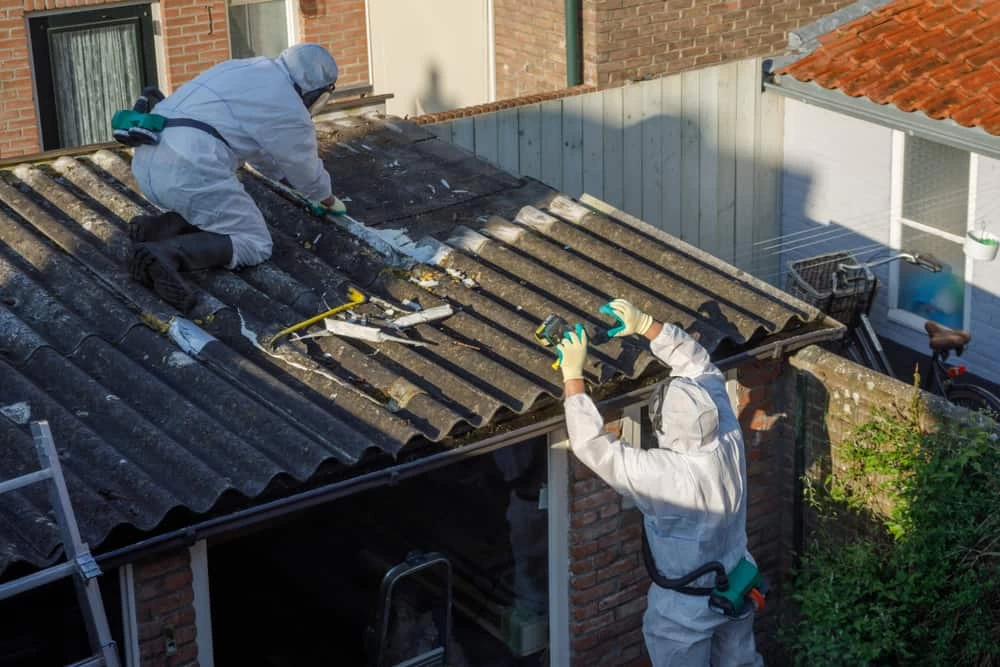
It starts with a free on-site inspection. One of our technicians comes to your property, walks through the areas of concern, and identifies any suspected asbestos-containing materials. In Cross River, that often means looking at more than just the main house a lot of properties here include detached garages, utility buildings, or older outbuildings where transite siding panels and asbestos-containing roofing materials are just as common as anything inside. We cover all of it.
If testing confirms the presence of ACMs, we scope the project and walk you through what removal will involve before any work begins. Containment comes next negative air pressure systems, sealed polyethylene barriers, and HEPA-filtered air scrubbers isolate the work area from the rest of the structure. For larger Cross River properties where full displacement isn’t practical, this engineering approach is specifically designed to keep the rest of the home livable while abatement proceeds in a contained zone.
Once removal is complete, all asbestos waste is bagged, labeled, and transported to a certified disposal facility under a signed NYS DEC waste manifest a chain-of-custody document that tracks the material from your property to its final destination. Given that Cross River sits adjacent to the Cross River Reservoir, an active component of the New York City water supply system since 1908, that level of environmental accountability isn’t just regulatory compliance. It’s the right way to work in this area. Post-abatement air clearance testing is the final step, and we provide you with the documentation from that test.
Every Material Type Found in Cross River Homes, Handled
The asbestos-containing materials we remove most frequently in Cross River’s housing stock are the ones that defined postwar residential construction: 9×9 and 12×12 vinyl floor tiles, acoustic popcorn ceiling texture, pipe and duct insulation around older heating systems, drywall joint compound, and roofing materials on both primary residences and outbuildings. Asbestos tile removal and popcorn ceiling removal are among the most common requests in this area, particularly when homeowners are preparing for renovation or listing a property.
For homes near Ward Pound Ridge Reservation where the rural, wooded setting means properties have often been left largely intact for decades we frequently encounter materials that have never been disturbed. That’s actually the best-case scenario for abatement: intact, undisturbed ACMs are far easier and safer to remove than materials that have already been partially damaged. If a storm event, a pipe freeze, or a water intrusion has already disturbed something, we handle emergency abatement as well and work directly with insurance carriers so you’re not stuck in the middle of a billing dispute while managing a restoration project.
All work is performed under NYS Industrial Code Rule 56, which is New York State’s asbestos-specific regulation and is more stringent than federal OSHA standards in several areas. Every worker on our projects holds an individual NYS DOL asbestos handler certificate not just the company-level license, but a personal credential for every person who enters your home.
Does my Cross River home actually need asbestos testing before a renovation?
If your home was built before 1980, yes and in Cross River, that covers a significant portion of the housing stock. The postwar development era of the 1950s and 1960s produced the majority of homes in the Lewisboro area, and asbestos was a standard building material throughout that period. Floor tiles, ceiling texture, pipe insulation, joint compound, and roofing materials from that era all have a meaningful probability of containing asbestos.
New York State’s Industrial Code Rule 56 requires that any renovation or demolition work that will disturb suspected asbestos-containing materials be preceded by a proper assessment. The Town of Lewisboro’s building department which handles all permits for Cross River since it’s a hamlet within Lewisboro may require asbestos survey documentation before issuing a renovation permit. Beyond the regulatory requirement, any renovation contractor who opens a wall or pulls up flooring and disturbs ACMs without prior testing is creating a health and liability problem for everyone on the job site, including you.
How do I know if the floor tiles or popcorn ceiling in my home contain asbestos?
You can’t tell by looking at them. The only way to know is to have a sample collected and tested by a certified laboratory. The visual cues people often rely on the 9×9 inch tile size, the gray corrugated pipe insulation, the thick acoustic ceiling texture are indicators worth taking seriously, but they’re not confirmation. Testing is the only confirmation.
Our free inspection includes a professional assessment of suspected materials and, where warranted, sample collection for lab analysis. In Cross River homes, the most common confirmed ACM types are vinyl floor tiles in kitchens, basements, and utility spaces; acoustic ceiling texture in living areas and bedrooms; and pipe insulation around older boilers and heating systems. If your home has original materials from the 1950s or 1960s that have never been tested, the inspection will give you a clear picture of what you’re actually dealing with before any work begins.
What happens if a contractor already disturbed asbestos during a renovation in my home?
Stop the work immediately. If a renovation contractor has opened a wall, pulled up flooring, or disturbed ceiling material and you have reason to believe asbestos-containing materials were involved, the work area needs to be sealed off until a licensed abatement contractor can assess the situation. This is not an overreaction it’s the correct response under NYS Industrial Code Rule 56, and it protects everyone in the home.
We handle this type of emergency abatement regularly. The first step is containment and air testing to determine the extent of fiber release. From there, we scope the remediation, complete the abatement under proper containment conditions, and provide post-clearance documentation confirming the space is safe. If the disturbance is connected to a water damage event a pipe burst, for example, which is a real seasonal risk in Cross River’s older homes during hard winters we can coordinate directly with your insurance carrier to handle the billing side of the claim.
Does asbestos disclosure affect a home sale in Cross River, NY?
It can, and in a market where homes are selling at a median of $862,500, the stakes are high enough to take seriously. New York State’s Property Condition Disclosure Act requires sellers to disclose known material defects, and known asbestos-containing materials fall within that scope. Buyers and their attorneys in the Katonah-Lewisboro market are thorough a disclosure without accompanying documentation tends to trigger requests for price reductions, abatement contingencies, or both.
The cleaner path is to handle abatement before listing. We provide post-abatement air clearance documentation as a standard deliverable at the close of every project. That document formal air testing results confirming the work was completed correctly is what you hand to a buyer’s attorney to close the loop. It converts an open disclosure item into a resolved one, which protects your negotiating position and keeps the transaction moving. In a market that averaged just 38 days on the market in 2023, that kind of clarity matters.
How long does asbestos abatement take for a typical Cross River home?
It depends on the scope, but for a single material type in a contained area a basement floor with vinyl asbestos tile, or a section of popcorn ceiling in one room most residential projects are completed within one to three days. Larger scopes involving multiple material types, multiple rooms, or outbuildings take longer, and we’ll give you a specific timeline after the free inspection so you can plan accordingly.
For Cross River homeowners who are coordinating abatement with a renovation contractor or working toward a real estate closing, timeline certainty is one of the most practical things we can offer. The inspection and scoping process is specifically designed to eliminate guesswork you’ll know what’s being removed, how long it will take, and what the post-clearance process looks like before any work starts. If you’re working against a closing date or a contractor’s start date, that conversation happens upfront.
Does Green Island Group serve Cross River and the surrounding Lewisboro area?
Yes. Cross River and the Town of Lewisboro are part of our defined Westchester County service area. We work throughout northern Westchester regularly, and the specific regulatory environment that applies here NYS Industrial Code Rule 56, Westchester County building permit requirements, and the Town of Lewisboro’s building department processes is familiar territory for us.
That local familiarity has a practical impact. A contractor who knows Westchester County’s regulatory requirements doesn’t need to figure out the permit process or the waste disposal chain while on your job. We come in knowing what documentation the town requires, what disposal facilities are certified to accept asbestos waste under NYS DEC rules, and how to sequence the work so your project closes cleanly with the paperwork to back it up. For homeowners in Cross River where properties are high-value, the housing stock is older, and the margin for error on a transaction is slim that operational familiarity is worth more than a low bid from a contractor who’s never worked in this jurisdiction before.