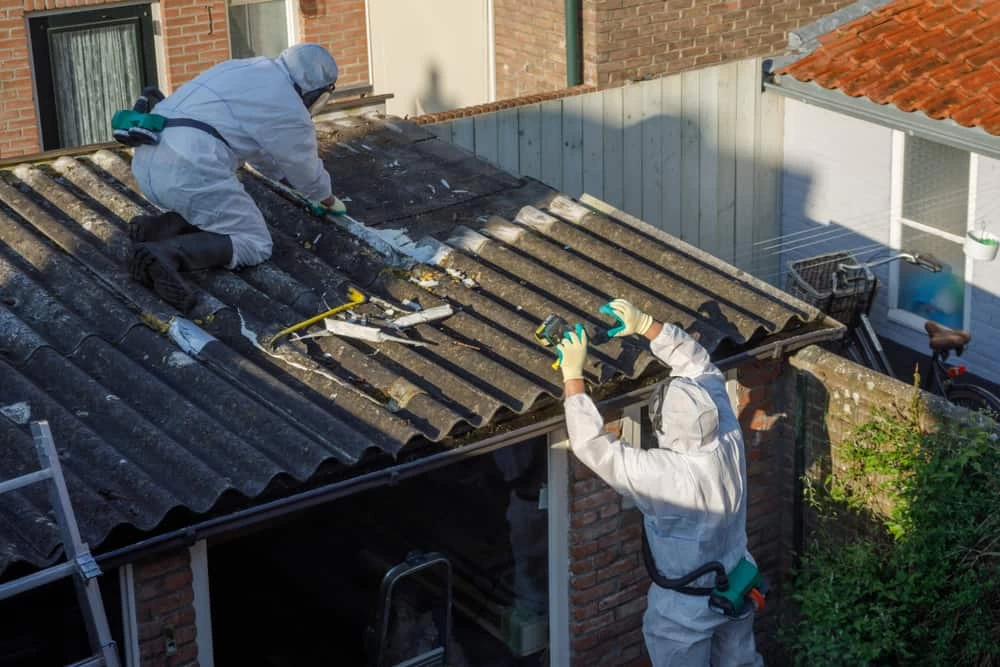
Croton-on-Hudson’s housing stock tells a story railroad-era Colonials in Harmon, mid-century ranches in Croton Meadows, Arts & Crafts bungalows up on Mt. Airy. Beautiful homes. But if yours was built before 1980, there’s a real chance it’s holding onto something that needs to go before your next renovation, sale, or repair goes any further.
I needed a professional consultation explanation of procedure for safe removal of Asbestos in my apartment complex. Without having an account yet, I was very impressed with the caring, knowledgeable and generous advice offered by Jessica, and will look forward to doing business in the future. Thank you so much! I feel much more informed about a sometimes scary endeavor. Peace. Nancy Silva Mineola, NY.
Mia Munoz
Used this company to clean up some water flood in my house. They were fast and easy to work with.very professional, Would recommend to anyone!
Nini Valle
Great company, had a flood and they responded quickly and efficiently. Billed my insurance company directly. I highly recommend this company!
joe colapietro, jr
I had pipe freeze in my basement right before a snow storm and they made to within an hour to help start the clean up process. They we by our side throughout the entire process and even helped with the insurance company. They did such a great job with the cleanup, repair, remidiation, I contracted them to perform the repairs and finishes in the basement. They came with enough manpower and material to get the job done. Leo and Jessica were nothing but a pleasure to deal with!!
Cristian Arredondo c
I had some water damage in my home and Green Island was able to take care of my issue quickly and effectively. I am very pleased with the work they did. They responded quickly and were very professional.
Michael M
Outstanding service! From the office to the field crew everyone was friendly, helpful and responsive. I highly recommend Green Island Group.
You stop guessing. That’s the first thing. Whether you found suspicious floor tiles under old carpeting, noticed popcorn ceiling texture in a room you’re about to open up, or had a contractor flag something during a renovation walk-through the uncertainty is the hardest part. Once the material is properly tested, removed, and cleared, you have documentation that answers the question definitively. No more wondering.
For homeowners in Croton-on-Hudson, that documentation carries real weight. With median home values pushing toward $743,000 and property taxes over $10,000 a year, you’re protecting a serious asset. A pre-sale abatement with a clearance certificate on file doesn’t just satisfy a buyer’s inspector it removes a negotiating chip that could otherwise cost you far more than the abatement itself in a competitive Westchester market.
There’s also the flood factor that’s specific to this area. Croton-on-Hudson sits at the confluence of the Croton River and the Hudson River, and portions of the village carry formal flood zone designations. When water gets into an older home from a nor’easter, a burst pipe in a Westchester winter, or a river event it doesn’t just damage walls and floors. It disturbs materials. Wet asbestos-containing tile, deteriorating pipe insulation, and softened drywall compound all become active hazards. Getting ahead of that, or responding to it correctly when it happens, is what proper asbestos remediation actually does for you here.
Every License That Matters And the Work to Back It Up
We hold a NYS Department of Labor Asbestos Handling License, EPA certification, and NYS DEC compliance certification for regulated waste disposal. Those aren’t marketing claims they’re public record, and you can verify every one of them. We’re also a certified M/WBE contractor through the NYS Office of General Services, which means New York State has formally vetted us, not just a trade association. No competitor currently serving Croton-on-Hudson is leading with that credential.
With more than 5,000 completed abatement projects across the New York metro region including Westchester County communities like Croton-on-Hudson we’ve handled the full range of what this area’s older building stock presents. Railroad-era pipe insulation in Harmon. Vinyl asbestos tile in postwar Croton Meadows homes. Popcorn ceiling texture in 1970s renovations throughout the Upper Village. The scenarios here aren’t new to us.
Every worker who enters your home is individually certified by the NYS Department of Labor not just our company, but each person on the crew. That’s a regulatory requirement under New York State’s Industrial Code Rule 56, and it’s a detail worth knowing before you let anyone start work.
Asbestos Remediation Process in Croton-on-Hudson, NY
No Surprises Here's Exactly What the Process Looks Like
It starts with a free on-site inspection. One of our representatives comes to your property, assesses the materials in question, and gives you a straight answer about what you’re dealing with no charge, no obligation. If testing is needed to confirm whether a material actually contains asbestos, that gets coordinated before any removal work begins. You won’t be paying for abatement you don’t need.
If removal is warranted, the work area gets fully contained using negative air pressure and polyethylene sheeting meaning air flows into the containment zone, not out of it. HEPA-filtered air scrubbers run throughout the project. The rest of your home stays separated from the work area, which matters especially if you have children at home or you’re working around a Metro-North commute schedule and need the household disruption kept to a minimum.
Because Croton-on-Hudson is an incorporated village with its own building department, any renovation project that triggers a building permit also requires asbestos survey documentation before work proceeds. We handle that documentation as part of the process so if your renovation contractor needs it to pull a permit, it’s covered. Once removal is complete, post-abatement air clearance testing is conducted and you receive the clearance certificate as a standard deliverable. That’s the document that closes the loop for your insurance carrier, your real estate attorney, or simply your own peace of mind.
Asbestos Tile and Popcorn Ceiling Removal, Westchester NY
Built for the Materials Actually Found in Croton-on-Hudson Homes
The asbestos-containing materials that show up most often in Croton-on-Hudson’s housing stock follow a clear pattern by era. Homes from the 1910s through the 1930s particularly in the Harmon neighborhood, which grew up around the railroad industry tend to have pipe insulation, boiler wrap, and early plaster as the primary concerns. The railroad history here isn’t just local color; it shaped what got built and how, and some of those materials are still in place.
Mid-century homes from the 1940s through the 1960s are where vinyl asbestos floor tiles become the dominant issue. The 9×9 tile pattern under carpeting is one of the most common discoveries during renovations in this area, and it requires careful handling not because it’s automatically dangerous in place, but because cutting, scraping, or pulling it without proper containment releases fibers that shouldn’t be in the air. Asbestos tile removal in occupied homes requires the same containment protocol as any other abatement work, and we handle it with the same licensed crew and documentation process.
Popcorn ceiling texture and drywall joint compound are the most frequent finds in homes built or renovated between the mid-1960s and 1978, which covers a significant portion of the village’s postwar residential inventory. We handle all of these material types asbestos tile removal, popcorn ceiling removal, pipe insulation, duct wrap, roofing, and boiler insulation under one contractor, one license, and one set of clearance documentation. If your property has more than one material type, you’re not coordinating multiple crews.
Do I need a permit for asbestos removal in Croton-on-Hudson, NY?
New York State’s Industrial Code Rule 56 governs all asbestos abatement work statewide, and it applies in Croton-on-Hudson regardless of project size. There are no residential exemptions under New York law even a small floor tile removal in a private home requires a licensed contractor. The state requirement exists at the project level, not just for large commercial jobs.
At the local level, Croton-on-Hudson is an incorporated village with its own building department and engineering office. If your asbestos abatement is connected to a broader renovation that requires a building permit which is common for kitchen and bathroom remodels, structural work, or HVAC replacement the village will require asbestos survey documentation before the permit is issued. We handle that documentation as part of the abatement process, so your renovation contractor has what they need to move forward without delays.
How do I know if my older Croton-on-Hudson home actually contains asbestos?
The honest answer is that you can’t tell by looking. Asbestos-containing materials look identical to non-asbestos versions of the same product. The only way to know for certain is to have a sample collected and sent to an accredited laboratory for analysis. What you can do in the meantime is use the age of your home as a starting point if it was built or significantly renovated before 1980, the probability of asbestos-containing materials being present somewhere in the structure is high enough to take seriously.
In Croton-on-Hudson specifically, the housing stock spans from early 20th-century railroad-era construction through postwar mid-century builds, and a meaningful portion of the village’s homes fall squarely in the high-risk era. If you’re planning a renovation, a sale, or any work that involves disturbing original building materials, a professional assessment before work begins is the right call. We offer free on-site inspections you get a professional opinion on what you’re dealing with before spending anything.
Can I stay in my home during asbestos abatement in Croton-on-Hudson?
In many cases, yes but it depends on the scope and location of the work. For a contained project like asbestos tile removal in a single room or popcorn ceiling removal in a basement, proper containment protocol keeps the work area fully separated from the rest of your home. Negative air pressure inside the containment zone means fibers can’t migrate into adjacent rooms, and the rest of the house remains accessible.
For larger projects involving multiple rooms, HVAC-connected materials, or areas that can’t be isolated from living spaces, temporary displacement may be necessary for the duration of the active removal phase. We’ll give you a straight answer about this during the free inspection before you commit to anything. For Croton-on-Hudson residents with Metro-North commutes and school-age children, knowing the realistic timeline and displacement requirements upfront is part of planning the project around your actual life.
What happens if asbestos is disturbed during a renovation before it's been tested?
This is one of the most common situations that leads to an emergency call. A renovation contractor pulls up old flooring, scrapes a ceiling, or cuts into a wall and either they or the homeowner realizes partway through that the material might contain asbestos. At that point, work needs to stop. Continuing to disturb the material without proper containment and a licensed abatement contractor on-site is a violation of New York State law and a genuine health risk.
If this has already happened in your home, the first step is to limit access to the affected area and call a licensed contractor for an emergency assessment. We can respond to these situations, assess what was disturbed, collect samples if needed, and establish proper containment to prevent further exposure. The post-disturbance scenario is more complicated than a planned abatement, but it’s manageable and getting a licensed crew involved quickly is what limits the damage. In Croton-on-Hudson, where many homeowners are actively renovating older homes in the Harmon and Mt. Airy areas, this situation comes up more often than people expect.
Does homeowners insurance cover asbestos removal in New York?
It depends on what triggered the need for removal. Planned, elective abatement like removing floor tiles before a kitchen renovation is typically not covered by standard homeowners insurance. That’s considered a maintenance or improvement expense, not a covered loss. However, when asbestos-containing materials are disturbed or damaged as a result of a covered event a burst pipe, storm damage, or flooding the abatement required as part of the remediation may be covered under the property damage claim.
This is particularly relevant in Croton-on-Hudson, where portions of the village sit in designated flood hazard areas near the Croton River and Hudson River. When a water damage event affects an older home in a flood-prone area and disturbs asbestos-containing materials, the abatement often becomes part of a broader insurance claim. We work directly with insurance carriers and handle billing on behalf of clients in those situations which removes a significant burden when you’re already managing a damaged property and a disrupted household at the same time.
How long does asbestos abatement typically take for a Croton-on-Hudson home?
For a single-room project one bathroom floor, a basement ceiling, or a utility room with pipe insulation the active removal work typically takes one to two days. Post-abatement air clearance testing adds time to the overall timeline, but that’s not time you’re displaced or waiting on a crew; it’s the testing lab processing samples and issuing results. Most residential projects in Croton-on-Hudson are completed within a week from start to clearance certificate.
Larger projects involving multiple material types, multiple rooms, or occupied spaces that require careful scheduling take longer, and the timeline gets mapped out during the initial inspection. If you’re working around a real estate transaction which is common in Croton-on-Hudson’s competitive market, especially for pre-1980 homes near the Croton-Harmon station we can give you a realistic schedule during the free inspection so you’re not guessing when you’re in the middle of a deal. The clearance certificate is the finish line, and that’s what gets handed to you at the end.