If your Deer Park home was built before 1970, asbestos isn’t a maybe it’s a real possibility. We handle the inspection, removal, and full NYS compliance so you don’t have to figure it out alone.
I needed a professional consultation explanation of procedure for safe removal of Asbestos in my apartment complex. Without having an account yet, I was very impressed with the caring, knowledgeable and generous advice offered by Jessica, and will look forward to doing business in the future. Thank you so much! I feel much more informed about a sometimes scary endeavor. Peace. Nancy Silva Mineola, NY.
Mia Munoz
Used this company to clean up some water flood in my house. They were fast and easy to work with.very professional, Would recommend to anyone!
Nini Valle
Great company, had a flood and they responded quickly and efficiently. Billed my insurance company directly. I highly recommend this company!
joe colapietro, jr
I had pipe freeze in my basement right before a snow storm and they made to within an hour to help start the clean up process. They we by our side throughout the entire process and even helped with the insurance company. They did such a great job with the cleanup, repair, remidiation, I contracted them to perform the repairs and finishes in the basement. They came with enough manpower and material to get the job done. Leo and Jessica were nothing but a pleasure to deal with!!
Cristian Arredondo c
I had some water damage in my home and Green Island was able to take care of my issue quickly and effectively. I am very pleased with the work they did. They responded quickly and were very professional.
Michael M
Outstanding service! From the office to the field crew everyone was friendly, helpful and responsive. I highly recommend Green Island Group.
You stop guessing. That’s the first thing. When a certified inspection confirms what’s there and a licensed crew removes it the right way you’re not sitting on a liability anymore. You have documentation. You have clearance. You can move forward with your renovation, your sale, or whatever came next on the list.
For Deer Park homeowners, that matters more than it might somewhere else. The Cape Cods and split-levels along Commack Road and the side streets off Deer Park Avenue were built during the height of asbestos use in residential construction. Those 9×9 floor tiles in the kitchen, the popcorn ceiling in the back bedroom, the wrapped pipes in the basement that’s not ancient history, that’s your house. And with median home values in Deer Park now approaching $590,000, you have real equity at stake every time someone swings a hammer without checking first.
Getting this done right also protects your renovation timeline. Contractors can’t legally proceed once asbestos is suspected. The faster you bring in a certified abatement team, the faster everything else gets back on track.
We are a fully licensed and NYS DOL-certified asbestos abatement contractor serving Deer Park and the surrounding communities across Suffolk County. Every technician on every job holds current certification under New York State Industrial Code Rule 56. That’s not a selling point that’s the legal minimum, and it’s one a lot of operators in this market quietly skip.
What sets our work apart is the documentation. Every project comes with a pre-abatement inspection report, project notification confirmation, waste manifests, and a post-abatement air clearance certificate. For a Deer Park homeowner who’s invested in a home in the Town of Babylon for decades or just bought into this market that paper trail is worth something real.
We also serve Deer Park’s neighboring communities, including Wyandanch, Dix Hills, Brentwood, and North Babylon, which means our team knows this specific housing stock, the Town of Babylon permitting process, and what to expect inside homes built during the postwar boom that shaped this entire part of western Suffolk County.
No Surprises Here's Exactly How the Work Gets Done
It starts with a certified inspection. Before anything is touched, a NYS DOL-certified asbestos inspector surveys the area in question whether that’s a basement floor, a popcorn ceiling, pipe insulation around an old boiler, or roofing material on a 1950s Cape Cod. Samples are collected and tested. You get a clear answer, not a guess.
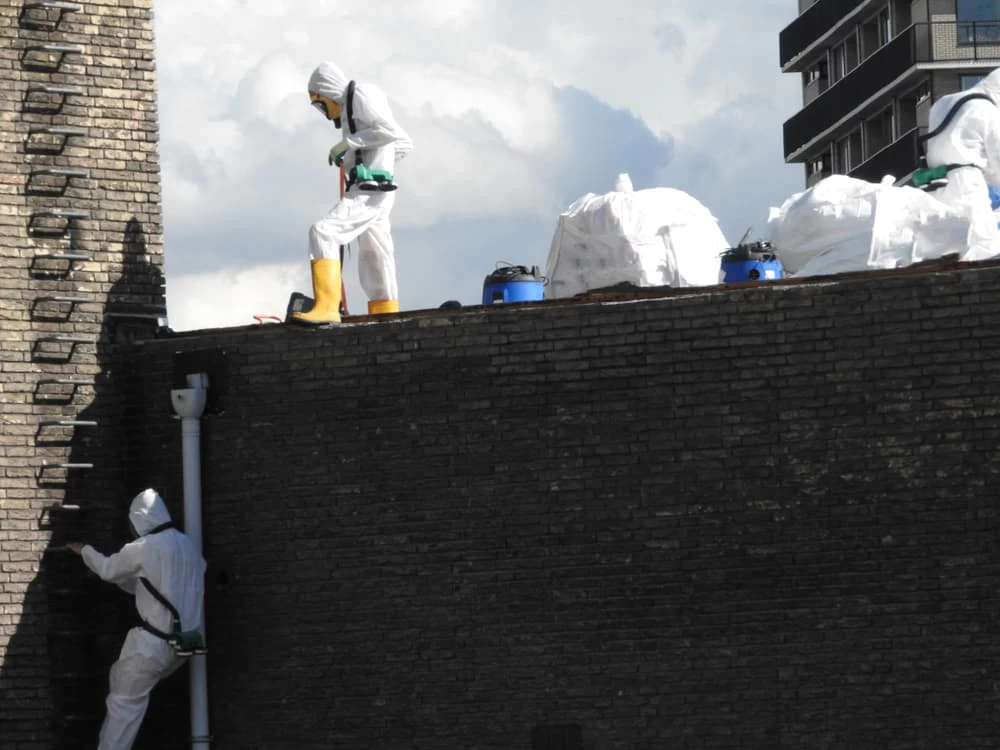
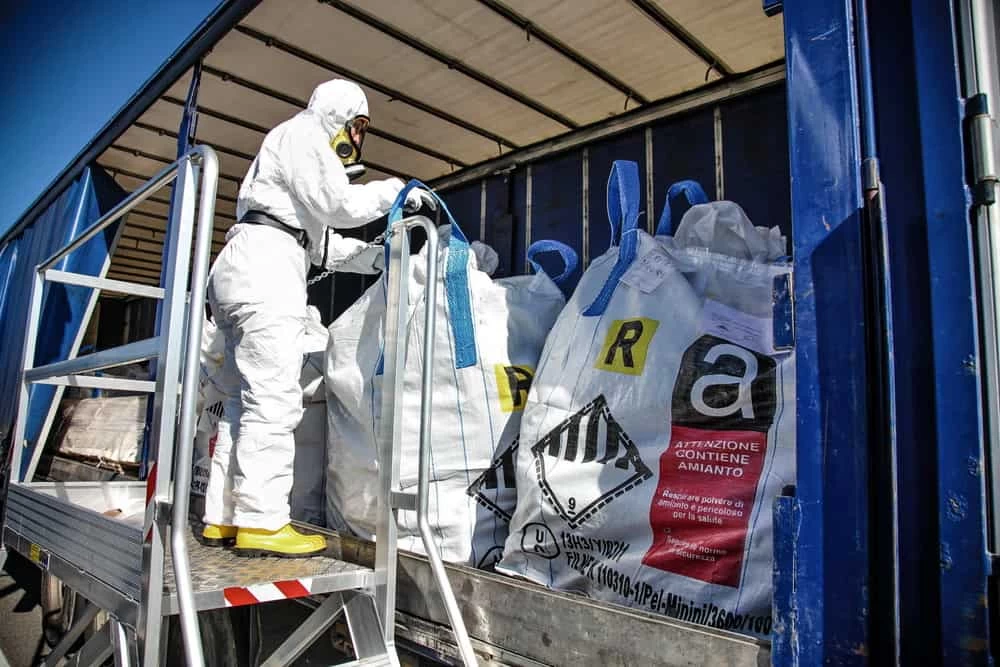
If asbestos-containing materials are confirmed, we handle the project notification to the NYS Department of Labor’s Asbestos Control Bureau before any removal begins. This is a legal requirement under ICR 56, and skipping it is how homeowners end up with stop-work orders and fines. The abatement itself is performed under full containment with negative air pressure meaning fibers don’t travel to other parts of your home while the work is happening. Materials are wetted, properly bagged, labeled, and transported to an approved disposal facility. A waste manifest documents the entire chain.
Once removal is complete, a certified industrial hygienist performs post-abatement air clearance testing. You don’t get a verbal thumbs-up you get a written clearance certificate. In Deer Park, where the Town of Babylon Building Department requires compliance documentation before renovation permits close out, that certificate isn’t optional. It’s the finish line.
Asbestos Tile and Popcorn Ceiling Removal, Deer Park
The Materials Most Deer Park Homes Are Actually Dealing With
The most common asbestos-containing materials found in Deer Park’s postwar housing stock are also the ones most likely to be disturbed during a renovation. Vinyl floor tiles especially the 9×9 inch variety installed in kitchens, bathrooms, and finished basements from the late 1940s through the 1960s frequently contain chrysotile asbestos. What most homeowners don’t realize is that the adhesive mastic beneath those tiles is often just as problematic. We remove both, using wet methods that prevent fiber release during the process.
Asbestos popcorn ceiling removal is another common call in Deer Park. Spray-applied acoustic texture was standard in homes built and renovated through the 1970s, and scraping it without testing first is both a regulatory violation and a genuine health risk. The same applies to pipe and boiler insulation in basements a fixture in homes that still run on original oil or steam heating systems, which is more common in this neighborhood than most people expect.
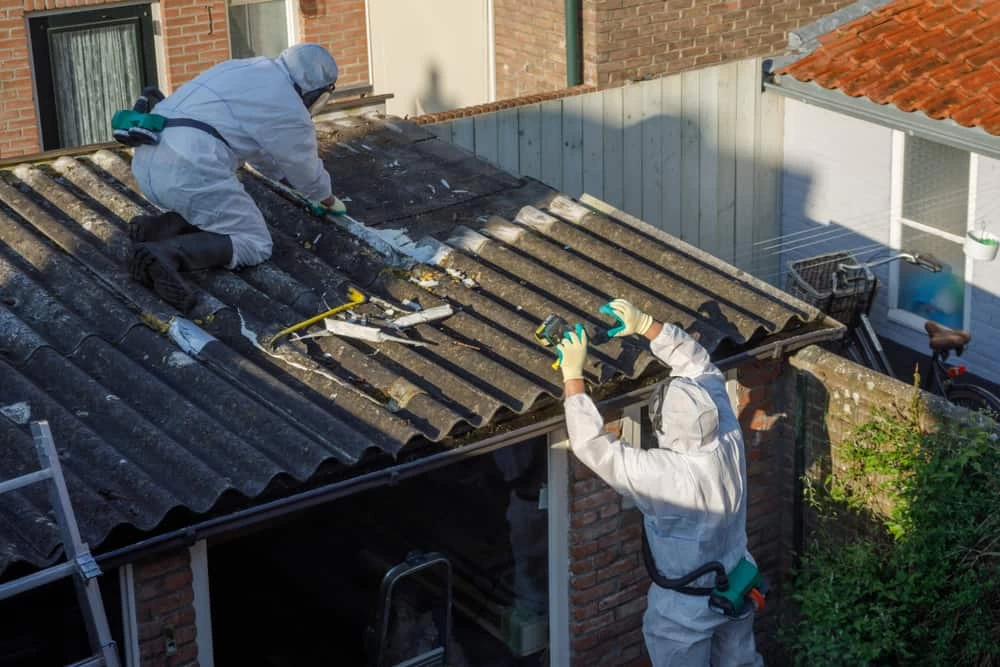
We also handle asbestos-cement roofing and siding, joint compound, and ceiling tile removal the full range of materials that show up in homes built during the era that defines Deer Park’s residential landscape. Every service includes inspection, licensed removal, proper disposal, and written clearance documentation. Suffolk County homeowners don’t get a handshake at the end you get a file you can actually use.
Does my Deer Park home actually need an asbestos inspection before renovating?
If your home was built before 1980 which describes the overwhelming majority of Deer Park’s housing stock yes, a certified asbestos inspection is required before any renovation, demolition, or significant repair work begins. This isn’t a suggestion; it’s a legal requirement under New York State Industrial Code Rule 56, enforced by the NYS Department of Labor’s Asbestos Control Bureau.
There’s a common misconception that homes built after 1974 are automatically exempt from this requirement. NYSDOL has officially clarified that this is not the case. For Deer Park homeowners, where most homes were constructed during the 1950s and 1960s, virtually every renovation project from a kitchen gut to a basement finish triggers the inspection requirement. The inspection must be performed by a NYS DOL-certified asbestos inspector, not a general contractor or a home inspector. If you’re not sure whether your home has been previously inspected, the safest move is to get it done before any work starts.
How much does asbestos removal typically cost for a home in Deer Park, NY?
Cost depends on the scope how much material needs to be removed, where it’s located, and how accessible it is. For a single room of asbestos floor tile removal in a Deer Park ranch home or Cape Cod, you’re generally looking at a few hundred to a few thousand dollars. Larger projects involving pipe insulation, popcorn ceilings, or roofing material will run higher. A full residential abatement project can range from roughly $1,500 on the lower end to $10,000 or more for extensive work.
What matters most is getting an accurate scope before anyone quotes you a number. We provide free estimates, and the estimate reflects the full scope: inspection, notification, removal, disposal, and air clearance testing. Deer Park homeowners sometimes get a low quote from an unlicensed operator who skips the notification step, skips the clearance test, and hands over no documentation and then find out later that the work doesn’t hold up when they go to sell or pull a permit. That’s a more expensive problem than doing it right the first time.
What happens if asbestos is found mid-renovation in my Deer Park home?
Work stops. That’s the legal requirement, and it’s the right call regardless. If a contractor opens a wall, pulls up flooring, or disturbs a ceiling and encounters material that looks like it could contain asbestos, all activity in that area needs to halt until a certified inspector assesses the situation. Continuing to work around suspected asbestos-containing material is a violation under NYS ICR 56 and creates real health exposure for everyone on site.
This situation comes up regularly in Deer Park, where homes built in the 1950s and 1960s often have multiple layers of renovation history on top of original construction materials. A bathroom remodel might reveal original vinyl tile beneath newer flooring. A basement project might uncover wrapped pipes that were never addressed. We respond quickly to mid-renovation discoveries specifically because timing matters the longer work is paused, the more it costs everyone. A prompt inspection and abatement schedule gets your project moving again with full documentation in hand.
Is the mastic adhesive under old floor tiles in Deer Park homes also a concern?
Yes, and it’s one of the most frequently overlooked issues in homes of this era. The 9×9 vinyl floor tiles installed in Deer Park kitchens, basements, and bathrooms during the 1950s and 1960s often contain asbestos but the black mastic adhesive used to bond them to the subfloor is frequently just as problematic, sometimes more so. Many homeowners assume that if the tiles test negative, the mastic is fine. That’s not always the case, and testing both separately is the only way to know for certain.
Some contractors will suggest simply tiling over existing asbestos floor tiles rather than removing them. In certain situations, encapsulation is a legitimate option under ICR 56 but it comes with conditions, and it doesn’t eliminate the issue permanently. Any future renovation that disturbs the floor will still require abatement at that point. We’ll walk you through both options honestly, including what each means for your documentation and your home’s long-term compliance record.
How long does asbestos abatement take for a typical Deer Park house?
For a contained, single-area project one room of floor tile, a section of pipe insulation, or a single ceiling abatement typically takes one to three days from start to finish, including setup, removal, and air clearance testing. Larger or more complex projects involving multiple materials or multiple areas of the home will take longer, sometimes a week or more depending on scope and scheduling.
There are also regulatory timelines to account for. NYS DOL requires project notification to be submitted before abatement begins, and there are minimum waiting periods built into that process for certain project types. We handle the notification on your behalf and build those timelines into the project schedule from the start, so there are no last-minute delays. For Deer Park homeowners working around a contractor’s schedule or a real estate closing date, knowing the realistic timeline upfront makes a significant difference in how you plan the rest of the project.
Can asbestos in a Deer Park home affect a real estate sale or home inspection?
It can, and it often does. When a home inspector or buyer’s contractor identifies suspected asbestos-containing materials during a pre-sale inspection, it typically triggers a negotiation and not one that favors the seller. Buyers may request abatement as a condition of sale, reduce their offer to account for it, or walk away entirely depending on the scope. In Deer Park’s current market, where median home values are approaching $590,000, that’s a meaningful financial exposure.
The cleaner path is to address known asbestos issues before listing. A completed abatement with full documentation clearance certificate, waste manifests, inspection report removes the issue from the table entirely and gives buyers confidence that the home has been properly handled. We provide exactly that documentation package on every project, which is something Deer Park sellers can present directly to buyers, real estate attorneys, and title companies. Homes in the Town of Babylon with unresolved asbestos findings can face complications at the permit and closing stage having the paperwork in order eliminates that friction before it starts.