Denton’s older homes along Route 17M weren’t built with today’s safety standards and asbestos abatement in Denton, NY starts with knowing exactly what you’re dealing with before anyone touches a wall.
I needed a professional consultation explanation of procedure for safe removal of Asbestos in my apartment complex. Without having an account yet, I was very impressed with the caring, knowledgeable and generous advice offered by Jessica, and will look forward to doing business in the future. Thank you so much! I feel much more informed about a sometimes scary endeavor. Peace. Nancy Silva Mineola, NY.
Mia Munoz
Used this company to clean up some water flood in my house. They were fast and easy to work with.very professional, Would recommend to anyone!
Nini Valle
Great company, had a flood and they responded quickly and efficiently. Billed my insurance company directly. I highly recommend this company!
joe colapietro, jr
I had pipe freeze in my basement right before a snow storm and they made to within an hour to help start the clean up process. They we by our side throughout the entire process and even helped with the insurance company. They did such a great job with the cleanup, repair, remidiation, I contracted them to perform the repairs and finishes in the basement. They came with enough manpower and material to get the job done. Leo and Jessica were nothing but a pleasure to deal with!!
Cristian Arredondo c
I had some water damage in my home and Green Island was able to take care of my issue quickly and effectively. I am very pleased with the work they did. They responded quickly and were very professional.
Michael M
Outstanding service! From the office to the field crew everyone was friendly, helpful and responsive. I highly recommend Green Island Group.
Most people in Denton don’t go looking for asbestos. They find it halfway through a kitchen renovation, or after a pipe bursts in January and the insulation around it starts coming apart. That’s when it stops being a background concern and becomes a real problem and the question shifts from “do I have it?” to “what do I do right now?”
Here’s what changes after proper asbestos abatement: your renovation moves forward, your home is legally cleared, and you have written documentation from an independent industrial hygienist confirming the air is clean. That clearance certificate isn’t just peace of mind it’s what your real estate attorney needs to close a deal, what your general contractor needs to get back on-site, and what protects you legally if questions ever come up later.
Homes along the Route 17M corridor and throughout the Wawayanda area were largely built between the 1940s and 1970s right in the middle of peak asbestos use in American construction. Nine-inch vinyl floor tiles, popcorn ceilings, pipe insulation on older heating systems, roofing felt these materials are common in this housing stock. Orange County’s freeze-thaw winters make it worse. When pipes freeze and burst in a pre-1980 home in Denton, the insulation around them doesn’t just get wet it gets disturbed. That’s an asbestos exposure scenario, and it happens here more than most people realize.
We’ve been working in Orange County for over 12 years. That includes homes in Denton, properties near Randall Airport, older farmhouses with outbuildings that haven’t been touched in decades, and everything in between. This isn’t a national franchise with a templated page for your town it’s a company that has actually worked in Denton and the surrounding area, understands the housing stock, and knows what western Orange County’s building inspectors and real estate attorneys need to close the loop on a job.
Our NYS DOL Asbestos Contractor License is publicly verifiable and we’ll give you the number to look it up yourself. Beyond that, we hold dual M/WBE certification from both New York State and New York City, have performed abatement work for NYS OGS, DASNY, and the NYS Office of Mental Health, and carry the full insurance stack to back every job. When state agencies trust us with their facilities, that track record speaks for itself.
No Guesswork Here's What the Process Actually Looks Like
It starts with an assessment. Before anything is removed, the material needs to be identified and tested. If you’ve already had a sample tested and know what you’re dealing with, that moves things faster. If not, we can help coordinate that step. Either way, nothing gets disturbed until there’s a clear picture of what’s there, where it is, and how much.
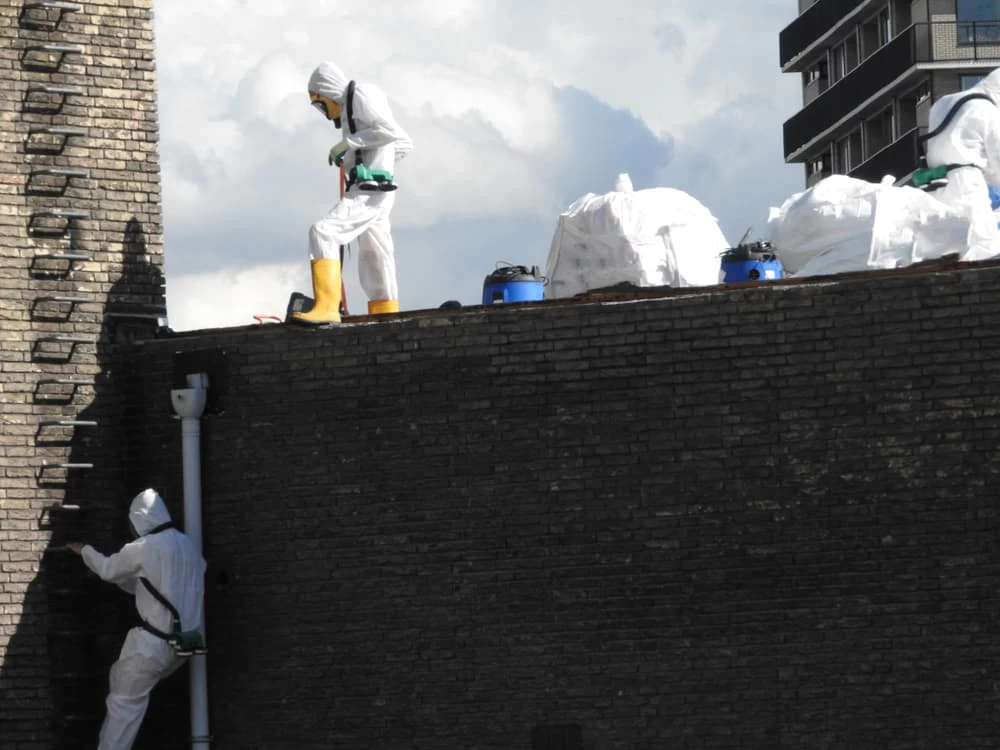
Once the scope is confirmed, we handle the NYS DOL notification required under Code Rule 56 before work begins that’s a state requirement for projects above de minimis thresholds, and it’s not optional. For Denton homeowners going through the Town of Wawayanda’s permitting process for a larger renovation, we provide the documentation your building department needs. The abatement itself is done under containment, with proper personal protective equipment, negative air pressure where required, and material disposal handled through licensed channels. Nothing gets bagged and left at the curb.
After the work is complete, an independent licensed industrial hygienist conducts post-abatement air monitoring. If the air clears, you get a written clearance certificate. That document is yours to keep for your records, your contractor, your lender, or your closing attorney. If you’re dealing with a water damage situation at the same time, we handle both under one engagement. One call, one crew, one set of documentation. That matters when your renovation is already on hold and you need things moving again.
What's Actually Included When You Call Green Island Group
Asbestos abatement isn’t one-size-fits-all, and the materials most common in Denton’s housing stock each come with their own removal requirements. Vinyl asbestos floor tiles the nine-inch squares found in kitchens, bathrooms, and basements of mid-century homes throughout the Wawayanda area are one of the most frequently encountered materials we remove. Popcorn acoustic ceilings from the 1960s and 70s are another. Pipe and boiler insulation in older heating systems, roofing felt, and asbestos-cement siding on outbuildings and agricultural structures are also common in this part of Orange County, particularly on properties with older barns or detached garages.
Every project includes containment setup, licensed removal, compliant disposal, and coordination of post-abatement air testing by an independent industrial hygienist. The clearance certificate comes standard it’s not an add-on, it’s part of how the job gets done correctly. For projects connected to a covered insurance event, we bill your carrier directly and handle the back-and-forth with the adjuster so you’re not managing that on top of everything else.
For homeowners who weren’t expecting this cost and most people aren’t we offer 0% APR financing up to $200,000 through a third-party lender. If you’re mid-renovation and the discovery of asbestos just changed your budget, that option exists and it’s real. Pricing for common asbestos removal services in the NY metro area typically runs $3–$8 per square foot for popcorn ceiling removal, $5–$15 per square foot for floor tile removal, and $25–$75 per linear foot for pipe insulation and we provide written estimates before any work begins.
Does asbestos abatement in Denton, NY require permits or state notification?
Yes and this is one of the most important things to understand before any work starts. New York State requires notification to the NYS DOL Asbestos Control Bureau under Industrial Code Rule 56 before asbestos-containing material is disturbed on projects above de minimis thresholds. This isn’t something a licensed contractor can skip, and it’s one of the clearest ways to tell whether the company you’re talking to actually knows what they’re doing.
For Denton homeowners, asbestos abatement that’s part of a larger renovation will also typically intersect with the Town of Wawayanda’s building permit process. Your building department may require clearance documentation before other work can resume. We handle the state notification and provide the written documentation your town’s permit process requires so you’re not left trying to figure out what paperwork goes where while your project sits idle.
How do I know if my older Denton home actually has asbestos in it?
If your home was built before 1980, there’s a reasonable chance it contains asbestos-containing materials somewhere the question is where and in what condition. In Denton and the Wawayanda area, the most common materials we encounter are nine-inch vinyl floor tiles (often found under newer flooring layers), popcorn or textured acoustic ceilings, pipe and boiler insulation in older heating systems, and roofing felt. Asbestos-cement siding and roofing panels are also common on older outbuildings and agricultural structures, which are prevalent in this part of Orange County.
The only way to know for certain is to have a sample tested by a certified laboratory. Visual identification alone isn’t reliable asbestos-containing materials often look identical to non-asbestos versions. If you’re planning a renovation, a pre-renovation asbestos inspection is the right first step. If material has already been disturbed, stop work, limit access to the area, and call for an assessment. Don’t try to clean it up or bag it yourself that creates the exposure risk you’re trying to avoid.
What happens after the asbestos is removed how do I know it's actually safe?
This is the question most people forget to ask and it’s the most important one. Asbestos removal isn’t complete just because the material is gone. Under New York State regulations, after abatement is finished, a licensed independent industrial hygienist conducts post-abatement air monitoring to measure fiber concentrations in the space. If the air tests clear, they issue a written clearance certificate. That document is your proof not our word, not a verbal confirmation, but a third-party certified record that the job was completed properly and the space is safe to reoccupy.
Every Green Island Group project includes this step. The clearance certificate becomes part of your permanent project documentation. If you’re selling your home, your buyer’s attorney will want it. If you’re reopening a space to a contractor, they’ll need it before work resumes. If questions ever come up years from now, you have the paper trail. It’s the difference between a job that’s done and a job that’s documented.
Can a pipe burst or water damage event in my Denton home expose asbestos?
Yes, and it happens more often than people expect in Denton and the surrounding Wawayanda area. When a pipe freezes and bursts in a pre-1980 home which is a real seasonal risk in this part of Orange County given the freeze-thaw cycle the pipe insulation that gets saturated and physically disturbed may contain asbestos. The same applies to water damage that reaches older ceiling tiles, floor tiles, or deteriorating pipe lagging. Once that material is wet and disturbed, the risk of fiber release goes up significantly.
The challenge is that most contractors handle either water damage or asbestos not both. That means you’re making two calls, waiting on two separate timelines, and trying to coordinate two different crews while your home sits in a damaged state. We handle asbestos abatement, water damage restoration, and mold remediation under one roof. We can assess the full scope of what’s happening, address both issues in a coordinated sequence, and produce a single set of documentation covering everything. That’s a meaningful difference when you’re dealing with an emergency situation in the middle of a winter night.
How much does asbestos removal typically cost for a home in Orange County, NY?
Cost varies depending on the type of material, how much of it there is, where it’s located, and whether it’s friable meaning it can be crumbled by hand and releases fibers more easily or non-friable. For common materials encountered in Denton and the broader Wawayanda area, typical pricing in the NY metro market runs roughly $3–$8 per square foot for popcorn ceiling removal, $5–$15 per square foot for vinyl asbestos floor tile removal, and $25–$75 per linear foot for pipe insulation removal. Larger or more complex projects full basement pipe systems, whole-house tile removal, or abatement tied to a demolition will fall toward the higher end of those ranges.
What you should always expect from a legitimate contractor is a written estimate before any work begins, with a clear breakdown of what’s included. No reputable licensed abatement company should be asking you to commit to a number over the phone without seeing the scope. If you’re facing an unexpected abatement cost mid-renovation, we offer 0% APR financing up to $200,000 it’s a real option for homeowners who need the work done now but didn’t budget for it.
Does asbestos have to be removed before selling a house in the Denton area?
Not always but it depends on what was found, where it is, and what condition it’s in. New York State does not require sellers to remove all asbestos-containing materials before a sale. However, if asbestos is identified during a home inspection, it almost always becomes a negotiating point. Buyers may request remediation as a condition of closing, lenders may require it before approving a mortgage, and real estate attorneys on both sides will want documentation confirming the scope and condition of any known ACMs.
In the Denton and Wawayanda real estate market, where older housing stock is the norm and home inspectors have become more thorough about flagging potential ACMs, this situation comes up regularly. The most practical approach for sellers is to get ahead of it have a licensed assessment done before listing, understand what’s there, and either remediate or disclose with full documentation in hand. We provide the written clearance certificate and project documentation that your closing attorney needs. Having that paperwork ready before the buyer’s inspector finds something puts you in a much stronger position at the negotiating table.