If your Dwaarkill property was built before 1980, there’s a real chance asbestos is somewhere inside it and we’re the licensed team Ulster County homeowners call to handle it the right way.
I needed a professional consultation explanation of procedure for safe removal of Asbestos in my apartment complex. Without having an account yet, I was very impressed with the caring, knowledgeable and generous advice offered by Jessica, and will look forward to doing business in the future. Thank you so much! I feel much more informed about a sometimes scary endeavor. Peace. Nancy Silva Mineola, NY.
Mia Munoz
Used this company to clean up some water flood in my house. They were fast and easy to work with.very professional, Would recommend to anyone!
Nini Valle
Great company, had a flood and they responded quickly and efficiently. Billed my insurance company directly. I highly recommend this company!
joe colapietro, jr
I had pipe freeze in my basement right before a snow storm and they made to within an hour to help start the clean up process. They we by our side throughout the entire process and even helped with the insurance company. They did such a great job with the cleanup, repair, remidiation, I contracted them to perform the repairs and finishes in the basement. They came with enough manpower and material to get the job done. Leo and Jessica were nothing but a pleasure to deal with!!
Cristian Arredondo c
I had some water damage in my home and Green Island was able to take care of my issue quickly and effectively. I am very pleased with the work they did. They responded quickly and were very professional.
Michael M
Outstanding service! From the office to the field crew everyone was friendly, helpful and responsive. I highly recommend Green Island Group.
You stop guessing. That’s the biggest thing. When you’re living in or renovating an older farmhouse off County Route 7 here in Dwaarkill, you don’t always know what’s behind the walls or under the floors and that uncertainty has a way of stalling everything. A renovation you planned for spring sits on hold. A home sale gets complicated. A basement you’ve been avoiding stays avoided. Once the asbestos is properly removed and cleared, that stops.
For Dwaarkill homeowners specifically, this matters in ways that go beyond the obvious. The housing stock here mid-century ranch homes, Dutch Colonial farmhouses, properties that have been through multiple renovation cycles over decades carries a higher-than-average likelihood of asbestos-containing materials. Floor tile adhesives, pipe insulation around older boilers, joint compound in 1960s additions, roofing felt. These aren’t rare finds in this part of Ulster County. They’re common. And the Dwaar Kill watershed means moisture is a real factor too water intrusion from seasonal flooding or a high water table can deteriorate materials that might otherwise stay stable, turning a manageable situation into one that needs immediate attention.
After abatement, you get documented air clearance results that prove the space is safe. Not just a verbal assurance actual monitoring data you can show a future buyer, an insurance adjuster, or a building inspector. That documentation follows the property for 30 years under New York State law, and it’s worth more than most people realize when it comes time to sell.
The License Isn't a Formality It's the Whole Point
In a rural area like the Town of Shawangunk where Dwaarkill sits, it’s not hard to find someone willing to tear out old materials for a low price. What’s harder to find is a contractor who’s actually licensed by the New York State Department of Labor to do it and who understands exactly what that distinction means for you legally, financially, and health-wise.
We hold the NYS DOL Asbestos Handling License required under Industrial Code Rule 56. That’s the specific, state-issued credential that separates legal abatement from a liability event. We already serve the Town of Shawangunk and the broader Ulster County area, which means the team arriving at your Dwaarkill property isn’t learning the local regulations on your dime we already know them.
Beyond asbestos, we handle mold remediation, water damage, fire damage, demolition, lead abatement, and HVAC cleaning. For older properties near Dwaarkill, where one problem rarely shows up alone, that matters.
No Surprises Here's Exactly What the Process Looks Like
It starts with an assessment. Before any work begins, a certified NYS Asbestos Inspector surveys the property to identify what materials are present, where they are, and what condition they’re in. Under New York State Industrial Code Rule 56, this survey is required before any renovation or demolition work on a pre-1974 structure and in the Town of Shawangunk, where building permit applications reference this requirement directly, skipping it isn’t an option.
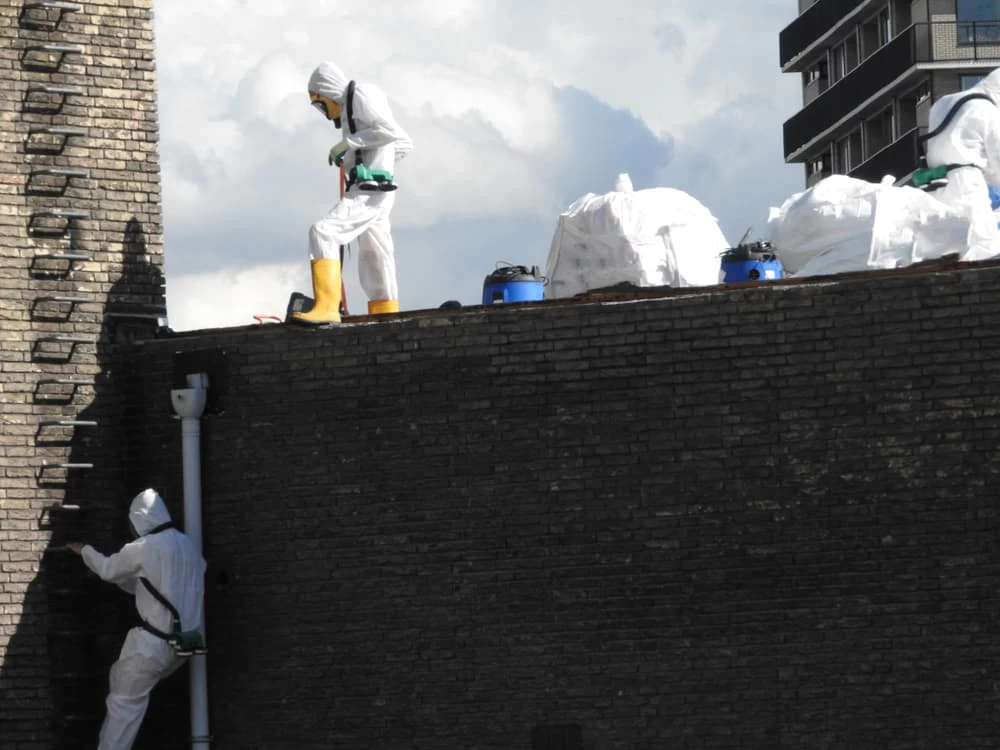
Once the scope is confirmed, we file the required notification with the NYS DOL on your behalf. You don’t have to navigate the Albany District Office paperwork or figure out what forms apply to your project we handle that. The abatement itself is performed under full containment protocols: negative air pressure, proper PPE, regulated disposal. Every step follows ICR 56 to the letter.
After removal, post-abatement air monitoring is conducted before the space is cleared for re-occupancy. You get the results in writing. For Dwaarkill homeowners managing a renovation timeline or preparing a property for sale, this clearance documentation is what closes the loop it’s the proof that the work was done correctly, not just the promise that it was.
Asbestos abatement isn’t one-size-fits-all, especially in a place like Dwaarkill where the properties themselves are so varied. A 1950s ranch home on a rural lot has different materials and different risks than a farmhouse that’s been renovated three times or a historic structure near Steen Road. We assess each property on its own terms identifying the specific materials present, whether that’s asbestos floor tile and black mastic adhesive in a mid-century kitchen, pipe and boiler insulation in a basement, popcorn ceiling texture from a 1970s update, or roofing felt disturbed during storm damage.
The full scope of what’s included: the pre-abatement inspection, all required NYS DOL permit filings, containment setup, licensed removal, regulated waste transport and disposal, and post-abatement air clearance monitoring with written results. If your situation involves an insurance claim which is common after flooding or storm damage in the Wallkill River watershed we bill insurance directly so you’re not fronting costs and waiting for reimbursement.
For properties dealing with multiple issues at once, our same team can transition into mold remediation, water damage restoration, or lead abatement without you having to bring in a second contractor. In a rural area where coordinating multiple crews is its own headache, that’s a real advantage.
Does my Dwaarkill home actually need an asbestos survey before renovating?
If your home was built before 1974 and a significant portion of the housing stock in the Town of Shawangunk falls into that category New York State Industrial Code Rule 56 requires an asbestos survey by a certified inspector before any renovation or demolition work begins. This isn’t optional, and it’s not just a technicality. Building permit applications in Ulster County reference this requirement, so if you’re pulling a permit for a kitchen gut, a bathroom remodel, or any structural work, the survey is part of the process whether you plan for it or not.
The good news is that a survey doesn’t automatically mean you have a problem. It means you’ll know exactly what you’re dealing with before work starts which protects your contractor, your family, and your project timeline. Discovering asbestos mid-renovation, after materials have already been disturbed, is a far more complicated and expensive situation than finding it beforehand through a proper inspection.
How do I know if the floor tiles in my older Dwaarkill farmhouse contain asbestos?
You can’t tell by looking at them. The 9-inch by 9-inch floor tiles that were standard in mid-century homes extremely common in the farmhouses and ranch-style properties throughout the Shawangunk area and Dwaarkill were frequently manufactured with asbestos, as was the black mastic adhesive used to install them. The same goes for the 12×12 tiles that came into use in the 1960s and 1970s. Visual inspection tells you nothing definitive.
The only way to know is laboratory testing of a sample collected by a certified inspector. If the tiles come back positive and you’re planning to renovate, they need to be addressed by a licensed abatement contractor before any disturbance occurs. If they’re in good condition and you’re not touching them, they may be able to stay in place encapsulation is sometimes an option depending on the material and its condition. A proper assessment will tell you which path makes sense for your specific property.
What does asbestos abatement actually cost for a home in Ulster County?
For a typical residential project in the Ulster County area, asbestos abatement generally runs between $1,500 and $10,000, with most single-material, single-room projects falling in the $1,500 to $4,000 range. Larger scope work multiple rooms, multiple material types, or full basement pipe insulation removal can push into the $10,000 to $30,000 range depending on linear footage and complexity. Costs increased roughly 8 to 12 percent in 2026, and post-abatement air monitoring adds to the total, though it’s a required step, not an optional add-on.
For Dwaarkill properties specifically, scope tends to run larger than a typical suburban project. Older farmhouses and rural homes often have asbestos in multiple locations floor tiles, pipe insulation, attic insulation, roofing materials because they’ve been updated and renovated in layers over decades. Getting an accurate estimate requires a proper inspection first. A quote given over the phone without seeing the property isn’t worth much, and any contractor offering one should be a red flag.
Is it safe to stay in my home during asbestos abatement work?
It depends on the scope and location of the work. For small, contained projects removing a section of floor tile in one room, for example temporary displacement from that specific area may be all that’s needed, with the rest of the home remaining accessible. For larger projects involving multiple rooms, basement work, or any materials that are actively friable (crumbling or deteriorating), vacating the home during abatement is the standard recommendation.
We use full containment protocols negative air pressure systems, sealed work zones, and proper PPE to prevent fiber migration into areas outside the work zone. Post-abatement air monitoring is conducted before any area is cleared for re-occupancy, so you’re not moving back in based on someone’s word. You’re moving back in based on actual air quality data. For families with young children or anyone with respiratory concerns, that documented clearance is the only answer that actually means something.
What happens if a contractor disturbs asbestos without a license in New York?
The consequences fall on multiple parties, and they’re serious. In New York State, any contractor who disturbs asbestos-containing materials without holding the NYS DOL Asbestos Handling License is in violation of Industrial Code Rule 56. That means potential stop-work orders, fines, and legal liability but the homeowner isn’t off the hook either. If unlicensed work creates an exposure event, you’re looking at potential liability for remediation costs, health claims, and the cost of a proper licensed abatement to clean up what the unlicensed contractor left behind.
In rural areas like the Town of Shawangunk, it’s not uncommon for general contractors or handymen to offer to “handle” old materials without disclosing that they’re not licensed to do so. The price looks better upfront. The problem is that unlicensed work leaves no paper trail, no air monitoring results, and no regulatory compliance which means no documentation when you go to sell the property, file an insurance claim, or pull a future building permit. Licensed abatement costs more for a reason, and that reason protects you long after the job is done.
Can flooding or water damage make asbestos more dangerous in a Dwaarkill home?
Yes and this is a real concern for properties in and around Dwaarkill. The Dwaar Kill stream and the broader Wallkill River watershed create genuine seasonal flooding risk for low-lying properties in this area. When water intrudes into a basement or crawl space, it can saturate and deteriorate asbestos-containing materials that were previously stable pipe insulation, floor tile adhesives, ceiling tiles turning them friable. Friable asbestos means the material can crumble and release fibers into the air, which is when the health risk becomes immediate rather than theoretical.
If your property has experienced flooding and you have a pre-1980 home, a post-flood assessment for asbestos-containing materials is worth taking seriously especially in the basement and around any mechanical systems. We handle both the asbestos abatement and the water damage restoration, so if a flood event has created both problems simultaneously, you’re not coordinating two separate contractors to fix what is really one connected situation. That’s a practical advantage in an area where this combination of issues comes up more often than most homeowners expect.