East Hills Homes Were Built in the Asbestos Era — Here's What That Means for You
Most homes in East Hills were built in the 1950s and 1960s — right when asbestos was standard in residential construction. If you’re renovating, selling, or just concerned about what’s inside your walls, we handle asbestos abatement the legal, documented way.
I needed a professional consultation explanation of procedure for safe removal of Asbestos in my apartment complex. Without having an account yet, I was very impressed with the caring, knowledgeable and generous advice offered by Jessica, and will look forward to doing business in the future. Thank you so much! I feel much more informed about a sometimes scary endeavor. Peace. Nancy Silva Mineola, NY.
Mia Munoz
Used this company to clean up some water flood in my house. They were fast and easy to work with.very professional, Would recommend to anyone!
Nini Valle
Great company, had a flood and they responded quickly and efficiently. Billed my insurance company directly. I highly recommend this company!
joe colapietro, jr
I had pipe freeze in my basement right before a snow storm and they made to within an hour to help start the clean up process. They we by our side throughout the entire process and even helped with the insurance company. They did such a great job with the cleanup, repair, remidiation, I contracted them to perform the repairs and finishes in the basement. They came with enough manpower and material to get the job done. Leo and Jessica were nothing but a pleasure to deal with!!
Cristian Arredondo c
I had some water damage in my home and Green Island was able to take care of my issue quickly and effectively. I am very pleased with the work they did. They responded quickly and were very professional.
Michael M
Outstanding service! From the office to the field crew everyone was friendly, helpful and responsive. I highly recommend Green Island Group.
You stop guessing. That’s the biggest thing. When asbestos-containing materials are properly identified, removed, and cleared — not just painted over or ignored — you have documentation that says your home is safe. That matters whether you’re staying, renovating, or eventually selling.
East Hills homes are overwhelmingly post-war construction. Strathmore was built by Levitt and Sons in the late 1940s. Norgate, Country Estates, Lakeville Estates — all developed in the same era when pipe insulation, floor tiles, and ceiling texture routinely contained asbestos. The average home in East Hills is about 70 years old. That’s just the reality of the housing stock here, and it’s why asbestos abatement comes up so often during renovations on the North Shore.
When you’re opening up walls, replacing a boiler, pulling up old tile floors, or scraping a popcorn ceiling in an East Hills home this age, you’re in territory where asbestos is a real possibility. Getting it handled correctly — with licensed removal, air monitoring, and clearance testing — means your contractor can move forward, your family isn’t exposed, and you have a paper trail that holds up at closing or at the building department.
We Know East Hills Homes — Because We've Been Working Here for Years
We’re a Nassau County-based environmental contractor, fully licensed by the New York State Department of Labor under Industrial Code Rule 56. Every project uses certified asbestos workers. Every job ends with documentation — not just a handshake.
We’ve worked throughout East Hills and the surrounding North Shore communities — Roslyn, Old Westbury, Greenvale, and Manhasset. We know the post-war colonials, the Levitt-era ranches, the steam-heated homes with original pipe insulation still wrapped in the basement. When we show up to a Strathmore home or a Lakeville Estates colonial in East Hills, we’re not learning on the job — we’ve been here.
East Hills residents expect a certain standard. You’re making a significant investment in your home, your family’s health, and your property’s future value. We take that seriously, and we show it through the work — not through sales language.
No Surprises — This Is Exactly How the Process Works
It starts with an inspection. A certified asbestos inspector surveys the area in question — whether that’s a basement floor, pipe insulation, a popcorn ceiling, or wall material — and collects samples for laboratory analysis. You get a clear answer on what’s there and what needs to happen next. In Nassau County, this survey is required before any renovation or demolition that could disturb potential asbestos-containing materials in a pre-1980 home.
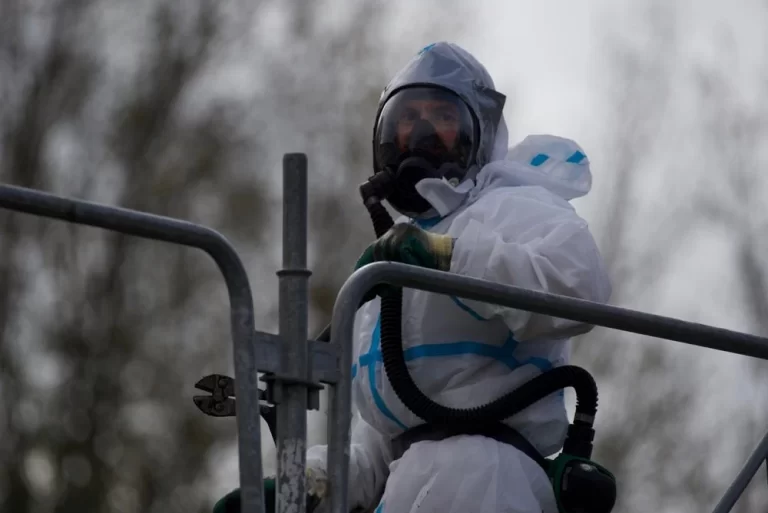
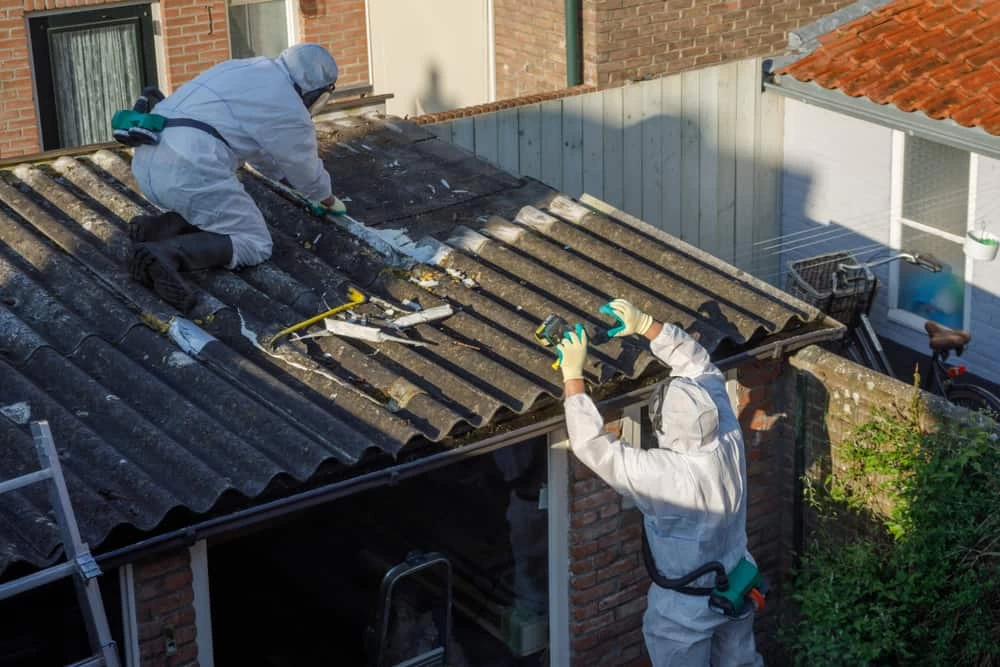
If abatement is needed, we build a written work plan and prepare the area with full containment — plastic sheeting, negative air pressure, restricted access. This isn’t optional under New York State law, and it’s not something you want skipped. The actual removal follows strict phased protocols required by Code Rule 56: contained removal, thorough cleaning, and then air monitoring to confirm fiber levels are within safe limits before containment comes down.
Once clearance is confirmed, you receive the full documentation package — the survey results, the work plan, the air monitoring data, and the clearance certification. That’s what your general contractor needs to move forward, what Nassau County’s building department expects to see, and what protects you if questions come up during a future sale. We coordinate the entire process from start to finish — you don’t need to coordinate between separate inspectors, abatement crews, and air monitoring firms.
Every asbestos abatement project we handle in East Hills covers the full scope — inspection, removal, air monitoring, and clearance documentation. We don’t hand you off to a third party for one piece of it. The licensed inspector, the certified abatement crew, and the clearance testing are all coordinated through us.
The most common materials we address in East Hills homes are the ones built into this era of construction: vinyl asbestos floor tiles and the black mastic adhesive underneath them (found in nearly every post-war basement and kitchen), pipe and boiler insulation in steam heating systems, popcorn ceiling texture applied before 1978, and textured plaster or drywall joint compound in pre-1980 construction. If you’re doing a full gut renovation in Nob Hill or Canterbury Woods — or updating a kitchen in a Norgate ranch — there’s a real chance more than one of these materials is present. We assess the full picture, not just the one spot you already noticed.
All asbestos waste is packaged, labeled, and transported to a licensed disposal facility in compliance with New York State and federal regulations. It cannot go in a construction dumpster, and improper disposal creates liability that follows the homeowner — not just the contractor. When we’re done, that liability is off your plate. You get a complete documentation package that satisfies the Nassau County building department and stands up to scrutiny at any point down the road.
Does my East Hills home actually need asbestos testing before a renovation?
If your home was built before 1980 — which covers nearly every property in East Hills — then yes, asbestos testing is required before any renovation or demolition work that could disturb potential asbestos-containing materials. This isn’t a recommendation; it’s a requirement under Nassau County’s building permit process and New York State Industrial Code Rule 56. Your general contractor cannot legally proceed with work that disturbs walls, floors, ceilings, or mechanical systems in a pre-1980 home without documentation that asbestos has been assessed.
The practical reality in East Hills is that most homes here are 60 to 75 years old. That puts them squarely in the era when asbestos was used in floor tiles, pipe insulation, ceiling texture, and joint compound as a matter of routine. Testing before you start protects you legally, protects your contractor, and protects your family from exposure during the renovation itself. It’s a straightforward step that prevents a much larger problem.
What does asbestos abatement typically cost for a Nassau County home?
Cost depends on the scope — what materials are involved, how much square footage needs to be addressed, and how accessible the work area is. A focused removal of vinyl asbestos floor tiles in a basement might run in the range of $1,500 to $4,000. Pipe insulation removal around a boiler system can range from $2,000 to $6,000 depending on the extent of the wrapping. Larger projects — like a full popcorn ceiling removal throughout a 3,000-square-foot home, or multiple material types in a gut renovation — can run $8,000 to $15,000 or more.
What you’re paying for isn’t just the physical removal. It’s the certified labor, the containment setup, the air monitoring, the licensed waste disposal, and the documentation package that satisfies the Nassau County building department and protects your property’s value. In East Hills, where homes regularly sell for well over $1 million, the cost of proper abatement is a small fraction of what’s at stake if the work is done incorrectly or left undocumented.
What are the most common places asbestos hides in East Hills homes?
In homes built during the late 1940s through the 1960s — which describes most of East Hills — asbestos tends to show up in predictable places. The most common are vinyl floor tiles, particularly the 9-inch square tiles found in basements, kitchens, and utility rooms, along with the black adhesive mastic underneath them. Both the tile and the mastic frequently contain asbestos, and disturbing one without accounting for the other is a mistake.
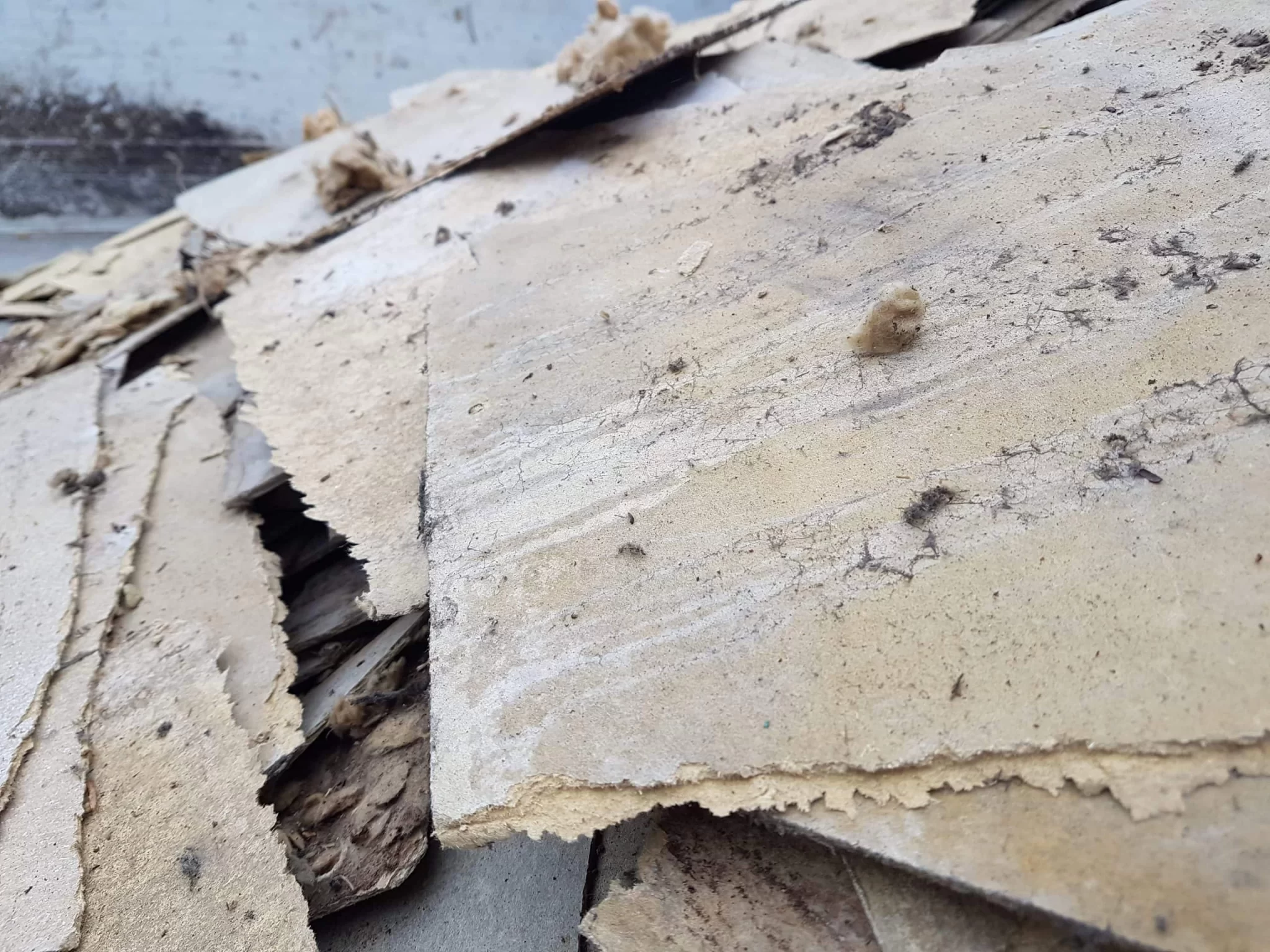
Pipe and boiler insulation is another major one. Steam heating systems in post-war East Hills homes were routinely wrapped in asbestos insulation, and that material becomes friable — meaning it crumbles and releases fibers — as it ages. Popcorn ceiling texture applied before 1978 is also a significant risk, especially in homes being updated with modern interiors. Beyond those, textured plaster walls, drywall joint compound, window glazing, and older cement board siding can all contain asbestos in homes of this age. A proper inspection looks at all of it, not just the obvious spots.
Can I legally remove asbestos myself in New York State?
There is a narrow exemption under New York State Industrial Code Rule 56 that allows an owner-occupant of a single-family home to perform asbestos removal themselves. But that exemption only applies if you are the owner doing the work with your own hands — the moment you hire any contractor to perform or assist with the removal, full licensure requirements apply. In practice, almost no East Hills homeowner undertaking a meaningful renovation is doing the physical demolition themselves. If a contractor is touching it, that contractor must be NYS DOL licensed.
Beyond the legal issue, there’s the practical one. Asbestos fibers are invisible and odorless. You cannot tell by looking at a material whether it’s releasing fibers, and standard dust masks do not provide adequate protection. Improper removal without containment, negative air pressure, and proper respiratory equipment can contaminate the entire living space — not just the work area. The health consequences of asbestos exposure are serious and long-latency, meaning the damage doesn’t show up for decades. It’s not a risk worth taking.
How long does asbestos abatement take in a typical East Hills home?
For a focused removal — a section of vinyl tile in a basement, or pipe insulation around a single boiler — the active abatement work typically takes one to two days. That includes setup, containment, removal, cleaning, and final air monitoring. Clearance results from the air monitoring lab usually come back within 24 to 48 hours, after which the containment can come down and your contractor can move in.
Larger projects take longer. A full popcorn ceiling removal throughout a multi-room home, or a combined tile-and-insulation removal in preparation for a gut renovation, may take three to five days of active work plus the clearance waiting period. We coordinate with your general contractor so the abatement phase fits into your renovation timeline as cleanly as possible. For homeowners in East Hills working toward a real estate closing deadline or a Nassau County permit approval, we’re used to working within those time constraints and communicating clearly about what’s realistic.
What happens if asbestos is found during a home inspection in East Hills?
It’s more common than most buyers and sellers expect, especially in East Hills where the housing stock is predominantly pre-1980 construction. When a home inspector flags suspected asbestos-containing materials — whether it’s floor tiles, pipe insulation, or ceiling texture — the transaction typically pauses until the material is either tested and confirmed safe or properly abated and documented.
At that point, you have a few options. The seller can hire a licensed abatement contractor to remove and document the material before closing. The buyer can negotiate a price adjustment and handle it post-closing. Or both parties can agree on an escrow arrangement. What matters most is that whatever path is chosen, the work is done by a NYS DOL-licensed contractor with full documentation — because that paperwork follows the property and protects both parties. We work regularly with real estate attorneys and agents in Nassau County who are familiar with this process, and we can move quickly when a closing timeline is involved. East Hills homes are high-value transactions, and getting the asbestos piece handled correctly protects everyone at the table.