Your 1950s South Shore Home Deserves a Real Answer
Most East Massapequa homes were built during the exact decades asbestos was used in almost everything — and if you’re renovating, selling, or dealing with water damage, you need certified asbestos abatement you can actually trust.
I needed a professional consultation explanation of procedure for safe removal of Asbestos in my apartment complex. Without having an account yet, I was very impressed with the caring, knowledgeable and generous advice offered by Jessica, and will look forward to doing business in the future. Thank you so much! I feel much more informed about a sometimes scary endeavor. Peace. Nancy Silva Mineola, NY.
Mia Munoz
Used this company to clean up some water flood in my house. They were fast and easy to work with.very professional, Would recommend to anyone!
Nini Valle
Great company, had a flood and they responded quickly and efficiently. Billed my insurance company directly. I highly recommend this company!
joe colapietro, jr
I had pipe freeze in my basement right before a snow storm and they made to within an hour to help start the clean up process. They we by our side throughout the entire process and even helped with the insurance company. They did such a great job with the cleanup, repair, remidiation, I contracted them to perform the repairs and finishes in the basement. They came with enough manpower and material to get the job done. Leo and Jessica were nothing but a pleasure to deal with!!
Cristian Arredondo c
I had some water damage in my home and Green Island was able to take care of my issue quickly and effectively. I am very pleased with the work they did. They responded quickly and were very professional.
Michael M
Outstanding service! From the office to the field crew everyone was friendly, helpful and responsive. I highly recommend Green Island Group.
You stop guessing. That’s the first thing. Once a certified inspection has been done and any asbestos-containing materials have been properly removed and documented, you’re no longer making decisions around something you can’t see or quantify. Your renovation moves forward. Your sale closes. Your family isn’t breathing in fibers that were quietly deteriorating behind a wall or under a floor.
For East Massapequa homeowners specifically, the stakes are a little higher than they are in some other Nassau County communities. The housing stock here is almost entirely detached single-family homes — the vast majority built in the 1950s and 1960s — and that means the odds of finding asbestos-containing materials during a kitchen gut, a basement finishing project, or an HVAC replacement are genuinely high. Joint compound, vinyl floor tile, pipe insulation, popcorn ceilings — these were standard in every home built during that era.
The waterfront character of East Massapequa adds another layer. The canals that cut into the southern edge of the community create elevated humidity and salt air exposure year-round, and those conditions accelerate the breakdown of building materials. When asbestos-containing materials get wet, crack, or start to crumble, they become airborne. That’s when they become dangerous. Getting ahead of it — especially in a home near the water — isn’t overcautious. It’s just smart.
We Work in East Massapequa and the Communities Around It
Green Island Group is a Nassau County-based environmental services company. Not a national chain. Not a regional franchise routing your call through a call center three states away. We work in East Massapequa, Massapequa Park, Seaford, and Amityville — and we know the difference between them.
That matters here because East Massapequa isn’t a simple zip code to serve. The community straddles the Nassau-Suffolk border, with the eastern third near Carman Creek falling under the Amityville school district even though the mailing address says Massapequa. Permitting runs through the Town of Oyster Bay’s building department, not a village government. The housing stock ranges from turn-of-the-century waterfront homes along Clocks Boulevard to mid-century ranches to 1980s colonials — and each era carries its own asbestos history.
We’re fully licensed under New York State Industrial Code Rule 56, which is the governing regulation for all asbestos work in this state. That’s not a marketing point — it’s a legal requirement, and not every contractor operating in this area actually holds it. We do.
It starts with an inspection. A NYS-certified inspector comes to your home, identifies any materials that may contain asbestos, and collects samples for laboratory analysis. This isn’t a formality — in New York State, a certified asbestos survey is legally required before renovation or demolition work that could disturb potential ACMs. If you’re pulling a building permit through the Town of Oyster Bay, this documentation is part of what keeps your project from getting stopped mid-renovation.
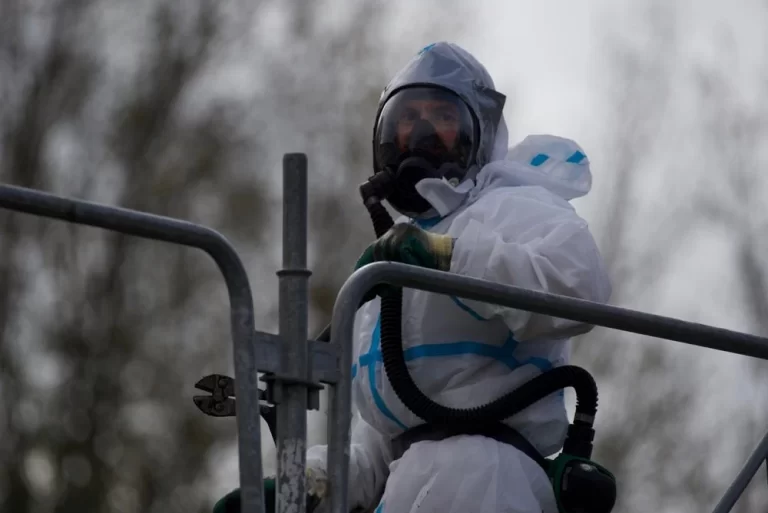
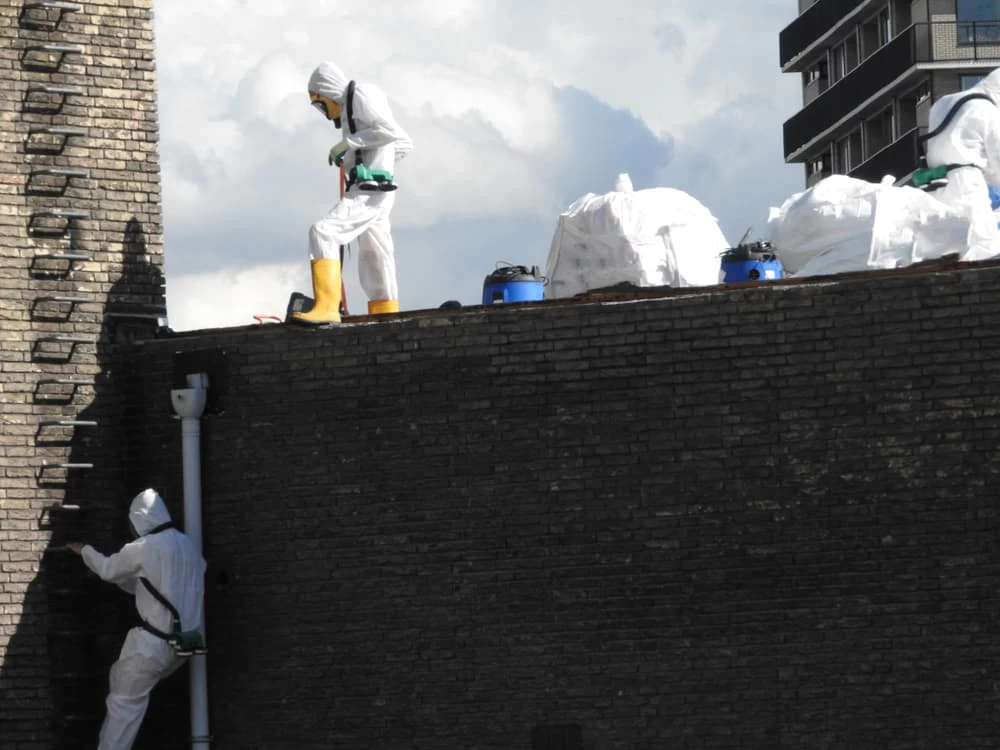
Once the lab results are back, you get a clear picture of what’s there, where it is, and what needs to happen next. If abatement is required, we set up proper containment — sealing off the work area so fibers can’t migrate to other parts of your home — and remove the materials following strict NYS ICR 56 protocols. Everything goes to a licensed hazardous waste disposal facility. Nothing gets bagged and left at the curb.
After removal, we conduct post-abatement air clearance testing. This is the step that confirms the space is safe before containment comes down and your contractor goes back in. You receive full documentation of the entire process — inspection results, abatement records, and air clearance certification — which is exactly what your building department, your real estate attorney, or your buyer’s inspector will ask for. In a community where median home values are above $700,000, that paperwork is worth protecting.
Asbestos abatement isn’t a single task — it’s a sequence, and every step matters. We handle the full scope: initial asbestos inspection and bulk sampling, laboratory analysis, licensed abatement and removal, proper disposal, and post-abatement air clearance testing. You don’t need to coordinate between three different contractors or wonder whether the paperwork from one phase is compatible with what the next phase requires. One company, beginning to end.
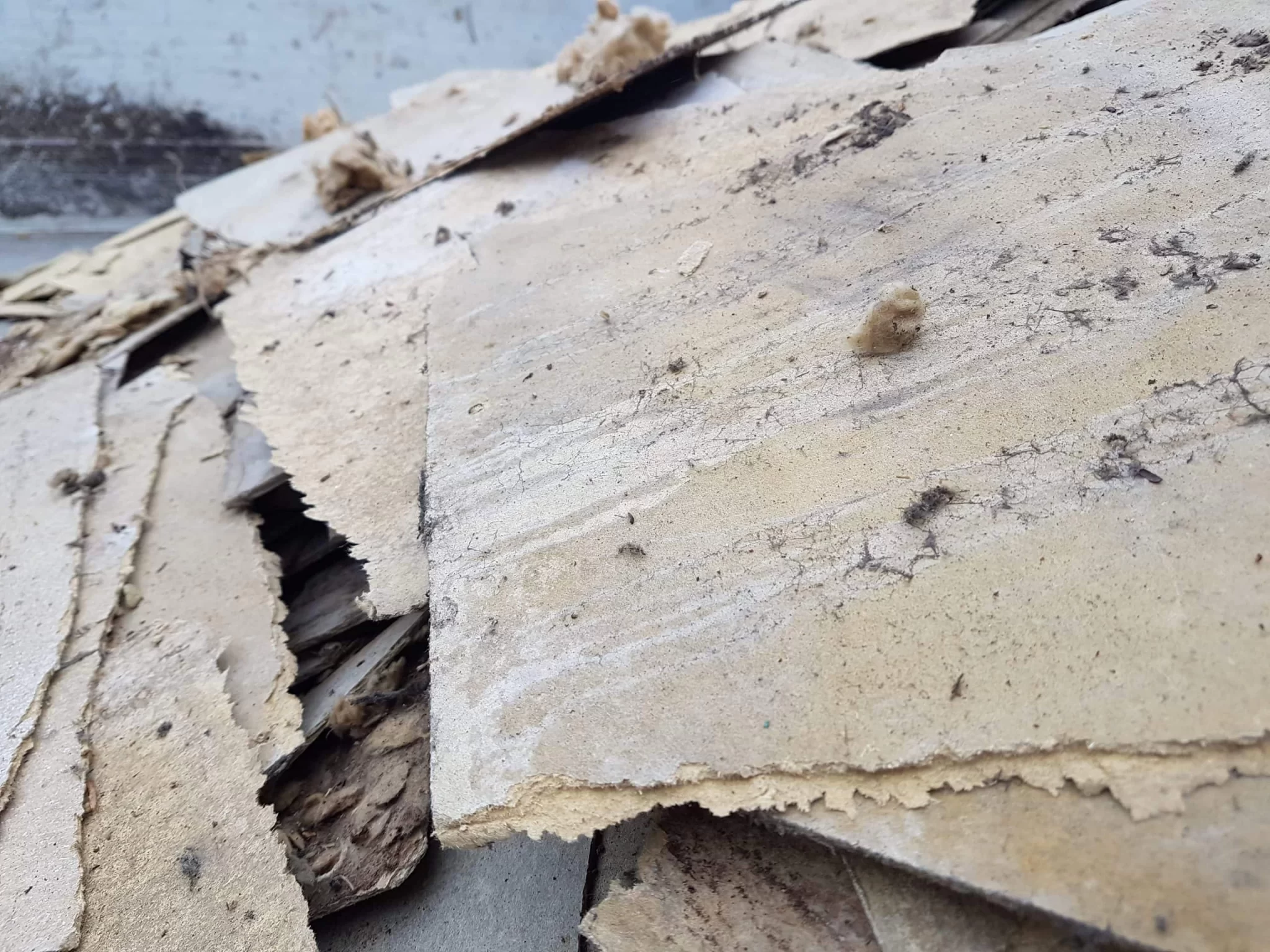
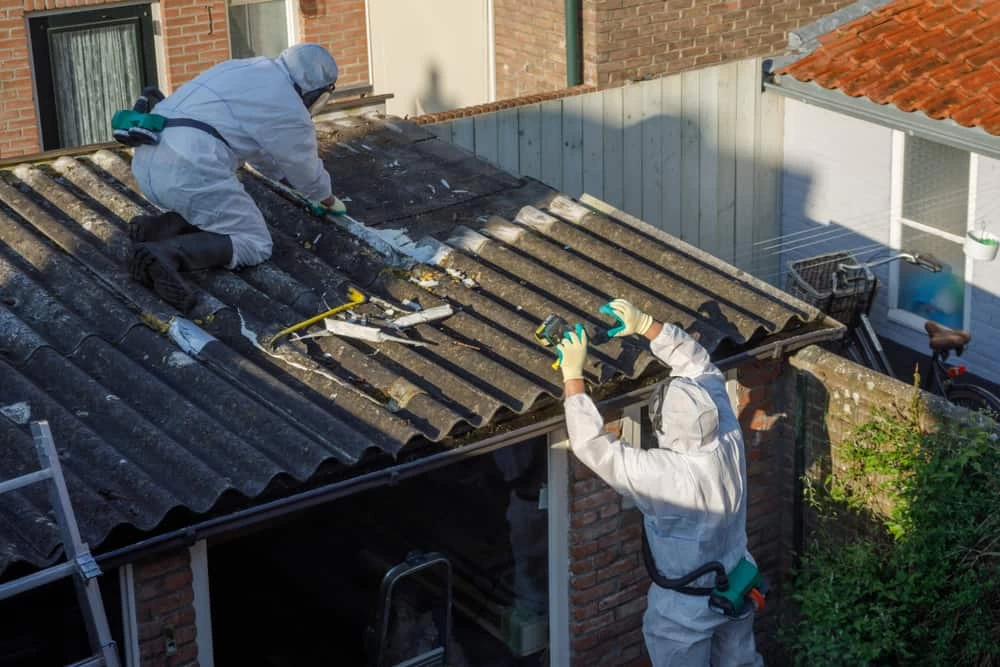
The specific materials we encounter most often in East Massapequa homes reflect the community’s post-war construction era. Vinyl floor tiles — particularly the 9-inch and 12-inch formats common in 1950s and 60s kitchens and basements — are one of the most frequent finds. Popcorn and textured ceilings applied through the 1970s are another. Pipe and boiler insulation in homes with original steam or oil heat systems, joint compound used in drywall repairs, and asbestos-cement roofing and siding materials round out the picture. If your home was built before 1980, there’s a realistic chance at least one of these materials is present.
For homeowners on the canal-front properties in the southern part of East Massapequa, or in the older homes near Clocks Boulevard, we also factor in moisture history. Water-damaged asbestos-containing materials require a different level of care than materials that are still intact — and we assess that distinction before any work begins.
Does my East Massapequa home actually need an asbestos inspection before renovating?
If your home was built before 1980 — which describes the vast majority of East Massapequa’s housing stock — then yes, a certified asbestos inspection is legally required before renovation or demolition work that could disturb potential asbestos-containing materials. This isn’t optional guidance. New York State Industrial Code Rule 56 mandates it, and the Town of Oyster Bay’s building department expects the documentation to be in order before work proceeds.
The practical reason this matters: the 1950s and 1960s construction era that defines most of East Massapequa used asbestos in joint compound, floor tile, pipe insulation, ceiling texture, and roofing materials as a matter of routine. You may not know it’s there until a certified inspector looks. Skipping the inspection doesn’t eliminate the risk — it just means you find out the hard way, mid-project, when your contractor has already disturbed the material and your permit is suddenly in jeopardy.
What does asbestos abatement actually cost for a home in Nassau County?
The cost depends on what’s found, where it is, and how much of it needs to be removed. A localized removal — say, asbestos floor tile in a single room or pipe insulation on a section of basement plumbing — can run anywhere from $1,500 to $4,000. Larger projects involving multiple materials or whole-home surveys before a major renovation will cost more, and full abatement of extensive ACMs in an older home can reach $10,000 or beyond depending on scope.
What drives cost in East Massapequa specifically is the age and layering of the housing stock. Homes that have gone through multiple renovation cycles — a 1950s original with 1970s updates and 1990s repairs — often have asbestos-containing materials from more than one era, and identifying all of them takes more thorough inspection work. Waterfront properties that have experienced flooding or storm intrusion may also have materials that have degraded and require more careful containment. The inspection phase is what gives you an accurate number — and it’s worth doing before you budget a renovation, not after.
How long does asbestos abatement take from inspection to clearance?
For a typical residential project in East Massapequa, you’re looking at a few days to about a week from the time abatement begins to the time air clearance testing confirms the space is safe. The inspection and lab analysis phase usually takes two to four business days before that, depending on the lab turnaround. So from first call to cleared workspace, most homeowners should plan for one to two weeks total.
Larger projects — full basement abatement, whole-home surveys before a major gut renovation, or situations involving water-damaged materials — can take longer. The post-abatement air clearance test is a hard stop in the timeline: the containment doesn’t come down and your contractor doesn’t re-enter until the air sample results confirm the space is clean. That step exists to protect you, and it can’t be rushed. If a contractor tells you they can skip it or that it’s optional, that’s a serious red flag.
Can I sell my East Massapequa home without doing asbestos abatement first?
Technically, there’s no New York State law that requires abatement as a condition of sale for a residential property — but that’s not the whole story. Buyers in the current East Massapequa market are sophisticated, and their inspectors are thorough. If asbestos-containing materials are identified during a buyer’s inspection, you’re likely looking at a price reduction, a delayed closing, or a deal that falls apart entirely. With median home values in this community above $700,000, even a modest price concession can cost more than abatement would have.
The more practical approach is a pre-listing asbestos survey. You find out what’s there, you address it on your timeline and at your own cost, and you go to market with documentation showing the work was done by a licensed contractor. That’s a stronger position than disclosing unknown conditions and letting a buyer’s inspector frame the narrative. For homes in the Amityville school district zone near Carman Creek — where buyers are already weighing school district tradeoffs — removing asbestos as a concern before listing is a meaningful advantage.
What types of asbestos materials are most common in East Massapequa homes?
The materials that show up most frequently in homes built during East Massapequa’s primary construction era — the 1950s through the 1970s — follow a fairly predictable pattern. Vinyl floor tiles in the 9-inch and 12-inch formats were used in nearly every kitchen, bathroom, and basement of that period. Popcorn and textured ceiling finishes applied through the late 1970s commonly contained asbestos as a fire retardant and acoustic additive. Pipe and boiler insulation in homes with original steam or oil heating systems is another consistent find.
Joint compound used in drywall installation and repair is one of the less obvious sources — it was used through the mid-1970s and shows up in walls and ceilings that look completely ordinary. Asbestos-cement roofing shingles and exterior siding panels were also common through the 1960s. For the older homes along Clocks Boulevard near the water, you may be dealing with materials from multiple construction eras layered on top of each other, which is why a thorough inspection matters more than a quick visual check.
What happens if asbestos is found during a renovation already in progress?
Stop work immediately — that’s the first step, and it’s not an overreaction. If a contractor disturbs asbestos-containing material without proper containment in place, fibers can spread through the home quickly, and the remediation scope gets significantly larger and more expensive. The right move is to clear the area, limit access, and call a licensed abatement contractor before anything else happens.
In East Massapequa, this situation comes up more often than homeowners expect — particularly in basement finishing projects, bathroom tile removals, and HVAC replacements in older homes. The Town of Oyster Bay’s building department may also need to be notified depending on the scope of the original permit and what was disturbed. We can assess the situation, contain it properly, complete the abatement, and provide the documentation you need to get your project back on track with the building department. The goal is to resolve it cleanly and get your renovation moving again — not to make it more complicated than it needs to be.