If your East Quogue home was built before 1980, there’s a real chance asbestos is somewhere inside it and a renovation is the most common way to find out the hard way.
I needed a professional consultation explanation of procedure for safe removal of Asbestos in my apartment complex. Without having an account yet, I was very impressed with the caring, knowledgeable and generous advice offered by Jessica, and will look forward to doing business in the future. Thank you so much! I feel much more informed about a sometimes scary endeavor. Peace. Nancy Silva Mineola, NY.
Mia Munoz
Used this company to clean up some water flood in my house. They were fast and easy to work with.very professional, Would recommend to anyone!
Nini Valle
Great company, had a flood and they responded quickly and efficiently. Billed my insurance company directly. I highly recommend this company!
joe colapietro, jr
I had pipe freeze in my basement right before a snow storm and they made to within an hour to help start the clean up process. They we by our side throughout the entire process and even helped with the insurance company. They did such a great job with the cleanup, repair, remidiation, I contracted them to perform the repairs and finishes in the basement. They came with enough manpower and material to get the job done. Leo and Jessica were nothing but a pleasure to deal with!!
Cristian Arredondo c
I had some water damage in my home and Green Island was able to take care of my issue quickly and effectively. I am very pleased with the work they did. They responded quickly and were very professional.
Michael M
Outstanding service! From the office to the field crew everyone was friendly, helpful and responsive. I highly recommend Green Island Group.
You stop guessing. That’s the first thing. Once a licensed inspection confirms what’s there and proper abatement removes it, you’re not renovating around an unknown anymore. Your contractor can move forward, your timeline holds, and your home is actually safe not just assumed to be.
For East Quogue homeowners, that matters more than it might in a newer community. Nearly 35% of homes here were built before 1970. The original Shinnecock Shores cottages, built from 1956 along the canals off Barracuda and Dolphin Drive, fall squarely in the era when asbestos was standard in pipe insulation, floor tiles, ceiling materials, and adhesives. Coastal conditions on Shinnecock Bay accelerate deterioration salt air and humidity break down older building materials faster than in inland communities, which increases the likelihood that what’s in your walls or under your floors has become genuinely hazardous.
Getting this handled correctly also protects your investment. East Quogue home values average close to $963,000. Buyers, their attorneys, and their lenders increasingly require documented proof of professional remediation before closing. A clean abatement record isn’t just about safety it’s a real asset when it’s time to sell.
We’re a licensed asbestos abatement and environmental remediation company based on Long Island. We don’t route your call through a national center and dispatch someone from three counties away. We know this area the housing stock, the Town of Southampton’s permit process, and the specific conditions that come with owning property on the East End.
We already serve neighboring Quogue, which means we’ve worked within the same municipal jurisdiction as East Quogue, dealt with the same Suffolk County regulatory framework, and handled the same era of coastal construction that defines this stretch of the Hamptons. When you call us about a home in East Quogue, we’re not learning the landscape on your dime.
Every project we handle is managed by certified, trained professionals operating under New York State Code Rule 56. We manage the permitting, the notifications, the containment, and the documentation so you don’t have to become an expert in environmental compliance just to get your renovation back on track.
It starts with an inspection. Before anything is removed or disturbed, we assess the materials in question pipe insulation, floor tiles, ceiling texture, joint compound, roofing, siding and collect bulk samples for laboratory analysis. You get a clear picture of what’s actually there before any decisions are made.
If abatement is needed, we handle the permitting and pre-project notification required under NYS Code Rule 56 and coordinate with the Town of Southampton’s building department. Since East Quogue falls under Southampton’s jurisdiction, there are specific notification requirements that have to be met before work begins on qualifying projects. We take care of all of it. Once the paperwork is in order, we set up negative air pressure containment to isolate the work area, use HEPA filtration throughout the removal process, and ensure no fibers migrate beyond the contained zone.
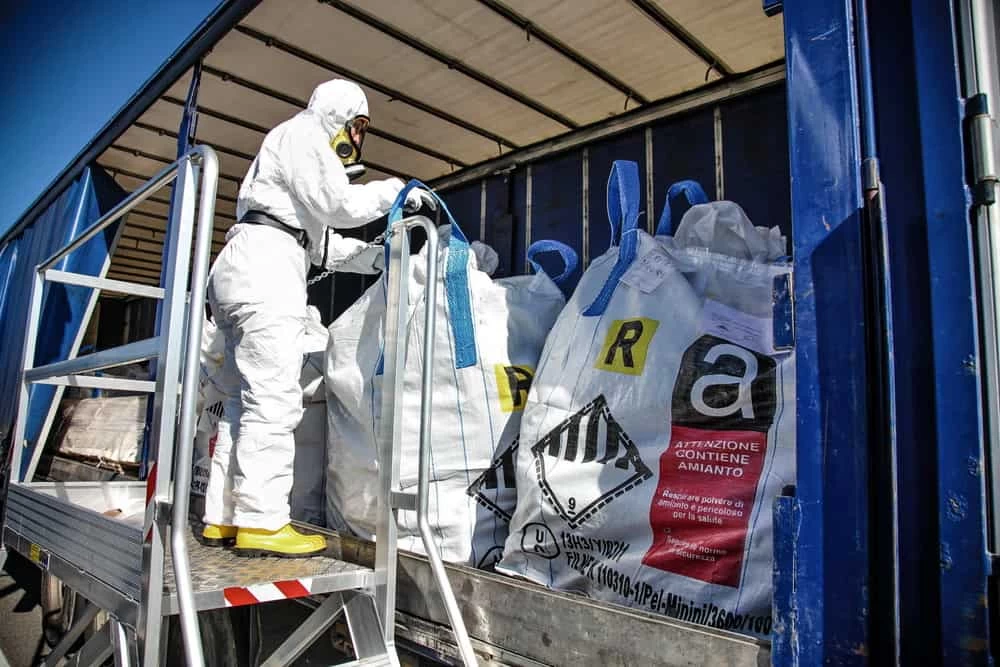
After removal, we don’t just hand you a bill and leave. Post-abatement air clearance testing confirms the space is safe before anyone re-enters before your contractor returns, before your family comes home. You also receive complete project documentation: inspection reports, air monitoring records, waste disposal manifests, and clearance certification. In East Quogue’s active real estate market, that paperwork has real value.
Two materials catch East Quogue homeowners off guard more than anything else: vinyl floor tiles and textured popcorn ceilings. Both were standard in homes built between the 1950s and early 1980s and both commonly contain asbestos. The black mastic adhesive beneath vinyl tiles is just as likely to test positive as the tile itself. Popcorn ceiling texture was routinely mixed with asbestos for fire resistance and soundproofing. These aren’t edge cases. In a community where the median year built is 1981 and a large share of homes predate that, they’re the norm.
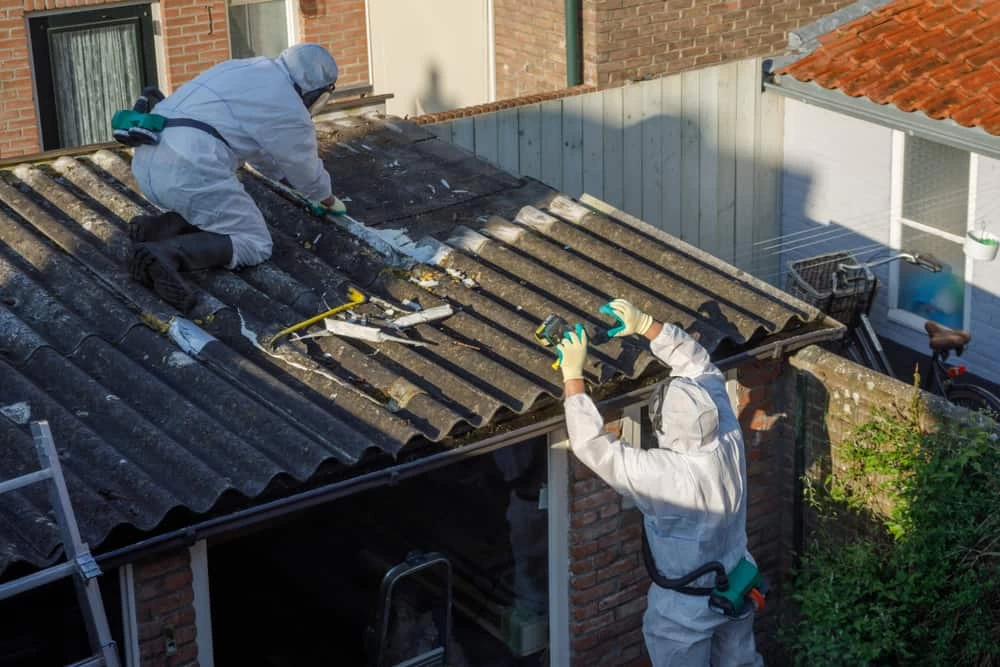
Our asbestos removal services cover the full range of materials: floor tiles and adhesives, acoustic ceiling texture, pipe and boiler insulation, cement board siding, roofing shingles, drywall joint compound, and more. For waterfront properties in Shinnecock Shores or bay-facing homes along the East Quogue shoreline, we also account for the accelerated material degradation that comes with years of salt air and moisture exposure conditions that can turn a stable material into a friable one faster than most homeowners expect.
If you’re in the Eagles Walk 55+ community, managing an estate, or preparing an older property for sale, we can scope the full project in a single assessment. One company handles inspection, abatement, air monitoring, and clearance documentation no coordinating between multiple vendors, no gaps in accountability.
Does asbestos abatement in East Quogue require permits or government notification?
Yes and this is one of the most important things to understand before any work begins. New York State Code Rule 56 requires that licensed contractors notify the NYS Department of Labor’s Asbestos Control Bureau before starting abatement on qualifying projects. This isn’t optional, and it applies to most residential abatement work beyond a very limited threshold.
On top of that, East Quogue falls under the Town of Southampton’s building department jurisdiction. Renovation and construction projects in this town require building permits, and the building department coordinates with state asbestos requirements. If you’re planning a kitchen remodel, bathroom renovation, or any project that disturbs pre-1980 materials, the permit and notification process needs to happen before your contractor touches anything. We handle all of this on your behalf the filings, the notifications, and the documentation so the process doesn’t stall your project or create liability down the road.
How much does asbestos removal typically cost in East Quogue, NY?
Based on current market data for East Quogue, asbestos removal generally runs between $20 and $65 per square foot. That’s a wide range because the cost depends heavily on what type of material is involved, where it’s located, how much of it there is, and whether it’s friable meaning it can crumble and release fibers or still intact and non-friable.
A single-room vinyl floor tile removal is a very different scope than insulation abatement around a boiler system in a 1960s Shinnecock Shores home, or a full popcorn ceiling removal across multiple rooms before a renovation. The only way to get an accurate number is through a proper inspection and bulk sampling not a ballpark estimate over the phone. We’ll assess what’s actually there, tell you exactly what needs to be done and why, and give you a clear, itemized quote before any work begins.
What materials in older East Quogue homes are most likely to contain asbestos?
The most common sources we find in homes from this era and East Quogue has a lot of them are vinyl floor tiles and the black adhesive mastic beneath them, pipe and boiler insulation, textured popcorn ceilings, drywall joint compound, cement board siding, and roofing shingles. These were all standard building materials from roughly the 1940s through the late 1970s.
In coastal communities like East Quogue, pipe insulation and ceiling materials in older homes often show more wear than you’d expect, because salt air and bay humidity accelerate deterioration over time. A material that looks intact might have become friable crumbly enough to release fibers without any visible warning. That’s especially relevant for homes in Shinnecock Shores, where the original 1956-era construction has been exposed to Shinnecock Bay conditions for decades. If your home was built before 1980 and you’re planning any kind of renovation, a professional inspection before work starts is the only way to know what you’re actually dealing with.
Can I remove asbestos-containing materials myself in New York State?
For most project types, no and attempting it creates serious legal and health risk. New York State Code Rule 56 requires licensed, certified contractors for asbestos abatement work. DIY removal is not only dangerous because of fiber exposure, it’s illegal for qualifying projects, and it can create significant liability especially if you’re preparing a property for sale and the removal wasn’t properly documented or permitted.
Beyond the legal side, improper removal is genuinely dangerous. Disturbing asbestos-containing materials without proper containment, negative air pressure, and HEPA filtration releases microscopic fibers that can remain airborne for hours and settle throughout a home. There’s no safe way to do this with standard contractor tools or protective gear. In a year-round residential community like East Quogue where families, children, and older residents are living in these homes daily the stakes of getting it wrong are real. Licensed abatement isn’t a formality. It’s the only way to know the job was done correctly.
How do I know if my popcorn ceiling or floor tiles actually contain asbestos?
You can’t tell by looking. The only way to confirm whether a material contains asbestos is through bulk sampling and laboratory analysis. We collect a small sample of the material a section of ceiling texture, a tile, a piece of adhesive and send it to an accredited lab. Results typically come back within a few business days, and they give you a definitive answer rather than an assumption.
This matters because not every popcorn ceiling or vinyl tile from this era contains asbestos. Some do, some don’t it depended on the manufacturer, the year, and the specific product. Treating every textured ceiling as a confirmed hazard wastes money and causes unnecessary disruption. But skipping the test and assuming it’s clean is the other kind of mistake, and it’s the more dangerous one. If your East Quogue home was built between the 1950s and early 1980s and you’re planning any renovation that touches these materials, a professional bulk sample test is the right first step not the last one.
How long does asbestos abatement take for a typical East Quogue home?
For a focused single-area project one room of floor tile, a section of pipe insulation, or a single ceiling abatement typically takes one to three days once permitting and notifications are in place. Larger projects involving multiple materials or multiple rooms take longer, and the pre-project compliance steps with the NYS Asbestos Control Bureau and the Town of Southampton’s building department add lead time before physical work can begin.
For East Quogue homeowners working around a rental season, a real estate closing, or a contractor’s return date, the timeline planning matters as much as the abatement itself. Spring is one of the busiest periods for this type of work on the East End, as property owners assess winter damage and prepare homes for summer. If you’re planning a renovation or listing a property, getting the inspection scheduled early gives you the most flexibility. The earlier you know what you’re dealing with, the more control you have over the timeline and the less likely you are to hit a last-minute delay that costs you a closing or a rental season.