If your home in Eighmyville was built before 1980, there’s a real chance asbestos is somewhere inside it and the only way to know for sure is a proper assessment from a licensed contractor who knows what to look for.
I needed a professional consultation explanation of procedure for safe removal of Asbestos in my apartment complex. Without having an account yet, I was very impressed with the caring, knowledgeable and generous advice offered by Jessica, and will look forward to doing business in the future. Thank you so much! I feel much more informed about a sometimes scary endeavor. Peace. Nancy Silva Mineola, NY.
Mia Munoz
Used this company to clean up some water flood in my house. They were fast and easy to work with.very professional, Would recommend to anyone!
Nini Valle
Great company, had a flood and they responded quickly and efficiently. Billed my insurance company directly. I highly recommend this company!
joe colapietro, jr
I had pipe freeze in my basement right before a snow storm and they made to within an hour to help start the clean up process. They we by our side throughout the entire process and even helped with the insurance company. They did such a great job with the cleanup, repair, remidiation, I contracted them to perform the repairs and finishes in the basement. They came with enough manpower and material to get the job done. Leo and Jessica were nothing but a pleasure to deal with!!
Cristian Arredondo c
I had some water damage in my home and Green Island was able to take care of my issue quickly and effectively. I am very pleased with the work they did. They responded quickly and were very professional.
Michael M
Outstanding service! From the office to the field crew everyone was friendly, helpful and responsive. I highly recommend Green Island Group.
You stop guessing. That’s the first thing. When you’re living in or renovating a pre-1980 home along Route 308 in Eighmyville, the question isn’t really “do I have asbestos?” it’s “where is it, and is it a problem right now?” Once a licensed abatement contractor has assessed the property, removed what needs to come out, and cleared the air, you’re no longer managing an unknown. You have documentation. You have a clean space. And if you’re selling, your buyer’s attorney has nothing to flag.
The older housing stock in the Town of Rhinebeck is part of what makes this area worth living in but those same farmhouses and mid-century homes that line the back roads near Eighmyville are also the ones most likely to have asbestos in the pipe insulation, the floor tiles, the plaster, or the roofing. The Hudson Valley’s freeze-thaw winters don’t help. When water gets into aging materials especially after a rough nor’easter or a burst pipe in an unheated outbuilding it accelerates the breakdown of asbestos-containing materials and turns a stable situation into an airborne one.
Proper asbestos remediation doesn’t just remove a health hazard. It gives you the ability to move forward with your renovation, your sale, or simply your peace of mind without that open question sitting in the background.
We’ve been handling asbestos abatement, mold remediation, and environmental restoration across New York State for over 12 years. More than 5,000 completed projects. Every technician on our team holds a valid asbestos handler certificate issued by the NYS Department of Labor. Every project we run operates under Industrial Code Rule 56 the state law that governs all asbestos work in Dutchess County, enforced out of the Albany District Office of the NYS DOL Asbestos Control Bureau.
We’re also MWBE certified and approved to work on New York State agency properties a level of vetting that most contractors in the Eighmyville area simply haven’t gone through. That matters when you’re hiring someone to work inside your home or on a historic property in the Rhinebeck area, where the stakes around doing this right are higher than average.
If you’re dealing with a straightforward floor tile removal or a more complex situation involving pipe insulation in a century-old farmhouse near Eighmyville, the experience behind our team is the kind that comes from doing this work not just talking about it.
No Guesswork Here's Exactly What the Process Looks Like
It starts with a free assessment. Someone from our team comes out to your property in Eighmyville, walks the space, and gives you an honest read on what’s there and what it means. No pressure. No invoice for the conversation. Just clear information so you can make an informed decision about next steps.
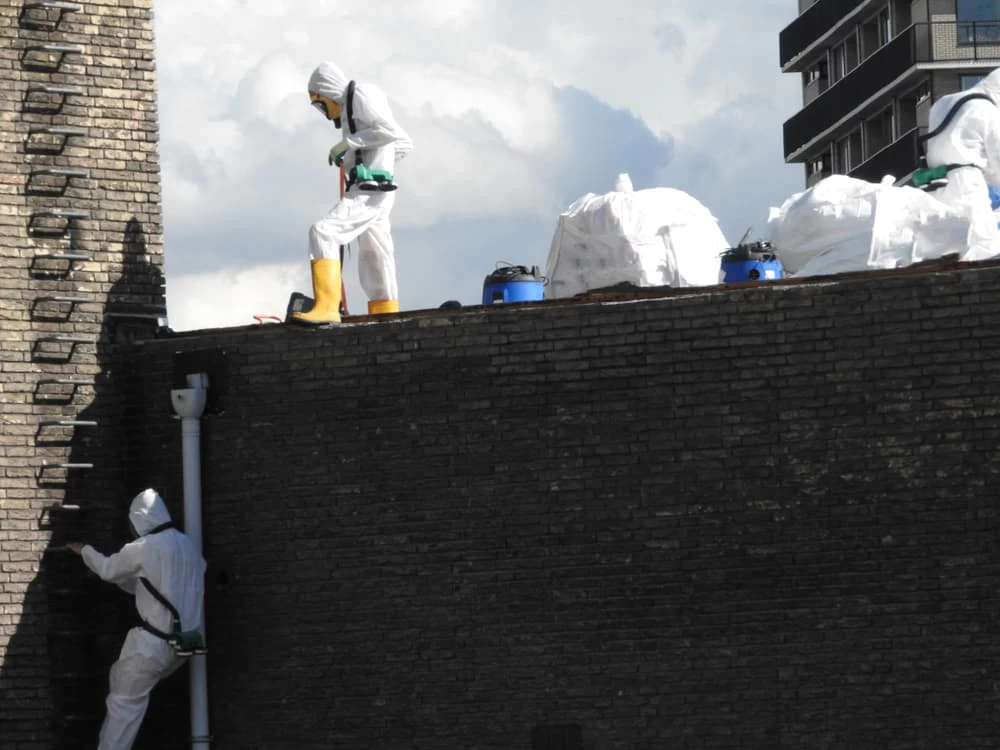
If abatement is needed, the work is planned and executed in full compliance with New York State Industrial Code Rule 56. That means proper containment of the work area, negative air pressure to prevent fiber migration, and licensed handlers doing the physical removal. For projects above threshold quantities, the required notification to the NYS DOL Asbestos Control Bureau is handled before any work begins that’s not optional under state law, and a contractor who skips it is putting you at risk, not just themselves. In the Town of Rhinebeck, where some properties carry historic significance, exterior abatement work may also need to coordinate with local preservation considerations, and we account for that.
Once the material is out, it doesn’t just disappear it’s packaged, transported, and disposed of by licensed haulers at approved facilities, as required by NYS DEC. Post-abatement air clearance testing is then conducted to confirm that fiber levels meet safety standards before the space is reoccupied. You get documentation of all of it. That paper trail is what protects you legally, satisfies your buyer’s inspector, and proves the job was done right.
Every Material Type, Every Property Type in This Area
Eighmyville and the surrounding Town of Rhinebeck aren’t cookie-cutter suburban territory. The properties here include 18th-century farmhouses, post-war ranch homes, agricultural outbuildings, and rural estates and each one presents asbestos in different forms. Asbestos tile removal is one of the most common requests in this area, particularly the 9×9 vinyl asbestos floor tiles that were standard in homes built through the 1960s. Asbestos popcorn ceiling removal comes up frequently in mid-century homes that haven’t been renovated since they were built. Pipe insulation, boiler wrap, exterior siding, and roofing shingles are all common in the older structures throughout this part of Dutchess County.
We handle all of it residential, agricultural, and commercial and do so as a single point of contact for the full scope of work. If water damage or mold is part of the picture (which it often is in properties along the low-lying areas near the small lakes and wetlands around Eighmyville), that’s handled under the same contract. Asbestos removal services, mold remediation, and water or fire damage restoration are all part of what we do. You’re not managing three separate contractors and three separate schedules.
Insurance billing is handled directly by us, which means less paperwork on your end during an already stressful situation. And because we’re available around the clock, a weather-triggered emergency the kind that happens when a Hudson Valley ice storm takes out part of a roof and suddenly exposes old insulation doesn’t have to wait until Monday morning.
Does my older Eighmyville home actually need a professional asbestos inspection?
If your home was built before 1980 and you’re planning any renovation work or if you’ve had recent water damage, storm damage, or structural disruption then yes, a professional assessment is the right call. Asbestos-containing materials aren’t dangerous when they’re intact and undisturbed. The risk comes when those materials are cut, drilled, broken, or deteriorated to the point where fibers become airborne. In Eighmyville, where a lot of the housing stock dates back decades and some properties include older outbuildings and agricultural structures, the range of places asbestos can show up is wider than in a newer suburban development.
A professional assessment doesn’t automatically mean you have a problem. It means you know what you’re dealing with. If the materials are in good condition and not being disturbed, the recommendation might simply be to monitor them. If they need to come out, you’ll know the scope, the cost, and the timeline before committing to anything. Our assessment is free, which makes it an easy first step regardless of what you suspect.
What does asbestos abatement actually cost for a home in Dutchess County?
Cost depends on the scope how much material, what type, where it’s located, and how accessible it is. A single-room floor tile removal in a Rhinebeck-area home will land at a very different number than a full pipe insulation abatement in a large farmhouse or a barn with asbestos roofing. Most residential asbestos abatement projects in the Dutchess County area fall somewhere between a few hundred dollars for limited, contained work and several thousand dollars for whole-house or multi-material projects.
What affects cost most is how friable the material is meaning how easily it crumbles and releases fibers. Friable materials require more intensive containment and handling, which takes more time and labor. You won’t know your specific number until someone walks your property. Our free assessment is specifically designed to give you a real estimate based on what’s actually there, not a ballpark pulled from a general pricing guide. In a market where Rhinebeck-area homes carry median values around $600,000, the cost of proper abatement is almost always a fraction of what an undisclosed asbestos issue would cost you at closing.
How do I know if a contractor is legally allowed to do asbestos work in New York?
New York State Industrial Code Rule 56 requires that every asbestos contractor hold a valid license issued by the NYS Department of Labor, and that every worker on the job carry a current asbestos handler certificate. These aren’t optional credentials they’re the legal baseline for any asbestos project in the state, including all work in Dutchess County. The Albany District Office of the NYS DOL Asbestos Control Bureau has jurisdiction over this region and can inspect active projects.
You can verify a contractor’s license through the NYS DOL’s publicly searchable asbestos contractor database before you ever sign anything. If a contractor can’t point you to their license number or their workers can’t show handler certificates, that’s a serious red flag and not just for the quality of the work. As the property owner, hiring an unlicensed contractor can expose you to direct legal liability. Our licensing under ICR 56 is current and verifiable, and our team carries all required certifications for every project we take on in the Eighmyville area.
Can asbestos in a barn or outbuilding on my Rhinebeck property be removed?
Yes, and it’s more common than most people expect. Agricultural outbuildings throughout the Town of Rhinebeck and the surrounding Dutchess County area were frequently built or retrofitted with asbestos-containing roofing materials and siding through the mid-20th century. Corrugated asbestos cement roofing panels and flat asbestos siding were both widely used on barns, equipment sheds, and storage structures because they were inexpensive, durable, and fire-resistant at the time.
The challenge with outbuildings is that they’ve often been exposed to decades of weather without maintenance, which means the materials may have deteriorated significantly. Freeze-thaw cycling which is hard on any exterior building material in the Hudson Valley accelerates that breakdown. By the time someone is ready to renovate or demolish an older barn in the Eighmyville area, the asbestos-containing materials may already be in a friable state, which requires more careful handling and containment than intact materials would. We have experience with exactly these property types and can assess an agricultural structure the same way we would a residential home.
Will asbestos abatement disrupt my daily life, and how long does it take?
The honest answer is that it depends on the scope of work. A limited removal one room, one material type can often be completed in a day or two with minimal disruption to the rest of the house. A larger project involving multiple materials or multiple areas of a home will take longer and may require you to vacate certain spaces during active work. The containment setup that’s required under ICR 56 plastic sheeting, negative air pressure, sealed work zones is designed specifically to keep the rest of your home unaffected while work is in progress.
For Eighmyville homeowners managing a renovation on a property they also live in, or for second-home owners coordinating work remotely from outside the area, our project management and communication are part of what makes the process manageable. You’ll know what’s happening, when, and what the space will look like when we leave. Post-abatement air clearance testing is the final step, and the space isn’t cleared for reoccupancy until that testing confirms it’s safe which gives you something concrete to rely on rather than just taking someone’s word for it.
Does asbestos abatement need to be done before I list my Eighmyville home for sale?
Not always but it depends on the condition of the materials and what a home inspector or buyer’s attorney flags during the transaction. In the Rhinebeck real estate market, where median home values in the 12572 zip code sit around $605,000 and buyers tend to be well-represented, environmental issues rarely go unnoticed. If a home inspector identifies suspected asbestos-containing materials that are deteriorated or in an area being renovated, it typically becomes a negotiating point or a deal-stopper depending on how it’s handled.
Sellers who address known asbestos issues before listing generally have an easier transaction. You control the scope, the timing, and the contractor selection rather than scrambling to respond to a buyer’s demand with a closing date looming. The documentation from a properly completed abatement clearance certificates, disposal records, licensed contractor paperwork gives buyers’ attorneys exactly what they need to move forward with confidence. If you’re not sure whether the materials in your home are a concern, a free pre-listing assessment from us is a straightforward way to find out before the property hits the market.