Elmhurst's Older Buildings Hide What Most Contractors Miss
If your building went up before 1980 and most in Elmhurst did asbestos abatement isn’t a maybe. We handle the full job: licensed removal, city filings, and air clearance, all under one roof.
I needed a professional consultation explanation of procedure for safe removal of Asbestos in my apartment complex. Without having an account yet, I was very impressed with the caring, knowledgeable and generous advice offered by Jessica, and will look forward to doing business in the future. Thank you so much! I feel much more informed about a sometimes scary endeavor. Peace. Nancy Silva Mineola, NY.
Mia Munoz
Used this company to clean up some water flood in my house. They were fast and easy to work with.very professional, Would recommend to anyone!
Nini Valle
Great company, had a flood and they responded quickly and efficiently. Billed my insurance company directly. I highly recommend this company!
joe colapietro, jr
I had pipe freeze in my basement right before a snow storm and they made to within an hour to help start the clean up process. They we by our side throughout the entire process and even helped with the insurance company. They did such a great job with the cleanup, repair, remidiation, I contracted them to perform the repairs and finishes in the basement. They came with enough manpower and material to get the job done. Leo and Jessica were nothing but a pleasure to deal with!!
Cristian Arredondo c
I had some water damage in my home and Green Island was able to take care of my issue quickly and effectively. I am very pleased with the work they did. They responded quickly and were very professional.
Michael M
Outstanding service! From the office to the field crew everyone was friendly, helpful and responsive. I highly recommend Green Island Group.
Elmhurst’s housing stock tells the story. The neighborhood was built out primarily between 1940 and 1969 and nearly every building from that era contains asbestos somewhere. Floor tiles, pipe insulation, boiler wrap, popcorn ceilings, joint compound. You don’t always see it until a renovation opens a wall or a pipe bursts in January and a crew shows up to assess the water damage. When that moment comes, what you need isn’t just someone who can pull material out. You need someone who knows what happens after.
When asbestos abatement is done right, you get your space back with documentation that holds up to a buyer’s attorney, a co-op board, a city inspector, or your own insurance company. In Elmhurst, where multi-family buildings are the norm and tenants share walls, ventilation, and common areas, that matters more than it does almost anywhere else in Queens. Proper containment means the unit next door isn’t affected. A certified post-clearance air test means you have proof, not just a contractor’s word.
For building owners managing properties in Elmhurst along Queens Boulevard or on the residential blocks off Broadway, the legal exposure from skipping steps is real. NYC DEP notification requirements, DOB permit clearance, licensed waste disposal these aren’t optional. Getting them right the first time protects your tenants, your property, and your liability.
Every License the City Requires Plus the One That Gets You Rebuilt
We hold the credentials that matter for work in New York City: NYS DOL Asbestos Abatement Contractor license, NYC BIC Trade Waste registration, and NYC MWBE certification. That last one isn’t just a badge it makes us a qualifying vendor for city-funded renovation programs and institutional procurement in Queens, something most local abatement contractors simply can’t offer.
What separates us from a specialist-only shop is the general contracting side. Most abatement contractors hand you back an empty, cleared space and walk away. We hold general contracting licenses for New York City, which means we can handle the reconstruction that follows new flooring, drywall, mechanical work, whatever the project needs. One company, start to finish.
We’ve worked throughout Elmhurst and the surrounding neighborhoods in Community District 4. We know the difference between abating a single apartment unit and managing a boiler room clearance in a multi-family building and we know what NYC DEP expects from both.
No Surprises Here's Exactly How the Work Gets Done
It starts with an inspection. Before anything is touched, the material gets identified and tested. If asbestos is confirmed, the next step is filing the ACP-7 notification with NYC DEP through the ARTS system required at least one week before work begins on any project disturbing more than 10 square feet or 25 linear feet of asbestos-containing material. That threshold is lower than the federal standard, which means more projects in Elmhurst require formal city notification than most property owners expect. We handle that filing as part of the job.
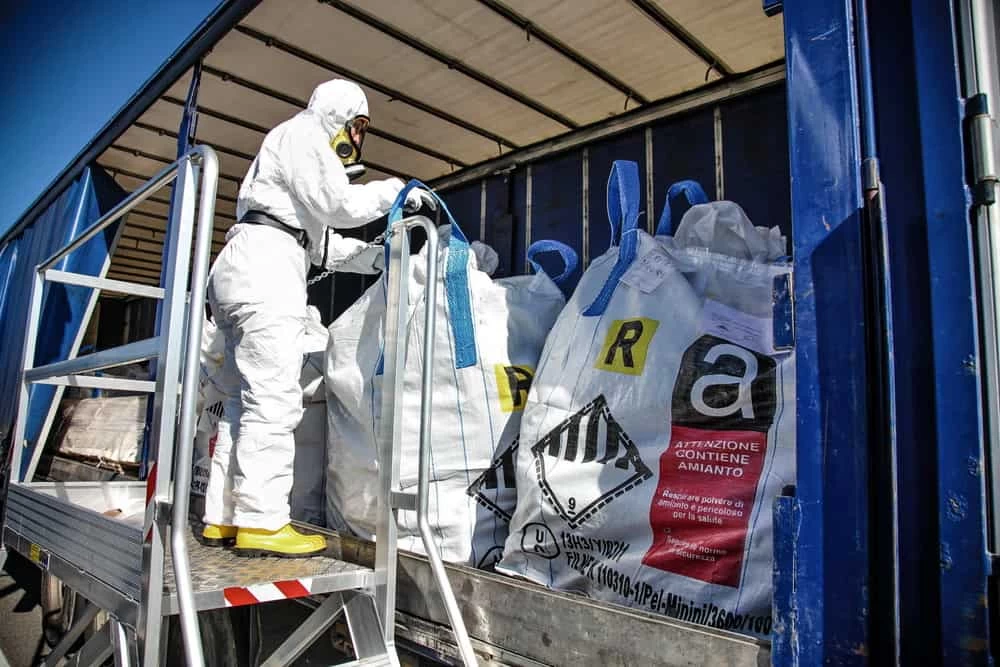
Once the project is cleared to begin, the work area is sealed under negative-pressure containment. Air scrubbers run throughout the abatement to maintain air quality in the surrounding space critical in a multi-unit building where adjacent apartments share ventilation. The asbestos-containing material is removed, properly packaged, and transported by a NYC BIC-registered carrier. Nothing gets left to interpretation on the disposal side.
After removal, a certified air sampling technician performs post-clearance testing. That test result is what closes the project it’s the documented proof that the air meets NYC DEP standards before the containment comes down and the space is returned to use. If your project involves insurance, we bill directly and manage the claims process alongside the abatement work. You’re not coordinating two separate conversations while your building is mid-project.
Asbestos Tile and Popcorn Ceiling Removal, Queens NY
Built for Elmhurst's Buildings Not a Generic Checklist
Asbestos abatement in Elmhurst covers more ground than most people realize when they first call. Vinyl asbestos tile VAT is one of the most common materials found in the neighborhood’s postwar apartment buildings, and asbestos tile removal requires careful handling to avoid fiber release during the process. Popcorn ceiling texture from the same era is another frequent find, especially in units that haven’t been renovated since the building was first occupied. Asbestos popcorn ceiling removal is a contained, methodical process not something you scrape off over a weekend.
Beyond floors and ceilings, Elmhurst’s older buildings carry asbestos in places that aren’t visible until something breaks: pipe insulation on steam lines, wrap around boiler connections, and duct insulation in mechanical rooms. When a pipe freezes and bursts in February which happens in these buildings the water damage response can disturb all of it at once. Our IICRC water damage certification means we can manage the emergency and the asbestos exposure in a single engagement, without handing you off to a second contractor mid-crisis.
Every project includes the full regulatory package: DEP notification, DOB coordination, licensed waste transport, and post-clearance air testing documentation. If your building participates in any city-funded renovation or maintenance program, our NYC MWBE certification satisfies the diversity procurement requirements that come with that funding a practical advantage that matters in Elmhurst’s institutional and multi-family property market.
Does my Elmhurst apartment building actually need asbestos testing before renovation?
If your building was constructed before 1980 and the vast majority of Elmhurst’s residential stock was then yes, testing before renovation isn’t optional, it’s required. Under NYC DEP rules, any project that will disturb more than 10 square feet or 25 linear feet of suspected asbestos-containing material must be preceded by a formal inspection and, if asbestos is confirmed, an ACP-7 notification filed at least one week before work begins. That threshold is lower than what federal NESHAP rules require, which catches a lot of property owners off guard.
In practical terms, this means that even a bathroom retile, a kitchen floor replacement, or a boiler repair in a pre-1980 Elmhurst building can trigger the full notification and abatement process. The risk of skipping it isn’t just regulatory if asbestos is disturbed without proper containment, you’re exposing tenants, workers, and yourself to both health risk and significant legal liability. A proper inspection before demolition starts is the step that keeps everything else from going sideways.
How long does asbestos abatement take in a Queens multi-family building?
For a single residential unit one apartment with asbestos floor tiles or a popcorn ceiling most projects run one to three days from containment setup through post-clearance air testing. Larger projects, like a boiler room or a common-area hallway with pipe insulation, can run three to five days depending on the volume of material and the complexity of the containment setup.
What adds time in an Elmhurst multi-family building isn’t usually the removal itself it’s the coordination. Negative-pressure containment has to be set up in a way that protects adjacent units and common areas. Post-clearance air testing can’t be skipped or rushed. And in Elmhurst’s older apartment buildings, where mechanical systems are often interconnected across floors, the scope of what needs to be addressed sometimes expands once the inspection is complete. The timeline you get at the start of the project is based on what’s visible a thorough inspection upfront is what keeps the schedule from shifting once work begins.
What is the NYC DEP ACP-7 form and do I need one for my Elmhurst project?
The ACP-7 is the asbestos project notification form required by the NYC Department of Environmental Protection before any regulated asbestos abatement project begins. It’s filed through the city’s ARTS (Asbestos Regulatory Tracking System) and must be submitted at least one week before work starts. There’s a filing fee, and the notification is valid for one year from the original filing date. If your project also requires a NYC Department of Buildings construction permit, the DOB will want to see that asbestos requirements have been addressed before issuing that permit.
Whether you need an ACP-7 depends on the scope of disturbance. In Elmhurst, where buildings routinely contain asbestos in floors, ceilings, pipe insulation, and mechanical rooms, it’s common for what looks like a small renovation to cross the 10-square-foot threshold once the full scope is assessed. We handle the ACP-7 filing as part of every qualifying project you don’t have to navigate the DEP’s system yourself or track down the right forms. That’s built into how the job gets done.
Can asbestos removal be covered by my homeowner's or building insurance in New York?
It depends on how the asbestos was discovered and what triggered the project. If asbestos-containing materials were disturbed or exposed as a result of a covered event a pipe burst, water damage, fire then your insurance claim for that event may include asbestos abatement as part of the remediation scope. That’s a common scenario in Elmhurst’s older apartment buildings, where winter pipe freeze events frequently uncover asbestos-wrapped steam lines or disturb insulated boiler connections during the emergency response.
Asbestos abatement that’s driven purely by a planned renovation not a covered loss is typically not covered by standard property insurance. But if you’re dealing with a water damage event that also involves asbestos, the two scopes are often handled together under a single claim. We bill insurance companies directly and work through the claims process alongside the abatement work, which means you’re not managing a separate conversation with your adjuster while the building is mid-project. That coordination matters when time is a factor.
Is asbestos common in Elmhurst homes and apartment buildings built in the 1950s and 1960s?
Yes and not just common, but expected. Elmhurst’s dominant housing era is 1940 to 1969, and asbestos was used widely in residential construction throughout that period. Vinyl asbestos tile was the standard flooring material in apartment buildings of that era. Popcorn ceiling texture, applied in thousands of Queens units through the 1970s, frequently contains asbestos. Pipe and boiler insulation in older steam-heated buildings which describes most of Elmhurst’s multi-family stock was routinely wrapped in asbestos-containing material.
The presence of asbestos in a building doesn’t automatically mean there’s a hazard. Asbestos-containing materials that are in good condition and aren’t being disturbed are generally considered stable. The risk comes when material is deteriorating on its own called friable asbestos or when renovation or repair work is about to disturb it. If you’re planning any work in a pre-1980 Elmhurst building, or if you’ve noticed damaged floor tiles, crumbling pipe insulation, or deteriorating ceiling texture, that’s the point to call for an inspection before anything else happens.
What happens after asbestos is removed how do I know the air is actually safe?
Post-removal air clearance testing is the answer to that question and it’s not optional under NYC DEP rules. After abatement is complete and before the containment area is dismantled, a certified air sampling technician collects air samples from the cleared space. Those samples are analyzed to confirm that airborne asbestos fiber levels meet the DEP’s clearance standard. Only after that test passes can the containment come down and the space be returned to normal use.
This matters especially in Elmhurst’s multi-unit buildings, where tenants return to cleared apartments and adjacent units share ventilation pathways. The clearance certificate isn’t just a formality it’s the documented proof that the work was done correctly, and it’s what satisfies a future buyer’s attorney, a co-op board’s review, or a city inspector’s inquiry. We provide the full documentation package at project close: the clearance certificate, waste disposal manifests, and DEP project records. That paperwork has real value every time the property changes hands or a new renovation is planned.