Elmsmere's Pre-War Homes Deserve More Than a Guess
Most homes in Elmsmere were built before 1940 and nearly every one of them has something that needs to be looked at before you touch a wall, pull up a floor, or call a contractor.
I needed a professional consultation explanation of procedure for safe removal of Asbestos in my apartment complex. Without having an account yet, I was very impressed with the caring, knowledgeable and generous advice offered by Jessica, and will look forward to doing business in the future. Thank you so much! I feel much more informed about a sometimes scary endeavor. Peace. Nancy Silva Mineola, NY.
Mia Munoz
Used this company to clean up some water flood in my house. They were fast and easy to work with.very professional, Would recommend to anyone!
Nini Valle
Great company, had a flood and they responded quickly and efficiently. Billed my insurance company directly. I highly recommend this company!
joe colapietro, jr
I had pipe freeze in my basement right before a snow storm and they made to within an hour to help start the clean up process. They we by our side throughout the entire process and even helped with the insurance company. They did such a great job with the cleanup, repair, remidiation, I contracted them to perform the repairs and finishes in the basement. They came with enough manpower and material to get the job done. Leo and Jessica were nothing but a pleasure to deal with!!
Cristian Arredondo c
I had some water damage in my home and Green Island was able to take care of my issue quickly and effectively. I am very pleased with the work they did. They responded quickly and were very professional.
Michael M
Outstanding service! From the office to the field crew everyone was friendly, helpful and responsive. I highly recommend Green Island Group.
Know What's in Your Elmsmere Home Before Work Begins
When you’re dealing with a pre-war home in Elmsmere, the question isn’t really “does it have asbestos?” it’s “where is it, and what condition is it in?” The housing stock in the Chester Hill Park and Elmsmere area is overwhelmingly pre-1939. That means original pipe insulation, old vinyl floor tiles, plaster walls, boiler wrap, and sometimes exterior siding that was standard-issue asbestos-cement at the time it was installed. None of that is automatically dangerous sitting still but the moment renovation starts, or a pipe bursts, or water gets in, the situation changes fast.
Westchester winters are hard on older buildings. The freeze-thaw cycle that runs through every January and February in this area quietly accelerates the deterioration of the exact materials most likely to contain asbestos pipe insulation, floor tiles, roofing underlayment. Add in the nor’easters that regularly push water into basements and through aging rooflines, and you have a neighborhood where asbestos disturbance isn’t a hypothetical. It’s a regular occurrence. Getting ahead of it before your contractor starts demoing a kitchen or a bathroom is what separates a clean project from a costly, legally complicated one.
The other piece that matters here: if you’re preparing to sell a pre-war property near the Bronxville border, buyers and their inspectors are increasingly thorough about environmental disclosures. Documented abatement, with proper clearance paperwork, protects the transaction. It’s not just about safety it’s about not losing a deal at the finish line over something that could have been handled cleanly beforehand.
Licensed, Documented, and Accountable on Every Elmsmere Job
We’re a licensed asbestos abatement contractor serving Elmsmere and the broader Westchester County area. We hold a NYS Department of Labor Asbestos Handling License, EPA certification, NYC DEP contractor approval, and NYS DEC compliance for disposal every credential required to legally perform this work in New York, verifiable by license number on the state’s public database. We also carry NYS M/WBE certification from the Office of General Services, a formal state-issued designation that required documented review, not a self-applied label.
With more than 5,000 completed projects across the New York metro area, we’ve worked through the full inventory of materials found in pre-war Westchester homes original steam pipe insulation, 9×9 floor tiles, asbestos-cement siding, textured plaster, boiler wrap. The Mount Vernon and Elmsmere area is not new territory. We work directly with insurance carriers on water damage and restoration claims, handle all post-abatement air clearance documentation, and offer free on-site inspections with no obligation to move forward.
No Guesswork Here's What the Process Actually Looks Like
It starts with a free on-site inspection. We come to your property in Elmsmere, walk the space, and identify any materials that may contain asbestos floor tiles, pipe insulation, ceiling texture, plaster, roofing, siding. If samples need to go to a lab for confirmation, that gets communicated clearly upfront. You’ll know what you’re dealing with before any decision is made.
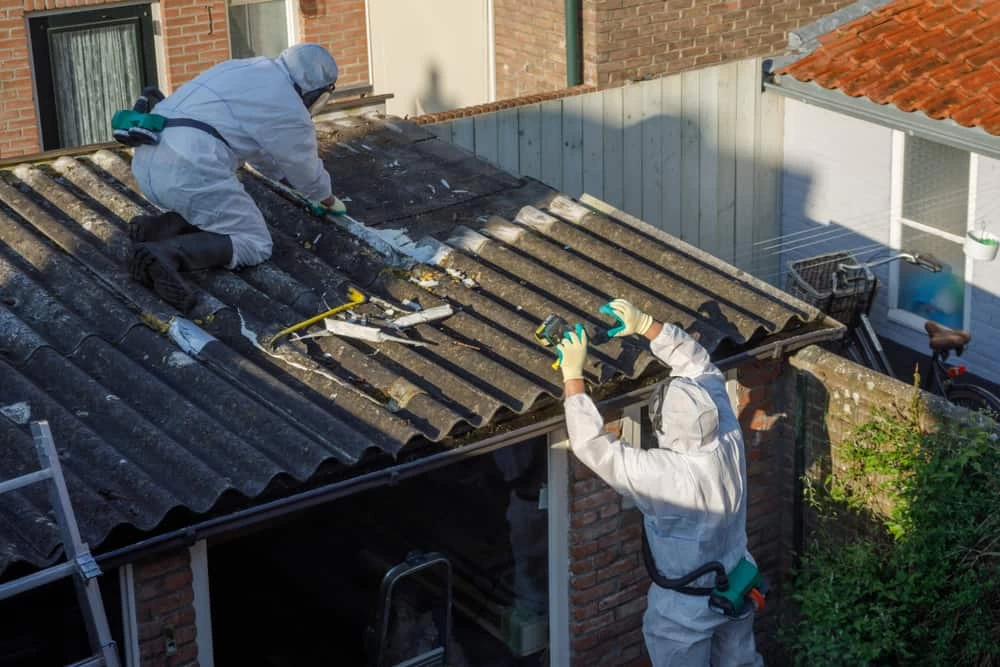
If abatement is needed, the work area gets sealed off with polyethylene sheeting and put under negative air pressure using HEPA-filtered air scrubbers. That means air flows into the containment zone, not out of it so the rest of your home stays unaffected while the work is happening. Workers enter and exit through a decontamination chamber. Every person on our crew holds an individual NYS DOL asbestos handler certificate, not just a company-level license. In Mount Vernon, all abatement work must comply with NYS Industrial Code Rule 56, and every project generates a NYS DEC waste manifest documenting proper disposal. That paperwork doesn’t disappear it stays on file and travels with the property.
Once the work is complete, post-abatement air clearance testing is conducted and formal documentation is issued. That’s the final deliverable the written proof that the space is clear, which your insurance carrier, your real estate attorney, and any future buyer may ask to see.
Asbestos Tile and Popcorn Ceiling Removal Elmsmere
Every Material Type Found in Elmsmere Homes, Handled in One Project
Pre-war homes in Elmsmere don’t usually have just one asbestos-containing material they have several, layered across decades of original construction and mid-century updates. We handle the full range: vinyl asbestos floor tiles (the 9×9 format nearly universal in pre-1960 construction), pipe and boiler insulation, duct wrap, asbestos-cement roofing and siding, textured plaster, joint compound, and acoustic popcorn ceiling texture applied during 1950s and 1960s renovations. You don’t need to hire separate contractors for different material types everything gets handled under one project, one compliance record, and one set of clearance documents.
For Elmsmere homeowners dealing with a water damage event a burst pipe in a home with original steam heat, or basement flooding that disturbs old floor tiles we work directly with your insurance carrier. That means you’re not managing paperwork between a remediation contractor and an adjuster while also dealing with property damage. The billing goes direct, and the process moves faster because of it.
Our asbestos removal services are built around what Westchester County’s older housing stock actually requires: thorough inspection, proper containment, certified removal, legal disposal with NYS DEC documentation, and post-abatement air clearance testing issued as a standard deliverable not an add-on you have to request.
Does my pre-war home in Elmsmere definitely have asbestos in it?
Not every pre-war home has asbestos in every material but the odds are high that at least some original materials contain it. Homes built before 1940 in the Elmsmere area were constructed during a period when asbestos was a standard ingredient in floor tiles, pipe insulation, boiler wrap, plaster, roofing felt, and exterior siding. It wasn’t a corner-cutting measure it was the building standard of the era.
The only way to know for certain is to have the materials sampled and tested by a licensed professional. Visual inspection alone can’t confirm asbestos content. What we can do is identify which materials are suspect based on age, type, and condition, then collect samples for lab analysis. That’s the starting point and we offer that initial inspection at no charge, so there’s no financial barrier to finding out what you’re actually dealing with before your renovation contractor starts pulling things apart.
What happens if asbestos is found during a renovation in my Elmsmere home?
If asbestos-containing materials are discovered mid-renovation, work in that area needs to stop until the materials are properly assessed and, if necessary, abated by a licensed contractor. In New York State, NYS Industrial Code Rule 56 requires that any disturbance of asbestos-containing materials be handled by a licensed asbestos contractor with individually certified workers. This applies to projects in Mount Vernon and throughout Westchester County.
The practical reality is that mid-renovation discovery is one of the most common scenarios in Elmsmere’s pre-war housing stock. A contractor opens a wall, pulls up a floor, or cuts into pipe insulation and realizes what they’re looking at. At that point, the general contractor typically pauses that portion of the work, you call a licensed abatement contractor, and the abatement gets completed before renovation resumes. It adds time to the project, but attempting to proceed without proper abatement creates legal exposure and genuine health risk. The cleaner path is always to commission an inspection before renovation begins which is exactly what the free on-site inspection is designed to help you do.
How much does asbestos removal typically cost for a Westchester County home?
Cost depends on what materials are present, how much of them there are, and what condition they’re in. For a limited-scope project a single room with vinyl floor tile removal, for example you’re generally looking at somewhere in the $1,500 to $3,000 range. For a pre-war Elmsmere home with multiple material types (pipe insulation, floor tiles, plaster, and roofing), a whole-home abatement project can run $10,000 to $40,000 or more depending on the scope.
The honest answer is that no one can give you a reliable number without seeing the property. Material type, linear footage of pipe insulation, square footage of tile, ceiling height, accessibility all of it affects the final cost. What you can count on is that the free on-site inspection gives you a real estimate based on your actual conditions, not a ballpark pulled from a general formula. For projects triggered by a water damage event, we work directly with insurance carriers, which can significantly reduce or eliminate out-of-pocket costs depending on your coverage.
Do I need a permit for asbestos abatement work in Mount Vernon, NY?
Asbestos abatement in Mount Vernon is governed primarily by NYS Industrial Code Rule 56, which is the state-level regulation that applies to all asbestos abatement work in New York including projects within the City of Mount Vernon. Under Rule 56, the abatement contractor is required to notify the NYS Department of Labor Asbestos Control Bureau before certain projects begin. This is a contractor-side obligation, not something you as the homeowner need to file independently.
The City of Mount Vernon Department of Buildings issues permits for renovation and demolition work, and those permits may require documentation that asbestos has been assessed or abated before certain types of work proceed. We’re familiar with these requirements and handle the relevant notifications as part of the project. We maintain all required documentation including NYS DEC waste manifests for disposal as standard practice, not as an afterthought.
Is asbestos in old pipe insulation dangerous if I leave it alone?
Asbestos-containing pipe insulation that is in good condition and completely undisturbed is generally considered low-risk. The danger comes from disturbance when the material is cut, broken, crumbled, or deteriorated to the point where fibers become airborne. In that state, asbestos fibers can be inhaled, and that’s where the serious health risk originates.
The issue with older Elmsmere homes specifically is that “undisturbed” is a harder condition to maintain than it sounds. The freeze-thaw cycles that hit Westchester every winter put mechanical stress on pipe insulation over decades. Pipes shift, insulation cracks, and materials that were once intact become friable meaning they crumble easily and release fibers with minimal contact. If you have original pipe insulation in a pre-war home and it’s showing any signs of deterioration flaking, cracking, exposed sections, or areas where the outer wrap has come loose that’s not a “leave it alone” situation anymore. That’s a condition that warrants a professional assessment to determine whether it needs to be encapsulated or removed.
Can we handle asbestos abatement if your Elmsmere home had water damage?
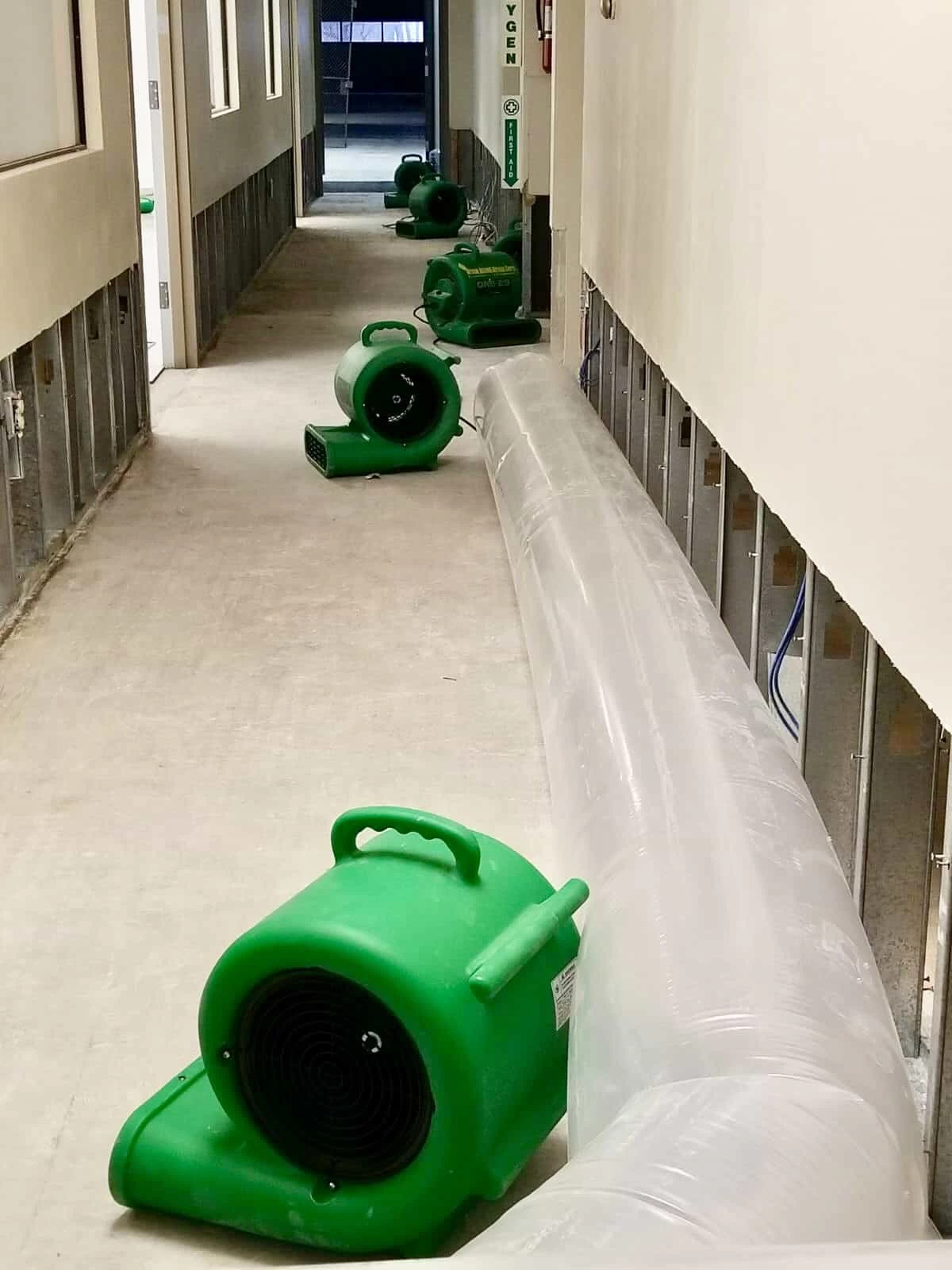
Yes and this is one of the more common scenarios in Elmsmere’s older housing stock. When a pipe bursts in a home with original steam heat, or when a nor’easter pushes water into a basement with 1940s floor tiles, the water damage event and the asbestos disturbance often happen at the same time. Flooded floor tiles, wet pipe insulation, and damaged ceiling materials all become higher-risk once they’ve been saturated and disturbed.
We handle the abatement component of water damage restoration and work directly with insurance carriers on billing. That matters because managing a remediation contractor, a restoration crew, and an insurance adjuster simultaneously while also dealing with a damaged home is genuinely overwhelming. When the abatement contractor handles the insurance side directly, you have one less thing to coordinate during an already stressful situation. We’re experienced with the material types common to pre-war Westchester homes and understand how water intrusion affects asbestos-containing materials differently depending on the type tile, insulation, plaster which affects how the abatement is scoped and executed.