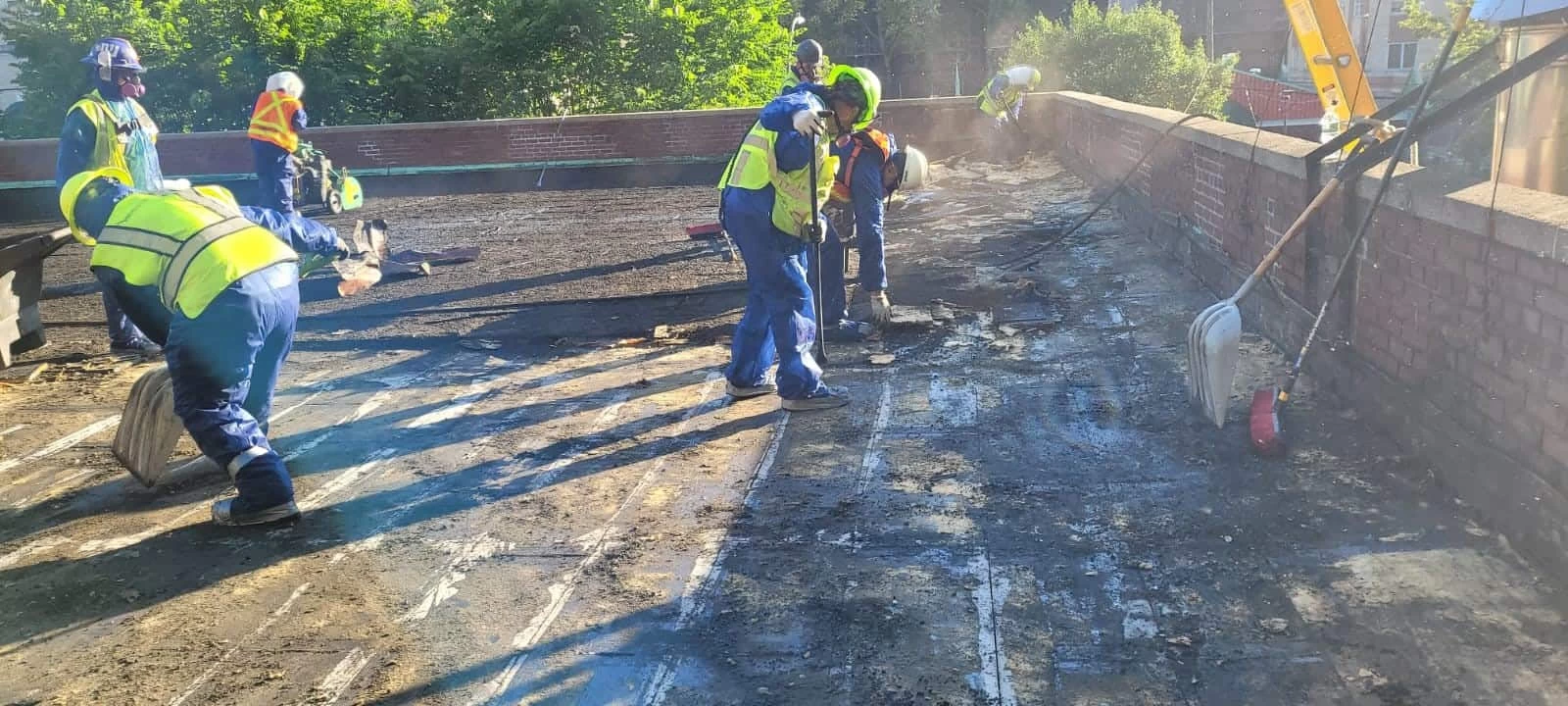
Pre-War Manhattan Buildings Don't Keep Secrets Long
If your building went up before 1987, asbestos is likely somewhere in it and in Empire State and the surrounding Chelsea and Midtown South neighborhoods, that’s most of the block. We provide certified asbestos abatement in Empire State, NY, and handle everything from the inspection to the NYC DEP filings to post-clearance sign-off.
I needed a professional consultation explanation of procedure for safe removal of Asbestos in my apartment complex. Without having an account yet, I was very impressed with the caring, knowledgeable and generous advice offered by Jessica, and will look forward to doing business in the future. Thank you so much! I feel much more informed about a sometimes scary endeavor. Peace. Nancy Silva Mineola, NY.
Mia Munoz
Used this company to clean up some water flood in my house. They were fast and easy to work with.very professional, Would recommend to anyone!
Nini Valle
Great company, had a flood and they responded quickly and efficiently. Billed my insurance company directly. I highly recommend this company!
joe colapietro, jr
I had pipe freeze in my basement right before a snow storm and they made to within an hour to help start the clean up process. They we by our side throughout the entire process and even helped with the insurance company. They did such a great job with the cleanup, repair, remidiation, I contracted them to perform the repairs and finishes in the basement. They came with enough manpower and material to get the job done. Leo and Jessica were nothing but a pleasure to deal with!!
Cristian Arredondo c
I had some water damage in my home and Green Island was able to take care of my issue quickly and effectively. I am very pleased with the work they did. They responded quickly and were very professional.
Michael M
Outstanding service! From the office to the field crew everyone was friendly, helpful and responsive. I highly recommend Green Island Group.
Your Renovation Doesn't Have to Stall at the Permit Window
In Manhattan, discovering asbestos mid-project doesn’t just create a health concern it creates a paperwork problem that can freeze your DOB permit, stall your contractor, and push your timeline back by weeks. The Empire State area is dense with pre-war and mid-century buildings where asbestos was standard in floor tiles, pipe insulation, ceiling materials, plaster, and boiler wrapping. It’s not a rare find here. It’s expected.
What actually matters is how fast and how correctly it gets handled. When asbestos abatement is done right with proper NYC DEP filings, licensed removal, and post-abatement air clearance your project keeps moving. Your permit gets closed out. Your building is documented as clean. That’s the outcome that matters to a co-op owner trying to close a renovation, a building manager dealing with a pipe failure at midnight, or a developer converting a Chelsea loft.
The buildings around 34th Street and throughout Midtown South weren’t built to last forever without maintenance. Steam pipe systems in pre-war structures deteriorate. Freeze-thaw cycles crack older materials. When those materials contain asbestos, the clock starts the moment they’re disturbed. Getting a certified team on-site quickly one that knows the NYC DEP system and can file the right forms correctly the first time is what separates a manageable situation from a regulatory headache.
We Know Empire State's Rules Not Just the General Ones
We are a full-service environmental remediation company serving all five NYC boroughs, including the full Manhattan service area from Lower Manhattan to Inwood. The Empire State area Chelsea, Midtown South, the Penn Station corridor, Hudson Yards is territory we know well, and the NYC DEP Asbestos Control Program is not new to us. We file ACP-7 project notifications, ACP-5 assessments, and ACP-21 completion forms as a standard part of every job. We don’t hand you a stack of forms and wish you luck.
What sets us apart in a market this competitive isn’t a tagline it’s the fact that we’re available 24 hours a day, every day, and we show up. When a steam pipe fails in a pre-war Chelsea building at 11 PM and the insulation is compromised, that’s not a Monday morning problem. We handle asbestos abatement alongside mold remediation, water damage restoration, and demolition support, so one call covers what most buildings need when something goes wrong.
From First Call to DEP Clearance Here's the Sequence
It starts with an assessment. A Certified Asbestos Investigator comes to your building, evaluates the materials in question, and determines whether what you have qualifies as an Asbestos Project under NYC DEP rules. In the Empire State area, that assessment almost always involves pre-war or mid-century building materials original floor tiles, pipe lagging, textured ceilings, plaster walls and the findings determine which form gets filed: an ACP-5 if no regulated project is required, or an ACP-7 if abatement work needs to proceed.
If abatement is required, the ACP-7 gets filed with NYC DEP at least seven days before work begins that’s a hard regulatory requirement, not a suggestion. The abatement itself is performed by our licensed team under full containment, with proper negative air pressure, protective equipment, and disposal protocols that meet NYS NYSDOL, EPA NESHAP, and OSHA standards. Nothing gets cut short because someone’s in a hurry.
Once the work is complete, post-abatement air clearance testing confirms that fiber levels meet safe reoccupancy thresholds. That clearance produces the documentation needed for the ACP-21 completion form the final sign-off that closes out your DEP record and allows the DOB to finalize your permit. If insurance is involved, we handle the billing coordination directly so you’re not stuck in the middle of that conversation.
Asbestos Remediation Services in Midtown South, NY
What's Actually Included When You Call Us
Asbestos abatement in the Empire State area covers more than just pulling material out of a room. In Manhattan’s pre-war and mid-century building stock, asbestos shows up in multiple forms and each one requires a different approach. Floor tile removal (especially those 9×9 linoleum tiles from the 1950s and 60s) involves careful handling of both the tile and the adhesive beneath it. Pipe insulation abatement in steam heat systems common throughout Chelsea and the blocks surrounding Penn Station requires full containment of the work area and careful disposal of friable materials. Popcorn ceiling removal in older co-op and rental units is another frequent project in this neighborhood, particularly as building owners convert or renovate older units.
Every project includes the pre-abatement inspection, all required NYC DEP filings, licensed removal by our certified crew, and post-abatement air clearance testing. You get the ACP-21 completion documentation when the job is done the paperwork your DOB permit needs to close out. We also handle asbestos tile removal, asbestos popcorn ceiling removal, and pipe insulation abatement as standalone services when the scope is limited to a single material or area.
Because asbestos rarely travels alone in an older building, we’re also equipped to address mold, water damage, and structural issues that often surface during abatement work. If something else turns up during the project, you don’t need to bring in a second contractor.
Do I need an asbestos inspection before renovating my Manhattan apartment?
Yes and in New York City, it’s not optional. NYC DEP requires that any renovation or demolition affecting a pre-1987 building be preceded by an asbestos assessment conducted by a DEP Certified Asbestos Investigator. Without that assessment on file, the Department of Buildings won’t issue your permit. This applies to co-op and condo renovations, gut rehabs, kitchen and bathroom remodels, flooring replacements any scope of work that disturbs building materials in a pre-1987 structure.
In the Empire State area specifically, nearly every residential and commercial building you’re working with falls into that category. The Empire State Building itself was constructed in 1931. The surrounding blocks of Chelsea and Midtown South are filled with pre-war tenements, loft conversions, and mid-century residential buildings where asbestos-containing materials were standard. The inspection determines what’s there, what condition it’s in, and what filing is required before your contractor can swing a hammer.
What's the difference between an ACP-5 and ACP-7 form in NYC?
Both forms are part of NYC DEP’s Asbestos Control Program, and both are required before a DOB permit can be issued for renovation or demolition work in a pre-1987 building but they apply to different situations. An ACP-5 is filed when a Certified Asbestos Investigator determines that the scope of work does not constitute a regulated Asbestos Project. It documents the assessment findings and confirms that no abatement is required for the planned work. An ACP-7 is filed when the work does constitute an Asbestos Project meaning regulated asbestos-containing materials will be disturbed and must be removed by a licensed abatement contractor.
The ACP-7 must be submitted to NYC DEP through the ARTS electronic filing system at least seven days before abatement work begins, along with the required filing fee. Once abatement is complete and post-clearance air testing confirms safe fiber levels, the ACP-21 completion form is issued and that’s what closes out your DEP record and satisfies the DOB. Getting any of these filings wrong or out of sequence can delay your project significantly, which is why working with a contractor who files these routinely matters.
How much does asbestos removal cost in Manhattan, NY?
Costs vary depending on the type of material, the square footage, whether the asbestos is friable or non-friable, and the complexity of the containment setup required. For a typical residential project in Manhattan a single room with floor tile removal or a bathroom with pipe insulation you’re generally looking at a range of $2,200 to $6,500 all-in. Larger scopes, like multi-room abatement in a pre-war co-op or commercial floor abatement in a Midtown office building, can run significantly higher.
It’s worth knowing that NYC and Long Island asbestos removal costs increased 8 to 12 percent in 2025 and 2026, driven by updated NYS DOL licensing requirements, higher disposal fees, and the mandatory post-abatement air clearance testing that NYC DEP now enforces more strictly. Those costs are real and they affect every licensed contractor operating in this market. What you want to watch out for is a quote that seems unusually low it usually means something is being skipped, and in New York City, what gets skipped tends to show up later as a permit problem or a stop-work order. We provide free inspections and itemized estimates so you understand exactly what you’re paying for before any work begins.
Do NYCHA buildings in Empire State and Chelsea actually have asbestos problems right now?
Yes, and it’s documented. NYCHA’s own project records for the Fulton Houses and Elliott-Chelsea Houses both located in the Chelsea neighborhood adjacent to Empire State explicitly list asbestos among the deteriorating conditions that residents are currently living with, alongside leaks, mold, and security issues. This isn’t speculative. It’s in NYCHA’s own language.
The planned redevelopment of the Fulton-Elliott-Chelsea campus, which involves the potential demolition of up to 24 buildings, would require one of the largest pre-demolition asbestos abatement efforts this part of Manhattan has seen in years. Even before demolition begins, any maintenance, repair, or renovation work in those buildings that disturbs existing asbestos-containing materials requires licensed abatement and NYC DEP compliance. If you’re a resident, a tenant advocate, or a contractor working on any of those properties, the presence of asbestos is a known condition not a surprise and it needs to be handled by a certified team with the proper filings and containment protocols in place.
Can I stay in my apartment during asbestos abatement in a NYC building?
It depends on the scope and location of the work, but in most cases where active abatement is underway, the work area needs to be fully contained and under negative air pressure meaning the space being abated is not accessible during the project. Whether you can remain in other parts of the building or apartment depends on how the containment is set up, what materials are being removed, and whether the HVAC or ventilation system connects the work zone to occupied areas.
In Manhattan’s dense, multi-unit buildings the kind that make up most of the Empire State area’s residential stock this question matters a lot because you’re often sharing walls, floors, and ventilation with neighbors. Post-abatement air clearance testing is the step that confirms it’s safe to reoccupy the space. That testing produces measurable data on airborne fiber levels, and reoccupancy only happens after those levels come back within safe thresholds. We walk every client through what to expect before work begins, including realistic timelines for reoccupancy, so there are no surprises mid-project.
What happens if asbestos is discovered mid-renovation in an Empire State building?
Work stops that’s the first thing. If your contractor uncovers material that looks like it could contain asbestos during a renovation, the responsible move is to stop disturbing it, seal off the area if possible, and get a Certified Asbestos Investigator on-site to assess it before anything continues. In New York City, continuing to disturb suspected asbestos-containing materials without proper assessment and abatement is a violation that can result in stop-work orders, fines, and significant liability for both the property owner and the contractor.
This scenario happens regularly in Chelsea and Midtown South, where older building materials get uncovered during gut renovations, flooring replacements, or pipe repairs. The good news is that a mid-project discovery doesn’t have to mean a months-long delay. If the assessment confirms abatement is required, the ACP-7 can be filed and work can typically begin within a week of filing. Our team responds quickly we’ve had clients tell us other contractors quoted them two-day waits when they called in an emergency. We’re available around the clock, and we know how to move through the DEP filing process efficiently so your renovation gets back on track as fast as the regulations allow.