Old Stone Country And What's Been Hiding Inside It
Fantinekill sits in some of the oldest continuously inhabited land in New York State. If your home was built or renovated before 1980, there’s a real chance asbestos abatement isn’t just a precaution it’s a legal requirement before you touch another wall.
I needed a professional consultation explanation of procedure for safe removal of Asbestos in my apartment complex. Without having an account yet, I was very impressed with the caring, knowledgeable and generous advice offered by Jessica, and will look forward to doing business in the future. Thank you so much! I feel much more informed about a sometimes scary endeavor. Peace. Nancy Silva Mineola, NY.
Mia Munoz
Used this company to clean up some water flood in my house. They were fast and easy to work with.very professional, Would recommend to anyone!
Nini Valle
Great company, had a flood and they responded quickly and efficiently. Billed my insurance company directly. I highly recommend this company!
joe colapietro, jr
I had pipe freeze in my basement right before a snow storm and they made to within an hour to help start the clean up process. They we by our side throughout the entire process and even helped with the insurance company. They did such a great job with the cleanup, repair, remidiation, I contracted them to perform the repairs and finishes in the basement. They came with enough manpower and material to get the job done. Leo and Jessica were nothing but a pleasure to deal with!!
Cristian Arredondo c
I had some water damage in my home and Green Island was able to take care of my issue quickly and effectively. I am very pleased with the work they did. They responded quickly and were very professional.
Michael M
Outstanding service! From the office to the field crew everyone was friendly, helpful and responsive. I highly recommend Green Island Group.
Your Home Cleared, Documented, and Safe to Live In
When asbestos abatement is done right, you’re not just removing a material you’re removing the uncertainty that’s been sitting over every renovation decision you’ve made. You know what’s in your walls. You have documentation proving the air is clean. You can move forward with your project, your sale, or just your life, without that question mark hanging over everything.
For homeowners in Fantinekill and the surrounding Town of Rochester, that uncertainty tends to run deeper than most places. The housing stock here is genuinely old some properties date back to the 17th century, with layers of 20th-century renovation stacked on top. Each of those renovation eras had its own version of asbestos-containing materials: pipe wrap from the 1930s heating conversion, floor tiles from the 1950s, textured ceilings from the 1970s. It’s not unusual to find asbestos in three or four locations in a single home.
Add to that the Catskill foothills climate hard winters, significant freeze-thaw cycles, wet springs and older insulation and tile materials that have been physically stressed for decades. Materials that were once stable can become friable over time, meaning fiber release becomes a real risk, not a theoretical one. Getting a licensed assessment and, if needed, a full asbestos removal before you renovate isn’t overcautious. In a home like yours, it’s the only responsible starting point.
We hold a NYS Department of Labor Asbestos Handling License the specific state credential required by law to perform asbestos abatement in New York. Not a general contractor license. Not a certification from a weekend course. The actual license issued by the NYS DOL’s Asbestos Control Bureau, which you can verify yourself on the state’s website. We’ll give you the number upfront because we have nothing to hide.
Beyond asbestos, we’re also certified for mold remediation, lead abatement, water and fire damage restoration, and HVAC cleaning. That matters in Fantinekill and the Town of Rochester, where older homes rarely present just one problem. A wet basement in Kerhonkson doesn’t just mean water it often means degraded pipe insulation, mold growth, and lead paint all in the same space. We handle the full picture, not just the piece that triggered the call.
We serve all of Ulster County, including the rural interior hamlets most contractors don’t bother with. When you call from Fantinekill, we know where you are.
No Guesswork Here's Exactly What the Process Looks Like
It starts with an inspection. Before anything is removed, a licensed inspector surveys your property and collects samples from suspected materials floor tiles, pipe insulation, ceiling texture, drywall compound, exterior siding, wherever the age of your home suggests risk. In Fantinekill and the broader Town of Rochester, that list tends to be longer than average, given the layered renovation history of most properties here. Lab results typically come back within a few days.
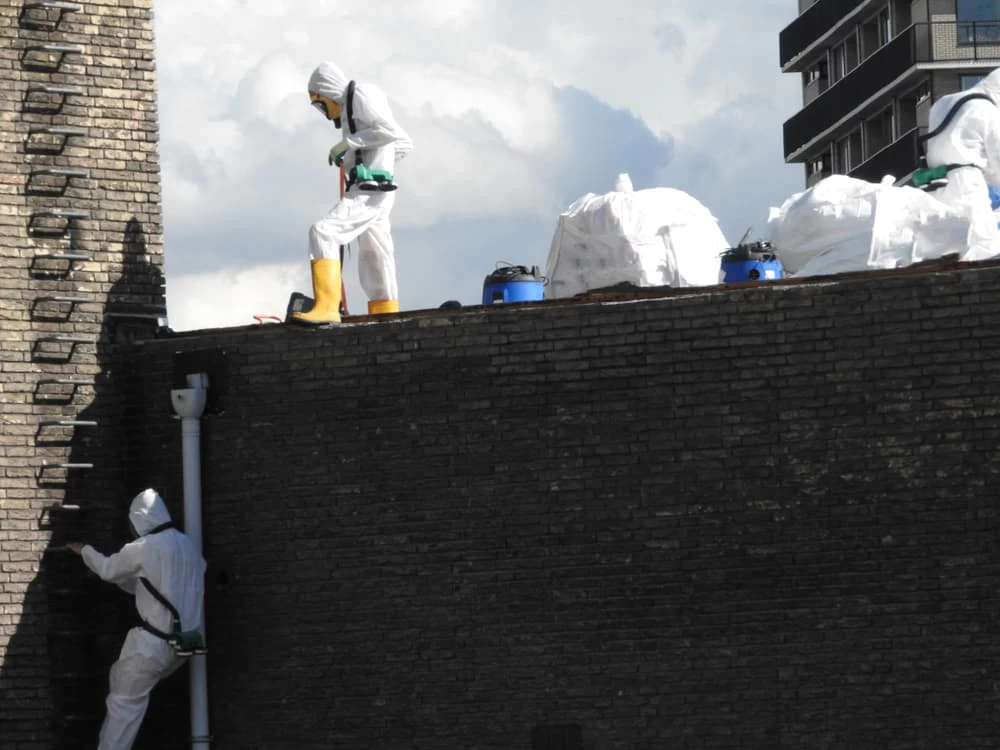
If asbestos is confirmed, we handle the NYS Industrial Code Rule 56 notification to the Department of Labor before work begins that’s a legal requirement for any regulated project, and it’s paperwork most homeowners don’t want to navigate alone. From there, the work area is fully contained and sealed off from the rest of your home using negative air pressure and physical barriers. The material is removed, packaged, and transported to a licensed disposal facility. You don’t touch any of it.
After removal, the space is cleaned and air monitoring is conducted by an independent party. You receive the results in writing. If the air clearance passes and it needs to pass before anyone re-occupies that space you get documentation you can keep, share with a buyer, or file with your renovation permits. That’s not a bonus step. That’s how the job ends.
Asbestos abatement in Fantinekill isn’t a single-material job. Homes in this area and the surrounding Ulster County commonly contain asbestos in multiple locations 9×9 and 12×12 floor tiles and their mastic adhesive, pipe and boiler insulation from mid-century heating systems, popcorn ceiling texture applied through the late 1970s, and drywall joint compound used before the federal ban in 1977. We assess all of it, not just the one spot that caught your eye during a renovation.
Every project we complete includes licensed inspection, full containment setup, regulated removal, proper disposal at a permitted facility, and post-abatement air monitoring with written clearance results. If your project involves a historically significant structure and the Town of Rochester has more of those than almost any other town in the state we work within those preservation requirements rather than against them. The town’s Historic Preservation Commission has documented properties throughout the area, and abatement near or within those structures requires an extra layer of care and coordination.
If you’re also dealing with mold, water damage, or lead paint in the same space which is common in older Catskill-area homes we can address those under the same project rather than coordinating a separate contractor. We also work directly with insurance companies when the abatement is tied to a covered event, handling the billing process on your end so you’re not managing that on top of everything else.
Does my old farmhouse in Fantinekill, NY likely contain asbestos?
If your home was built or significantly renovated before 1980, there’s a strong probability that at least one material in it contains asbestos. In Fantinekill and the broader Town of Rochester, that probability is higher than most places because the housing stock is genuinely old some homes have been continuously occupied since the 18th century, with additions and renovations added across multiple eras. Each era brought its own materials.
The most common locations in older Catskill-area homes are floor tiles and the adhesive beneath them, pipe and boiler insulation in basements and utility spaces, textured ceiling coatings, and exterior cement board siding. The only way to know for certain is to have a licensed inspector collect samples and send them to a certified lab. Visual identification isn’t reliable asbestos-containing materials often look identical to non-asbestos versions. Don’t guess. A proper inspection costs a fraction of what an unplanned abatement mid-renovation will cost you.
What happens if I disturb asbestos during a renovation without knowing it?
Under NYS Industrial Code Rule 56, any disturbance of asbestos-containing material that meets or exceeds 10 square feet or 25 linear feet triggers a legal requirement for licensed abatement. If you’ve already disturbed it without knowing pulled up old floor tiles, knocked down a wall, cut into pipe insulation the first step is to stop work immediately and limit access to that area. Don’t vacuum it up, don’t try to clean it yourself, and don’t run your HVAC system if the material is near ductwork.
The Catskills renovation boom has brought many buyers into Fantinekill and the Town of Rochester who are mid-project when they discover this. It’s one of the more stressful scenarios we deal with, but it’s manageable. A licensed contractor can assess the scope, contain the area, perform the removal, and conduct air clearance testing to confirm the space is safe. The sooner you stop and call, the smaller the problem tends to stay.
How long does asbestos abatement take for a typical home in Ulster County?
For a single-room or single-material project say, floor tile removal in a kitchen or bathroom abatement typically takes one to two days once the project is permitted and scheduled. Larger projects involving multiple materials or multiple rooms can run three to five days or longer. The timeline depends heavily on the scope of what’s found during inspection, which in older Ulster County homes can be broader than expected.
There’s also a regulatory piece that affects timing. NYS Industrial Code Rule 56 requires advance notification to the Department of Labor before regulated abatement work begins. That notification period is built into the project schedule, so starting the process as early as possible before your renovation timeline is already locked in gives you the most flexibility. If you’re planning a spring renovation, which is peak season in this area, getting an inspection done in late winter puts you ahead of the curve.
Do I need to leave my home during asbestos abatement in Fantinekill, NY?
It depends on the location and scope of the work. For contained single-room projects where the work area can be fully sealed and isolated from the rest of the living space, some homeowners choose to stay in unaffected parts of the home. For larger projects, or for homes where the HVAC system could potentially spread fibers to other areas, temporary relocation is the safer call.
We walk through this with every client before work begins so there are no surprises. For Fantinekill residents many of whom have animals, outbuildings, or other property dependencies that make displacement more complicated than it would be in a suburban setting we take the logistics seriously. Containment protocols are designed to isolate the work area as completely as possible, and we don’t re-open the space until air clearance testing confirms it’s safe. You’ll have documentation of that result before anyone moves back in.
Can asbestos in my home affect a sale or home inspection in New York State?
Yes, and it comes up regularly in Ulster County real estate transactions. Buyers and their inspectors are increasingly aware of asbestos risk in older properties, and the presence of suspect materials even if undisturbed can trigger requests for testing, price reductions, or in some cases, deal-killing delays. In a market where a lot of buyers are purchasing older farmhouses and rural properties in the Town of Rochester area, this is a real and recurring issue.
Having a licensed abatement completed before listing, with written air clearance documentation, removes the issue from the negotiation entirely. It also signals to buyers that the property has been properly maintained which carries weight in a market full of older homes with unknown histories. If you’re planning to sell within the next few years, addressing asbestos proactively is often the more financially sound decision than waiting for it to surface during due diligence.
What's the difference between asbestos testing and asbestos abatement?
Testing and abatement are two separate steps, and it’s important to understand the distinction before you call anyone. Testing or inspection is the process of collecting material samples from suspected locations and sending them to a certified laboratory for analysis. This tells you whether asbestos is present and where. Abatement is the licensed removal or encapsulation of confirmed asbestos-containing materials. You need testing before you can know whether abatement is necessary.
In New York State, the inspector and the abatement contractor are typically separate roles by design it’s a built-in check that keeps the process honest. A company that inspects and then immediately quotes you a large abatement job without independent lab results is a flag worth paying attention to. We work within the proper sequence: inspection, lab confirmation, permitted abatement if required, and independent air clearance testing after the work is done. For homeowners in Fantinekill dealing with properties that have complex, layered histories, that sequence isn’t just good practice it’s the only way to know the job was done right.