Old Bungalows, Big Renovations, and Asbestos Hiding in Both
Far Rockaway’s housing stock is old, the redevelopment is moving fast, and asbestos doesn’t wait for a convenient time to show up. If you’ve found something suspicious or you’re about to start work on a pre-1980 home we handle asbestos abatement in Far Rockaway the right way, from the first test to the final clearance certificate.
I needed a professional consultation explanation of procedure for safe removal of Asbestos in my apartment complex. Without having an account yet, I was very impressed with the caring, knowledgeable and generous advice offered by Jessica, and will look forward to doing business in the future. Thank you so much! I feel much more informed about a sometimes scary endeavor. Peace. Nancy Silva Mineola, NY.
Mia Munoz
Used this company to clean up some water flood in my house. They were fast and easy to work with.very professional, Would recommend to anyone!
Nini Valle
Great company, had a flood and they responded quickly and efficiently. Billed my insurance company directly. I highly recommend this company!
joe colapietro, jr
I had pipe freeze in my basement right before a snow storm and they made to within an hour to help start the clean up process. They we by our side throughout the entire process and even helped with the insurance company. They did such a great job with the cleanup, repair, remidiation, I contracted them to perform the repairs and finishes in the basement. They came with enough manpower and material to get the job done. Leo and Jessica were nothing but a pleasure to deal with!!
Cristian Arredondo c
I had some water damage in my home and Green Island was able to take care of my issue quickly and effectively. I am very pleased with the work they did. They responded quickly and were very professional.
Michael M
Outstanding service! From the office to the field crew everyone was friendly, helpful and responsive. I highly recommend Green Island Group.
You stop guessing. That’s the first thing. When you don’t know whether the floor tiles in your bungalow or the pipe wrap in your basement contain asbestos, every renovation decision carries risk legal risk, health risk, and the very real risk of a project shutdown by NYC DEP. Once testing is done and abatement is complete, you have documentation that says exactly what was found, what was removed, and that the air is clean. That piece of paper matters whether you’re selling the property, pulling a permit, or just trying to sleep at night.
For Far Rockaway specifically, that clarity carries extra weight. A lot of the homes here were built between the 1930s and the 1970s the peak decades for asbestos use in construction. And because this neighborhood sits right on the water, those materials have been exposed to decades of coastal humidity and salt air, which accelerates deterioration. Asbestos that’s crumbling is asbestos that’s releasing fibers. Catching it before a renovation or before a nor’easter tears through and does the damage for you is the difference between a manageable project and a serious problem.
If your home was repaired or gutted after Hurricane Sandy and no one tested for asbestos first, that’s worth revisiting. The post-Sandy reconstruction effort disturbed asbestos-containing materials in thousands of older Rockaway homes, and not all of it was handled correctly. Getting a proper assessment now gives you the full picture and the documentation to back it up.
Fully Licensed, NYC DEP Ready, and Not New to Queens
We’re a licensed environmental remediation contractor serving Far Rockaway and the broader Queens County area. We hold an active NYS DOL Asbestos license, NYC General Contractor licensing, NYC BIC Trade Waste licensing, and NYC MWBE certification the full credential stack required to do this work legally and completely inside New York City’s regulatory framework. That matters in Far Rockaway, because the neighborhood falls under NYC DEP jurisdiction, not just state rules, and contractors who don’t know the difference can create serious compliance problems for the property owners who hire them.
Beyond the paperwork, we’re a full-service operation. We handle asbestos testing, abatement, post-removal air clearance, and reconstruction all under one roof. For property owners in the Redfern area, Bayswater, or anywhere along the Rockaway Peninsula dealing with a renovation that’s hit a wall, that means one call, one team, and no handoff gaps. We also bill insurance directly, which is a real advantage in a neighborhood that knows what storm damage claims look like.
From Suspicious Material to Clearance Certificate Here's How We Do It
It starts with an inspection and testing. One of our certified inspectors comes to your Far Rockaway property, identifies any materials that may contain asbestos floor tiles, pipe insulation, popcorn ceilings, joint compound, roofing materials and collects samples for lab analysis. You get a clear answer on what’s there and what needs to happen next. No guessing, no vague estimates.
If abatement is required, our crew sets up full containment before anything is touched. That means negative air pressure, sealed work zones, and proper PPE the kind of setup that keeps fibers from spreading to the rest of your home or building. In Far Rockaway, this step also includes filing the required NYC DEP notification before work begins. That’s a regulatory requirement for asbestos work in Queens, and it’s not something you want to skip. We handle that paperwork as part of the job, not as an add-on.
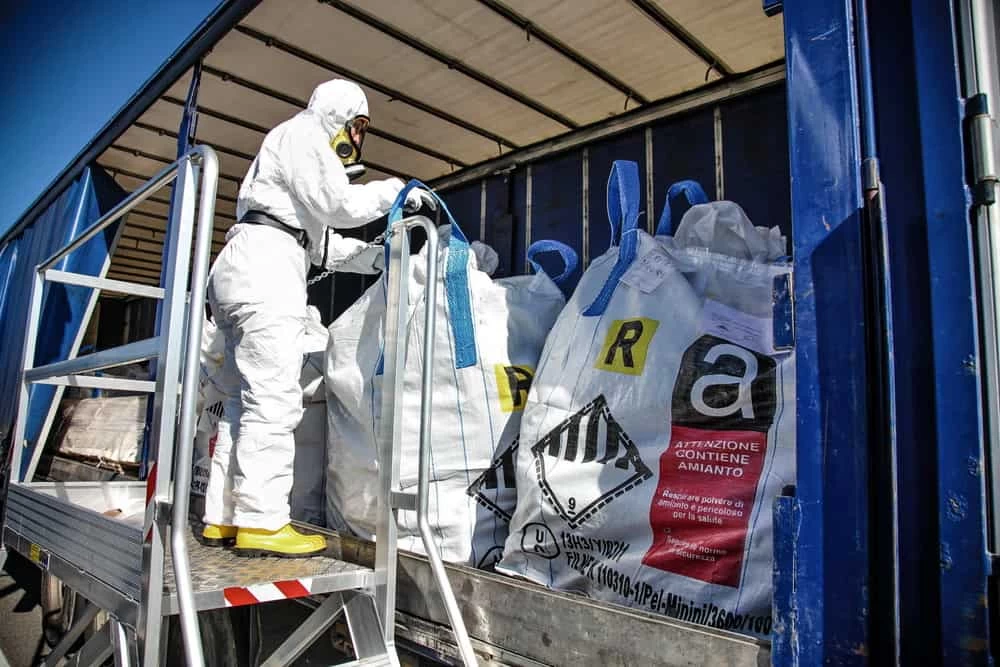
Once the material is removed, it’s disposed of through licensed channels not just bagged and left at the curb. Then comes post-abatement air clearance testing. One of our certified technicians runs air samples to confirm fiber levels are within safe limits before the containment comes down and the space is returned to you. That clearance report is your proof that the job was done right and it’s the document your insurance company, your real estate attorney, or your permit office will ask for.
Asbestos Testing and Abatement in Far Rockaway, NY
Every Material Type, Every Property Type in Far Rockaway
The asbestos-containing materials most commonly found in Far Rockaway’s older housing stock follow a predictable pattern. The 9×9-inch vinyl floor tiles in mid-century bungalows almost always used asbestos-containing adhesive. Popcorn ceilings applied before 1980 are a frequent find in the apartments and converted summer cottages throughout the neighborhood. Pipe and boiler insulation in pre-1970 homes, cement board siding, and drywall joint compound round out the list. We handle asbestos removal for all of it residential, multi-family, and commercial properties across the Rockaway Peninsula.
For the major redevelopment projects reshaping Downtown Far Rockaway including the Rockaway Village development near the Mott Avenue station and the broader Arverne East buildout asbestos assessment and abatement is a required step before any demolition or gut renovation can proceed under NYC DEP and federal EPA NESHAP regulations. We work with property managers, developers, and commercial clients to fulfill that requirement with full documentation and post-clearance certification. Our NYC MWBE certification also makes us an eligible vendor for projects with diversity spend requirements, which applies to many of the publicly funded developments currently underway in this neighborhood.
For homeowners, the process is just as thorough. Whether you’ve found suspicious tile during a kitchen remodel, you’re preparing to sell, or a pre-sale inspection flagged something that needs resolution, the scope of work is scoped to your actual situation not a one-size-fits-all package. Asbestos tile removal, popcorn ceiling removal, pipe insulation abatement each job is assessed and handled based on what’s actually in your home.
Do I need NYC DEP approval before removing asbestos in Far Rockaway?
Yes and this is one of the most important things to understand before any work begins on a Far Rockaway property. Because Far Rockaway is in Queens County, it falls under New York City DEP jurisdiction for asbestos regulation. The NYC DEP has governed asbestos work in all five boroughs since 1987, and their requirements go beyond what the state alone mandates. Before any regulated asbestos material is disturbed, a DEP notification must be filed, licensed workers must be on-site, and post-abatement air clearance testing is required before the containment can be removed.
Contractors who primarily work in Nassau or Suffolk County and are unfamiliar with the NYC DEP process can inadvertently put you in violation even if the physical removal is done correctly. The permit and notification requirements are the contractor’s responsibility, but the liability lands on the property owner if something is missed. We handle the full DEP compliance process as a standard part of every job in Queens, not as an optional add-on.
How do I know if my Far Rockaway home actually has asbestos in it?
The honest answer is that you can’t know without testing. Visual inspection alone doesn’t tell you whether a material contains asbestos it has to be sampled and analyzed by a certified lab. That said, there are strong indicators based on your home’s age and construction type. If your Far Rockaway home was built before 1980, there’s a reasonable likelihood that at least one material contains asbestos. The most common locations are vinyl floor tiles and the adhesive beneath them, pipe and boiler insulation, popcorn or textured ceiling finishes, drywall joint compound, and roof shingles.
Far Rockaway’s resort-era bungalows and mid-century row houses were built during the peak decades of asbestos use in American construction. Many of those materials are still in place, and decades of coastal humidity and salt air exposure have accelerated their deterioration. Asbestos that’s in good condition and left undisturbed poses lower risk but asbestos that’s crumbling or about to be cut into during a renovation is a different situation entirely. A certified inspection gives you a clear, documented answer before you make any decisions.
What if asbestos was disturbed during post-Sandy repairs on my Far Rockaway home?
This is a real concern for a lot of Far Rockaway homeowners, and it’s worth taking seriously. When Hurricane Sandy hit the Rockaway Peninsula in 2012, thousands of older homes were flooded, structurally damaged, or gutted and the post-storm reconstruction happened fast, often before proper asbestos assessment was completed. FEMA and the EPA both issued guidance at the time stating that flood-damaged buildings needed to be assessed for asbestos before remediation work began, because flooding disturbs previously stable materials and can release fibers into the air.
If your home was repaired or renovated after Sandy and you’re not sure whether asbestos testing was done, the right move is to get an inspection now. One of our certified inspectors can assess the current condition of remaining materials, identify whether any asbestos-containing materials were disturbed without proper containment, and provide documentation of the current state of your home. That documentation matters if you’re selling, refinancing, or undertaking additional renovation work. It also matters for your own peace of mind especially in a home where your family lives year-round.
How long does asbestos abatement take for a typical Far Rockaway home?
The timeline depends on the scope of what needs to be removed, but for a typical residential job in Far Rockaway say, floor tile removal in a single room or pipe insulation in a basement the abatement itself usually takes one to three days. Larger jobs, like a full gut renovation of a pre-1980 bungalow or multi-room abatement in an apartment building, can take longer depending on the square footage and the number of material types involved.
What adds time in New York City specifically is the regulatory process. The NYC DEP notification must be filed before work begins, and post-abatement air clearance testing has to be completed and confirmed before the containment comes down. That testing process typically adds a day at the end of the job. The full timeline from initial inspection to final clearance certificate is generally one to two weeks for a residential project when everything is scheduled properly. We walk you through the expected timeline during the assessment phase so you’re not left guessing about when you can get back into the space.
Does homeowners insurance cover asbestos removal in Far Rockaway, NY?
It depends on how the asbestos was discovered and what triggered the need for removal. Standard homeowners insurance policies typically don’t cover asbestos abatement as a standalone maintenance issue meaning if you’re renovating and find asbestos, that’s generally not a covered event on its own. However, if the asbestos was disturbed or exposed as a result of a covered loss a burst pipe, storm flooding, fire damage there’s a stronger case for coverage, and many policies do include some provision for hazardous material remediation in those scenarios.
In Far Rockaway, where coastal flooding and storm damage are real and recurring risks, the connection between a covered water or storm event and asbestos exposure comes up more often than in inland neighborhoods. We bill insurance companies directly and have experience navigating these claims. If you’re dealing with a situation where water damage or storm damage has exposed asbestos-containing materials, we can document the scope of work in a way that supports your insurance claim and reduces the back-and-forth with your adjuster.
Is asbestos abatement required before the redevelopment projects happening in Downtown Far Rockaway?
Yes, and it’s not optional. Under NYC DEP regulations and federal EPA NESHAP rules, any demolition or renovation of a pre-1980 structure that will disturb regulated asbestos-containing material requires a mandatory asbestos assessment before work begins. If asbestos is present above threshold amounts 160 square feet, 260 linear feet, or 35 cubic feet licensed abatement must be completed and documented before demolition or gut renovation can proceed.
The scale of redevelopment currently underway in Far Rockaway makes this especially relevant. The Rockaway Village development near the Mott Avenue station, the Downtown Far Rockaway Redevelopment Project spanning roughly 23 blocks, and the Arverne East buildout all involve demolition and renovation of older structures built squarely within the asbestos era. Developers, general contractors, and property managers working on these projects need an abatement contractor who understands the NYC DEP notification process, can turn around documentation quickly, and holds the right certifications including MWBE credentials for projects with diversity spend requirements. We cover all of it.