Farmingville Homes Built in the '70s Are Still Hiding This
Most homes in Farmingville were built right in the middle of the asbestos era and the materials are still there. We remove them safely, legally, and completely.
I needed a professional consultation explanation of procedure for safe removal of Asbestos in my apartment complex. Without having an account yet, I was very impressed with the caring, knowledgeable and generous advice offered by Jessica, and will look forward to doing business in the future. Thank you so much! I feel much more informed about a sometimes scary endeavor. Peace. Nancy Silva Mineola, NY.
Mia Munoz
Used this company to clean up some water flood in my house. They were fast and easy to work with.very professional, Would recommend to anyone!
Nini Valle
Great company, had a flood and they responded quickly and efficiently. Billed my insurance company directly. I highly recommend this company!
joe colapietro, jr
I had pipe freeze in my basement right before a snow storm and they made to within an hour to help start the clean up process. They we by our side throughout the entire process and even helped with the insurance company. They did such a great job with the cleanup, repair, remidiation, I contracted them to perform the repairs and finishes in the basement. They came with enough manpower and material to get the job done. Leo and Jessica were nothing but a pleasure to deal with!!
Cristian Arredondo c
I had some water damage in my home and Green Island was able to take care of my issue quickly and effectively. I am very pleased with the work they did. They responded quickly and were very professional.
Michael M
Outstanding service! From the office to the field crew everyone was friendly, helpful and responsive. I highly recommend Green Island Group.
You stop guessing. That’s the first thing. When you’re living in a Farmingville home built in the late ’60s or early ’70s which describes most of the neighborhood there’s a real chance asbestos-containing materials are somewhere in that house. Under the kitchen floor. In the popcorn ceiling of your finished basement. Wrapped around the pipes in your utility room. You don’t have to live with that uncertainty.
Once the work is done correctly, you have documentation. Not just a verbal “it’s clean” actual air clearance results, waste disposal records, and an abatement report you can hand to a real estate attorney, a renovation contractor, or a home inspector without hesitation. That matters a lot in Farmingville, where home values are pushing close to $500,000 and buyers are thorough.
The other thing that changes is your renovation timeline. A lot of homeowners in Farmingville are updating kitchens, finishing basements, or replacing original flooring and they hit a wall when asbestos shows up mid-project. Getting ahead of it with a proper inspection and abatement means your contractor can work without stopping, and you’re not scrambling to find a licensed abatement company while your kitchen is torn apart.
Local to Farmingville, Licensed by New York State, No Shortcuts
We’re based in Bohemia, NY just down Nicolls Road from Farmingville. That’s not a coincidence. Central Suffolk County is the core of what we do, and the Brookhaven Town area specifically represents a large part of our work. We know the Farmingville housing stock. We know what a 1971 split-level looks like inside, and we know exactly where asbestos tends to hide in it.
Every project we take on is performed under full New York State Department of Labor licensing, as required by Industrial Code Rule 56. That’s not optional in this state, and it’s not something you should have to ask about it should be the first thing any abatement contractor offers to show you. We carry full liability insurance and worker’s compensation coverage, and we handle all required NYS DOL notifications before work begins.
What that means for you practically: you’re protected. Legally, financially, and from a health standpoint.
No Surprises Here's Exactly How the Work Gets Done
It starts with an inspection. Before anything is touched, a licensed asbestos inspector surveys the areas of concern whether that’s flooring, ceiling material, pipe insulation, or suspected joint compound. Samples are collected and sent to an accredited lab. You get a clear report of what’s present, where it is, and what needs to happen next. No guessing, no assumptions.
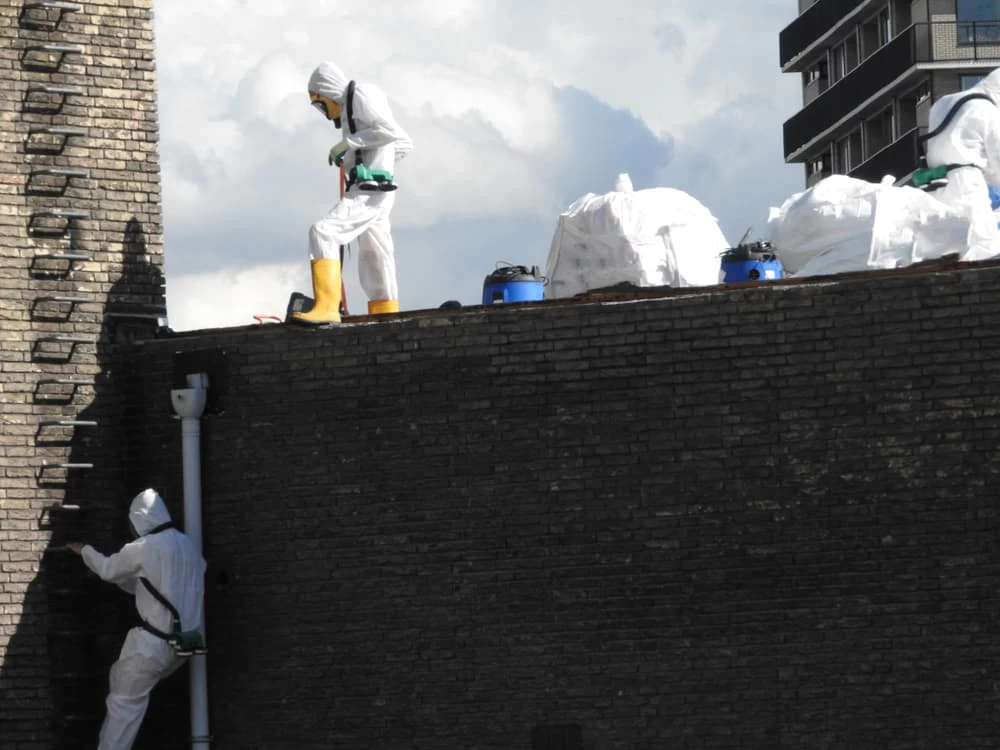
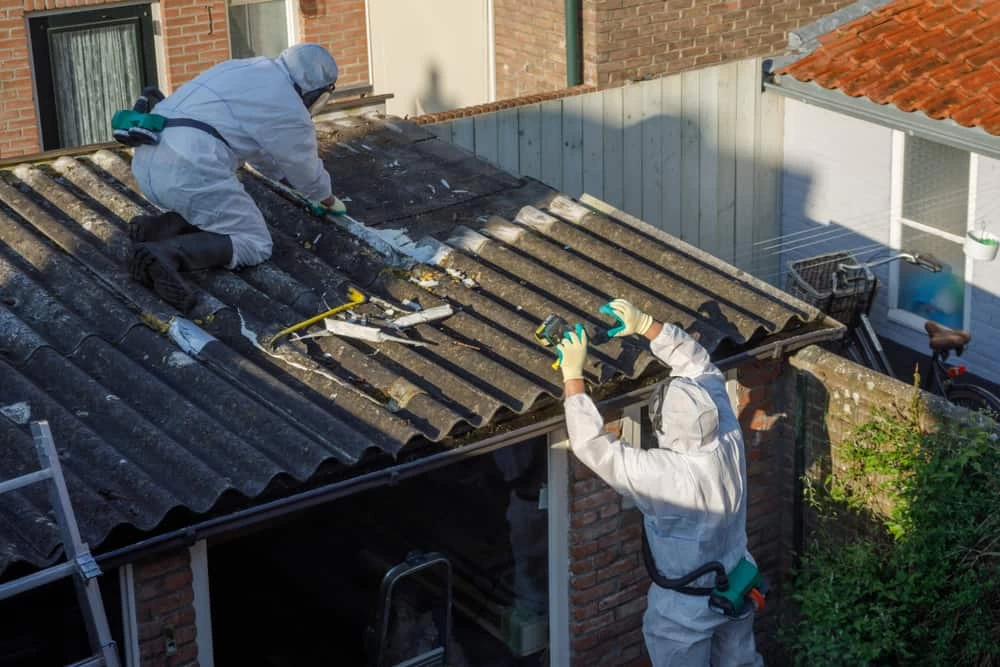
If abatement is needed, the work area is fully contained using negative air pressure and HEPA filtration before any material is disturbed. This keeps fibers from migrating into the rest of your home. For homeowners in Farmingville who are mid-renovation or planning one this containment process is critical. Disturbing asbestos-containing materials without it isn’t just a health risk, it’s a violation of New York State law under Industrial Code Rule 56.
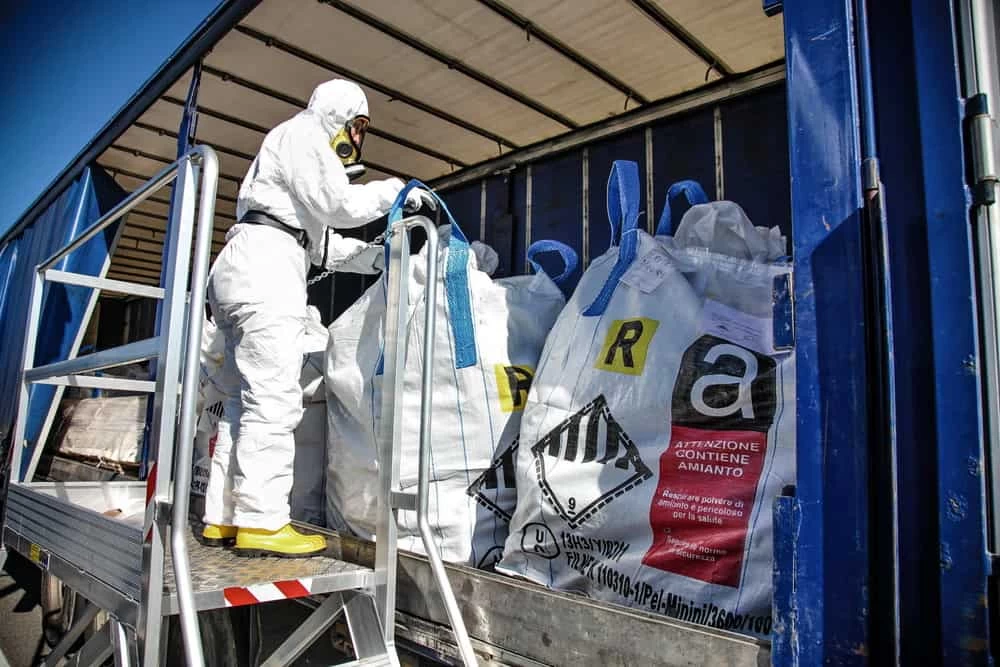
Once the material is removed, it’s packaged and transported to a licensed hazardous waste disposal facility not a standard dumpster, not a general landfill. Suffolk County has specific requirements for asbestos waste disposal, and we follow them exactly. After disposal, post-abatement air clearance testing confirms that fiber levels are back to safe background levels before the containment comes down and the space is released. That clearance certificate is yours to keep.
What We Handle in a Farmingville Abatement Project
The most common asbestos abatement calls we get from Farmingville homeowners involve four things: vinyl asbestos floor tiles, popcorn and textured ceilings, pipe and duct insulation, and pre-1980 joint compound. These aren’t rare they’re standard in the homes built throughout Farmingville during the 1960s and 1970s, and they show up constantly in renovation projects, home inspections, and pre-sale assessments.
Vinyl asbestos tile removal often called VAT removal is especially common in Farmingville’s ranch-style and split-level homes. The 9×9 tiles and the black mastic adhesive underneath them frequently contain chrysotile asbestos. This material can’t just be pulled up and tossed. It requires wet removal methods, proper containment, and licensed disposal. The same applies to popcorn ceiling removal, which we handle with full room containment and air monitoring so the rest of your home stays unaffected while the work is underway.
Every project includes a pre-abatement inspection report, air monitoring during the work, a licensed waste disposal manifest, and a post-abatement clearance certificate. If you’re preparing to sell your Farmingville home, refinancing, or handing a contractor a scope of work, that documentation package is what makes the process clean and defensible from start to finish. We also handle all required notifications to the NYS Department of Labor, so you don’t have to navigate that process on your own.
Does my Farmingville home actually have asbestos, or should I just assume it doesn't?
If your Farmingville home was built before 1980 which covers the majority of the neighborhood, given the median construction year of 1971 there’s a meaningful chance asbestos-containing materials are present somewhere. That doesn’t mean they’re dangerous right now. Asbestos that’s intact and undisturbed generally doesn’t pose an immediate risk. The problem comes when those materials are disturbed during a renovation, a flooring replacement, or even aggressive cleaning of a damaged surface.
The only way to know for certain is to have a licensed asbestos inspector collect samples and send them to an accredited lab. Visual identification isn’t reliable asbestos-containing materials look exactly like non-asbestos materials in most cases. If you’re planning any renovation work in your Farmingville home, an inspection before you start is the right move. It protects you, your contractor, and anyone else who’s going to be in that space.
Is asbestos abatement legally required before a renovation in New York State?
In New York State, Industrial Code Rule 56 governs asbestos abatement and requires that any renovation or demolition work that will disturb suspect asbestos-containing materials be preceded by an inspection conducted by a licensed asbestos inspector. If asbestos is found above de minimis thresholds, it must be removed by a NYS DOL-licensed abatement contractor before the renovation proceeds. This isn’t a recommendation it’s state law, and it applies to residential properties.
For Farmingville homeowners, this comes up most often during kitchen remodels, bathroom renovations, basement finishing projects, and flooring replacements. If you’re pulling up old vinyl tile, scraping a textured ceiling, or opening walls in a home built before 1980, the law requires that you know what you’re dealing with before work begins. The Town of Brookhaven issues building permits for renovation work, and permit inspectors can flag asbestos concerns during the process. Getting ahead of it with a proper inspection protects your project timeline and keeps you on the right side of state requirements.
How long does asbestos abatement take for a typical Farmingville home?
It depends on the scope of the work, but most residential abatement projects in Farmingville fall somewhere between one and three days for the actual removal work. A single room with vinyl asbestos tile or a popcorn ceiling can often be completed in a day. Larger projects multiple rooms, pipe insulation throughout a basement, or a combination of materials take longer, and the post-abatement air clearance testing adds time before the space can be reoccupied.
The inspection phase typically takes a few days from sample collection to lab results, depending on the lab turnaround. If you’re working against a real estate closing date or a contractor’s start date, the sooner you initiate the inspection, the better. We work with a lot of Farmingville homeowners who are on a timeline either selling, buying, or mid-renovation and we’re used to moving efficiently when the situation calls for it. The key is not waiting until the last minute, because the lab results and NYS DOL notification requirements have their own timelines that can’t be compressed.
What does asbestos abatement actually cost for a home in Farmingville, NY?
Cost varies based on what materials are present, how much of it there is, and where it’s located. A single-room vinyl asbestos tile removal in a Farmingville home might run in the range of $1,500 to $3,000. A more involved project multiple rooms, pipe insulation, or a combination of floor tile and ceiling material can reach $5,000 to $10,000 or more depending on scope. These are real ranges, not minimums designed to get you in the door.
What’s worth understanding is what you’re paying for. Licensed abatement isn’t just labor it includes the containment setup, air monitoring equipment, accredited lab analysis, licensed waste disposal at a Suffolk County-approved hazardous waste facility, NYS DOL notifications, and the clearance documentation you receive at the end. That paperwork has real value, especially in Farmingville’s active real estate market where buyers and their attorneys look closely at anything flagged during inspection. Cutting corners on abatement to save money upfront almost always creates a larger problem down the road.
Can I remove asbestos tiles or popcorn ceiling material myself in New York?
New York State law is clear on this. Asbestos abatement above de minimis thresholds must be performed by a contractor licensed by the NYS Department of Labor under Industrial Code Rule 56. For homeowners, there are very narrow exemptions primarily limited to owner-occupied single-family residences performing their own work on a small amount of material but even those exemptions come with strict requirements around notification, handling, and disposal that most people aren’t equipped to meet.
The practical reality is that DIY asbestos removal creates serious risks beyond the legal ones. Without proper containment and HEPA filtration, disturbing asbestos-containing materials can spread fibers throughout your home. Improper disposal putting asbestos waste in a standard dumpster or at a general municipal facility is a violation of Suffolk County hazardous waste requirements and can result in significant fines. And if you’re planning to sell your Farmingville home at any point, a lack of proper abatement documentation will surface during the buyer’s inspection and create a problem that’s far more expensive to resolve than doing the job right the first time.
Does Green Island Group serve areas around Farmingville, like Selden or Centereach?
Yes. We serve the full central Suffolk County area, including the communities immediately surrounding Farmingville Selden, Centereach, Holtsville, Medford, Lake Ronkonkoma, and beyond. All of these neighborhoods share similar housing stock characteristics to Farmingville, with a large percentage of homes built during the 1960s and 1970s when asbestos-containing materials were standard in residential construction.
Operating out of Bohemia means we’re genuinely local to this part of Long Island not a regional franchise dispatching crews from an hour away. When a Farmingville homeowner calls us, they’re reaching a team that’s familiar with the Brookhaven Town permit process, the specific housing types throughout this area, and the Suffolk County disposal requirements that govern every project we complete. If you have a neighbor in Selden dealing with the same flooring or ceiling situation, we’re the same contractor for them too.