Fire Island Homes Hide What the Ferry Doesn't Bring Over
Asbestos abatement on Fire Island takes more than a license it takes a contractor who knows how to actually get there and get it done before your summer rental season starts. We understand the logistics of working on an island where equipment moves on boardwalks, not trucks, and where every project has to coordinate around ferry schedules. That’s not something we figure out on the fly. It’s how we plan every job from the start.
I needed a professional consultation explanation of procedure for safe removal of Asbestos in my apartment complex. Without having an account yet, I was very impressed with the caring, knowledgeable and generous advice offered by Jessica, and will look forward to doing business in the future. Thank you so much! I feel much more informed about a sometimes scary endeavor. Peace. Nancy Silva Mineola, NY.
Mia Munoz
Used this company to clean up some water flood in my house. They were fast and easy to work with.very professional, Would recommend to anyone!
Nini Valle
Great company, had a flood and they responded quickly and efficiently. Billed my insurance company directly. I highly recommend this company!
joe colapietro, jr
I had pipe freeze in my basement right before a snow storm and they made to within an hour to help start the clean up process. They we by our side throughout the entire process and even helped with the insurance company. They did such a great job with the cleanup, repair, remidiation, I contracted them to perform the repairs and finishes in the basement. They came with enough manpower and material to get the job done. Leo and Jessica were nothing but a pleasure to deal with!!
Cristian Arredondo c
I had some water damage in my home and Green Island was able to take care of my issue quickly and effectively. I am very pleased with the work they did. They responded quickly and were very professional.
Michael M
Outstanding service! From the office to the field crew everyone was friendly, helpful and responsive. I highly recommend Green Island Group.
Your Renovation Stays Legal, Safe, and On Schedule
Fire Island’s housing stock is full of pre-1980 construction bungalows from the 1930s and 1940s, midcentury cottages in Ocean Beach, modernist homes in the Pines that were groundbreaking when they were built and still contain the materials that were standard at the time. Floor tiles, pipe insulation, joint compounds, popcorn ceilings, roofing materials any of it could contain asbestos. If you’re opening walls, replacing floors, or rebuilding after storm damage, you need to know what’s there before work begins. That’s not optional in New York State. It’s the law under NYS Industrial Code Rule 56.
What changes after abatement is done right isn’t just compliance it’s clarity. You can move forward with your renovation without stopping mid-project because something unexpected turned up. You can list the property, rent it, or hand it off to your contractor with a clean environmental report in hand. For a home worth $1.4 million or more on an island where summer rentals run $10,000 to $20,000 a week, that clarity has real dollar value attached to it.
The coastal environment on Fire Island also matters. Salt air, humidity, storm flooding, and decades of exposure accelerate the breakdown of older building materials faster than anywhere inland. When those materials are damaged whether by a nor’easter, a burst pipe, or just age the risk of fiber release goes up. Getting ahead of it isn’t overcautious. It’s the only move that makes sense for a property on this island.
We've Worked the South Shore Including the Hard-to-Reach Parts
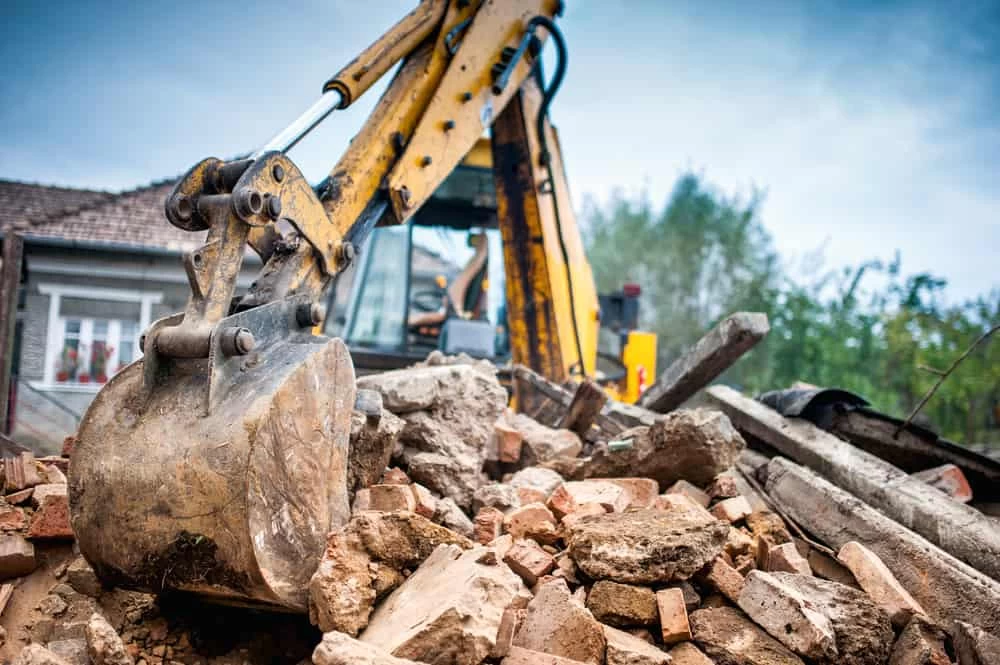
We’re a New York-based environmental remediation contractor serving residential, commercial, and public-sector clients across the state. Asbestos abatement, mold remediation, lead removal, water and fire damage restoration, demolition we handle the full scope of what happens when a building needs to be made safe before or during a renovation.
Serving Fire Island isn’t something we treat as an afterthought. We understand that getting to Ocean Beach, Cherry Grove, or Fair Harbor means coordinating around ferry schedules, moving equipment on boardwalks instead of roads, and working within a community where your neighbors are close and the season is short. That’s not a challenge we figure out on the fly it’s something we plan for before we show up.
We’re fully licensed under NYS Industrial Code Rule 56, which governs every asbestos abatement project in New York State. Every job is staffed by our certified asbestos handlers and supervisors, and every project is documented from initial survey through final air clearance.
From Ferry Landing to Final Clearance Here's the Process
It starts with a certified asbestos inspection. Before any renovation or demolition work touches a pre-1980 structure on Fire Island, NYS ICR 56 requires a survey by a certified inspector to identify whether asbestos-containing materials are present and where. This step isn’t just a formality it determines the full scope of what needs to happen next and protects you from discovering a problem mid-renovation when the cost and delay are much worse.
Once the survey is complete, we put together a work plan. Depending on the size of the project, this may involve advance notification to the NYS Department of Labor. We also handle coordination with the relevant town government because depending on where your property sits on Fire Island, your building permits run through the Town of Islip, the Town of Babylon, or the Town of Brookhaven. That’s a detail a lot of property owners don’t know until it slows them down.
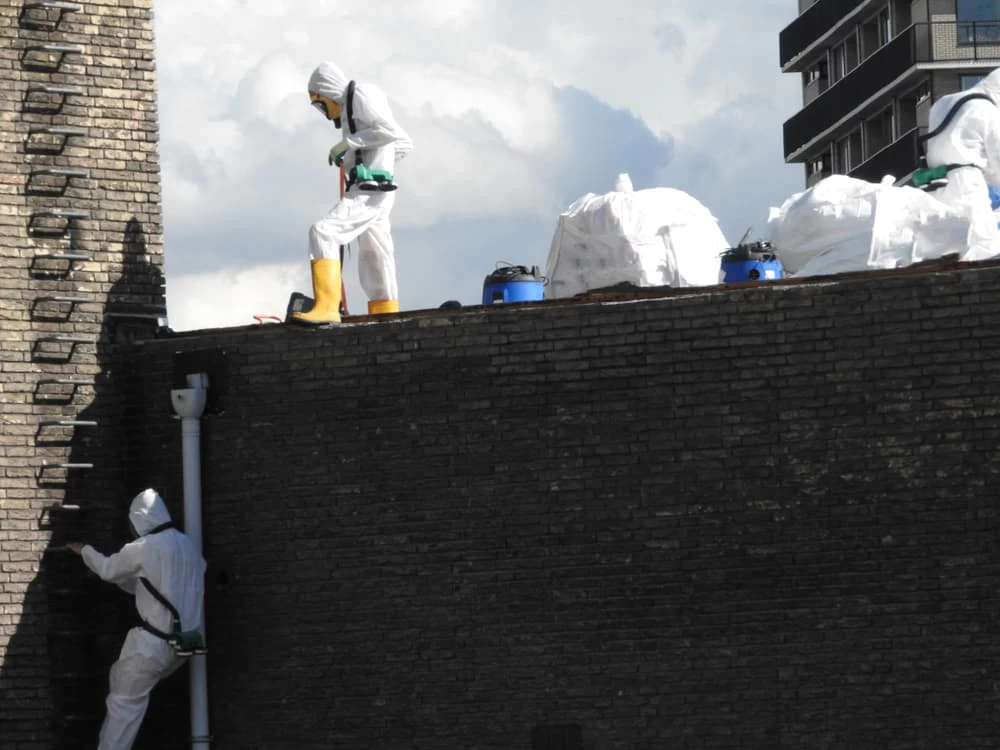
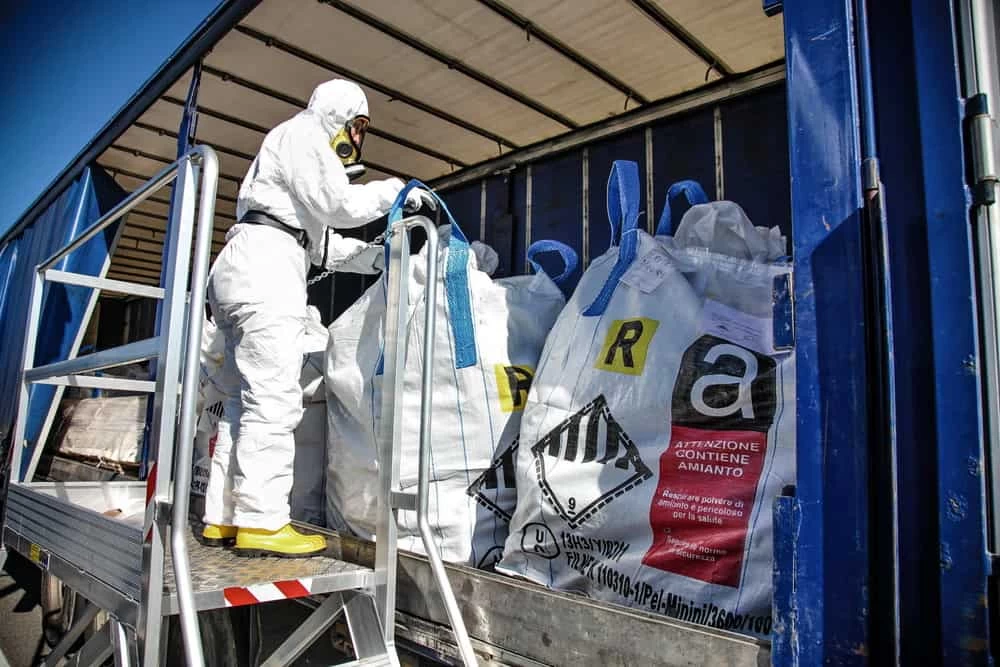
The abatement itself is done under proper containment with negative air pressure, certified equipment, and strict waste handling protocols. On Fire Island, that means all materials are packaged for compliant removal and transported off the island via the same ferry system we came in on. After the work is finished, independent air clearance testing confirms the space is clean. You get the full documentation survey results, abatement records, waste disposal manifests, and clearance certification so there are no questions when it comes time to sell, rent, or rebuild.
Every Material, Every Community on Fire Island, Every Part of the Island
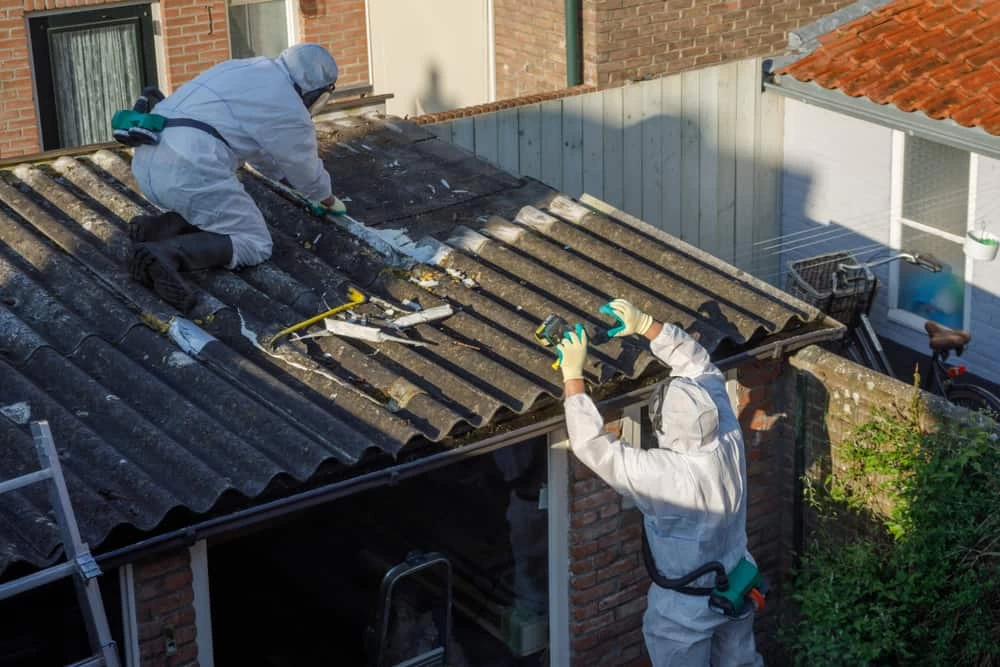
Asbestos doesn’t show up in just one place in an older home, and it doesn’t affect just one type of property on Fire Island. Vinyl floor tiles and the adhesive beneath them, textured popcorn ceilings, pipe and duct insulation, roofing shingles, drywall joint compounds, exterior siding all of it was used extensively in the decades when most of Fire Island’s housing stock was built. We handle asbestos tile removal, popcorn ceiling removal, pipe insulation abatement, and full-structure surveys for renovation and demolition projects of any size.
We serve the full length of Fire Island from the western communities like Kismet and Saltaire that come in through Bay Shore, to the central villages including Ocean Beach and Seaview, to the eastern communities in Cherry Grove and Fire Island Pines accessed through Sayville. If your property is on Fire Island, we can reach it. We’ve built our logistics around the ferry systems and the boardwalk-only environment that most mainland contractors aren’t prepared for.
For property owners dealing with storm damage whether from a recent nor’easter or ongoing deterioration from years of salt air and coastal flooding we also provide asbestos assessment as part of a broader remediation scope that can include mold and water damage. One team, one project, one completed job before the season starts.
Do I need an asbestos survey before renovating my Fire Island home?
Yes and it’s not optional. Under New York State Industrial Code Rule 56, a certified asbestos inspection is required before any renovation or demolition work that could disturb materials in a pre-1980 structure. That covers the vast majority of homes on Fire Island, where most of the housing stock dates to the 1920s through the 1970s. The inspection has to be conducted by a NYS-certified asbestos inspector before work begins not during, and not after something unexpected turns up in the wall.
The practical reason this matters on Fire Island specifically is timing. If you’re planning a renovation before the summer rental season, you don’t have room for a mid-project stop. Discovering asbestos after your contractor has already opened up walls is a much more expensive and disruptive problem than finding it in a proper pre-renovation survey. Getting the survey done first is the move that keeps your project on schedule and your property legally protected.
How does asbestos abatement actually work on Fire Island with no roads?
It requires more planning than a standard mainland job, and that’s exactly why you want a contractor who’s done it before. Workers, equipment, containment materials, and air monitoring units all have to come over on the ferry whether that’s Fire Island Ferries out of Bay Shore, Sayville Ferry Service, or the Davis Park Ferry depending on your community. Once on Fire Island, everything moves on foot or by cart along the boardwalks. There are no trucks, no dumpsters at the curb, no standard waste logistics.
Hazardous waste removal is handled under the same strict protocols required anywhere in New York State properly packaged, labeled, and transported off the island for compliant disposal at a licensed facility. The containment setup, negative air pressure, and clearance testing process is identical to what you’d see on a mainland project. What’s different is the coordination required to make all of it happen within the island’s physical constraints. That coordination is something we build into the project plan from day one, not something we work out after we arrive.
What materials in older Fire Island bungalows are most likely to contain asbestos?
The most common sources in Fire Island’s older housing stock are vinyl floor tiles and the black mastic adhesive used to install them, textured popcorn ceilings applied before 1980, pipe and duct insulation, roofing shingles and felt underlayment, and joint compounds used in drywall finishing. Many of the bungalow-style homes and midcentury cottages on Fire Island were built during decades when these materials were standard across American residential construction.
It’s worth noting that asbestos-containing materials that are in good condition and undisturbed don’t necessarily require immediate removal. The risk comes when those materials are damaged, deteriorating, or about to be disturbed by renovation work. On Fire Island, where coastal humidity, salt air, and periodic flooding accelerate material breakdown faster than in inland communities, the condition of older building materials deserves a closer look especially after any storm event or period of water intrusion.
Which town government issues permits for asbestos work on Fire Island?
It depends on where your property is located on Fire Island. The island sits within the boundaries of three different towns the Town of Islip, the Town of Babylon, and the Town of Brookhaven and the jurisdictional lines don’t always follow the community boundaries that residents are used to thinking about. Building permits and municipal oversight for renovation work run through whichever mainland town has jurisdiction over your specific property, not through a Fire Island-specific office.
This catches a lot of property owners off guard, particularly seasonal residents who manage their Fire Island home remotely and haven’t had to deal with the local permitting process before. On top of the town-level requirements, properties within or adjacent to the Fire Island National Seashore may also have federal considerations that affect major structural work. We’re familiar with the permitting landscape across all three towns and can help you understand what’s required for your specific project before work begins so you’re not discovering a missing permit after the job is already underway.
Can asbestos abatement be completed before the summer rental season starts on Fire Island?
Yes, and for most Fire Island property owners, that’s exactly the window that matters. The off-season roughly October through April is when most renovation and remediation work on the island happens. The community is quiet, the disruption to neighbors is minimal, and there’s enough lead time to complete the work, get final air clearance, and have the property ready before Memorial Day weekend.
The realistic timeline depends on the scope of the project. A targeted asbestos tile removal or popcorn ceiling abatement in a single-family bungalow can often be completed in a few days of on-site work once the survey is done and the work plan is in place. Larger projects involving multiple material types or significant square footage take longer. The key is starting the process early enough including the initial inspection and any required permit applications so that the actual abatement work isn’t crammed into the last few weeks before the season opens. If you’re planning a renovation for next summer, the fall is the right time to start the conversation.
Does storm damage to my Fire Island home create an asbestos risk I need to address?
It can, and it’s one of the more urgent scenarios we see on Fire Island. When Hurricane Sandy hit in 2012, most oceanfront homes on Fire Island sustained significant damage and the rebuilding process that followed required asbestos assessment before reconstruction could legally proceed in structures built before 1980. That same principle applies every time a major nor’easter or hurricane causes structural damage, flooding, or material deterioration on the island.
The concern isn’t just regulatory. Asbestos-containing materials that are intact and undisturbed carry a much lower risk than materials that have been physically damaged, waterlogged, or broken apart by storm forces. Flood water that penetrates an older floor or wall assembly, wind damage that tears through a roofline, or structural movement that cracks older insulation all of these can disturb materials that were previously stable. If your property took on water or sustained structural damage, getting a certified asbestos assessment done before any repair or renovation work starts is the right call both for safety and to keep your project on the right side of NYS ICR 56 requirements.