Fishkill Plains Homes Have History Some of It Needs to Go
If your home was built before 1980, asbestos abatement in Fishkill Plains isn’t a maybe it’s a conversation worth having before you touch a single wall.
I needed a professional consultation explanation of procedure for safe removal of Asbestos in my apartment complex. Without having an account yet, I was very impressed with the caring, knowledgeable and generous advice offered by Jessica, and will look forward to doing business in the future. Thank you so much! I feel much more informed about a sometimes scary endeavor. Peace. Nancy Silva Mineola, NY.
Mia Munoz
Used this company to clean up some water flood in my house. They were fast and easy to work with.very professional, Would recommend to anyone!
Nini Valle
Great company, had a flood and they responded quickly and efficiently. Billed my insurance company directly. I highly recommend this company!
joe colapietro, jr
I had pipe freeze in my basement right before a snow storm and they made to within an hour to help start the clean up process. They we by our side throughout the entire process and even helped with the insurance company. They did such a great job with the cleanup, repair, remidiation, I contracted them to perform the repairs and finishes in the basement. They came with enough manpower and material to get the job done. Leo and Jessica were nothing but a pleasure to deal with!!
Cristian Arredondo c
I had some water damage in my home and Green Island was able to take care of my issue quickly and effectively. I am very pleased with the work they did. They responded quickly and were very professional.
Michael M
Outstanding service! From the office to the field crew everyone was friendly, helpful and responsive. I highly recommend Green Island Group.
You stop guessing. That’s the first thing. When you’ve got a mid-century home along Route 376 and a renovation on the horizon, the not-knowing is its own kind of stress. Once the asbestos is properly identified, removed, and cleared by a licensed crew following NYS Code Rule 56 you can move forward without that weight hanging over the project.
For Fishkill Plains homeowners specifically, the risk isn’t hypothetical. Homes built during the IBM-era construction boom of the 1960s and 1970s when East Fishkill was growing fast to house the workers flooding into the county are now 50 to 60 years old. That means pipe insulation in basement utility rooms, 9×9 vinyl floor tiles under the linoleum, popcorn ceiling texture in bedrooms, and boiler wrap that hasn’t been touched since the Carter administration. These materials were stable once. Decades of Hudson Valley winters, freeze-thaw cycles, and in some cases, flooding from Sprout Creek, have a way of changing that.
And if you’re near the creek and your basement has flooded before, that’s not a separate problem from asbestos it’s the same problem. Water reaching older pipe insulation or floor tiles can turn a stable situation into an active hazard overnight. Knowing your home is clear means your family isn’t breathing something they shouldn’t be, and your renovation contractor isn’t walking into a liability.
Licensed Asbestos Contractor Serving East Fishkill
12 Years In, 5,000 Projects Deep We Know Fishkill Plains Homes
We’ve been doing this work across New York State for over 12 years, with more than 5,000 completed projects. We hold all required NYS Department of Labor asbestos contractor licenses, our crews are certified under Code Rule 56, and we’re one of the few asbestos abatement companies in the state that’s also MWBE certified and approved as a contractor for New York State agencies. That last part matters because state agencies vet contractors hard and those same standards apply to every residential job we take.
We serve homeowners throughout Dutchess County, including the hamlets and neighborhoods that make up East Fishkill Fishkill Plains, Hopewell Junction, Stormville, Hillside Lake, and beyond. We know the East Fishkill Building Department handles permits for this area, we know how the NYS DOL’s Albany district office handles notifications for abatement projects here, and we know what older homes in Fishkill Plains along Route 376 tend to look like on the inside. We also bill insurance directly, which is one less thing you have to manage when you’re already dealing with enough.
No Surprises Here's Exactly How the Work Gets Done
It starts with an inspection. Before anything is removed, we need to know what we’re dealing with which materials are suspect, where they are, and what condition they’re in. In a pre-1980 home in Fishkill Plains, that typically means checking the basement utility room, flooring layers, ceiling texture, pipe insulation, and any mechanical room materials. Samples go to a certified lab. You get real answers, not assumptions.
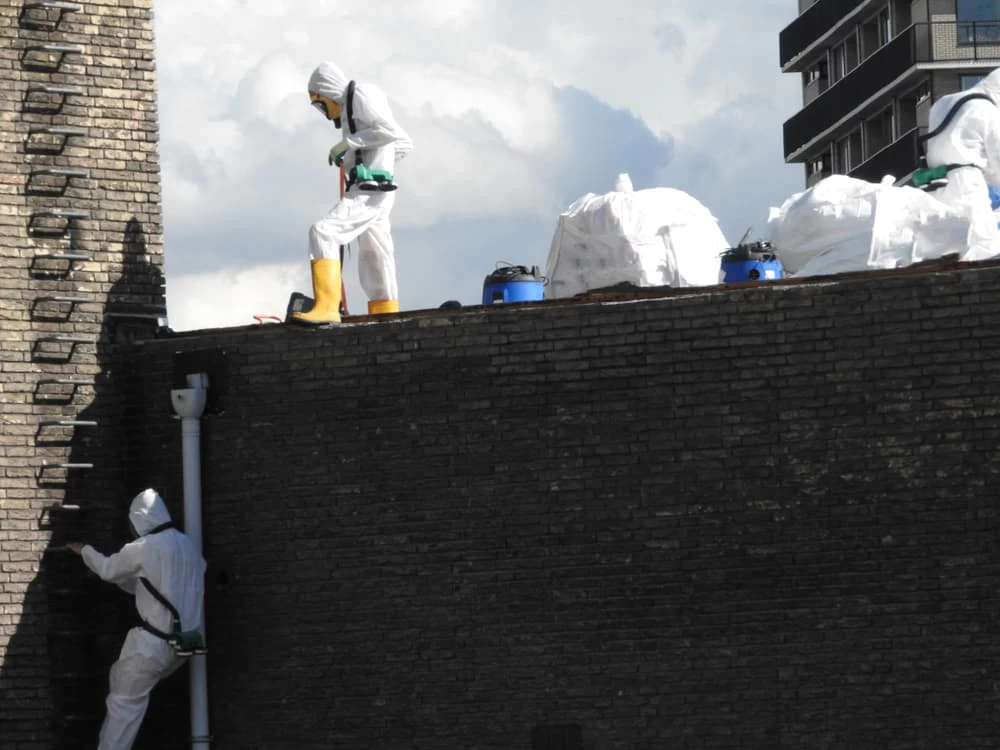
Once we know what’s there, we build a removal plan around your home and your timeline. The work area gets fully contained negative air pressure, sealed barriers, HEPA filtration so the rest of your home stays unaffected while we work. For homeowners near Sprout Creek who are also dealing with water damage, we can coordinate both the asbestos abatement and the water restoration under one roof, which keeps the timeline tight and the process clean. All waste is transported by NYS DEC-licensed haulers to approved disposal facilities, as required under state law. Nothing gets cut short on the back end.
When the removal is done, we don’t just pack up and leave. Post-abatement air clearance testing confirms the space is genuinely safe before anyone reoccupies it. You get documentation the kind that satisfies the East Fishkill Building Department, satisfies your insurance carrier, and satisfies a buyer’s agent if you’re selling. The paper trail matters, and we make sure it’s complete.
Asbestos Tile and Popcorn Ceiling Removal, Fishkill Plains
Every Material, Every Layer Handled the Right Way
Asbestos abatement isn’t one-size-fits-all, and the homes in Fishkill Plains reflect that. The most common materials we find in this area’s older housing stock are 9×9 vinyl floor tiles and the black mastic adhesive underneath them, popcorn ceiling texture applied between the 1950s and 1980s, pipe and boiler insulation in basement utility rooms, and roofing or siding materials on homes that haven’t been touched in decades. Each one requires a different approach, and each one has to be handled correctly not just removed, but removed in a way that doesn’t create a bigger problem than the one you started with.
Asbestos tile removal is a good example of where shortcuts cause real damage. The tiles themselves may contain asbestos, but so does the mastic. Scraping or breaking tiles without proper containment releases fibers from both layers. We address both, with HEPA-filtered equipment and proper wet-method technique, so what goes under your new flooring is a clean subfloor not a hidden hazard.
Popcorn ceiling removal follows the same logic. Before any ceiling texture in a pre-1980 Fishkill Plains home is disturbed for painting, repair, or full removal it needs to be tested. If asbestos is present, we isolate the area, remove the material using wet methods that minimize fiber release, clean with HEPA equipment, and confirm clearance before the space is reopened. Whether it’s a single room or a whole-house project, the process doesn’t change. Neither does the standard.
Does my Fishkill Plains home actually need asbestos testing before I renovate?
If your home was built before 1980, the answer is yes and in many cases, it’s not optional. New York State’s Industrial Code Rule 56 requires an asbestos survey before renovation or demolition work that will disturb building materials in structures of that age. This applies to homes in Fishkill Plains just as it does anywhere else in Dutchess County, and the East Fishkill Building Department can flag non-compliance during the permit review process.
Beyond the legal requirement, there’s a practical reason to test first. Your contractor can’t safely demo a kitchen, pull up old flooring, or open a wall in a 1960s or 1970s home without knowing what’s in those materials. If asbestos is discovered mid-demo without proper containment in place, the project stops, the area has to be assessed, and the cost and timeline both go up significantly. Testing before you start is almost always cheaper than stopping after you’ve already begun.
How much does asbestos removal typically cost for a home in East Fishkill?
For a single-family home in the Fishkill Plains area, most asbestos removal projects run somewhere between $1,300 and $3,100, with an average closer to $2,200. That range shifts based on what materials are present, how much square footage is involved, and how accessible the affected areas are. A basement utility room with deteriorating pipe insulation is a different scope than a whole-floor vinyl tile removal with mastic underneath.
It’s also worth knowing that costs in the New York metro and Hudson Valley region have risen in recent years updated NYS DOL licensing requirements and increased disposal fees have pushed abatement pricing up roughly 8 to 12 percent compared to a few years ago. That’s not a reason to delay; it’s a reason to get a real quote now rather than budgeting based on older numbers you find online. We provide straightforward estimates based on what’s actually in your home, not a ballpark designed to get a foot in the door.
What happens if flooding from Sprout Creek disturbed asbestos materials in my basement?
This is a real scenario for homeowners in Fishkill Plains, and it’s one of the more urgent asbestos situations we deal with. The Town of East Fishkill participates in FEMA’s Community Rating System because a large portion of the town including areas near Sprout Creek falls within a Special Flood Hazard Area. When water reaches a basement or crawl space in an older home, it can damage pipe insulation, floor tiles, and mechanical room materials that were previously stable and non-friable. Once those materials are wet, cracked, or physically disturbed, they can become an active airborne hazard.
If you’ve had flooding and you’re not sure whether asbestos-containing materials were affected, don’t start cleanup or repairs until the area is assessed. We handle both water damage restoration and asbestos abatement, so you’re not trying to coordinate two separate contractors while your basement sits damaged. We can assess the situation, contain the hazard, and address both issues on a single timeline which matters when you’re dealing with an active moisture problem alongside a potential asbestos exposure.
Can I remove asbestos floor tiles myself in New York State?
Technically, New York State law does not prohibit a homeowner from removing asbestos-containing materials from their own residence in limited circumstances but the practical and legal risks make DIY asbestos tile removal a genuinely bad idea for most people. NYS Industrial Code Rule 56 sets strict requirements for how asbestos work must be performed, and if you disturb asbestos-containing floor tiles or mastic without proper containment, HEPA filtration, and wet-method technique, you can contaminate your living space in ways that are expensive and difficult to remediate after the fact.
There’s also the disposal issue. Asbestos waste in New York State must be transported by NYS DEC-licensed haulers to approved facilities. You can’t bag it up and put it in the trash or take it to a standard transfer station. If you’re a homeowner in Fishkill Plains considering this route, the combination of containment requirements, disposal logistics, and the risk of doing it wrong makes hiring a licensed contractor the more cost-effective path not just the safer one.
How long does asbestos abatement take, and will my family need to leave the house?
Timeline depends on scope. A single-room project one bathroom with asbestos floor tiles, or a bedroom with popcorn ceiling texture can often be completed in one to two days. A larger project involving pipe insulation throughout a basement, multiple rooms of flooring, or whole-house ceiling texture will typically run three to five days or longer. We give you a realistic timeline before we start, not an optimistic one that gets extended mid-project.
As for displacement, it depends on where the work is happening and how the containment is set up. For localized projects in a basement or a single room, families can often remain in unaffected parts of the home. For larger projects or situations where HVAC systems could spread contamination, temporary relocation may be the safer call. We’ll tell you honestly what makes sense for your specific situation. For Fishkill Plains homeowners who don’t have easy access to nearby hotels or short-term rentals, we factor that into how we stage and sequence the work wherever possible.
How do I know if a contractor is actually licensed to do asbestos abatement in Dutchess County?
This is the right question to ask, and the answer is verifiable. New York State maintains a public listing of licensed asbestos contractors through the NYS Department of Labor. You can look up any contractor by name before you hire them it takes about two minutes and tells you whether their license is current and in good standing. In Dutchess County, abatement work falls under the oversight of the NYS DOL Asbestos Control Bureau’s Albany district office, and contractors operating here without a valid license are in violation of state law.
Beyond the contractor license, individual workers on your job should hold NYS DOL asbestos handler or supervisor certifications. If a crew shows up and can’t produce documentation for both the company license and individual worker certifications, that’s a problem. We hold all required credentials contractor license, worker certifications, and the MWBE certification that comes with its own layer of state vetting. If you want to verify before you call, the NYS DOL asbestos contractor listing is publicly accessible and easy to search.