Flanders' Older Homes Deserve a Safer Starting Point
If your Flanders home was built before 1980, there’s a real chance asbestos is somewhere inside it and a renovation, a sale, or a simple inspection can bring that to a head fast. We handle asbestos abatement the right way, from the first test to the final clearance.
I needed a professional consultation explanation of procedure for safe removal of Asbestos in my apartment complex. Without having an account yet, I was very impressed with the caring, knowledgeable and generous advice offered by Jessica, and will look forward to doing business in the future. Thank you so much! I feel much more informed about a sometimes scary endeavor. Peace. Nancy Silva Mineola, NY.
Mia Munoz
Used this company to clean up some water flood in my house. They were fast and easy to work with.very professional, Would recommend to anyone!
Nini Valle
Great company, had a flood and they responded quickly and efficiently. Billed my insurance company directly. I highly recommend this company!
joe colapietro, jr
I had pipe freeze in my basement right before a snow storm and they made to within an hour to help start the clean up process. They we by our side throughout the entire process and even helped with the insurance company. They did such a great job with the cleanup, repair, remidiation, I contracted them to perform the repairs and finishes in the basement. They came with enough manpower and material to get the job done. Leo and Jessica were nothing but a pleasure to deal with!!
Cristian Arredondo c
I had some water damage in my home and Green Island was able to take care of my issue quickly and effectively. I am very pleased with the work they did. They responded quickly and were very professional.
Michael M
Outstanding service! From the office to the field crew everyone was friendly, helpful and responsive. I highly recommend Green Island Group.
You stop guessing. That’s the first thing. When asbestos-containing materials have been properly identified, removed, and documented by a licensed contractor, you’re not carrying that uncertainty into every renovation decision anymore. You know what’s there, what’s been handled, and what the paperwork says and that matters whether you’re staying, selling, or just finally finishing that kitchen.
For Flanders homeowners specifically, the stakes are a little higher than most people realize. The ranch homes and cottages along the Flanders Road corridor were built right in the middle of the asbestos era 1940s through the 1970s and many of them have never been touched. Floor tiles, pipe insulation, ceiling texture, roofing materials: all of it was standard at the time, and a lot of it is still sitting there. Add in the humidity and flooding risk that comes with living near Reeves Bay and the Peconic River, and materials that might have stayed stable for another decade can deteriorate a lot faster than expected.
The practical outcome of professional abatement is this: your contractor can actually do the work, your building permit moves forward with Southampton Town, and your home is documented as safe. That documentation has real value at closing, during a refinance, and for your own peace of mind.
We Know Flanders' Housing Stock and Eastern Long Island's Building History Cold
We’re a licensed asbestos abatement contractor serving Suffolk County homeowners, including the Flanders area and the broader Southampton Town corridor. We’re not a national franchise trying to figure out local codes on the fly we work in this region, we know how these homes were built, and we understand what NYS DOL Industrial Code Rule 56 actually requires when you’re pulling permits through Southampton Town.
The homes in and around Flanders the older ranches off Route 24, the bayside cottages near Flanders Bay, the mid-century builds that have been in families for decades these aren’t mystery properties to us. We’ve worked throughout eastern Suffolk County, and we know where asbestos tends to hide in this generation of housing. That experience isn’t something you can fake, and it’s the difference between a job done right and one that creates problems down the road.
It starts with an inspection. Before anything is touched, a licensed inspector walks the property and identifies materials that may contain asbestos floor tiles, ceiling texture, pipe insulation, joint compound, roofing, and anywhere else it was commonly used in homes of this era. Samples go to a certified lab, and you get real results, not assumptions.
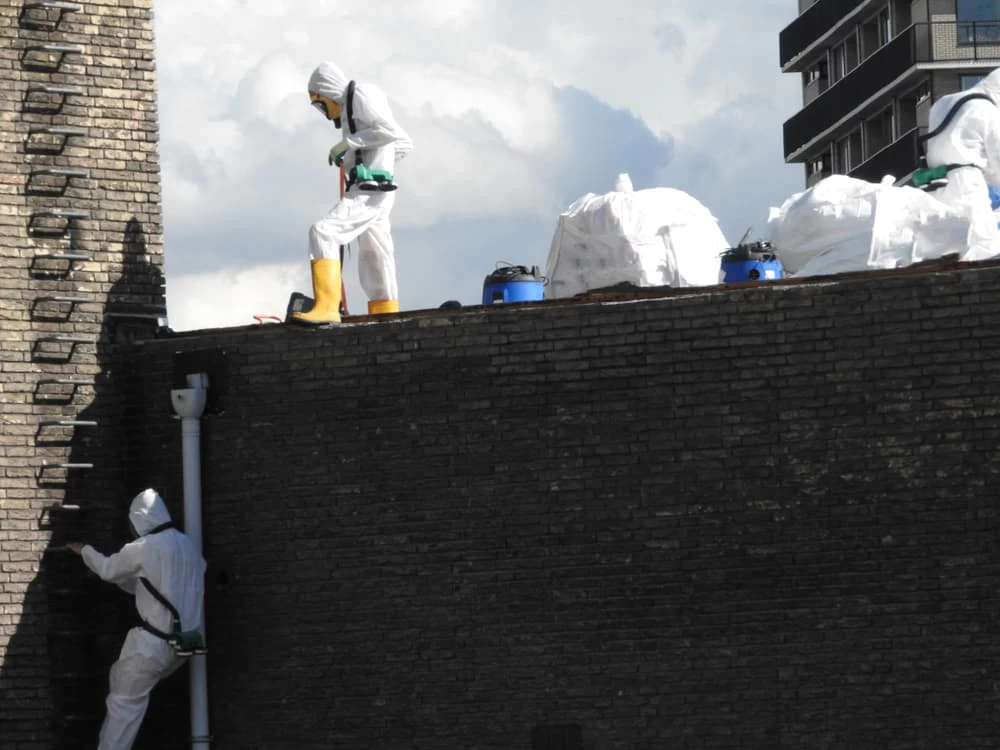
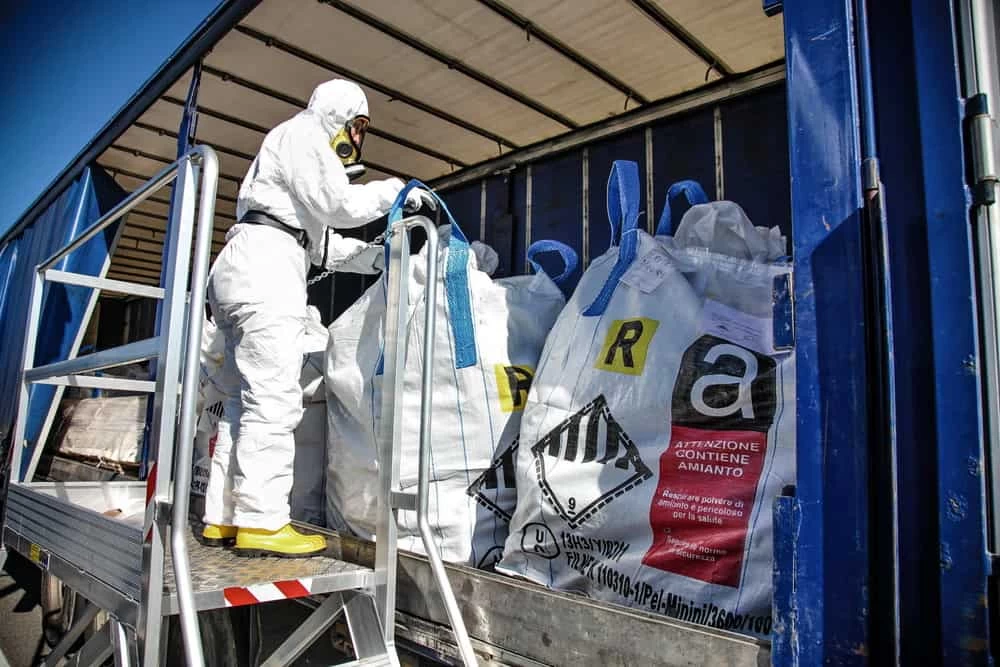
If abatement is needed, we handle the NYS DOL project notification requirements before work begins. For Flanders properties, that means filing with the correct Suffolk County district office under Industrial Code Rule 56 not the NYC DEP process, which doesn’t apply here and is a common source of confusion when homeowners hire contractors unfamiliar with this jurisdiction. Containment goes up, the materials come out using proper HEPA filtration and licensed removal protocols, and everything is bagged, labeled, and transported to an approved NYS DEC disposal facility.
The last step is air clearance testing independent confirmation that fiber levels are within safe limits before containment comes down. You get a complete documentation package at the end: inspection results, lab reports, project filings, disposal manifests, and clearance test results. That’s what your contractor needs to proceed, what Southampton Town’s building department expects to see, and what protects you if questions come up later.
Every Step Covered, Nothing Left for You to Figure Out
Asbestos abatement isn’t one thing it’s a sequence of regulated steps, and every one of them has to be done correctly or the whole job is compromised. We handle the full scope: initial inspection and sampling, lab analysis, containment setup, licensed removal, proper disposal, and final air clearance testing. You’re not coordinating four different vendors. One call covers it.
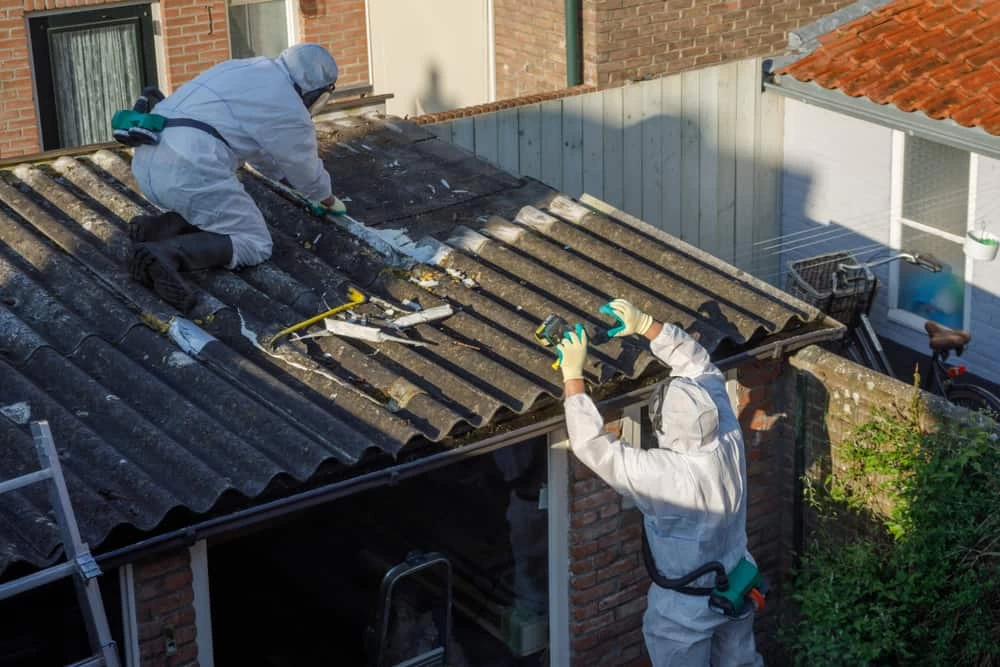
For Flanders homes, the most common materials we encounter are 9×9 vinyl asbestos floor tiles and the black mastic adhesive underneath them, spray-applied popcorn ceiling texture, pipe and duct insulation in basements and crawl spaces, and roofing or siding materials on older exterior structures. If your home is near the water along Flanders Bay or backing up to the Peconic River we also pay close attention to materials in lower-level spaces where moisture intrusion tends to accelerate deterioration. Coastal conditions do real damage to building materials over time, and what was stable five years ago may not be today.
Every project includes full documentation suitable for Southampton Town permitting, real estate transactions, and your own records. If you’re renovating, selling, or simply trying to understand what you’re dealing with, that paperwork is not a formality it’s protection.
Does asbestos abatement in Flanders require permits or government filings?
Yes, and this is one of the most important things to get right before any work starts. In Flanders, asbestos abatement falls under New York State Industrial Code Rule 56, administered by the NYS Department of Labor’s Asbestos Control Bureau. For projects above certain material thresholds, a project notification must be filed with the NYS DOL Suffolk County district office at least 10 business days before work begins. This is separate from your Southampton Town building permit, which you’ll also need if the abatement is part of a larger renovation.
One thing worth knowing: Flanders is under NYS DOL jurisdiction, not NYC DEP jurisdiction. The ACP-5 and ACP-7 filing system that applies to New York City does not apply here. If a contractor quotes you a job and mentions NYC DEP filings for a Flanders property, that’s a red flag that they’re not familiar with this area. We handle all required NYS DOL notifications as part of every project you won’t be left to figure out the paperwork on your own.
How do I know if my older Flanders home actually contains asbestos materials?
The honest answer is that you can’t know for certain without testing. Asbestos-containing materials don’t look different from non-asbestos versions a 1960s floor tile looks like a 1960s floor tile whether it contains asbestos or not. The only way to confirm is to collect a sample and have it analyzed by a certified laboratory.
That said, if your home was built between roughly 1940 and 1980, the probability is high that at least some asbestos-containing materials are present somewhere. The ranch homes and cottages that make up much of Flanders’ housing stock along Route 24 and the surrounding streets were built squarely in that window. Common locations include the 9×9 vinyl floor tiles and adhesive in kitchens, bathrooms, and basements; textured or popcorn ceiling finishes; pipe insulation on older heating systems; and roofing or siding materials on the exterior. A licensed inspection will tell you exactly what’s there and what needs to be addressed before any renovation work begins.
What happens if a contractor disturbs asbestos before it's been properly abated?
This is a situation you really want to avoid. When asbestos-containing materials are disturbed sanded, scraped, cut, or broken apart microscopic fibers become airborne. Those fibers can stay suspended for hours and are invisible to the naked eye. Inhalation is how asbestos-related diseases develop, including mesothelioma, lung cancer, and asbestosis, and there is no safe level of exposure established for these fibers.
From a legal and financial standpoint, the consequences are also serious. If a contractor disturbs asbestos without proper abatement in place, the work site may be shut down by the NYS DOL, remediation costs increase significantly because the affected area is now contaminated, and liability exposure extends to both the contractor and potentially the homeowner. In Suffolk County, enforcement of asbestos regulations is real this isn’t paperwork that gets overlooked. The right sequence is always inspection first, abatement if needed, clearance testing, and then renovation work. Skipping steps to save time or money almost always costs more in the end.
How much does asbestos abatement typically cost for a Flanders, NY home?
Cost depends heavily on what materials are present, how much of them there are, and where they’re located in the home. A straightforward floor tile removal in a single room is going to look very different from a full basement pipe insulation job or a whole-house popcorn ceiling removal. That range is real smaller residential projects can run a few hundred dollars, while larger or more complex jobs in the $5,000 to $15,000 range are not unusual depending on scope.
For Flanders homeowners, a few factors can influence cost beyond the basics. Homes near the water along Flanders Bay or the Peconic River sometimes have more extensive deterioration in lower-level spaces, which means more material to handle and more containment work. Homes that haven’t been touched since they were built in the 1950s or 1960s may have multiple types of asbestos-containing materials in several locations, which requires a more thorough inspection and a broader scope of work. The best way to get an accurate number is a proper inspection first a quote based on assumptions rather than confirmed findings isn’t worth much. We provide clear, itemized estimates after inspection so you know exactly what you’re paying for before anything starts.
Can I stay in my home during asbestos removal, or do I need to leave?
It depends on the scope and location of the work. For smaller, contained projects removing floor tiles in a single room, for example it may be possible to remain in other parts of the home while work is underway, provided proper containment barriers are in place and the work area is fully sealed off. For larger projects involving multiple rooms, ceiling materials, or work in shared spaces like hallways and basements, temporary relocation during the active abatement phase is typically the safer and more practical approach.
The containment setup is designed specifically to prevent fiber migration into the rest of the home negative air pressure, sealed doorways, HEPA filtration running continuously. But even with those measures in place, the honest recommendation for families with young children is to err on the side of caution and stay elsewhere until air clearance testing confirms the space is clean. We’ll walk you through what’s realistic for your specific project before work begins, so you’re not making that decision without the full picture.
Is asbestos testing required before a home renovation in Southampton Town?
Under New York State law, any renovation or demolition project that could disturb suspected asbestos-containing materials requires an asbestos survey before work begins. This isn’t a suggestion it’s a legal requirement enforced by the NYS Department of Labor, and it applies to properties in Flanders just as it does anywhere else in Suffolk County. Southampton Town’s building department expects this to be addressed as part of the permitting process, and a general contractor who skips this step is taking on real liability.
In practical terms, this means that if you’re planning a kitchen gut, a bathroom remodel, a basement finishing project, or anything that involves opening walls, removing floors, or disturbing ceiling materials in a pre-1980 home, you need an asbestos inspection before the first demo day. For Flanders homeowners who are actively renovating older properties and there are more of them every year as buyers move east from more expensive markets this is one of the first calls to make, not one of the last. Getting it done early keeps your renovation timeline intact and keeps your contractor legally protected to do the work.