If your Flint-area home was built before 1980, there’s a real chance asbestos is somewhere in it and we have the NYS DOL license to handle it the right way.
I needed a professional consultation explanation of procedure for safe removal of Asbestos in my apartment complex. Without having an account yet, I was very impressed with the caring, knowledgeable and generous advice offered by Jessica, and will look forward to doing business in the future. Thank you so much! I feel much more informed about a sometimes scary endeavor. Peace. Nancy Silva Mineola, NY.
Mia Munoz
Used this company to clean up some water flood in my house. They were fast and easy to work with.very professional, Would recommend to anyone!
Nini Valle
Great company, had a flood and they responded quickly and efficiently. Billed my insurance company directly. I highly recommend this company!
joe colapietro, jr
I had pipe freeze in my basement right before a snow storm and they made to within an hour to help start the clean up process. They we by our side throughout the entire process and even helped with the insurance company. They did such a great job with the cleanup, repair, remidiation, I contracted them to perform the repairs and finishes in the basement. They came with enough manpower and material to get the job done. Leo and Jessica were nothing but a pleasure to deal with!!
Cristian Arredondo c
I had some water damage in my home and Green Island was able to take care of my issue quickly and effectively. I am very pleased with the work they did. They responded quickly and were very professional.
Michael M
Outstanding service! From the office to the field crew everyone was friendly, helpful and responsive. I highly recommend Green Island Group.
You stop guessing. That’s the first thing. When asbestos-containing materials are properly identified, removed, and cleared by air monitoring not just patched over or ignored you can move forward on your renovation, your home sale, or your daily life without that background worry sitting in the corner.
For homeowners in Flint and the surrounding Plattekill area, this matters more than it might in a newer development. The housing stock here is genuinely old. We’re talking farmhouses, colonial-era builds, mid-century ranches properties where pipe insulation, floor tile adhesive, popcorn ceilings, and drywall compound were all installed in an era when asbestos was standard. The freeze-thaw cycles the Wallkill Valley gets every winter accelerate the deterioration of those materials. When they start to crumble, the risk becomes immediate, not theoretical.
After abatement, you get written air clearance documentation not just a verbal “looks good.” That paperwork matters for insurance, for real estate closings, and for any future contractor who works on the property. It’s the difference between done and actually done.
We hold a NYS Department of Labor Asbestos Handling License the specific state credential required under Industrial Code Rule 56 for any asbestos abatement work in New York. Not a general contractor license. Not an OSHA card. The actual license. That distinction matters more than most homeowners realize until they’re already mid-project with the wrong contractor.
We’ve been serving Flint and the Town of Plattekill for years, and we know the local building stock intimately. We’ve worked with the Town of Plattekill Building Department on permit coordination, and we understand what’s typically inside homes in this part of the Wallkill Valley. Beyond asbestos, we’re also IICRC-certified for water and fire damage, USEPA Lead and RRP certified, and carry NYS MBE, WBE, and MWBE designations credentials that matter for both residential homeowners and any commercial or municipal work in the area.
No Surprises Here's What the Job Actually Looks Like
It starts with an assessment. Before anything is touched, we identify what materials are present, where they are, and whether they meet the threshold that triggers licensed abatement under NYS Industrial Code Rule 56 that’s any disturbance of 10 square feet or 25 linear feet or more. If testing is needed, we coordinate that too. You’re not left chasing down a separate testing company while your renovation sits on hold.
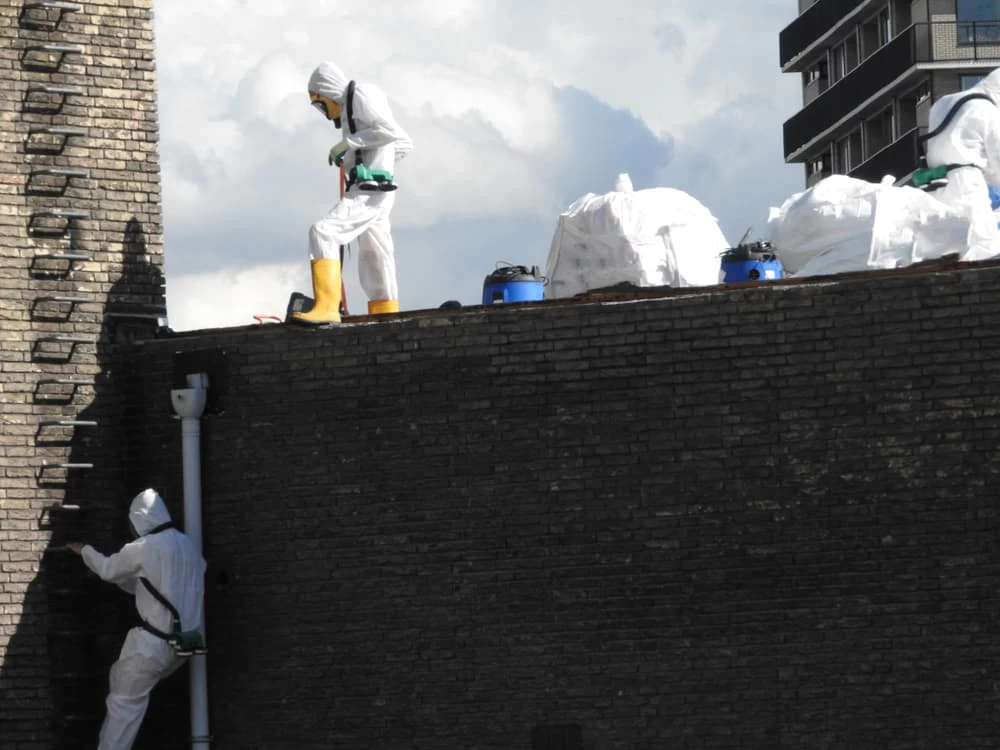
Once the scope is confirmed, we handle the permit application with the Town of Plattekill Building Department. That’s one less call you have to make to the office at 1915 Route 44/55 in Modena. Containment goes up, negative air pressure is established, and the removal is done by our NYS DOL-certified workers following full regulatory protocol. Waste is packaged and transported to a permitted disposal facility documented, not improvised.
After the work is complete, we conduct post-abatement air clearance testing by certified personnel. You receive the results in writing. If your insurance carrier is involved which happens often when storm damage or water intrusion is part of the picture we bill them directly and handle that coordination on our end. The project isn’t closed until the air is clear and the paperwork is in your hands.
Asbestos Abatement Services Plattekill Ulster County
What's Included When You Call Green Island Group
Asbestos abatement isn’t one-size-fits-all, especially in a community like Flint where the housing stock spans three centuries. The materials we encounter here 9×9 vinyl floor tiles and their black mastic adhesive, vermiculite attic insulation, pipe wrap on old boilers, textured popcorn ceilings from the 1960s and 70s, asbestos-cement siding on older outbuildings each require a specific removal approach. Asbestos tile removal, for example, involves different containment and handling procedures than popcorn ceiling removal or pipe insulation abatement. We’re trained and licensed across all of it.
Every project we handle includes the initial assessment, permit coordination with the Town of Plattekill, full containment setup, licensed removal, regulated waste disposal with documentation, and post-abatement air clearance testing with written results. If the situation involves mold, water damage, or partial demolition alongside the asbestos which is common in older Flint-area homes we handle that under the same project rather than handing you off to a second or third contractor.
For property owners upgrading homes under the Town of Plattekill’s short-term rental registration requirements, or for homeowners preparing for a real estate transaction where an inspection has flagged potential asbestos-containing materials, we can move quickly and provide the documentation your buyer, your insurer, or your municipality needs. If your situation is an emergency storm damage, unexpected material disturbance mid-renovation we’re available around the clock.
How do I know if my older Flint home actually contains asbestos?
The honest answer is that you can’t know for certain without testing. Visual inspection alone doesn’t confirm asbestos the fibers are microscopic, and many materials that contain asbestos look identical to those that don’t. What you can do is look at your home’s age and construction history. In Flint and the Town of Plattekill, homes built before 1980 are the primary concern. That includes farmhouses, colonial-era structures, and mid-century ranches that make up a large share of the local housing stock. Common locations include floor tiles and the adhesive beneath them, pipe and duct insulation, textured ceiling coatings, drywall joint compound, and roofing or siding materials on older outbuildings.
If you’re planning a renovation, a sale, or any work that involves disturbing those materials, testing before you start is the only way to know what you’re dealing with. We can coordinate the testing process and walk you through what comes next based on the results.
What does asbestos removal actually cost in Ulster County, NY?
In New York State, asbestos removal costs significantly more than national averages suggest, and that’s worth knowing upfront. National figures often cite averages around $2,000 but those numbers don’t reflect the NYS regulatory environment, which requires licensed workers, permitted disposal at approved facilities, post-abatement air monitoring, and 30-year record retention. In the Ulster County market, a realistic range runs from roughly $1,500 on the low end for a small, contained scope to $30,000 or more for a larger project involving multiple material types or a full pre-demolition abatement.
What drives the cost up or down is scope how many square feet, what type of material, how accessible the area is, and whether other hazards like mold or water damage need to be addressed at the same time. We provide clear estimates before any work begins, and for projects where insurance is involved, we bill the carrier directly. You shouldn’t be guessing at cost while your renovation sits on hold.
Does asbestos abatement in Flint require a permit from the town?
Yes, in most cases. Under NYS Industrial Code Rule 56, any asbestos abatement project that involves disturbing 10 square feet or 25 linear feet or more of asbestos-containing material requires project notification and must be performed by a licensed contractor. For renovation or demolition work in Flint, that means coordinating with the Town of Plattekill Building Department, located at 1915 Route 44/55 in Modena. The permit and notification process involves documentation that must be in place before abatement begins not something you can file after the fact.
We handle that coordination on your behalf. That’s not a premium add-on it’s part of how we run every project. If you’ve already started a renovation and discovered something mid-project, the right move is to stop work on that area and call us before proceeding. The permitting timeline is manageable, and getting it right protects you from liability down the road.
Is it safe to stay in my home during asbestos abatement?
It depends on the scope and location of the work. For smaller, well-contained projects a single room, a section of pipe in a basement it’s sometimes possible to remain in the home with proper containment barriers in place. For larger projects involving multiple areas, or work in high-traffic spaces like main living areas or HVAC systems, temporary relocation during the active abatement phase is typically the safer and more practical choice.
What makes the difference is containment. Licensed abatement requires negative air pressure enclosures that prevent fiber migration to unaffected areas of the home. When that’s set up correctly, the risk to other parts of the house is controlled. We walk through the specific scope with every client before work begins so you know exactly what to expect in terms of access, timeline, and re-occupancy. For Flint homeowners with families or pets, that conversation happens before the first day of work not the morning of.
What types of materials in Plattekill homes most commonly contain asbestos?
The materials we encounter most often in older Plattekill-area homes fall into a few predictable categories. Nine-by-nine inch vinyl floor tiles and especially the black adhesive mastic beneath them are one of the most common sources in mid-century homes. Pipe insulation wrapping on old steam and hot water heating systems is another, and it’s particularly relevant here because so many homes in this part of the Wallkill Valley still have older boiler systems. Textured popcorn ceilings installed before the late 1970s frequently contain asbestos, as does the joint compound used on drywall seams in homes built or renovated during that period.
Beyond the main residence, agricultural outbuildings, barns, and older garages on Plattekill properties sometimes have asbestos-cement roofing or siding that gets overlooked in standard residential assessments. Vermiculite attic insulation is another one it’s not always asbestos-containing, but a significant portion of vermiculite sold before 1990 was contaminated with asbestos from the Libby, Montana mine, and it needs to be tested before any attic work begins.
Why should I choose a licensed NYS contractor over a cheaper local option in Flint?
The short version is that unlicensed asbestos work in New York State is illegal and the consequences fall on the property owner, not just the contractor. If abatement is performed without a NYS Department of Labor Asbestos Handling License, without proper permitting, or without post-abatement air clearance, you have no documentation proving the work was done correctly. That creates real problems when you go to sell the property, file an insurance claim, or pull a permit for any future renovation. A buyer’s attorney or home inspector will ask for that paperwork, and “a local guy did it” is not a satisfactory answer.
Beyond the legal and transactional risk, there’s the practical one. Improper asbestos removal disturbing materials without containment, disposing of waste in regular trash, skipping air monitoring can leave fibers in the living space that no one can see. The NYS DOL license exists because this work has real health consequences when it’s done wrong. In a community like Flint where older homes are the norm and renovation activity is picking up, the difference between a licensed contractor and an unlicensed one is not a matter of preference it’s a matter of compliance, documentation, and your family’s safety.