Flushing's Older Buildings Hide More Than You Think
Most Flushing properties were built before 1980 which means asbestos abatement isn’t a rare situation here, it’s a common one. We handle the removal, the paperwork, and the NYC DEP compliance so you don’t have to figure it out alone.
I needed a professional consultation explanation of procedure for safe removal of Asbestos in my apartment complex. Without having an account yet, I was very impressed with the caring, knowledgeable and generous advice offered by Jessica, and will look forward to doing business in the future. Thank you so much! I feel much more informed about a sometimes scary endeavor. Peace. Nancy Silva Mineola, NY.
Mia Munoz
Used this company to clean up some water flood in my house. They were fast and easy to work with.very professional, Would recommend to anyone!
Nini Valle
Great company, had a flood and they responded quickly and efficiently. Billed my insurance company directly. I highly recommend this company!
joe colapietro, jr
I had pipe freeze in my basement right before a snow storm and they made to within an hour to help start the clean up process. They we by our side throughout the entire process and even helped with the insurance company. They did such a great job with the cleanup, repair, remidiation, I contracted them to perform the repairs and finishes in the basement. They came with enough manpower and material to get the job done. Leo and Jessica were nothing but a pleasure to deal with!!
Cristian Arredondo c
I had some water damage in my home and Green Island was able to take care of my issue quickly and effectively. I am very pleased with the work they did. They responded quickly and were very professional.
Michael M
Outstanding service! From the office to the field crew everyone was friendly, helpful and responsive. I highly recommend Green Island Group.
When you’re dealing with a pre-1960 building in Flushing whether it’s a two-family on a Bowne Park side street or a commercial space off Northern Boulevard asbestos isn’t a hypothetical. It’s in the floor tiles, the pipe insulation wrapping your steam heat system, the popcorn ceiling in the back bedroom. The question isn’t really whether it’s there. It’s whether you handle it right before someone gets hurt, a violation gets filed, or a deal falls through.
Once it’s properly removed and cleared, you get something most property owners don’t realize they were missing: documented proof that the space is safe. That matters when you’re pulling a DOB permit, closing a sale, turning over a rental unit, or bringing in a contractor for the next phase of work. The clearance certificate isn’t a formality in New York City, it’s what actually closes the loop.
For Flushing landlords managing older multi-family buildings, there’s another layer to this. NYC DEP can issue fines between $1,200 and $10,000 per infraction for abatement work that wasn’t done correctly or at all. Getting this handled by a licensed contractor isn’t just about safety. It’s about protecting the property and keeping your compliance record clean.
We’re a full-service environmental remediation contractor serving all five boroughs, including Queens. That means Flushing, Flushing Meadows, the corridors along Main Street and Northern Boulevard, and the dense residential blocks in between. We’re not a suburban outfit that occasionally crosses into the city. Our credentials are built specifically for this environment: NYS DOL Asbestos Contractor License, NYC General Contractor License, NYC BIC registration, USEPA Lead/RRP certification, and NYC MWBE certification.
That last one matters more than people realize. In Flushing’s commercial and multi-family property market, MWBE-certified contractors satisfy diversity procurement requirements that many building owners and managers are already working around. It’s a real credential government-verified, not self-reported.
Our team has direct experience filing ACP-7 project notifications through NYC DEP’s ARTS system, coordinating with independent air monitors, and delivering the clearance documentation that DOB and closing attorneys actually need. That’s not something you want to explain to a contractor for the first time on your job.
It starts with an inspection by a NYC DEP-Certified Asbestos Investigator. In Flushing’s older building stock especially the pre-1960 multi-family buildings with steam heat systems this step is not optional before renovation work begins. The investigator identifies which materials contain asbestos, determines whether they’ll be disturbed by the planned work, and produces the documentation NYC requires before a building permit is issued.
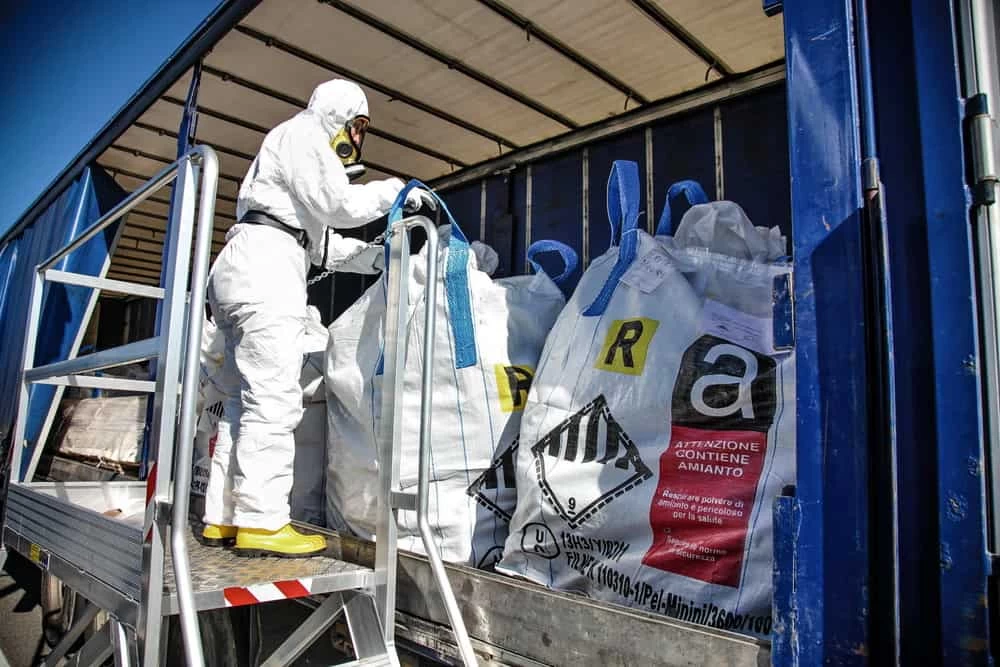
If abatement is needed, an ACP-7 project notification is filed with NYC DEP through the ARTS system at least seven days before work starts. From there, we set up proper containment, remove the asbestos-containing materials under regulated conditions, and package everything for licensed disposal which in New York City means BIC-registered trade waste handling, not just a dumpster.
After removal, an independent air monitoring firm verifies that fiber levels in the treated space meet clearance standards. That result gets documented in a written clearance certificate. If your project is in a mixed-use building on a busy block near the 7 train, or a residential unit where tenants are still in adjacent units, that verification step isn’t a technicality it’s the part that actually protects everyone. From there, if reconstruction is needed, we can handle that too, so you’re not starting over with a new contractor mid-project.
Asbestos abatement in Flushing covers more ground than most people expect going in. The most common materials found in this neighborhood’s housing stock include vinyl floor tiles particularly the 9-inch and 12-inch tiles that were standard in postwar apartment construction pipe insulation on steam heating systems, boiler wrap in basement mechanical rooms, ceiling texture, drywall joint compound, and roofing materials. Any renovation that touches walls, floors, plumbing, or HVAC in a pre-1980 building has a real chance of running into at least one of these.
We handle asbestos tile removal, popcorn ceiling removal, pipe and boiler insulation abatement, and full interior remediation for both residential and commercial properties. For Flushing’s landlords and building managers, that includes the DEP filing, the independent air monitoring coordination, and the clearance documentation not just the physical removal. And because lead paint and asbestos frequently co-exist in pre-1978 buildings, our USEPA Lead/RRP certification means both hazards can be addressed in the same project without bringing in a second contractor.
If your building has already received a DEP violation, or if you’re trying to satisfy a DOB permit requirement before construction begins, this is the process that resolves it documented, compliant, and done right the first time.
Do I need an asbestos survey before renovating my Flushing apartment building?
Yes and in New York City, this isn’t a recommendation, it’s a legal requirement. Before any renovation, alteration, or demolition work begins, the building owner must have a NYC DEP-Certified Asbestos Investigator conduct a survey to determine whether asbestos-containing materials will be disturbed. This applies to residential buildings, commercial spaces, and mixed-use properties alike.
In Flushing specifically, where the majority of the housing stock was built between the 1940s and 1970s, the likelihood of finding asbestos in floor tiles, pipe insulation, ceiling texture, or joint compound is high enough that skipping this step is a real risk not a theoretical one. If the survey finds that abatement is required and you proceed without a licensed contractor, NYC DEP can issue fines ranging from $1,200 to $10,000 per infraction. The survey is also what triggers the ACP-5 or ACP-7 filing that the NYC Department of Buildings needs before issuing your permit.
What is the difference between an ACP-5 and ACP-7 form for asbestos in NYC?
Both forms are part of New York City’s asbestos compliance process, but they serve different situations. The ACP-5 is completed by a DEP-Certified Asbestos Investigator and covers minor projects situations where the investigation determined that no asbestos-containing materials are present, that ACMs won’t be disturbed by the planned work, or that the scope qualifies as a minor project under NYC’s rules. The ACP-5 is what gets submitted to the NYC Department of Buildings to satisfy the asbestos requirement on a permit application.
The ACP-7 is for larger, regulated abatement projects. It’s a project notification form that the licensed abatement contractor files through NYC DEP’s online ARTS system at least seven days before work begins. This form triggers the formal abatement process including the requirement for independent air monitoring during the work. For commercial property owners and building managers in Flushing dealing with larger renovation scopes, understanding which form applies to your project is the first step in staying compliant. We handle both filings as part of the abatement process.
How long does asbestos abatement typically take in a Queens residential building?
For most residential projects a single apartment unit, a basement mechanical room, or a specific floor area abatement can typically be completed within one to five days once work begins. The timeline depends on the scope of the material being removed, the size of the space, and how many separate ACM types are involved. A boiler room with pipe and boiler insulation is a different job than a full-floor tile removal across multiple units.
What often extends the overall project timeline in New York City isn’t the removal itself it’s the required seven-day advance notice to NYC DEP before work can start on regulated projects, and the post-removal air clearance verification that has to happen before the space can be reoccupied or reconstruction can begin. In Flushing’s older multi-family buildings, where tenants may be in adjacent units during the work, that clearance step is especially important and can’t be rushed. Planning ahead for the full process not just the removal days is the best way to keep your renovation on schedule.
Is asbestos common in the older steam-heat apartment buildings throughout Flushing?
Very common. Steam heating systems were the standard in New York City’s pre-1960 multi-family housing stock, and the pipe insulation used in those systems was almost universally made with asbestos-containing materials during that era. That insulation wraps the pipes running through walls, ceilings, and mechanical rooms throughout Flushing buildings and in many of these older structures, it’s still there, either intact or in various stages of deterioration.
When pipe insulation becomes friable meaning it’s crumbling or flaking asbestos fibers can become airborne, which is when the health risk becomes real. Any work that touches those pipes, whether it’s a plumbing repair, a boiler replacement, or a pipe rerouting project, can disturb that insulation and trigger abatement requirements under NYC DEP rules. This is also why winter pipe failures in older Flushing buildings can create urgent abatement situations a burst pipe exposes the insulation, and the water damage and the asbestos issue have to be handled together. We respond to exactly these kinds of emergency situations and can coordinate both remediation needs under one project.
What happens if asbestos is found during a pre-sale inspection in Flushing, NY?
Finding asbestos during a pre-sale inspection doesn’t kill the transaction, but it does create a deadline. Buyers, their attorneys, and title companies will want documented proof that the material has been properly removed and that the space has passed post-removal air clearance verification before closing. That clearance certificate is the document that actually satisfies everyone at the table.
The practical challenge is timing. Abatement in New York City requires a seven-day advance notice filing with NYC DEP for regulated projects, plus the removal work itself, plus the post-clearance air monitoring all of which has to happen before you can hand over documentation. In a market where closing timelines are tight, getting this process started as soon as asbestos is identified is critical. We can move quickly once the scope is confirmed, and the clearance documentation we provide is formatted to meet the requirements that real estate attorneys and title companies in New York expect.
Does homeowners insurance typically cover asbestos abatement costs in New York City?
It depends on what caused the asbestos to become a problem. Standard homeowners insurance policies generally do not cover asbestos abatement as a standalone maintenance or renovation cost if you’re renovating and discover asbestos in your floor tiles or ceiling, that’s typically not a covered event. However, if asbestos-containing materials are disturbed as a direct result of a covered loss a burst pipe, a fire, storm damage then the abatement required to address that disturbance may be covered as part of the overall claim.
This distinction matters a lot in Flushing’s older building stock, where pipe failures during cold winters are a real and recurring issue. When a pipe bursts in a pre-1980 building and damages asbestos pipe insulation in the process, you’re dealing with a water damage claim and an abatement requirement at the same time. We bill insurance companies directly and have experience navigating exactly these combined claims which means you’re not stuck in the middle trying to explain the scope of work to an adjuster who’s never dealt with a steam-heat building in Queens.