Forest Hills Homes Have Asbestos. Here's What to Do About It.
If your Forest Hills home or apartment was built before 1980, asbestos is likely somewhere inside it and a renovation, pipe failure, or pre-sale inspection may have just made it your problem. We handle certified asbestos abatement in Forest Hills, NY with full NYC DEP compliance from start to finish.
I needed a professional consultation explanation of procedure for safe removal of Asbestos in my apartment complex. Without having an account yet, I was very impressed with the caring, knowledgeable and generous advice offered by Jessica, and will look forward to doing business in the future. Thank you so much! I feel much more informed about a sometimes scary endeavor. Peace. Nancy Silva Mineola, NY.
Mia Munoz
Used this company to clean up some water flood in my house. They were fast and easy to work with.very professional, Would recommend to anyone!
Nini Valle
Great company, had a flood and they responded quickly and efficiently. Billed my insurance company directly. I highly recommend this company!
joe colapietro, jr
I had pipe freeze in my basement right before a snow storm and they made to within an hour to help start the clean up process. They we by our side throughout the entire process and even helped with the insurance company. They did such a great job with the cleanup, repair, remidiation, I contracted them to perform the repairs and finishes in the basement. They came with enough manpower and material to get the job done. Leo and Jessica were nothing but a pleasure to deal with!!
Cristian Arredondo c
I had some water damage in my home and Green Island was able to take care of my issue quickly and effectively. I am very pleased with the work they did. They responded quickly and were very professional.
Michael M
Outstanding service! From the office to the field crew everyone was friendly, helpful and responsive. I highly recommend Green Island Group.
You stop guessing. That’s the first thing. When asbestos-containing materials are professionally removed and cleared by a licensed contractor, you have documentation not just someone’s word that the air in your home meets regulatory safety standards. That clearance certificate matters whether you’re finishing a renovation, going through a real estate transaction, or satisfying your co-op board’s compliance requirements.
For homeowners in Forest Hills Gardens, where Tudor and Colonial homes built between 1910 and 1940 are still standing in remarkably original condition, that documentation is especially important. These homes are valuable precisely because of their age and character but that same age means floor tiles, pipe insulation, plaster, and roofing materials installed during the peak era of asbestos use are almost certainly still in place. Renovating without addressing them isn’t just a health risk. It’s a legal exposure.
The Queens Boulevard apartment corridor tells a similar story. The large pre-war buildings lining that stretch of Forest Hills were constructed between the 1920s and 1950s. Boiler rooms, steam pipe systems, and original unit flooring in those buildings regularly contain regulated asbestos materials. When those systems age out and need replacement and they do the abatement process has to be done right, with the right permits, the right containment, and the right post-clearance verification. That’s what you get when the contractor actually knows how to work in New York City.
Every License NYC Requires Not Just the State Ones
We’re a full-service environmental remediation contractor serving all five New York City boroughs, including Queens and Forest Hills. The credentials matter here more than most places. New York State requires a NYS DOL Asbestos Contractor license to legally perform this work. New York City adds its own layer NYC DEP compliance, ACP-5 filing capability, and NYC BIC registration. We hold all of it, along with USEPA Lead/RRP certification, NYS DOL Mold licensing, IICRC, NADCA, and both NYC and NYS MWBE designation.
That’s not a list for the sake of a list. In a neighborhood like Forest Hills where co-op boards require contractor qualification packages, where pre-sale abatement has a closing date attached to it, and where buildings like those along Queens Boulevard have regulatory compliance obligations that go well beyond a simple removal job the difference between a contractor who’s NYC-compliant and one who isn’t is the difference between a smooth project and a stop-work order.
It starts with an inspection. Before anything is touched, a certified asbestos inspector surveys the site and identifies any regulated asbestos-containing materials. In Forest Hills, that typically means checking floor tiles and mastic adhesive, pipe and boiler insulation, popcorn ceilings, plaster walls, and HVAC duct insulation the materials most common in pre-1980 homes and apartment buildings throughout the neighborhood.
Once asbestos is confirmed, the NYC DEP notification process begins. In New York City, you can’t simply schedule a removal and start work. The proper filings have to be submitted and approved first including the ACP-5 form that’s required by the NYC Department of Buildings for most renovation and demolition projects. We manage that entire compliance process. You don’t have to figure out what forms go where or which agency needs what. That’s handled.
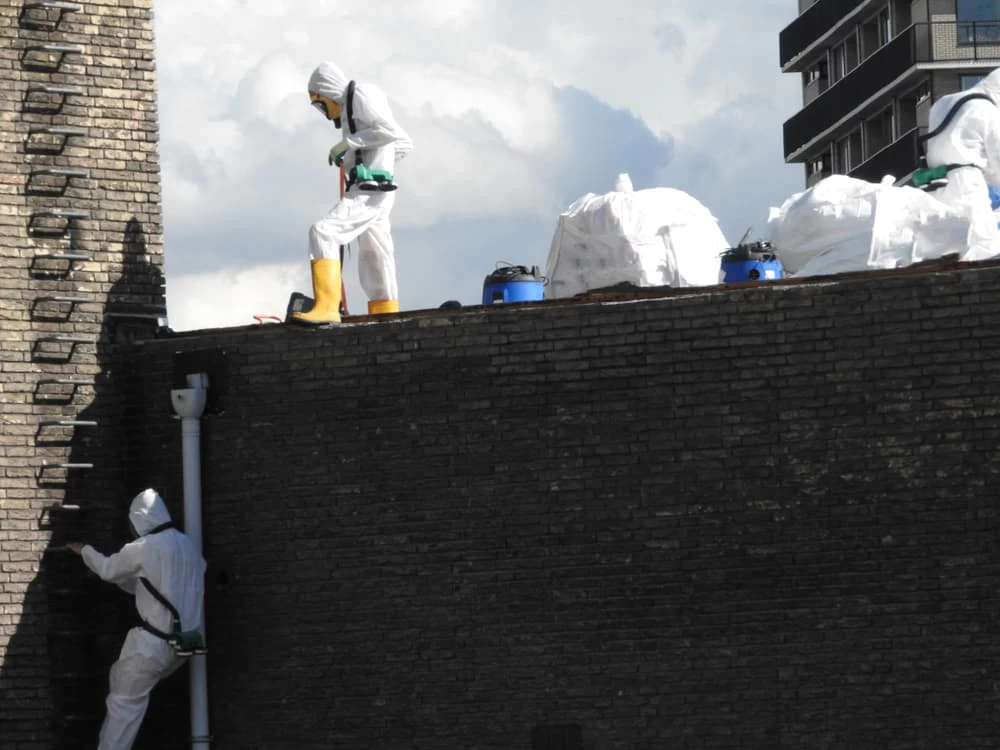
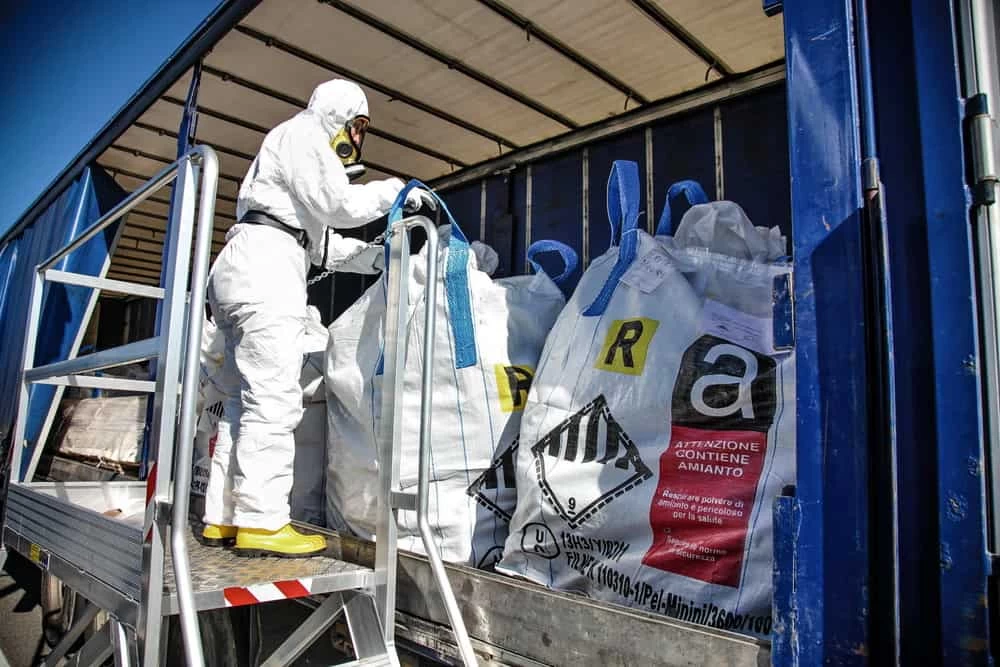
The physical removal happens under strict containment negative air pressure, sealed work zones, and Microtrap air scrubbers running throughout the job to prevent fiber migration into surrounding spaces. This matters especially in Forest Hills’s attached homes, co-op buildings, and multi-family structures, where neighboring units are feet away. After removal, post-clearance air quality testing is conducted before containment comes down. You receive a written clearance certificate. That’s the finish line not when the last bag goes out the door, but when the air test confirms the space is clean.
What's Included and Why It's Built for NYC Properties
Asbestos abatement in Forest Hills isn’t a single service it’s a coordinated process that covers inspection, removal, regulatory compliance, and post-clearance verification. We handle the full scope. That includes asbestos tile removal for the 9×9 vinyl asbestos floor tiles found in virtually every pre-1980 home and apartment in the neighborhood, asbestos popcorn ceiling removal for the acoustic ceilings still present in many Queens Boulevard co-op units, and Class I thermal system insulation removal for the pipe and boiler insulation found in the basement mechanical rooms of Forest Hills’s older apartment buildings the most regulated category of asbestos work.
Because pre-1978 construction in Forest Hills frequently involves both asbestos and lead paint, our USEPA Lead/RRP certification means both hazards can be addressed under one contractor and one contract. That matters when you’re managing a gut renovation in a Forest Hills Gardens home or a building-wide mechanical upgrade in a Queens Boulevard co-op you don’t want to coordinate two separate licensed contractors when one can handle it.
The full-service model extends beyond abatement as well. If water damage, mold, or structural issues are uncovered during the process which happens regularly in Forest Hills’s older housing stock we can handle remediation and reconstruction without bringing in outside contractors. One point of contact, full accountability, and direct insurance billing when the work is part of a covered claim.
Do I need NYC DEP approval before asbestos removal in Forest Hills?
Yes and this is one of the most important things to understand before hiring any contractor for asbestos work in Forest Hills or anywhere else in New York City. The NYC Department of Environmental Protection has regulated asbestos since 1987, and their requirements apply to every property in the five boroughs, including Queens. Before regulated asbestos-containing materials can be disturbed, the property owner must file the appropriate notification with NYC DEP. For most renovation and demolition projects, an ACP-5 form completed by a certified asbestos inspector must also be submitted to the NYC Department of Buildings.
This is separate from the New York State DOL licensing requirement, which also applies. A contractor can hold a valid NYS DOL Asbestos license and still not know how to navigate the NYC DEP filing process and that gap can result in stop-work orders, project delays, and fines. We handle the full NYC DEP compliance process as part of every project in Forest Hills, so the regulatory side is managed before a single tool touches the material.
How do I know if my Forest Hills Gardens home actually contains asbestos?
The honest answer is: if your home was built before 1980, there’s a very high probability that asbestos-containing materials are present somewhere. In Forest Hills Gardens specifically where most homes were constructed between 1910 and 1940 that probability is close to a certainty. The materials to look for include 9×9 vinyl floor tiles and the black mastic adhesive beneath them, pipe and boiler insulation in the basement, original plaster walls, roofing felt and shingles, and HVAC duct insulation. These were all standard construction materials during that era.
The only way to confirm it is through testing by a certified asbestos inspector. Visual identification alone isn’t enough and it’s not legally sufficient in New York City. Samples need to be collected and analyzed by an accredited laboratory. We can coordinate the inspection and testing process, and if asbestos is confirmed, move directly into the abatement process without you having to start over with a different contractor.
What does asbestos abatement typically cost for a Queens apartment or home?
Cost varies depending on the type of material, the quantity, the location within the building, and the category of asbestos work involved. As a general range, asbestos removal runs $5 to $20 per square foot for interior work, with most residential projects averaging somewhere around $2,000 to $3,500. In the New York City market including Forest Hills costs tend to run toward the higher end of that range because of higher labor rates, NYC DEP compliance overhead, and permit fees associated with the NYC Department of Buildings filing requirements.
Class I work which covers thermal system insulation on pipes and boilers, the type commonly found in the basement mechanical rooms of Forest Hills’s pre-war apartment buildings is more complex and typically costs more than floor tile or ceiling removal. The scope of the project, the accessibility of the materials, and whether lead paint remediation needs to happen simultaneously all affect the final number. The best way to get an accurate figure is a site assessment, not a phone estimate.
My co-op board requires contractor documentation what does Green Island Group provide?
Co-op boards in Forest Hills particularly in the large pre-war buildings along Queens Boulevard typically require a contractor qualification package before approving any renovation work that may disturb asbestos-containing materials. That package usually needs to include proof of NYS DOL Asbestos Contractor licensing, NYC BIC registration, NYC General Contractor licensing, current certificate of insurance with the building named as an additional insured, individual worker certifications, and a written description of the containment and removal procedures to be used.
We provide all of it. The NYS DOL license, NYC BIC registration, NYC General Contractor license, USEPA certifications, worker certifications, containment protocols, post-removal air quality reports, and the final clearance certificate are all part of the documentation package delivered at project completion. If your co-op board has a specific checklist, bring it. The credentials are there to satisfy it.
Can asbestos abatement be completed before a real estate closing in Forest Hills?
It can, but the timeline needs to be realistic. The NYC DEP notification and filing process has to happen before work begins there’s no legal way to skip it, and attempting to do so creates serious liability for both the property owner and the contractor. Depending on the scope of the project and the specific materials involved, the full process from inspection to post-clearance certification typically takes anywhere from a few days to a couple of weeks for a standard residential project in Forest Hills.
If you’re under contract on a Forest Hills home or co-op unit and a pre-sale inspection has flagged asbestos, the first call should be to a licensed contractor who can assess the scope quickly and give you a realistic timeline. We can mobilize fast and are available around the clock but the process still has to follow the regulatory steps. The clearance certificate you receive at the end is what your real estate attorney, your buyer’s agent, and your buyer’s inspector will all need to see before closing proceeds.
Is asbestos in old floor tiles dangerous if I'm not planning to renovate?
Asbestos-containing floor tiles that are intact and undisturbed generally don’t pose an immediate airborne risk. The danger comes from disturbance cutting, sanding, breaking, or removing them without proper containment releases asbestos fibers into the air, and that’s when exposure becomes a health concern. In Forest Hills homes and apartments where the original 9×9 vinyl tiles are still in place under carpet or newer flooring, the material may be stable for now.
That said, “stable for now” has a shelf life. Floor tiles in older Forest Hills homes and apartment buildings are aging, and in buildings with steam heat which is common throughout the neighborhood seasonal expansion and contraction cycles can cause tiles to crack or loosen over time. If you’re planning any renovation that involves the floor, or if existing tiles are already damaged, that’s when professional assessment and abatement becomes necessary. Leaving damaged asbestos-containing materials in place isn’t a safe alternative it’s a deferred problem that tends to get more complicated and more expensive the longer it waits.