Fort Salonga’s older housing stock hides asbestos in places most contractors miss and in a market where homes sell for well over a million dollars, getting it wrong isn’t an option. We handle asbestos abatement the right way, start to finish.
I needed a professional consultation explanation of procedure for safe removal of Asbestos in my apartment complex. Without having an account yet, I was very impressed with the caring, knowledgeable and generous advice offered by Jessica, and will look forward to doing business in the future. Thank you so much! I feel much more informed about a sometimes scary endeavor. Peace. Nancy Silva Mineola, NY.
Mia Munoz
Used this company to clean up some water flood in my house. They were fast and easy to work with.very professional, Would recommend to anyone!
Nini Valle
Great company, had a flood and they responded quickly and efficiently. Billed my insurance company directly. I highly recommend this company!
joe colapietro, jr
I had pipe freeze in my basement right before a snow storm and they made to within an hour to help start the clean up process. They we by our side throughout the entire process and even helped with the insurance company. They did such a great job with the cleanup, repair, remidiation, I contracted them to perform the repairs and finishes in the basement. They came with enough manpower and material to get the job done. Leo and Jessica were nothing but a pleasure to deal with!!
Cristian Arredondo c
I had some water damage in my home and Green Island was able to take care of my issue quickly and effectively. I am very pleased with the work they did. They responded quickly and were very professional.
Michael M
Outstanding service! From the office to the field crew everyone was friendly, helpful and responsive. I highly recommend Green Island Group.
Your renovation moves forward. Your closing doesn’t stall. Your family isn’t breathing something that was quietly sitting inside your walls for forty years. That’s what proper asbestos abatement actually delivers not just a clean report, but real peace of mind that the work was done by someone who knew what they were doing and followed the law doing it.
Fort Salonga sits at the eastern edge of Long Island’s historic Gold Coast, and a significant share of the homes here were built between the 1940s and 1980s exactly the window when asbestos was standard in floor tiles, pipe insulation, popcorn ceilings, joint compounds, and roofing materials. The salt air and humidity cycling that comes with living near the Long Island Sound accelerates the breakdown of those older materials. What was once intact and undisturbed can become friable meaning it crumbles, and when it crumbles, it releases fibers. That’s when exposure risk becomes real.
The other thing worth knowing: Fort Salonga straddles two towns. If your home sits on the Smithtown side of Bread and Cheese Hollow Road, you’re dealing with a different building department than your neighbor on the Huntington side. Either way, New York State law requires licensed contractors for asbestos work and the notification, air monitoring, and disposal requirements don’t bend for anyone. When you work with a contractor who knows this market, that compliance burden lands on them, not you.
We’re a Long Island–based environmental services company that has been handling asbestos abatement, asbestos removal, and asbestos remediation across Suffolk County for years. We’re not a national company running a landing page from out of state. When you call us, you reach a local team that knows North Shore homes the materials used in Gold Coast-era construction, the challenges of large wooded lots, and exactly what the Towns of Huntington and Smithtown each require before work begins.
We work in Fort Salonga specifically because the homes here demand a higher level of care. These aren’t quick-flip properties. They’re significant investments many of them near Crab Meadow Beach, along Sunken Meadow Road, or tucked into the wooded bluffs overlooking the Sound and the families living in them deserve a contractor who treats the work accordingly.
Every project we take on is fully licensed under New York State Industrial Code Rule 56. That means proper notification to the NYSDOL, certified air monitoring throughout the job, and documented disposal through permitted waste transporters. You get the full paper trail because in this market, that documentation matters.
It starts with an inspection. Before anything is removed, we identify what’s there, where it is, and whether it’s intact or already deteriorating. In Fort Salonga’s older homes particularly those built in the 1950s through 1970s we commonly find asbestos in 9×9 vinyl floor tiles and the black mastic adhesive beneath them, in popcorn and textured acoustic ceilings, in pipe and boiler insulation, and in older roofing and siding materials. The inspection tells us exactly what we’re dealing with.
From there, we handle the required notification to the New York State Department of Labor at least ten business days before work begins for projects above threshold quantities. This step is mandatory under ICR 56, and skipping it creates real legal exposure for the property owner. We manage that process entirely, whether your home falls under the Town of Huntington’s jurisdiction or the Town of Smithtown’s, so you’re not navigating two different municipal systems on your own.
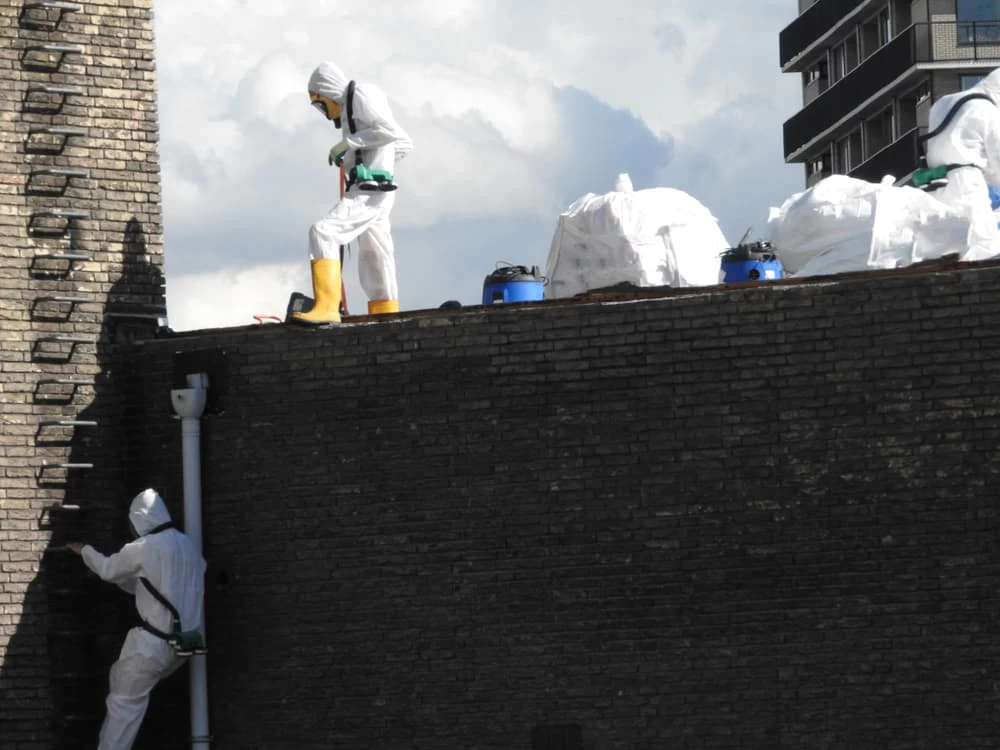
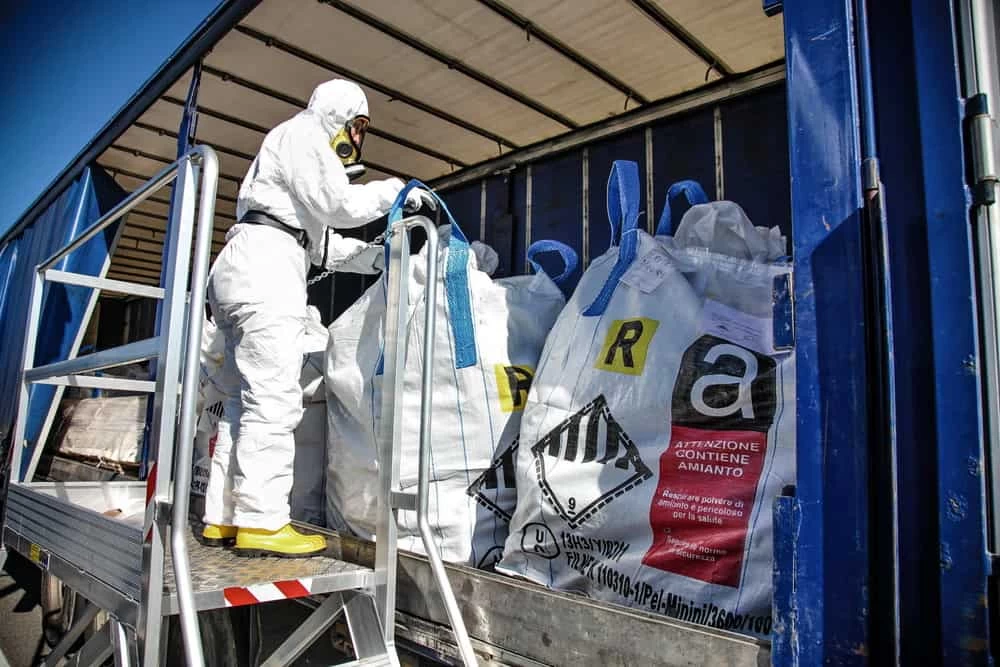
Once the work begins, the affected areas are fully contained and sealed off. Air monitoring runs throughout the job. When removal is complete, all asbestos-containing materials are packaged, labeled, and transported by a permitted waste hauler to an approved disposal facility. Then we conduct final air clearance testing the documentation you need for your contractor, your real estate attorney, or your own records. Clean, compliant, and closed out properly.
Asbestos abatement isn’t one-size-fits-all, and in Fort Salonga, the range of materials we encounter reflects just how much the housing stock here has aged. Asbestos tile removal is one of the most common jobs we handle the 9×9 vinyl tiles installed in kitchens, bathrooms, and basements throughout the 1950s and 60s almost always contain asbestos, and the adhesive beneath them frequently does too. Both need to come out properly, not just the tiles on top.
Popcorn ceiling removal is another major service in this market. If your home was built or renovated before 1978 and still has that textured acoustic ceiling, there’s a real chance it contains asbestos. Scraping it without proper containment isn’t just dangerous it’s illegal in New York State. We set up full containment, remove the material safely, conduct air clearance testing, and leave you with documentation that satisfies any inspector or contractor who comes in after us.
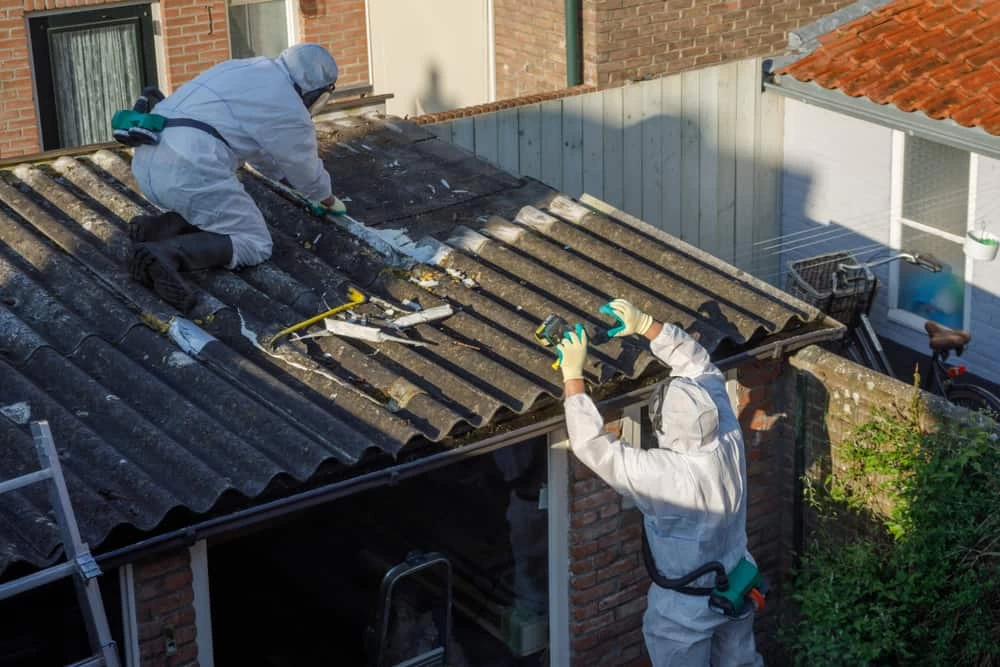
Beyond tiles and ceilings, we also handle pipe insulation, duct wrap, joint compound, roofing materials, and cement-asbestos siding all of which appear regularly in the older homes along Fort Salonga Road and throughout the hamlet’s wooded residential streets. Whatever the material, the process is the same: licensed removal, proper disposal, and full clearance documentation so your project can move forward without legal or health liability hanging over it.
Does my Fort Salonga home actually need asbestos testing before I renovate?
If your home was built before 1980, the honest answer is yes and in many cases it’s not just a good idea, it’s a legal requirement. New York State Industrial Code Rule 56 mandates that any renovation or demolition project disturbing above-threshold quantities of building materials in a pre-1980 structure must be preceded by an asbestos survey conducted by a licensed inspector. The threshold isn’t high: 10 linear feet of pipe insulation, 25 square feet of surface material, or 10 cubic feet of other materials.
Fort Salonga has a substantial inventory of homes built during the 1950s, 60s, and 70s exactly the era when asbestos was used in floor tiles, ceiling textures, pipe insulation, joint compounds, and roofing. If you’re planning a kitchen gut, a bathroom remodel, a basement renovation, or anything that involves disturbing original materials, testing isn’t optional. Getting it done before your contractor starts work protects you legally and keeps your project from hitting a costly, unexpected stop mid-renovation.
How long does asbestos abatement typically take for a residential project in Fort Salonga?
For most residential jobs a single room, a section of flooring, or a popcorn ceiling the physical removal work typically takes one to three days. But the full timeline is longer than that, because New York State requires at least ten business days of advance notification to the NYSDOL before work can begin on projects above threshold quantities. That notification window is mandatory, not something that can be compressed, so planning ahead matters.
After removal, air clearance testing adds another step before the space can be released for other contractors or occupants. In practice, most Fort Salonga homeowners should budget two to three weeks from initial inspection to final clearance sometimes faster for smaller scopes, sometimes longer for larger or more complex projects. If you’re working against a real estate closing deadline or a contractor start date, the earlier you call, the more flexibility you have. Waiting until the last week before a closing to discover asbestos is one of the more stressful situations we see, and it’s entirely avoidable.
What does asbestos abatement cost for a home in Fort Salonga, NY?
Cost depends on the scope how much material is present, where it’s located, and how accessible it is. For a standard asbestos tile removal covering a few hundred square feet, you’re generally looking at somewhere in the range of $1,500 to $4,000. A popcorn ceiling removal for a single room might run $1,000 to $2,500. Larger projects involving pipe insulation, multiple rooms, or older mechanical systems can go higher.
What’s worth keeping in mind in the Fort Salonga market specifically is that the cost of proper abatement is almost always a fraction of what improper handling ends up costing. Homes here sell for $850,000 to well over $2 million. A botched removal or asbestos discovered post-sale that wasn’t disclosed creates legal liability, failed inspections, and renegotiation leverage for buyers that can dwarf what the abatement itself would have cost. The investment in doing it right is straightforward when you frame it against what’s actually at stake.
Can I remove asbestos floor tiles or a popcorn ceiling myself in New York?
Legally, New York State takes a strict position on this. Any asbestos project above the threshold quantities defined under Industrial Code Rule 56 must be performed by a licensed asbestos contractor not a general contractor, not a handyman, and not the homeowner. The licensing requirement exists because improper disturbance of asbestos-containing materials releases fibers that are invisible to the naked eye and remain airborne for hours. There’s no safe DIY method for managing that exposure.
Beyond the health risk, the legal exposure is real. If you disturb asbestos without proper licensing and notification, you’re potentially liable under both state and federal regulations including EPA NESHAP requirements that apply to renovation and demolition. In a community like Fort Salonga, where homes are high-value and transactions are scrutinized carefully, the documentation trail from a licensed abatement matters. Buyers, inspectors, and attorneys will ask for it. A DIY removal with no clearance testing and no waste disposal records creates a problem that follows the property.
Does asbestos abatement require permits from the Town of Huntington or Smithtown?
This is one of the more nuanced aspects of doing abatement work in Fort Salonga specifically, because the hamlet is split between two municipalities. Homes west of Bread and Cheese Hollow Road fall under the Town of Huntington; homes to the east fall under the Town of Smithtown. Both towns may require building permits for renovation work that triggers asbestos abatement, and their processes differ.
At the state level, the NYSDOL notification requirement under ICR 56 applies regardless of which town you’re in that’s non-negotiable. But at the local level, permit requirements can vary based on the scope of the renovation, the type of work being done, and whether the abatement is part of a larger permitted project. We work across both Huntington and Smithtown jurisdictions regularly, so we know what each town’s building department expects and can help you understand what’s required before work begins rather than discovering a compliance gap after the fact.
Is asbestos common in Fort Salonga homes, or is this more of a rare concern?
It’s more common than most homeowners expect. Fort Salonga’s housing stock includes a significant number of homes built between the 1940s and the late 1970s the exact window when asbestos was widely used in residential construction across the country. Floor tiles, pipe and boiler insulation, popcorn and textured ceilings, roofing shingles, cement-asbestos siding, duct wrap, and joint compounds all routinely contained asbestos during that era. In many homes, those materials are still in place, undisturbed, and have been for decades.
The North Shore’s coastal environment adds another layer to this. Salt air and the humidity cycling that comes with living near the Long Island Sound accelerates the natural deterioration of older building materials. Asbestos-containing pipe insulation and exterior materials near waterfront or bluff properties including homes near Crab Meadow Beach or along the Sound-facing slopes of Fort Salonga can become friable faster than similar materials in more inland locations. Friable asbestos is the version that actually poses an inhalation risk. If your home is older and you haven’t had it assessed, the question isn’t really whether asbestos might be present it’s whether it’s been properly identified and accounted for.