If your home sits on Saratoga Road, Valley Forge Drive, or anywhere in that Prospect Hill development there’s a real chance asbestos is somewhere inside it. We handle licensed asbestos abatement in Fostertown, NY, so you know exactly what you’re dealing with and exactly what happens next.
I needed a professional consultation explanation of procedure for safe removal of Asbestos in my apartment complex. Without having an account yet, I was very impressed with the caring, knowledgeable and generous advice offered by Jessica, and will look forward to doing business in the future. Thank you so much! I feel much more informed about a sometimes scary endeavor. Peace. Nancy Silva Mineola, NY.
Mia Munoz
Used this company to clean up some water flood in my house. They were fast and easy to work with.very professional, Would recommend to anyone!
Nini Valle
Great company, had a flood and they responded quickly and efficiently. Billed my insurance company directly. I highly recommend this company!
joe colapietro, jr
I had pipe freeze in my basement right before a snow storm and they made to within an hour to help start the clean up process. They we by our side throughout the entire process and even helped with the insurance company. They did such a great job with the cleanup, repair, remidiation, I contracted them to perform the repairs and finishes in the basement. They came with enough manpower and material to get the job done. Leo and Jessica were nothing but a pleasure to deal with!!
Cristian Arredondo c
I had some water damage in my home and Green Island was able to take care of my issue quickly and effectively. I am very pleased with the work they did. They responded quickly and were very professional.
Michael M
Outstanding service! From the office to the field crew everyone was friendly, helpful and responsive. I highly recommend Green Island Group.
The renovation gets moving again. The closing doesn’t fall apart. You stop wondering whether what’s under your kitchen floor is something your family should be breathing. That’s what changes and it’s not a small thing.
Most of the homes built in Fostertown’s Prospect Hill subdivision during the 1960s were constructed with materials we now know contain asbestos. Vinyl floor tiles, popcorn ceilings, pipe insulation wrap, joint compound it was standard practice then. That doesn’t make it dangerous the moment you find it, but it does mean you need someone who knows what they’re looking at and is licensed to handle it properly under New York State law.
Fostertown also has something a lot of nearby communities don’t Gidneytown Creek running right through the hamlet. Homes near that creek have seen more moisture over the years, more basement seepage, more pipe deterioration. When water gets into materials that contain asbestos, those materials can become friable, meaning fibers can release into the air. That’s when a manageable situation becomes an urgent one. Getting ahead of it or responding quickly when it happens is exactly what this work is about.
We’ve been doing licensed environmental remediation work across the New York metro area for over 12 years. We’re not a franchise with a local phone number we’re an independently owned company with a real track record in Orange County and a NYS Department of Labor Asbestos Contractor License you can verify yourself on the DOL website right now.
State agencies don’t hand out contracts to companies they haven’t scrutinized. We’ve done asbestos abatement work for the NYS Office of General Services, the Dormitory Authority of the State of New York, and the NYS Office of Mental Health, among others. That kind of institutional track record doesn’t happen by accident it happens because the work gets done right, documented correctly, and held to a standard that public agencies require.
For a Fostertown homeowner with a 1960s house and a renovation on hold, that history matters. You’re not a test case for us. This is work we know.
No Guesswork Here's What the Process Actually Looks Like
It starts with an assessment. Before anything is removed, the suspected materials in your home get evaluated sometimes through bulk sampling sent to an accredited lab, sometimes through a visual inspection by a trained professional depending on what’s present and what your situation requires. You’ll know what you’re dealing with before any work begins.
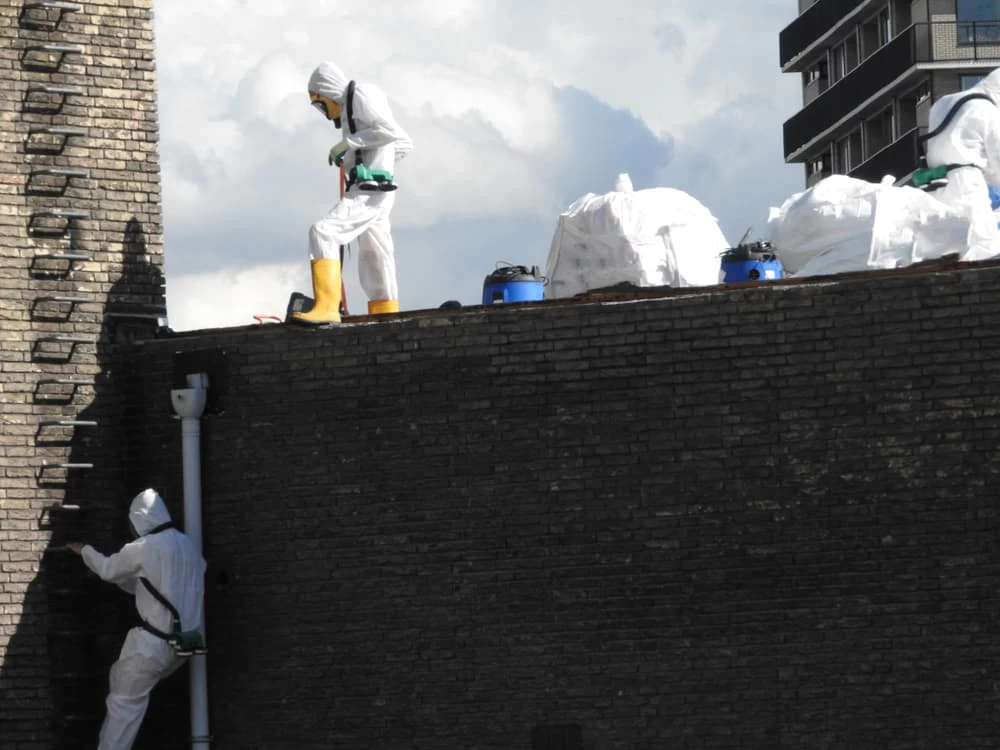
If abatement is needed, the work area gets properly contained and under negative air pressure before any material is disturbed. That’s not optional it’s required under New York State’s 12 NYCRR Part 56 regulations, which govern every licensed asbestos project in Orange County and the Town of Newburgh. Our crews are NYS Asbestos Handler Certified, which means they’ve completed the required training and aren’t learning on the job in your home.
After removal, an independent industrial hygienist someone with no financial stake in the outcome conducts post-abatement air monitoring in your home. If the air clears, you get a written clearance certificate. That document is what your real estate attorney, your lender, and your own peace of mind actually need. We don’t consider the job done until that certificate is in your hands.
Asbestos Tile and Popcorn Ceiling Removal, Fostertown
Every Hazard in Your Home, Handled Under One Roof
The most common materials we find in Fostertown’s 1960s housing stock are 9×9 vinyl asbestos floor tiles almost every home from that era has them somewhere, usually in kitchens, bathrooms, and basements. Spray-applied acoustic ceilings and popcorn ceiling texture from the same period frequently tested positive for asbestos as well. Pipe insulation in mechanical rooms and crawlspaces is another common find, especially in homes that have had any water issues near the creek or in low-lying areas off Fostertown Road.
We handle asbestos tile removal, popcorn ceiling removal, pipe insulation abatement, and full interior remediation for residential and commercial properties throughout the Town of Newburgh. What makes a real difference for most homeowners is that we also handle mold remediation, lead paint removal, and water damage restoration because in a 60-year-old Fostertown home, these problems rarely show up alone. You shouldn’t have to manage four separate contractors while your project sits on hold.
If your insurance covers any part of the damage, we bill them directly. And if the cost of an unplanned abatement project isn’t in your budget right now, we offer 0% APR financing up to $200,000 through a third-party lender. The goal is to make sure cost doesn’t become the reason you delay work that protects your family and your home.
Do homes in Fostertown's 1960s subdivisions actually contain asbestos?
The short answer is: very likely, yes. The Prospect Hill development behind Fostertown School the streets named after Revolutionary War battles, built in the 1960s was constructed during the peak era of asbestos use in American residential building. Vinyl floor tiles manufactured before 1980 have a high probability of containing asbestos, and 9×9 tiles were the standard in that era. Spray-applied ceiling textures, pipe insulation, and the joint compound used in drywall installation were also commonly asbestos-containing during this period.
That doesn’t mean every material in your home is a hazard right now. Asbestos that’s intact and undisturbed generally stays that way. The risk comes when materials are damaged, deteriorating, or disturbed during renovation work. If you’re planning to pull up old flooring, open walls, or remove a popcorn ceiling in a Fostertown home built before 1980, testing before you start isn’t just smart in many renovation scenarios, it’s required under EPA and New York State guidelines.
What should I do if a contractor finds suspected asbestos mid-renovation?
Stop the work in that area immediately. Don’t try to remove the material yourself, don’t let the contractor continue disturbing it, and don’t vacuum the area with a regular household vacuum standard vacuums spread asbestos fibers rather than capturing them. Seal off the area as best you can and call a licensed asbestos contractor.
This situation happens regularly in Fostertown and throughout the Town of Newburgh a contractor pulls up a kitchen floor or opens a basement ceiling and finds something that doesn’t look right. The renovation stops, the homeowner is frustrated, and suddenly there’s a timeline problem. We’re available 24 hours a day, seven days a week, specifically because these discoveries don’t happen on Monday morning during business hours. We can assess the situation quickly, give you a clear picture of what you’re dealing with, and get the project back on track with the proper abatement completed and documented.
How long does asbestos abatement take in a typical Fostertown home?
It depends on what’s being removed and how much of it there is. A single room of vinyl asbestos floor tile removal can often be completed in one to two days. A larger scope multiple rooms, pipe insulation throughout a basement, or a full popcorn ceiling removal across an entire floor typically runs three to five days for the abatement itself, plus additional time for post-abatement air monitoring and clearance.
One thing that affects timing in older Fostertown homes specifically is the likelihood of finding multiple hazardous materials in the same space. A 1960s basement, for example, might have asbestos pipe insulation, lead paint on the walls, and mold from years of moisture near the creek. When that’s the case, the scope of work expands, but handling it all in one mobilization is faster and less disruptive than bringing in separate contractors at different times. We’ll give you a realistic timeline at the assessment stage not a number designed to close the sale, but an honest estimate based on what’s actually there.
Do I need a permit for asbestos abatement in the Town of Newburgh?
The permitting and notification requirements depend on the scope of the project. Under New York State’s 12 NYCRR Part 56, all asbestos abatement work must be performed by a licensed contractor that applies everywhere in the state, including Fostertown and the Town of Newburgh. For larger demolition or renovation projects that will disturb asbestos-containing materials above certain thresholds, NESHAP notification to the NYS Department of Environmental Conservation is also required before work begins.
For most residential abatement projects a floor tile removal, a popcorn ceiling, pipe insulation in a basement the primary requirement is that the contractor holds a valid NYS DOL Asbestos Contractor License and that workers hold current NYS Asbestos Handler Certification. What you want to avoid is hiring someone who tells you permits and notifications aren’t necessary. In New York State, unlicensed asbestos work creates real legal and financial liability for the property owner, not just the contractor. We handle all required notifications and documentation as part of the job.
Will I need to leave my home during asbestos removal in Fostertown?
In most cases, yes at least for the area being worked on, and often for the duration of the abatement. The work area is sealed under negative air pressure and isolated from the rest of the home, but the safest approach for most residential projects is for occupants to stay elsewhere while active abatement is underway. For a one- or two-day project, that typically means a short stay with family or a hotel night. For larger scopes, the timeline is longer.
The more important point is that you shouldn’t reoccupy the abated space until post-abatement air monitoring has been completed by an independent industrial hygienist and a written clearance certificate has been issued. That’s not just a precaution it’s the documented proof that fiber levels are below regulatory thresholds and the space is safe. Some contractors skip this step or treat it as optional. We don’t. The clearance certificate is part of every project we complete, and it’s the document that matters most if you’re selling your home or need to show a lender the work was done correctly.
How much does asbestos abatement cost for a home in Fostertown, NY?
Cost varies based on the type of material, the square footage or linear footage involved, and whether there are multiple hazards being addressed in the same project. As a general reference point for the Orange County area: asbestos floor tile removal typically runs $5 to $15 per square foot, popcorn ceiling removal runs $3 to $8 per square foot, and pipe insulation removal runs $25 to $75 per linear foot. A single-room project might come in around $1,500 to $4,000. A larger whole-home scope multiple materials, multiple areas can reach $15,000 to $30,000 or more.
For Fostertown homeowners, the more useful way to think about cost is relative to what you’re protecting. The median home value in this area is over $700,000. An abatement project that’s documented correctly, cleared by an independent hygienist, and performed by a licensed contractor protects that asset and produces the paperwork that holds up in a real estate transaction. We offer 0% APR financing up to $200,000 for qualifying projects, which means an unplanned abatement discovery doesn’t have to derail your renovation or your budget. Get an assessment first, understand the actual scope, and then make a decision based on real numbers.