If your Freeport home was built before 1980 and you’re planning any kind of renovation, asbestos abatement isn’t optional — it’s the law. We handle every step so you don’t have to figure it out alone.
I needed a professional consultation explanation of procedure for safe removal of Asbestos in my apartment complex. Without having an account yet, I was very impressed with the caring, knowledgeable and generous advice offered by Jessica, and will look forward to doing business in the future. Thank you so much! I feel much more informed about a sometimes scary endeavor. Peace. Nancy Silva Mineola, NY.
Mia Munoz
Used this company to clean up some water flood in my house. They were fast and easy to work with.very professional, Would recommend to anyone!
Nini Valle
Great company, had a flood and they responded quickly and efficiently. Billed my insurance company directly. I highly recommend this company!
joe colapietro, jr
I had pipe freeze in my basement right before a snow storm and they made to within an hour to help start the clean up process. They we by our side throughout the entire process and even helped with the insurance company. They did such a great job with the cleanup, repair, remidiation, I contracted them to perform the repairs and finishes in the basement. They came with enough manpower and material to get the job done. Leo and Jessica were nothing but a pleasure to deal with!!
Cristian Arredondo c
I had some water damage in my home and Green Island was able to take care of my issue quickly and effectively. I am very pleased with the work they did. They responded quickly and were very professional.
Michael M
Outstanding service! From the office to the field crew everyone was friendly, helpful and responsive. I highly recommend Green Island Group.
Most Freeport homeowners don’t find out they have an asbestos problem until a contractor stops mid-job and tells them work can’t continue. That moment — the stopped renovation, the delayed timeline, the sudden scramble for a licensed abatement contractor — is exactly what proper planning prevents. When asbestos removal is handled correctly from the start, your renovation moves forward on schedule and you’re not paying emergency rates to fix a situation that didn’t have to happen.
Freeport’s housing stock makes this more relevant here than in most Nassau County towns. ZIP code 11520 data confirms the majority of homes in this village were built before 1940 — and significant construction continued through the 1950s, 60s, and 70s. That means nearly every era of asbestos-containing materials is potentially sitting in your walls, floors, ceilings, or mechanical systems. Pre-war pipe insulation, 1950s vinyl floor tiles, 1960s popcorn ceilings, 1970s joint compound — these aren’t rare findings in Freeport. They’re common ones.
Then there’s the flood factor. Nearly 4,000 Freeport homes were submerged in up to six feet of saltwater during Hurricane Sandy, and South Freeport streets like South Long Beach Avenue have flooded repeatedly since. Every gut renovation triggered by flood damage in a pre-1980 home is a potential asbestos disturbance event. Getting ahead of that — with a licensed survey and a clear abatement plan — means your rebuild doesn’t stall out halfway through because someone found something unexpected behind the drywall.
We Know Freeport's Code — and We Work It Every Day
Green Island Group is a licensed asbestos abatement contractor serving Freeport and the surrounding Nassau County communities. Every project we take on — from a single-room tile removal to a full pre-demolition abatement — is handled under New York State Industrial Code Rule 56, the regulation that governs every asbestos project in this state. That’s not a marketing point. It’s the legal baseline, and it’s what separates contractors who can legally do this work from those who can’t.
What that means for you practically: we handle the NYS Department of Labor project notification, the licensed survey, the certified removal, the air monitoring, the regulated waste disposal, and the final clearance certificate. You don’t have to coordinate between multiple vendors or wonder whether a step got skipped.
Freeport is a community we know well — the pre-war homes near downtown, the post-war Cape Cods off Merrick Road, the flood-damaged properties in South Freeport that have been through multiple rounds of renovation since Sandy. This isn’t a town we show up to once in a while. It’s part of the South Shore market we serve regularly.
No Surprises — Here's Exactly What the Process Looks Like
It starts with an asbestos survey. Before any abatement work begins, a NYS-licensed inspector assesses your home and collects samples from any materials that may contain asbestos — floor tiles, ceiling texture, pipe insulation, drywall compound, roofing, whatever is relevant to your specific project. The lab results tell us exactly what we’re dealing with, where it is, and what level of abatement is required. For any Freeport home built before 1987, this step is legally required before renovation or demolition work proceeds.
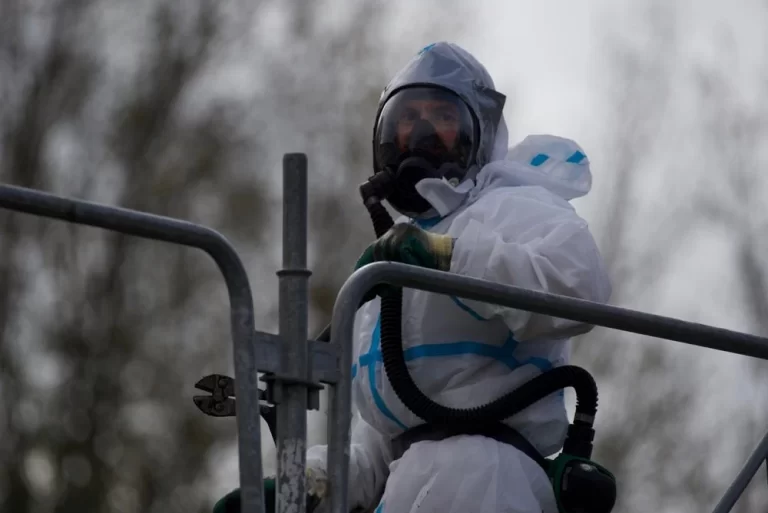
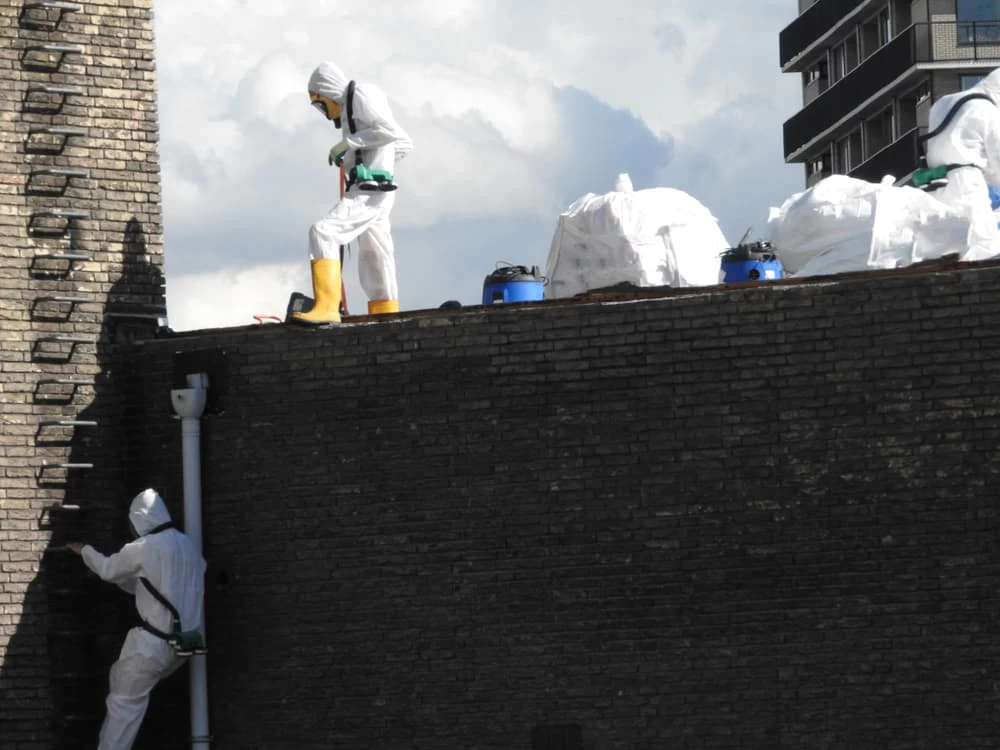
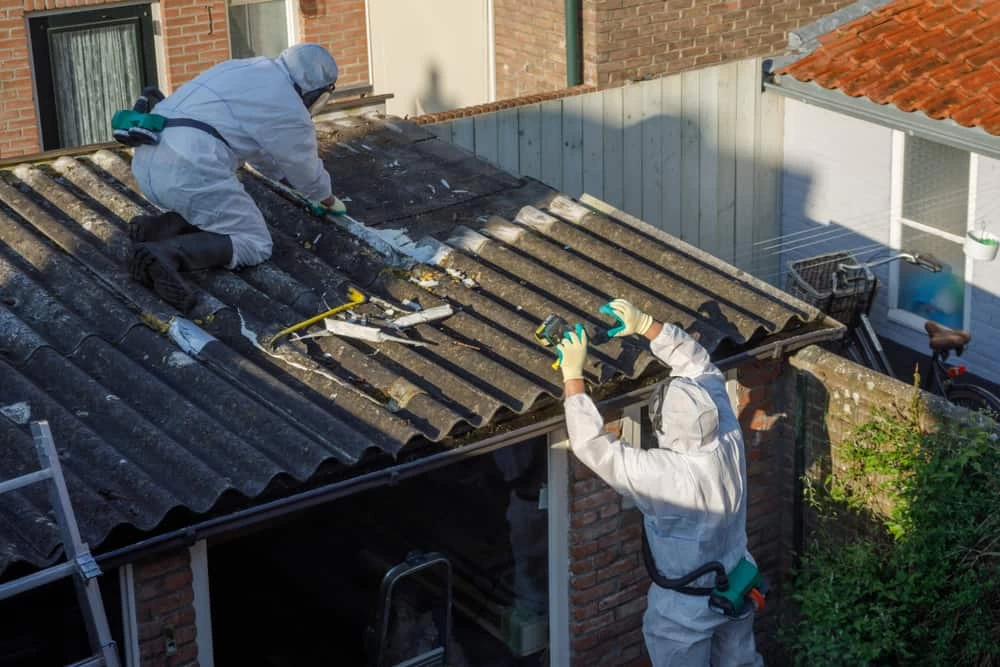
Once the survey confirms asbestos-containing materials, we file the required written notification with the NYS Department of Labor Asbestos Control Bureau. Notification timelines vary by project type, so we handle this early to avoid delays to your renovation schedule. Then the abatement itself begins — sealed negative-pressure containment, HEPA filtration, certified removal by licensed workers under a licensed supervisor, and real-time air monitoring throughout. Nothing gets opened back up until the air clears.
After removal, asbestos waste is transported by a licensed hauler to an approved disposal facility, with full chain-of-custody documentation. The final step is clearance certification — independent air testing that confirms fiber levels are below regulatory thresholds. That clearance certificate is your legal documentation that the space is safe and the work was done correctly. For Freeport homeowners navigating real estate transactions, insurance claims, or building permits, that paperwork matters as much as the work itself.
Asbestos Tile and Popcorn Ceiling Removal Freeport
The Materials We Find Most Often in Freeport Homes
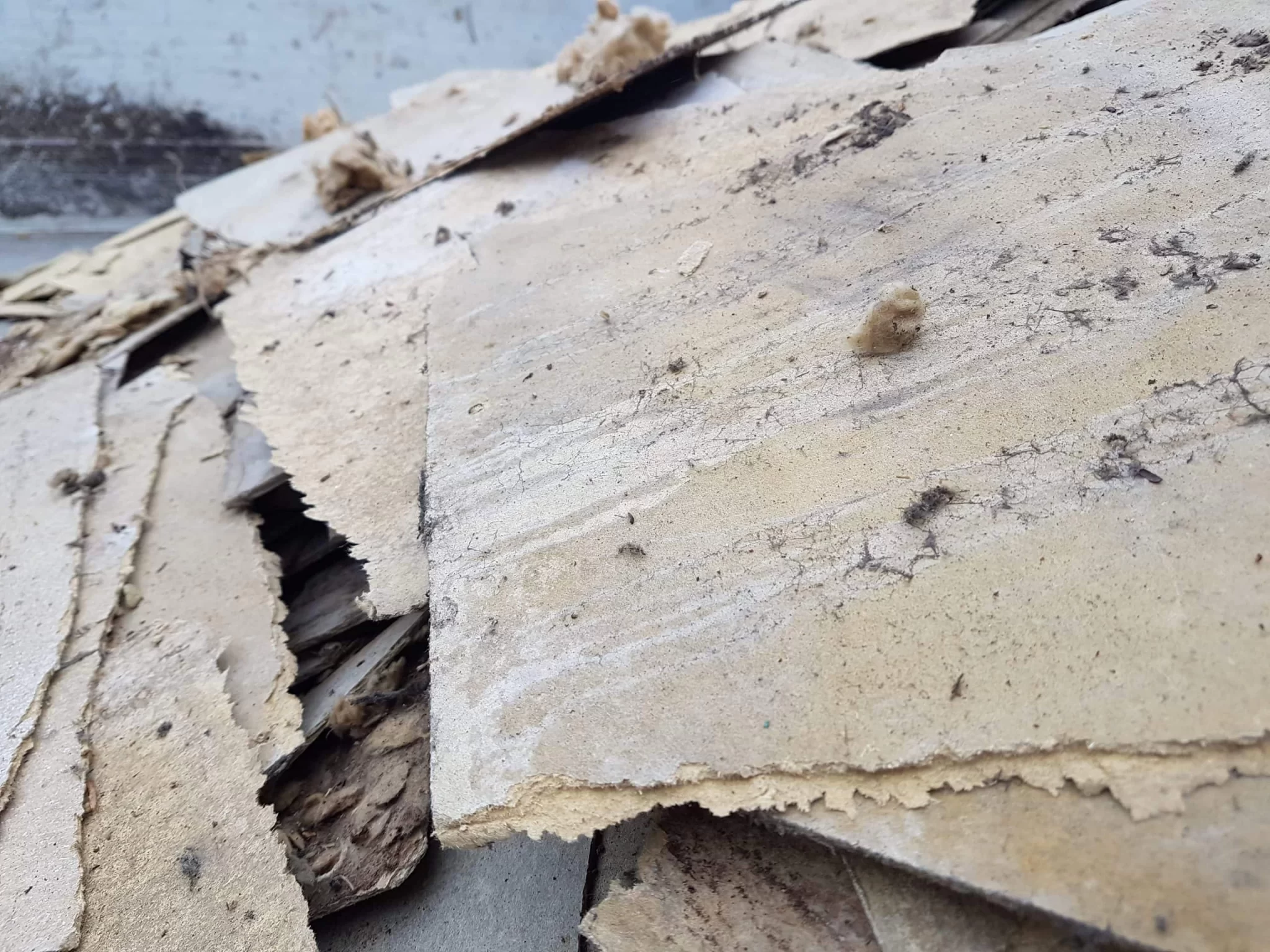
Asbestos doesn’t look like anything in particular. That’s what makes it easy to miss and easy to disturb without realizing it. In Freeport’s pre-war homes, the most common findings are pipe and boiler insulation — the wrapped, chalky material around old steam pipes and heating systems that becomes friable as it ages. In the post-war Cape Cods and ranch homes built during Freeport’s 1950s and 60s expansion — including subdivisions like Colony Park — 9×9 vinyl asbestos floor tiles and the black mastic adhesive beneath them are among the most frequently encountered materials during kitchen and bathroom renovations.
Popcorn ceiling removal is another common trigger for asbestos abatement in Freeport. Textured ceilings applied through the 1970s regularly contain chrysotile asbestos, and as homeowners modernize their interiors — a trend that accelerated sharply after Sandy — those ceilings need to be tested before anyone touches them. Asbestos-containing joint compound and drywall texture are also found in homes renovated during the 1960s and 70s, often in multiple rooms.
For commercial properties along the Nautical Mile or in Freeport’s downtown district — which received New York State Downtown Revitalization Initiative funding and is actively seeing renovation activity — the same Code Rule 56 requirements apply. We handle both residential and commercial asbestos abatement in Freeport, and the documentation requirements are the same regardless of property type. If you’re renovating, you need a survey. If the survey finds something, you need a licensed contractor. That’s the short version.
Do I need an asbestos survey before renovating my Freeport home?
Yes — and it’s not optional. Under New York State Industrial Code Rule 56, any building constructed before 1987 requires a licensed asbestos survey before renovation, remodeling, or demolition work begins. This applies to virtually every home in Freeport, where the majority of the housing stock predates 1940 and significant construction continued through the 1970s. The survey must be conducted by a NYS-licensed asbestos inspector, not a general contractor or home inspector.
Skipping this step doesn’t just create a health risk — it creates a legal and financial one. If a building inspector or NYS Department of Labor Asbestos Control Bureau investigator discovers that renovation work disturbed asbestos-containing materials without a prior survey and proper abatement, the consequences can include immediate work stoppages, fines reaching tens of thousands of dollars, and mandatory emergency abatement at rates far higher than a planned project. The survey is a small upfront cost that protects your entire renovation timeline and budget.
How much does asbestos removal typically cost in Freeport, NY?
Cost depends heavily on what was found, where it is, how much of it there is, and what kind of abatement is required. A straightforward asbestos floor tile removal in a single room will cost significantly less than a whole-house abatement involving pipe insulation, ceiling texture, and flooring across multiple rooms. In the Nassau County market, residential asbestos abatement projects commonly range from a few hundred dollars for a small, contained removal to several thousand dollars for larger or more complex scopes of work.
What’s worth understanding is that the cost of doing it wrong is almost always higher than the cost of doing it right. Freeport homeowners dealing with post-Sandy renovations, real estate transactions, or active building permits don’t have room for a mid-project shutdown. With median home values in Freeport approaching $491,000 and annual property taxes near $9,800, your home is a significant asset — and proper abatement protects that asset legally, financially, and from a health standpoint. The right question isn’t how to spend the least. It’s how to get a clear scope, a transparent quote, and a contractor who won’t leave you with incomplete documentation.
What happens if my contractor disturbs asbestos without proper abatement in place?
This is one of the most common and costly mistakes in home renovation, and it happens more often than most homeowners realize. If a general contractor — a flooring crew, a plumber, a demo team — disturbs asbestos-containing materials without a prior survey and licensed abatement in place, work must stop immediately. The area has to be sealed, emergency abatement has to be arranged, and the homeowner may be subject to regulatory action from the NYS Department of Labor Asbestos Control Bureau.
In practical terms, this means your renovation timeline collapses. Emergency abatement is more expensive than planned abatement because contractors have to mobilize quickly, containment has to be established around an already-disturbed area, and the documentation process is more complex. In Freeport, where flood-damaged homes have been going through multiple rounds of renovation since Sandy, this scenario has played out many times. The way to avoid it is straightforward: get the survey done before the first wall comes down, and hire a licensed contractor to handle whatever the survey finds.
Does flood damage in Freeport increase the risk of asbestos exposure during renovation?
It does, and this is something specific to Freeport and other South Shore communities that inland Nassau County towns don’t face at the same scale. When a pre-1980 home floods — whether from a storm surge like Sandy, a recurring tidal event, or a pipe failure — the gut renovation that follows typically involves removing flooring, drywall, insulation, and mechanical components. Every one of those layers in a home built before 1980 is a potential source of asbestos-containing materials.
Saltwater intrusion also accelerates the deterioration of building materials, including the binding agents that keep asbestos fibers stable. A floor tile or pipe wrap that was previously non-friable — meaning it couldn’t easily release airborne fibers — can become friable as it ages and degrades in a humid, salt-air coastal environment. That changes the risk profile and often changes the abatement approach required. If your home has been through flooding and you’re planning any kind of renovation, a licensed asbestos survey before work begins is especially important in Freeport’s coastal conditions.
Can I stay in my home during asbestos abatement?
It depends on the scope and location of the work. For small, contained projects — a single room, a section of flooring, a localized pipe repair — it may be possible to remain in other parts of the home while abatement is underway, as long as proper containment and negative-pressure enclosures are in place. For larger projects involving multiple rooms, HVAC systems, or whole-house abatement, temporary relocation is typically recommended until air clearance testing confirms that fiber levels are below regulatory thresholds.
We walk you through this before work begins, not after. The containment protocols required under NYS Code Rule 56 are designed to prevent fiber migration from the work area to occupied spaces, but the level of disruption varies significantly by project size. For Freeport families managing active renovation timelines — especially those working around school schedules or LIRR commutes — knowing the expected duration and disruption level upfront makes a real difference in planning. Ask your contractor for a realistic timeline before signing anything.
How do I know if a contractor is actually licensed to do asbestos abatement in New York?
This is the most important question you can ask — and the easiest one to verify. In New York State, asbestos abatement contractors must hold a valid license issued by the NYS Department of Labor. Individual workers must hold NYS DOH asbestos handler certifications, and supervisors must hold separate supervisor certifications. These are not optional credentials. They are legal requirements under Industrial Code Rule 56, and any contractor performing asbestos work in Freeport without them is operating illegally.
You can verify a contractor’s NYS DOL asbestos license directly through the Department of Labor’s online license lookup tool. Ask any contractor you’re considering for their license number before they set foot in your home — a legitimate contractor will provide it without hesitation. Be cautious of general contractors or restoration companies that offer asbestos removal as an add-on service without being able to produce a dedicated asbestos contractor license. In Nassau County, where regulatory enforcement is active and the consequences of non-compliance are significant, working with a properly licensed contractor isn’t just the safe choice — it’s the only choice that protects you legally when the project is done.