Fresh Meadows Homes Were Built in the Asbestos Era Here's What That Means for You
Most homes in Fresh Meadows were built between the 1940s and 1970s right when asbestos was standard. If you’re renovating, selling, or just found something during a repair, we handle the testing, removal, and clearance from start to finish.
I needed a professional consultation explanation of procedure for safe removal of Asbestos in my apartment complex. Without having an account yet, I was very impressed with the caring, knowledgeable and generous advice offered by Jessica, and will look forward to doing business in the future. Thank you so much! I feel much more informed about a sometimes scary endeavor. Peace. Nancy Silva Mineola, NY.
Mia Munoz
Used this company to clean up some water flood in my house. They were fast and easy to work with.very professional, Would recommend to anyone!
Nini Valle
Great company, had a flood and they responded quickly and efficiently. Billed my insurance company directly. I highly recommend this company!
joe colapietro, jr
I had pipe freeze in my basement right before a snow storm and they made to within an hour to help start the clean up process. They we by our side throughout the entire process and even helped with the insurance company. They did such a great job with the cleanup, repair, remidiation, I contracted them to perform the repairs and finishes in the basement. They came with enough manpower and material to get the job done. Leo and Jessica were nothing but a pleasure to deal with!!
Cristian Arredondo c
I had some water damage in my home and Green Island was able to take care of my issue quickly and effectively. I am very pleased with the work they did. They responded quickly and were very professional.
Michael M
Outstanding service! From the office to the field crew everyone was friendly, helpful and responsive. I highly recommend Green Island Group.
When asbestos shows up during a renovation or home inspection, the project doesn’t just pause everything stops. The contractor leaves, the permits stall, and suddenly you’re researching something you never expected to deal with. What you actually need is someone who can step in, assess what’s there, handle the removal correctly, and get your project moving again without dragging it out.
Fresh Meadows is a neighborhood where a huge portion of the housing stock dates back to the original New York Life Insurance Company development of the late 1940s. Those garden apartments, townhouses, and the single-family homes that filled in around them through the 1950s and 60s were all built when asbestos was used in floor tiles, pipe insulation, ceiling texture, and joint compound. It’s not a maybe it’s a very real probability in homes of this age.
What changes after a proper abatement is more than just air quality. Your renovation can resume. Your home sale can close. Your co-op board has the documentation it needs. You’re not sitting on a liability you have a clearance certificate that proves the work was done right, by licensed professionals, in full compliance with NYC DEP requirements. That’s the outcome that matters.
Every License That Fresh Meadows Requires We Hold Them All
We are a full-service environmental remediation contractor serving all five boroughs, Long Island, and the surrounding metro area. For asbestos work specifically in Fresh Meadows, that means holding a current NYS DOL Asbestos license, operating in full compliance with NYC DEP Title 15 requirements, and carrying USEPA Lead and RRP certification because homes built before 1978 in Fresh Meadows often have both asbestos and lead paint, and both need to be handled by certified professionals.
What sets us apart in a neighborhood like Fresh Meadows isn’t just the credentials. It’s the ability to handle the entire project under one roof inspection, abatement, air clearance testing, and full reconstruction if needed. No handoff to a second contractor. No gap in accountability. From the original New York Life garden apartments near Utopia Parkway to the Cape Cod homes throughout Hillcrest, we’ve worked in buildings exactly like yours.
No Guesswork Just a Clear Process From Test to Clearance
It starts with an inspection. A certified asbestos investigator comes to your property, identifies materials that may contain asbestos, and takes samples for laboratory testing. In Fresh Meadows, that typically means looking at vinyl floor tiles and their adhesives, pipe and boiler insulation in mechanical rooms, popcorn or textured ceilings, and joint compound in walls all common in the neighborhood’s 1940s through 1960s construction vintage.
If asbestos is confirmed, the next step is filing the required paperwork with NYC DEP before any removal begins. This includes the ACP-5 Asbestos Assessment Report and the ACP-7 Project Notification, submitted to DEP’s Asbestos Technical Review Unit at least seven days before work starts. The NYC Department of Buildings will not issue your renovation or demolition permit until these are filed and satisfied. We handle every form and every submission you don’t have to figure out what ARTS is or how to use it.
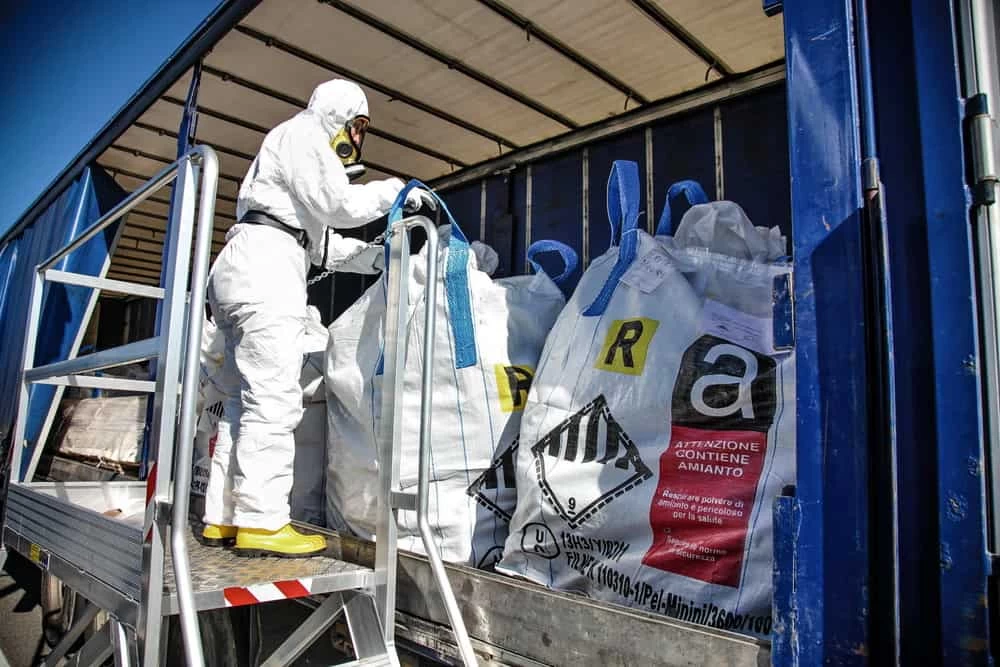
Once approvals are in place, our abatement crew establishes containment, removes the material using proper negative air pressure and HEPA filtration with Microtrap air scrubbers, and disposes of everything according to regulatory requirements. After removal, independent air clearance testing confirms the space is safe. You receive formal clearance documentation the certificate that your contractor, your buyer’s attorney, or your co-op board will ask to see.
From Popcorn Ceilings to Pipe Wrap We Handle the Full Scope
Asbestos abatement in Fresh Meadows covers more ground than most homeowners expect. The original Fresh Meadows housing complex and the post-war single-family homes throughout Hillcrest and the University Manor area were built with asbestos-containing materials in multiple locations throughout the structure. Floor tiles and their adhesive backing are among the most common finds. So is the insulation wrapped around pipes and boilers in basement mechanical rooms materials that have been stable for decades but become a serious concern the moment they’re disturbed during a repair or renovation.
We provide the full scope: asbestos inspection and testing, abatement and removal, encapsulation where appropriate, post-removal air quality verification, and final clearance documentation. For Fresh Meadows co-op boards and property managers overseeing buildings in the original complex some now 75 or more years old we also provide the pre-disturbance surveys required before any renovation work can legally proceed under NYC DEP rules. If the 2025 development proposal for 2,000 new apartments moves forward through the ULURP process, any demolition of existing structures will require exactly this kind of survey before a single permit gets issued.
Beyond removal, if your renovation was stopped mid-project by an asbestos discovery, we can carry the work all the way through reconstruction. That means you’re not coordinating two or three separate contractors you’re making one call and getting the whole job done.
Do I need a permit for asbestos removal in Fresh Meadows, Queens?
Yes and in New York City, the permitting process for asbestos work is more involved than most people expect. Before any renovation or demolition permit can be issued by the NYC Department of Buildings, the property owner must demonstrate that asbestos requirements have been addressed. That means having a certified asbestos investigator complete an ACP-5 Asbestos Assessment Report and filing an ACP-7 Project Notification with NYC DEP’s Asbestos Technical Review Unit at least seven days before work begins.
This applies to residential properties in Fresh Meadows just as it does to commercial buildings. If you’re updating a kitchen, finishing a basement, or replacing flooring in a home built before 1980, you’re legally required to have an asbestos survey completed before work begins. Skipping this step doesn’t just put your health at risk it can result in stop-work orders, fines, and the cost of undoing work that was done without proper clearance. We handle the entire filing process on your behalf so nothing gets missed.
How do I know if my home in Fresh Meadows actually has asbestos?
You can’t tell by looking. Asbestos fibers are microscopic, and the materials that contain them vinyl floor tiles, textured ceilings, pipe insulation, joint compound look completely normal. The only way to know for certain is to have samples collected and tested by a certified laboratory.
What makes Fresh Meadows specifically worth taking seriously is the age of its housing stock. The original garden apartments and townhouses developed by the New York Life Insurance Company starting in 1947, along with the post-war single-family homes built throughout the 1950s and 1960s, were all constructed during the peak era of asbestos use in residential building materials. If your home was built before 1980 and hasn’t been fully renovated since, there’s a strong likelihood that at least some asbestos-containing materials are present somewhere in the structure. A professional inspection gives you a definitive answer and a clear plan if anything is found.
Will my family need to leave the house during asbestos abatement?
It depends on the scope of the work and where in the home it’s being done. For smaller, contained projects like removing floor tiles in a single room it’s often possible for the rest of the home to remain occupied while the work area is sealed off with proper containment. For larger projects involving multiple rooms, mechanical systems, or whole-floor abatement, temporary relocation during the active removal phase is typically the safer and more practical choice.
We’ll give you a straightforward answer about this during the inspection phase, before any work is scheduled. The containment setup uses negative air pressure and HEPA filtration to prevent fibers from migrating to other areas of the home, and air clearance testing is performed after removal to confirm the space is safe before containment comes down. For Fresh Meadows families many of whom have lived in their homes for decades understanding exactly what to expect before the crew arrives makes the whole process significantly less stressful.
What does asbestos abatement typically cost in Queens, NY?
Nationally, asbestos removal runs roughly $5 to $20 per square foot, with average projects coming in around $2,000 to $3,000. In New York City and Queens specifically expect to pay at the higher end of that range. NYC pricing reflects higher labor costs, the additional regulatory requirements that apply within the five boroughs (ACP-5, ACP-7, DEP filing fees, ARTS submissions), and higher disposal costs for regulated hazardous material.
The scope of what’s found matters significantly. Removing vinyl floor tiles in a single room is a very different project than abating pipe insulation throughout a basement mechanical room or addressing textured ceilings across an entire floor. For Fresh Meadows homeowners and co-op boards, the more useful framing is this: the cost of a proper abatement is a fixed, one-time expense. The cost of doing it wrong regulatory fines, a failed home sale, future remediation, or liability exposure can multiply that number several times over. Getting a clear, itemized estimate upfront is the right first step.
Can asbestos abatement be covered by homeowners insurance in New York?
Sometimes it depends on what triggered the discovery. If asbestos-containing materials were disturbed or damaged as a result of a covered event, like basement flooding or a pipe burst, the abatement may be covered as part of the broader water damage or property damage claim. In that scenario, having a contractor who can handle both the water damage restoration and the asbestos abatement and bill the insurance company directly makes a significant difference in how smoothly the claim gets resolved.
If the asbestos is discovered during a planned renovation rather than an emergency event, it’s typically not covered under a standard homeowners policy. That said, it’s always worth calling your insurer before assuming it’s out of pocket particularly if there’s any connection to a recent water intrusion or damage event. We have extensive experience working directly with insurance carriers on combined water damage and asbestos claims, and can help you understand what’s likely to be covered before the project starts.
Is asbestos common in the garden apartments and co-ops in Fresh Meadows?
Yes and it’s worth understanding why. The original Fresh Meadows housing complex was developed by the New York Life Insurance Company beginning in 1947. Those buildings are now over 75 years old, and they were constructed entirely within the era when asbestos was the standard material for pipe insulation, boiler wrap, floor tile adhesives, and fireproofing throughout residential buildings. The same is true for the co-op and garden apartment buildings that were developed throughout the surrounding blocks in the 1950s and early 1960s.
For co-op boards and property managers overseeing these buildings today, the regulatory obligation is clear: any renovation, repair, or demolition that could disturb these materials requires a pre-disturbance asbestos survey by a DEP-certified investigator before work can begin. This isn’t optional, and the liability for skipping it falls on the building owner, not the contractor. We work regularly with co-op boards, property managers, and building owners throughout Queens Community Board 8 providing the surveys, abatement, and clearance documentation that keep buildings compliant and residents protected.