I needed a professional consultation explanation of procedure for safe removal of Asbestos in my apartment complex. Without having an account yet, I was very impressed with the caring, knowledgeable and generous advice offered by Jessica, and will look forward to doing business in the future. Thank you so much! I feel much more informed about a sometimes scary endeavor. Peace. Nancy Silva Mineola, NY.
Mia Munoz
Used this company to clean up some water flood in my house. They were fast and easy to work with.very professional, Would recommend to anyone!
Nini Valle
Great company, had a flood and they responded quickly and efficiently. Billed my insurance company directly. I highly recommend this company!
joe colapietro, jr
I had pipe freeze in my basement right before a snow storm and they made to within an hour to help start the clean up process. They we by our side throughout the entire process and even helped with the insurance company. They did such a great job with the cleanup, repair, remidiation, I contracted them to perform the repairs and finishes in the basement. They came with enough manpower and material to get the job done. Leo and Jessica were nothing but a pleasure to deal with!!
Cristian Arredondo c
I had some water damage in my home and Green Island was able to take care of my issue quickly and effectively. I am very pleased with the work they did. They responded quickly and were very professional.
Michael M
Outstanding service! From the office to the field crew everyone was friendly, helpful and responsive. I highly recommend Green Island Group.
When asbestos abatement is handled correctly, you’re not just removing a material — you’re removing the legal and health exposure that came with it. You get a clearance certificate that holds up. Your renovation can move forward. Your home sale doesn’t get derailed. And nobody in your household is breathing something they shouldn’t be.
Garden City’s housing stock is one of the oldest in Nassau County. Homes in the Estates Section, the Mott Section, and along the Cathedral area date back to the 1880s and 1930s — built during the era when asbestos was standard in pipe insulation, plaster, floor tiles, and roofing materials. If your Garden City home was built before 1980 and you’re planning any renovation, there’s a real chance those materials are still in place, undisturbed, exactly where they were installed a century ago.
With median home values in Garden City exceeding $1 million, the cost of getting this wrong isn’t just a health risk — it’s a financial one. An improperly abated home can fail a pre-sale inspection, trigger re-abatement under regulatory scrutiny, and expose you to buyer liability. Doing it right the first time protects your property, your family, and your investment.
We Know Garden City's Buildings — and What's Inside Them
Green Island Group is a Nassau County–based asbestos abatement and environmental remediation company. We handle every project with our own DOL-licensed team — not subcontractors — and every crew member holds individual New York State Department of Labor certification. That’s not a marketing point. That’s the legal standard in New York, and it’s a standard a lot of contractors quietly don’t meet.
We’ve worked across the full range of Garden City’s building stock — from pre-war estates in the historic Estates Section to mid-century split-levels to institutional buildings. We know what asbestos-containing materials look like in a 1925 Garden City Tudor, where they hide in a 1960s ranch, and what a proper abatement scope looks like for each one.
When you call us, you’re getting a company that handles everything from the certified inspection through final air clearance — so you’re never left coordinating between three different vendors trying to satisfy the Garden City building department’s permit requirements.
No Surprises — Here's Exactly What the Process Looks Like
It starts with a certified inspection. A New York State DOL-licensed asbestos inspector surveys your property and collects samples from any materials that may contain asbestos — floor tiles, pipe insulation, ceiling texture, joint compound, roofing underlayment. In Garden City homes, especially those built before 1960, that survey often covers more ground than homeowners expect, because original materials in these homes were rarely replaced. The inspector’s report tells you exactly what’s there, where it is, and what category of risk it presents.
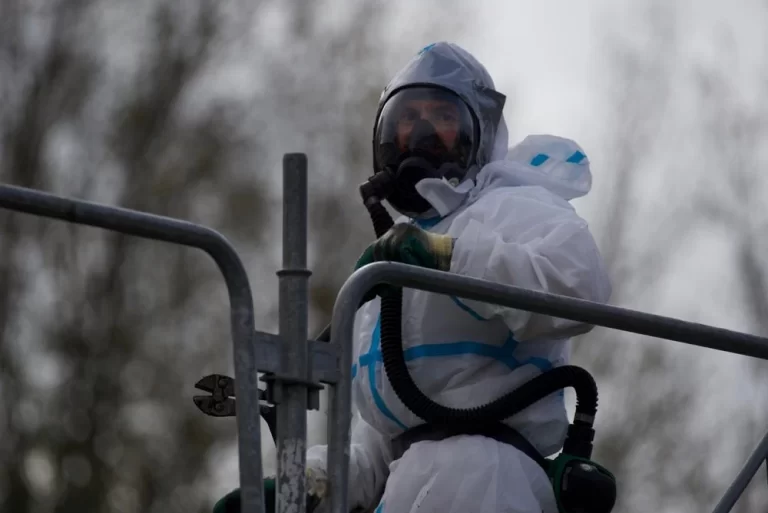
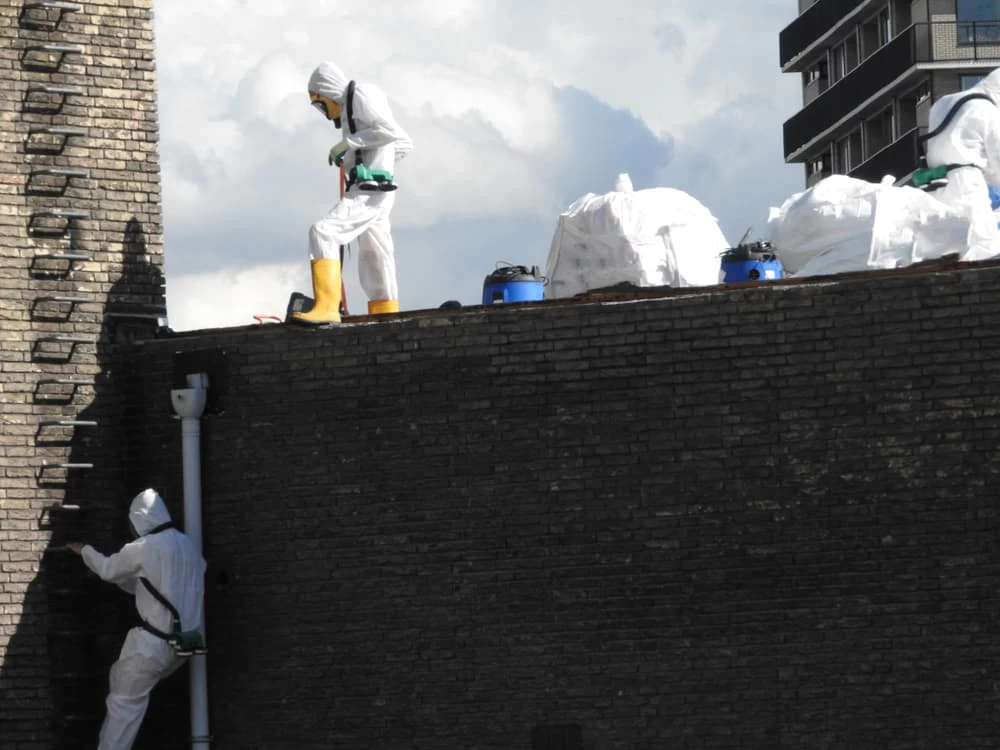
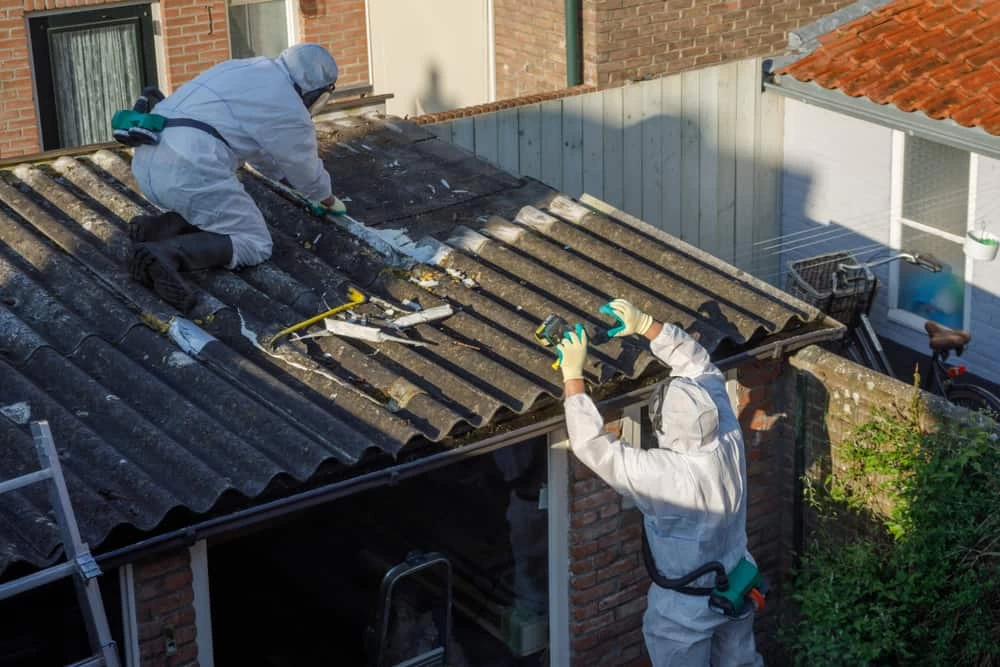
If abatement is needed, we design a scope of work that meets New York State Industrial Code Rule 56 requirements and submit the required notification to the NYSDOL before any work begins. On the job, our certified crew sets up full containment — negative air pressure, sealed work zones, proper personal protective equipment — and removes the material according to regulated protocols. All waste is disposed of at a licensed facility. Nothing gets bagged and thrown in a dumpster.
After removal, independent air clearance testing confirms the space is clean. You receive a final clearance certificate — the document your contractor, your buyer, or the Garden City building department needs to see before anything moves forward. If you’re pulling a permit through Garden City’s building department, that certificate is what closes the loop.
Every Material Type, Every Era of Garden City Construction
Asbestos abatement isn’t one-size-fits-all — especially in a village where homes span more than a century of construction. The materials we encounter in a 1920s home near the Cathedral of the Incarnation are different from what’s typically found in a 1965 split-level on the eastern edge of Garden City. Our inspectors know the difference, and our abatement scopes reflect it.
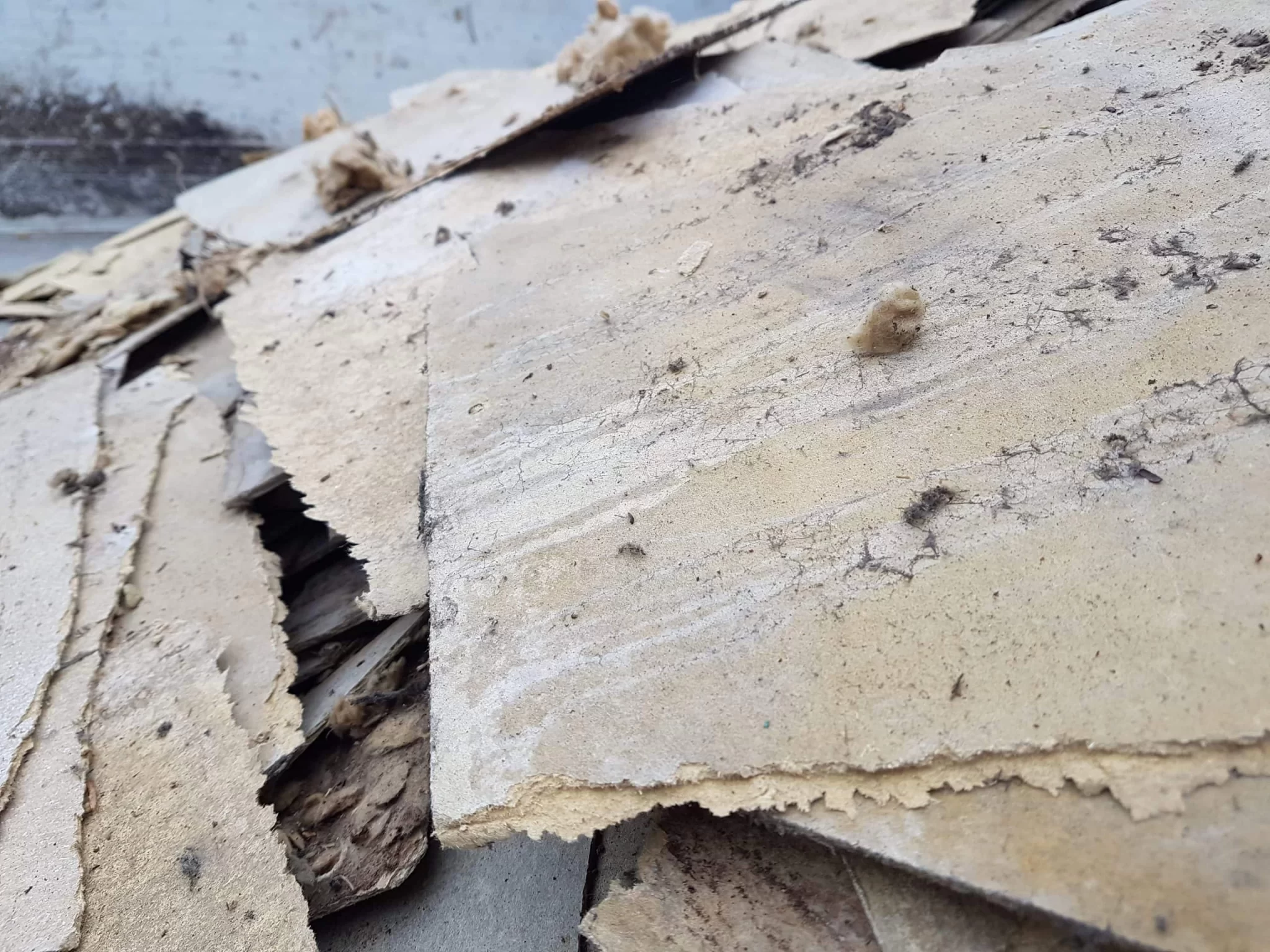
For Garden City homeowners, the most common asbestos-containing materials we address include vinyl floor tiles and the mastic adhesive beneath them — standard in mid-century kitchens and basements — pipe and boiler insulation in homes with original steam heating systems, popcorn and textured ceiling finishes applied through the early 1980s, and joint compound or plaster in pre-1980 walls and ceilings. Asbestos tile removal and popcorn ceiling removal are among the most frequent scopes we handle for homeowners renovating older properties in Nassau County.
For commercial and institutional clients — including property managers along the Franklin Avenue corridor, Adelphi University facilities, or buildings within the Nassau County government complex — we handle larger-scale asbestos remediation with the same ICR 56 compliance and documentation standards. Every project, residential or commercial, ends with the same thing: a clearance certificate you can actually use.
Does my Garden City home actually need an asbestos inspection before renovating?
Under New York State Industrial Code Rule 56, an asbestos survey by a certified NYS DOL inspector is required before any renovation, remodeling, or demolition that could disturb building materials — regardless of the building’s age. A common misconception is that newer homes are exempt, but the state eliminated that loophole. If you’re pulling a permit through Garden City’s village building department for a kitchen renovation, bathroom remodel, or basement project, you’ll likely encounter this requirement at the permit stage.
In practical terms, this means you need the survey done before your contractor starts demo — not after. If asbestos is discovered mid-project without a prior survey and a licensed abatement contractor in place, the project stops. In Garden City, where renovation timelines are tied to permit approvals and contractor schedules, that kind of delay is expensive. Getting the inspection done first is the move that keeps everything on track.
What does asbestos abatement actually cost for a typical Garden City home?
Cost depends on what materials are present, how much of it there is, and where it’s located. A single-room asbestos tile removal in a mid-century Garden City home might run in the range of $1,500 to $3,500. A larger scope — pipe insulation removal around a boiler system, combined with floor tile abatement in a basement — can range from $5,000 to $12,000 or more depending on the square footage and complexity of containment required.
What drives cost up isn’t usually the material itself — it’s the containment, the certified labor, the air monitoring, and the regulated disposal. Those aren’t optional line items. They’re what make the clearance certificate legally valid. In Garden City, where home values are well above $1 million, the cost of proper abatement is a fraction of what a failed pre-sale inspection or a stop-work order ends up costing. Getting accurate pricing starts with a certified inspection that tells you exactly what you’re dealing with.
How do I know if my Garden City home has asbestos in the floors or ceilings?
You can’t tell by looking. Asbestos fibers are microscopic and odorless — the material looks the same with or without it. What you can do is look at the age of your home and the type of materials present. If your Garden City home was built between the 1920s and the early 1980s and still has original vinyl floor tiles, a popcorn or textured ceiling, or plaster walls, those materials have a meaningful probability of containing asbestos. The 9×9 inch floor tiles common in mid-century Long Island homes are a particularly well-known source, and the black mastic adhesive beneath them almost always tests positive.
The only way to know for certain is to have a certified NYS DOL asbestos inspector collect samples and send them to an accredited laboratory. That’s not a complicated process — it typically takes a few days from inspection to lab results. If you’re planning any work that would disturb those surfaces, that step needs to happen before anyone picks up a tool.
What is ICR 56 and why does it matter for my renovation project?
New York State Industrial Code Rule 56 — commonly called ICR 56 — is the state regulation that governs all asbestos-related work in New York. It sets the rules for who can perform asbestos inspections, who can do the abatement, how the work must be contained and executed, how waste must be disposed of, and what documentation must be produced at the end. It’s administered by the NYS Department of Labor, and it applies to residential and commercial properties alike.
What this means for you practically: the contractor you hire must hold a valid NYS DOL asbestos-handling license, and every worker on the job must be individually DOL-certified. The project requires prior notification to the NYSDOL above certain material thresholds. And when the work is done, you need air clearance testing and a final clearance certificate from a certified industrial hygienist before other trades can re-enter the space. If you’re working through Garden City’s village permit process, your building inspector may ask to see that clearance documentation before approving the next phase of your project.
Can a general contractor just remove the asbestos tiles during my renovation?
Not legally, no. In New York State, any disturbance or removal of asbestos-containing materials above de minimis quantities must be performed by a DOL-licensed asbestos abatement contractor with DOL-certified workers. A general contractor — even a highly experienced one — cannot legally perform that work unless they hold the specific asbestos license. This is a hard line under ICR 56, not a gray area.
This comes up frequently in Garden City renovation projects where a GC pulls up a floor tile during demo and discovers original asbestos-containing vinyl underneath. At that point, work legally has to stop until a licensed abatement contractor is brought in. The smarter approach — especially in a home built before 1980 — is to have the asbestos inspection done before the GC starts, so the abatement scope is already factored into the project timeline and budget. It avoids the stop-work scenario entirely and keeps your renovation moving on schedule.
Does asbestos abatement always mean the material has to be removed?
Not always. Under ICR 56, there are two recognized approaches to managing asbestos-containing materials: removal (abatement) and encapsulation. Encapsulation involves sealing the material with a penetrating or bridging encapsulant so that fibers cannot become airborne — it’s sometimes appropriate when the material is in good condition and won’t be disturbed by the planned work. However, if you’re renovating — meaning the material will be cut, drilled, sanded, or demolished — encapsulation isn’t a viable option. The material has to come out.
In Garden City homes, where renovations frequently involve opening walls, replacing flooring, or upgrading HVAC systems, removal is the more common outcome. Encapsulation tends to be more applicable in situations where a material is being left in place and managed over time — like pipe insulation in an area of the home that won’t be touched. A certified inspector can walk you through which approach applies to your specific situation after reviewing the material condition and your renovation plans. That determination should always come from an inspector, not a general contractor or a YouTube video.