Old Walls in Southern Wawayanda Hide More Than You Think
If your Gardnerville home was built before 1980, there’s a real chance asbestos is somewhere inside it and the only way to know for sure is to test it before anything gets disturbed.
I needed a professional consultation explanation of procedure for safe removal of Asbestos in my apartment complex. Without having an account yet, I was very impressed with the caring, knowledgeable and generous advice offered by Jessica, and will look forward to doing business in the future. Thank you so much! I feel much more informed about a sometimes scary endeavor. Peace. Nancy Silva Mineola, NY.
Mia Munoz
Used this company to clean up some water flood in my house. They were fast and easy to work with.very professional, Would recommend to anyone!
Nini Valle
Great company, had a flood and they responded quickly and efficiently. Billed my insurance company directly. I highly recommend this company!
joe colapietro, jr
I had pipe freeze in my basement right before a snow storm and they made to within an hour to help start the clean up process. They we by our side throughout the entire process and even helped with the insurance company. They did such a great job with the cleanup, repair, remidiation, I contracted them to perform the repairs and finishes in the basement. They came with enough manpower and material to get the job done. Leo and Jessica were nothing but a pleasure to deal with!!
Cristian Arredondo c
I had some water damage in my home and Green Island was able to take care of my issue quickly and effectively. I am very pleased with the work they did. They responded quickly and were very professional.
Michael M
Outstanding service! From the office to the field crew everyone was friendly, helpful and responsive. I highly recommend Green Island Group.
Safe Air, Clear Documentation, Your Renovation Back on Track
Most people in Gardnerville don’t go looking for asbestos. They find it mid-renovation flooring comes up, a wall opens, and suddenly the whole project stops. What you need at that point isn’t a sales pitch. You need someone who can move fast, handle it correctly, and get you the paperwork that proves it’s done right.
That documentation matters more than most people realize. Whether you’re finishing a renovation, trying to close a real estate deal, or just trying to get your contractor back on-site, a written clearance certificate from an independent industrial hygienist is what makes everything move again. It’s what your lender, your buyer, and your attorney are going to ask for and it’s what we deliver on every single job.
The homes along County Route 62 and throughout southern Wawayanda tend to be older, and many of them were built or updated during the exact decades when asbestos was standard in floor tiles, pipe insulation, ceiling texture, and roofing materials. That’s just the reality of the local building stock in Gardnerville and the surrounding area. Knowing what you’re dealing with before you swing a hammer is always cheaper than dealing with it after.
Green Island Group has been performing asbestos abatement across Orange County for over 12 years, including throughout Gardnerville and the surrounding hamlets. We hold the NYS Department of Labor Asbestos Contractor License required under Industrial Code Rule 56 the law that governs every abatement project in New York State. You can look that license up by name on the NYS DOL website. We’d encourage you to.
We’ve worked with the NYS Office of General Services, DASNY, the NYS Office of Mental Health, Nassau County, and Suffolk County. Those agencies don’t hand out contracts based on a good website they audit our credentials, our insurance, and our safety record before they sign anything. That same level of accountability comes with every residential job we do in Gardnerville, Butterfield Estates, Breeze Hill Estates, and the surrounding hamlets.
We’re also certified as a Minority/Women-Owned Business Enterprise by both New York State and New York City not a self-reported claim, but a government-verified designation that requires ongoing compliance. When you hire us, you’re hiring a company that has been examined and found legitimate by multiple independent bodies. That’s not something a fly-by-night operator can say.
It starts with a proper inspection. Before any material is touched, we identify what’s there, where it is, and whether it’s friable or non-friable. Under New York State law, any structure whose construction began before 1974 requires an asbestos survey before renovation or demolition work proceeds and the Town of Wawayanda’s building permit process reflects that. If you’re pulling a permit for a renovation in Gardnerville, this step isn’t optional.
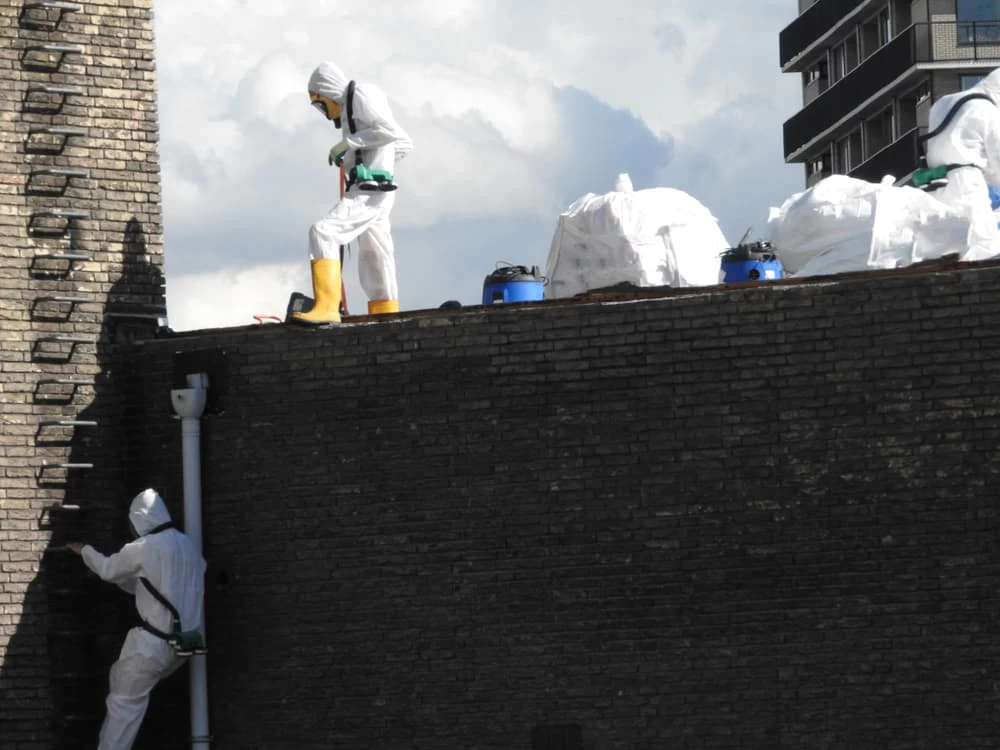
Once we know what we’re dealing with, we set up full containment. That means negative air pressure systems, poly barriers, and HEPA filtration so the work area is completely isolated from the rest of your home while abatement is underway. The materials come out wet, get double-bagged in 6-mil poly, labeled per OSHA standards, and transported to a licensed Class II landfill under New York State regulations. Nothing gets cut short.
After the work is done, an independent industrial hygienist conducts post-abatement air monitoring. This isn’t someone on our payroll it’s a third-party professional whose job is to confirm the air is clean. If it passes, you get a written clearance certificate. That’s the document that reopens your renovation, satisfies your lender, and gives you something real to hand to a buyer or an attorney. We don’t consider the job finished until that certificate is in your hands.
Asbestos shows up differently depending on the age and type of structure. In the older homes and farm properties near Gardnerville particularly those built or renovated between the 1940s and late 1970s the most common materials we encounter are 9×9 and 12×12 vinyl asbestos floor tiles, popcorn ceiling texture (sprayed acoustic material that frequently contains chrysotile asbestos when applied before 1978), pipe insulation on boiler systems, and transite siding or roofing on agricultural outbuildings. If you’re converting or renovating a farm structure in the Pine Island area, transite corrugated roofing is something to take seriously before any demo work begins.
Every project we handle includes the full scope: inspection and material identification, containment setup, licensed removal or encapsulation depending on what’s appropriate, proper waste disposal, and post-abatement air monitoring with written clearance. We also handle mold, lead paint, water damage, and fire damage because older properties in this part of Orange County rarely have just one issue, and managing four separate contractors while your project is stalled isn’t a position you want to be in.
If the cost of an unexpected abatement project is a concern, we offer 0% APR financing up to $200,000 for qualifying projects. It’s there because discovering asbestos in the middle of a renovation budget shouldn’t force you to choose between doing it right and doing it at all.
Does my Gardnerville home actually need an asbestos inspection before renovating?
Under New York State Industrial Code Rule 56, any structure whose construction commenced before 1974 requires an asbestos survey before demolition or renovation work begins. That applies to homes throughout the Town of Wawayanda, including Gardnerville and the Town’s building permit process is set up to reflect it. If you’re pulling a permit for a kitchen gut, a bathroom remodel, or anything that involves opening walls or disturbing flooring in a pre-1974 home, an inspection isn’t just a good idea. It’s a legal requirement.
Even if your home was built in the late 1970s, it’s worth having it checked. Materials installed during renovation work done between 1974 and 1980 can still contain asbestos, and contractors working in older Gardnerville homes often layered new materials over original ones. The only way to know what’s actually there is to test it not assume based on the year on the deed.
How much does asbestos removal typically cost in Orange County, NY?
The honest answer is that cost depends heavily on what’s there, how much of it there is, and where it’s located. A small section of asbestos floor tile in a single room is a very different project than pipe insulation throughout a basement or popcorn ceiling texture across an entire floor of a home. In Orange County, residential abatement projects generally range from a few thousand dollars for limited material removal to $15,000–$30,000 or more for larger or more complex scopes.
What drives cost up is usually scope creep from undiscovered materials which is exactly why a proper inspection upfront matters. When you know what’s in the structure before work begins, you can get an accurate quote rather than a number that changes once the walls open. We provide written estimates based on actual inspection findings, not ballpark guesses, and for qualifying projects, we offer 0% APR financing up to $200,000 so an unexpected abatement cost doesn’t derail a renovation you’ve already committed to.
Can I legally remove asbestos myself in New York State?
In most cases, no. New York State Industrial Code Rule 56 requires that asbestos abatement be performed by a licensed NYS DOL Asbestos Contractor. This applies to friable asbestos material that can be crumbled by hand and to non-friable materials that will be disturbed during renovation or demolition. There are very limited exemptions for homeowners doing their own work on their own single-family residence, but those exemptions come with strict conditions and still require proper notification, handling, and disposal procedures.
More practically, even if a technical exemption applies to your situation, doing the work yourself means you won’t have the post-abatement air monitoring or clearance certificate that a licensed contractor provides. That documentation is what your lender, your buyer, and your building inspector are going to ask for. Without it, you may find yourself unable to close a real estate transaction or get a final permit sign-off which ends up costing more than hiring a licensed contractor in the first place.
What are the most common places asbestos is found in older Wawayanda-area homes?
The building stock in and around Gardnerville reflects the construction patterns of the mid-twentieth century, which means the most common locations are fairly predictable. Floor tiles particularly the 9×9 inch format were almost universally made with asbestos content through the 1970s. Popcorn or acoustic ceiling texture applied before 1978 frequently contains chrysotile asbestos and is one of the most commonly encountered materials in Orange County homes. Pipe insulation on older boiler and hot water systems is another frequent find, especially in homes with original heating infrastructure.
Beyond the main living areas, older farm structures and outbuildings near the Pine Island agricultural region often have transite corrugated roofing or siding a cement-asbestos composite that was widely used in agricultural construction through the 1970s. If you’re renovating a farmhouse or converting an outbuilding in this part of Orange County, transite materials are something to specifically look for before any demo work starts. Joint compound used in drywall finishing through the mid-1970s is also a less-obvious but real source of asbestos exposure during renovation.
How long does asbestos abatement take, and do I need to leave my home?
Timeline depends on the scope of the project. A limited removal a single room of floor tile, for example can often be completed in one to two days. Larger projects involving multiple materials or areas of the home can take several days to a week or more. During active abatement, the work area is fully contained with poly barriers and negative air pressure systems, which isolates it from the rest of the home. Depending on the location of the work and your household’s specific situation, you may be able to remain in unaffected parts of the house, or temporary relocation may be the more practical choice.
What determines when you can fully reoccupy the space is the post-abatement air monitoring result, not the completion of the physical removal. Once the independent industrial hygienist clears the air, you get a written clearance certificate and the space is safe to reenter. We walk through the logistics with you before work begins so you’re not surprised by the timeline especially important if you have children, pets, or a renovation crew waiting to get back on-site.
Does Green Island Group serve the area around Gardnerville, including nearby hamlets in Wawayanda?
Yes we serve Gardnerville and the full surrounding area, including Johnson, Butterfield Estates, Breeze Hill Estates, Slate Hill, Stony Ford, South Centerville, and the broader Town of Wawayanda. We’re also regularly working throughout Orange County in communities like Warwick, Middletown, Minisink, and Unionville, so this isn’t a stretch of our service area it’s territory we know well.
The homes and properties in southern Wawayanda reflect a specific combination of building age and rural character that we’re familiar with. Older farmhouses, converted agricultural structures, mid-century residential homes on county roads these are the kinds of properties where asbestos tends to show up in multiple forms at once, and where having a contractor who understands the full scope of what might be present makes a real difference. If you’re in or near Gardnerville and you have questions about a specific property, the fastest way to get a straight answer is to call us and describe what you’re working with.